Breakpoint 上备受瞩目的 Firedancer 究竟是什么?

foresightnewsОпубликовано 2024-09-23Обновлено 2024-09-23

Введение

Solana 验证器客户端 Firedancer 表现如何?怎样运行?

Solana 验证器客户端 Firedancer 表现如何?怎样运行?


撰文:Karen,Foresight News


在上周的 Solana Breakpoint 大会上,现场气氛活跃,生态产品发布接踵而至,各类丰富多彩的周边活动更是锦上添花。在这场盛宴中,尤为引人注目的亮点是 Solana 验证器客户端 Firedancer 的早期版本正式登陆主网,这一里程碑式的成就被赋予了特别的关注,标志着 Solana 网络将在性能上将实现质的飞跃,同时可避免 Solana 上单一客户端崩溃导致网络宕机的风险。


Firedancer 的开发历程可追溯至于 2021 年至 2022 年,作为由 Jump Trading Group 主导开发的 Solana 第二个验证器客户端(原有客户端 Agave 由 Anza 开发),其设计初衷在于消除单点故障隐患,增强网络的整体稳健性和坚韧性。与原有基于 Rust 的验证器不同,Firedancer 采用 C 语言编写,不包含 Rust 代码,这一选择显著降低了潜在漏洞对整个网络的影响,为 Solana 的安全性加上了又一道坚固的防线。


Firedancer 表现如何?


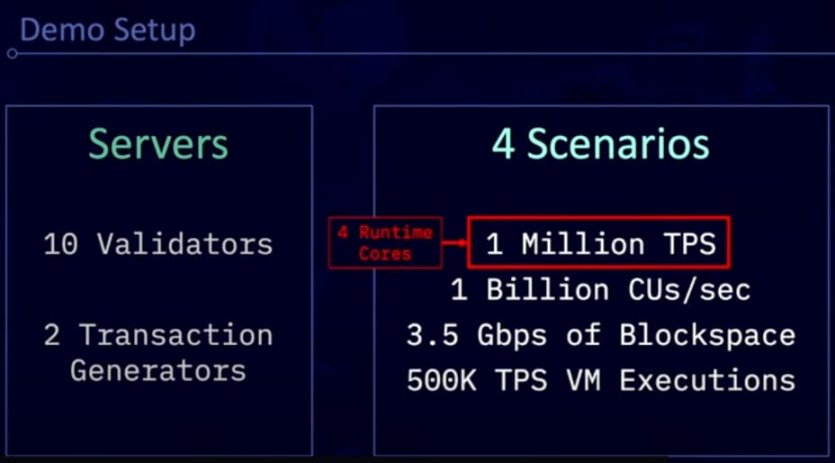
根据 Jump Crypto 首席科学官 Kevin Bowers 在 Solana Breakpoint 大会上的演示,Firedancer 展示了每秒处理超过 100 万笔交易的能力,这一数字远超 Solana 当前理论上的几万 TPS 极限。Kevin Bowers 还将这一成就形象地比喻为将「乡间小路」拓宽为「州际公路」,预示着网络成本和容量的双重优化。
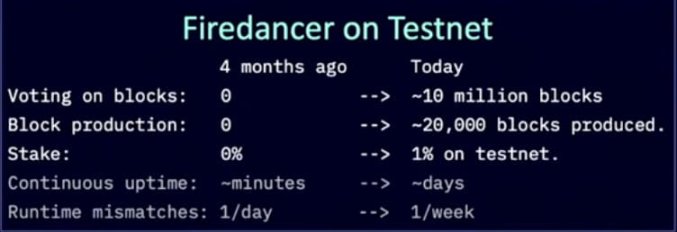


Jump Trading 的核心工程师 Liam Heeger 则分享了 Firedancer 在测试网上的进展,该客户端已成功产出超过 2 万个区块,并实现了 1% 的质押比例。


另一工程师 Aryaman Jain 的演示进一步揭示了 Firedancer 在特定条件下的表现,如在 10 个验证器环境下,其 TPS 可达百万级别,每秒处理计算单元超过 12 亿次,同时展现出 3.5 Gbps 的 Blockspace 能力和 50 万 TPS 的 VM 执行效率。


Firedancer 如何运行?


Firedancer 围绕高性能计算堆栈和网络堆栈、Runtime 和共识机制三个主要组成部分构建。Firedancer 之所以能够将 Solana 网络的性能提升至 100 万 TPS(当前协议级别的限制将性能限制在 81,000 TPS 左右),关键在于其创新的架构设计和数据流优化。


该验证器采用了一种并发模型,通过少量线程执行多样化的作业,每个线程都专注于特定的任务,如网络数据包处理、交易验证、区块打包等。这种设计实现了资源的最大化利用与交易处理速度的显著提升。
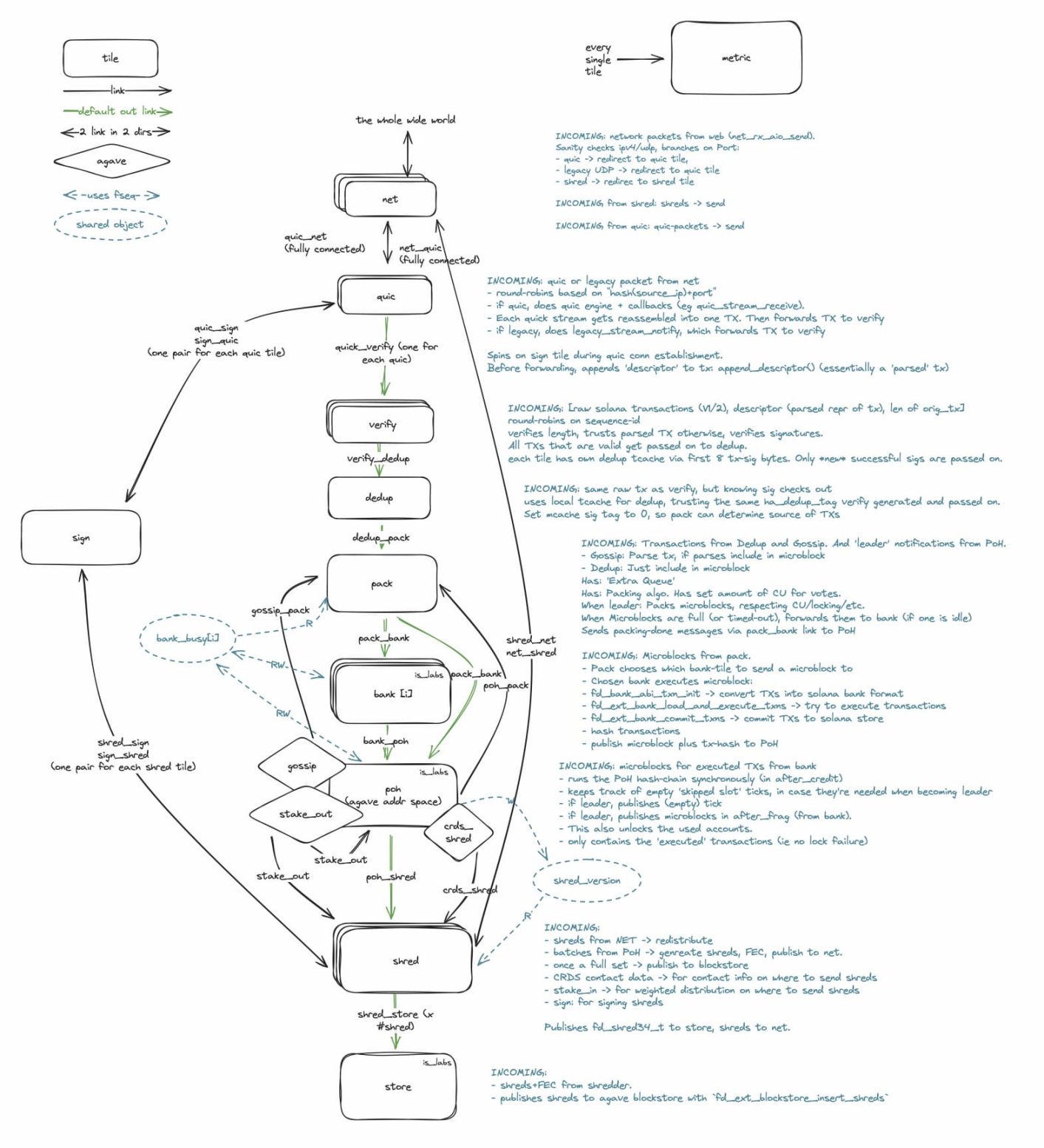


具体来说,每个线程执行 11 个不同的作业之一。有些作业只需要一个线程来完成它们,但某些作业需要许多线程并行执行相同的工作。另外,每个线程都有一个 CPU core 来运行,并且线程拥有该 core 的所有权:永远不会休眠或让操作系统将其用于其他目的。


Firedancer 还引入了一个名为「tiles」的架构,每种 tile 代表了一个作业及其运行的线程和分配的 CPU core。这种组合方式使得性能调优变得灵活而高效。例如,net 和 quic 的每 tile 可处理 >100 万 TPS,而 verify 和 bank tiles 则专注于交易验证和区块执行,尽管它们的处理速度相对较低,但足以满足高并发场景下的需求。


Firedancer 官方文档中列出了 11 种 tile,分别为:


  1. net:从网络设备发送和接收网络数据包(每 tile 可处理 >100 万 TPS);
  2. quic:接收来自客户端的交易,执行所有连接管理和数据包处理以管理和实施 QUIC 协议(每 tile 可处理 >100 万 TPS);
  3. verify:验证传入交易的加密签名,过滤无效交易(每 tile 可处理 20-4 万 TPS);
  4. dedup:检查并过滤掉重复的传入交易;
  5. pack:当成为 leader 时,打包传入的交易并智能地安排它们执行;
  6. bank:执行被安排的交易(每 tiles 可处理 20-4 万 TPS);
  7. poh:是一种连续在后台进行哈希运算的机制,将生成的哈希值与已执行的交易混合在一起,从而证明顺序性和时间性。
  8. shred:当成为 leader 时,向网络分发区块数据;非 leader 时,接收并重传区块数据(吞吐量主要取决于集群大小。在基准测试中,如果集群规模较小,1 个 tile 可以处理>100 万 TPS);
  9. store:当成为 leader 时接收区块数据,或者当其他节点是 leader 时从其他节点接收区块数据,并将其存储在本地磁盘上的数据库中;
  10. metric:收集有关其他 tiles 的监控信息并将其提供给 HTTP 端点;
  11. sign:持有验证者私钥,并接收和响应来自其他 tile 的签名请求。


值得注意的是,在 Firedancer 成熟之前,其过渡版本 Frankendancer 已先行一步进入 Solana 主网。Frankendancer 是 Firedancer 和 Agave 部分代码的混合体,结合了 Firedancer 在网络堆栈和区块生产方面的优势,同时保留了 Agave 在执行和共识方面的功能。而 Firedancer 则是完全从头开始构建,不包含任何 Agave 的代码。


Firedancer 有何影响?


无疑,Firedancer 的推出对 Solana 生态系统具有重大影响,将极大地丰富验证器的多样性,进一步削弱单点故障对网络稳定性的影响,为 Solana 网络的可靠性筑起一座更加坚固的堡垒。


此外,Firedancer 保持了与现有协议的向后兼容性,能够确保生态系统的平稳过渡,无需 DApp 开发者及用户做出重大调整。


尽管目前 Firedancer 仍处于非投票模式,且需经历持续不断的优化与审核,但这为 Solana 网络的未来发展描绘了一幅更加充满希望的蓝图。


参考:
1、https://www.youtube.com/watch?v=InGI7BDUeX4&list=PLilwLeBwGuK4eY3nT0vvvJ4GmcJLImcQE&index=14
2、https://firedancer-io.github.io/firedancer/guide/tuning.html
3、https://solanacompass.com/learn/Validated/firedancer-w-kevin-bowers

Похожее

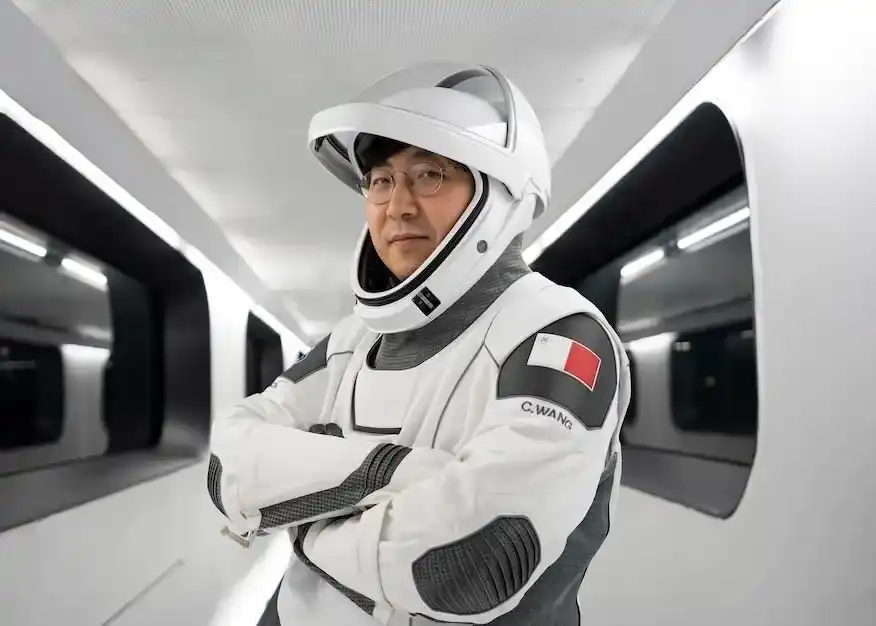
From Mining Pool to Mars: Why Is Wang Chun in the SpaceX Cockpit?

Title: From Mining Pool to Mars: Why Wang Chun is in the SpaceX Cockpit? When SpaceX announced that Wang Chun, co-founder of F2Pool, would command the first commercial crewed interplanetary mission, many were shocked. Why would a Bitcoin mining pool founder be on a Mars mission roster? However, understanding Wang Chun's journey over the past decade and the deepening ties between the crypto industry and SpaceX reveals this is not accidental, but an inevitable result of a new era taking shape. Today's Mars plan is no longer just a space engineering project; it is evolving into a civilization-upgrading experiment driven by global tech capital, AI, computing power, energy, and the crypto economy. Wang Chun stands precisely at the intersection of these forces. Part 1: From F2Pool to SpaceX – Wang Chun's Leap F2Pool, founded when Bitcoin was still niche, is one of the earliest large-scale mining pools and once held a significant share of global Bitcoin hash rate. Wang Chun belongs to the first generation of Chinese Bitcoin advocates and infrastructure builders—idealists and engineers who believed in a new value network independent of traditional finance. Miners like him built the hardware, energy, and computing power foundational to decentralized networks. This aligns with the long-term, high-engineering, future-oriented vision required for space civilization. Elon Musk’s space endeavors value such long-term builders over mere capital players, which explains Wang Chun's entry into the SpaceX ecosystem. Part 2: Why Crypto and SpaceX Are Growing Closer The core of global tech competition is shifting from internet applications to next-generation infrastructure. Both crypto and SpaceX are part of this. SpaceX's goal is to drastically reduce space access costs. If successful, it could enable orbital servers, space-based energy, global satellite internet, and Martian bases. These new frontiers will require new payment systems, value networks, and global financial architectures. Cryptocurrencies, inherently global and trustless, are poised to become key to off-planet economies. Moreover, crypto and SpaceX share a high-risk, long-termist ethos—believing in ambitious, world-changing goals despite early skepticism. Part 3: Human Spaceflight Enters the Commercial Era Space exploration, long dominated by state actors, is now being transformed by commercial entities like SpaceX. Wang Chun's involvement signifies that future deep-space participants may include not just career astronauts, but also entrepreneurs, engineers, and AI researchers. This mirrors the Age of Exploration, where commercial capital eventually drove global expansion. Wang Chun has emphasized that Mars colonization must not be delayed for future generations, countering a potential over-focus on nearer-term, commercial lunar projects. His presence symbolizes how new capital, technical communities, and idealists from the crypto world are now entering the interstellar age. In summary, the true significance is not an individual's journey to Mars, but the shift in the driving force of human civilization expansion from state machinery to tech companies, AI systems, and global technology capital. Wang Chun's path—from mining pool to Mars, from the Bitcoin network to starships—may be a preview of technological civilization's evolution in the coming decades.

marsbit42 мин. назад

From Mining Pool to Mars: Why Is Wang Chun in the SpaceX Cockpit?

marsbit42 мин. назад

Торговля

Спот
Фьючерсы

Популярные статьи

Обсуждения

Добро пожаловать в Сообщество HTX. Здесь вы сможете быть в курсе последних новостей о развитии платформы и получить доступ к профессиональной аналитической информации о рынке. Мнения пользователей о цене на SOL (SOL) представлены ниже.

活动图片