2026 Davos Annual Meeting: How Did Web3 Giants Discuss the Future?

marsbitОпубликовано 2026-01-26Обновлено 2026-01-26

Введение

At the 2026 World Economic Forum in Davos, Web3 leaders and traditional finance executives debated the mainstream integration of blockchain technology. Binance founder Changpeng Zhao (CZ) argued that banks must adopt blockchain infrastructure to improve efficiency and prevent liquidity crises, advocating for 100% reserve models. He highlighted discussions with multiple governments on national asset tokenization and predicted a Bitcoin "super cycle," with crypto becoming essential "fuel" for AI-driven economies. Coinbase CEO Brian Armstrong clashed with the French Central Bank Governor, defending Bitcoin's decentralization and the right for stablecoin holders to earn interest. He asserted that tokenization enhances financial efficiency and democratizes investment access. Key traditional finance figures, including BlackRock's Larry Fink and Standard Chartered's Bill Winters, endorsed tokenization as the future of finance, emphasizing its potential to boost liquidity and reduce costs. However, they stressed the need for collaboration between banks and blockchain. The event also saw the signing of the "Davos Declaration 2026" by Web3 leaders, committing to principles like inclusivity, decentralization, sustainability, and regulatory compliance in advancing blockchain and AI technologies.

Original Author: Eric, Foresight News

2025 was considered a landmark year for Web3 practitioners to enter the main agenda of the World Economic Forum (WEF) on a large scale for the first time. "Crypto at a Crossroads" appeared in the main agenda for the first time, discussing whether cryptocurrencies have entered the mainstream era. One year later, with the entry of Western financial giants, Web3 has evolved from last year's crossroads to truly becoming mainstream.

At this year's World Economic Forum main venue, tokenization and stablecoins became two important topics. Binance founder Changpeng Zhao (CZ) was also invited to participate in a discussion titled "New Era for Finance." Unlike speaking freely on CT (Crypto Twitter), the remarks of Web3 representatives on such a large occasion were noticeably more restrained, but they still did not hide the ambition that "Web3 will change the world."

So, at the 2026 Davos Annual Meeting, where Crypto was recognized as mainstream by traditional finance with a scale of trillions of dollars, what exactly did the big shots say?

Changpeng Zhao: "If Banks Don't Change, We Will Change Banks"

The last time a well-known entrepreneur criticized banks at a large economic and financial conference may date back to the 2020 Bund Financial Summit.

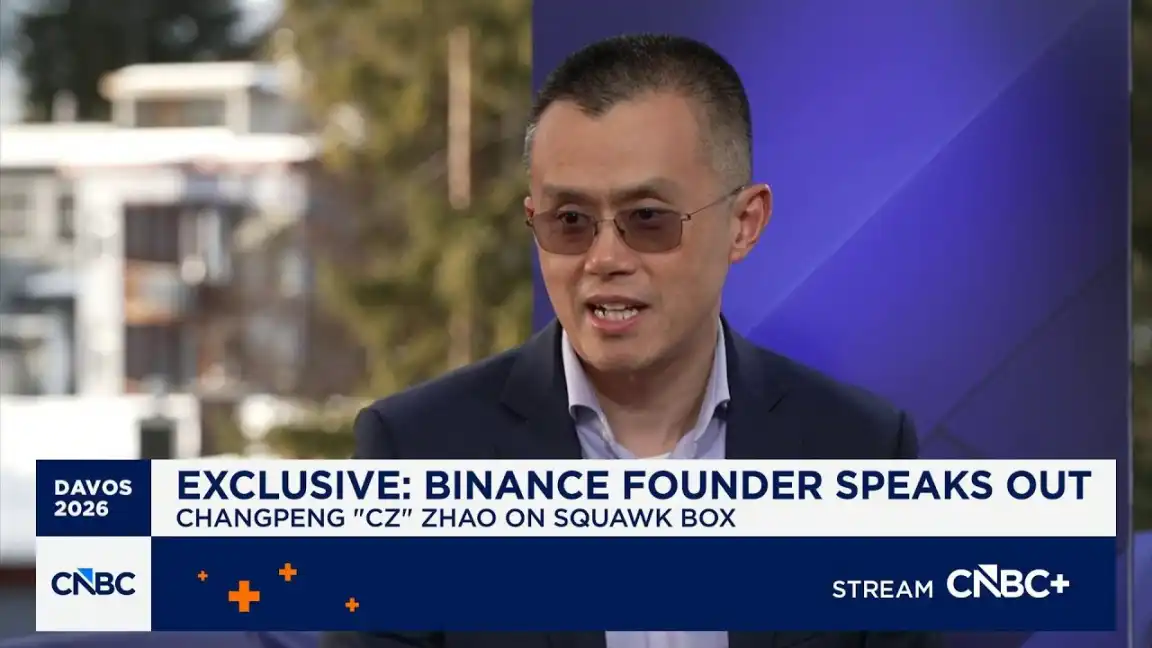
Changpeng Zhao (CZ) participated in the main venue roundtable titled "New Era for Finance" at this Davos Annual Meeting and also gave interviews to media outlets including CNBC. Overall, CZ's viewpoint was not to "replace banks" but rather that banks should embrace blockchain infrastructure, as the two are complementary. His main points include:

  • The reserve system of banks is the root cause of liquidity crises, making it difficult to handle billion-dollar-level withdrawals in a short time without issues, unlike Binance. The 100% reserve model of cryptocurrency exchanges is safer and more reliable. Traditional banks have their value but should embrace blockchain as their infrastructure to improve efficiency and reduce costs;
  • CZ is currently discussing national asset tokenization with governments of more than a dozen countries (such as Pakistan, Malaysia, Kyrgyzstan, etc.), including infrastructure, real estate, commodities, and government bonds. Tokenization can avoid debt issues and improve liquidity, attracting a broader range of investors;
  • Bitcoin's 4-year cycle will be broken, and 2026 will be Bitcoin's "super cycle." Meme tokens are similar to previous NFTs and the metaverse, being highly risky and speculative. Meme tokens with cultural value may exist long-term, but most meme tokens will disappear;
  • Traditional payments are merging with crypto payments, but risk awareness is necessary. AI Agents will use cryptocurrencies as a native payment method. In the future, AI will rely on blockchain for real-time, reliable payments, and cryptocurrencies will become the "fuel" for the AI economy;
  • The crypto industry needs to focus on risk management and regulatory reality, rather than blind optimism, balancing innovation and compliance.

In addition to these points, CZ also revealed details such as his mindset during his previous imprisonment in an interview with CNBC and mentioned on X that more details would be disclosed in his new book to be published in late February or early March.

Coinbase Founder Debates with French Central Bank Governor

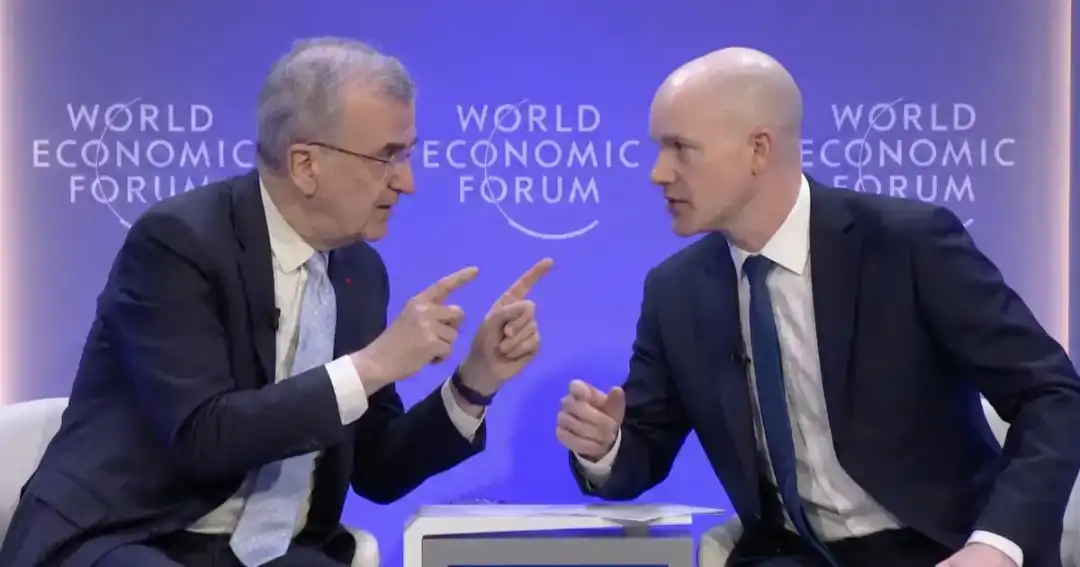
In a discussion titled "Is Tokenization the Future," Coinbase founder Brian Armstrong repeatedly interrupted French Central Bank Governor François Villeroy de Galhau and refuted his views on Bitcoin and stablecoin yields.

François Villeroy de Galhau expressed the following views:

  • Strongly opposes private companies paying interest to holders of their issued stablecoins, believing this threatens monetary sovereignty and financial stability;
  • Emphasizes that trust in currency must come from public institutions (central banks) with democratic mandates, not private issuers;
  • Criticizes stablecoins and Bitcoin as private currencies that could lead to systemic risks, promoting the digital euro as a tool to maintain sovereignty;
  • Warns that without improving financial literacy, tokenization could become a "disaster."

Brian Armstrong's "counterarguments" included:

  • Arguing that Bitcoin has no issuer, and its decentralized nature makes it more independent and anti-inflationary than traditional currencies;
  • Asserting that users have the right to earn yields from stablecoins and that allowing stablecoin interest is part of a country's competitiveness;
  • Emphasizing that Bitcoin and central banks should be in "healthy competition," with public choice becoming the strongest accountability mechanism for fiscal deficits and pushing central banks to be more responsible;
  • Refuting that stablecoins are fully backed by reserves, unlike bank deposits;
  • Tokenization can solve financial efficiency issues, achieve real-time settlement, reduce costs, and "democratize investment access," providing investment channels for 4 billion adults without access to brokerage services, and predicting significant progress in this technology in 2026.

In addition to this highly anticipated clash between "old finance" and "new finance," Brian Armstrong also mentioned in interviews or other occasions that during the meeting, a senior executive from a global top-ten bank told him that cryptocurrencies have now become the bank's "top priority," even seen as a "matter of survival." Armstrong stated that many financial leaders he met at the conference were not only open to cryptocurrencies but were actively seeking ways to enter the market.

Furthermore, Armstrong mentioned that although AI has diverted some attention from cryptocurrencies, the two are closely connected, and in the future, AI will likely use stablecoins by default instead of the existing banking payment system for payments.

In addition to the two main figures, many other well-known figures in the Web3 industry attended the meeting and expressed their views. Ripple CEO Brad Garlinghouse stated that the role of cryptocurrencies has shifted from a "threat" to economic infrastructure, believing that stablecoins will become a global payment bridge but need to protect monetary sovereignty. Brad Garlinghouse did not express the view that crypto payments would "replace" traditional payments but consistently emphasized that Ripple is building a bridge between the two.

Web3 Industry Representatives Sign the "Davos Declaration 2026"

During the side event "Davos Web3 Roundtable" at the Davos Annual Meeting, dozens of Web3 industry leaders, investors, and policymakers, including Animoca Brands co-founder Yat Siu, Unstoppable Domains executive Sandy Carter, and 0G Foundation representative Jonathan Chang, signed the "Davos Declaration 2026."

The declaration emphasizes that when embracing powerful technologies like blockchain and AI, the following principles must be adhered to ensure that technology serves human well-being:

  • Inclusivity: Enable more people (especially in developing countries and marginalized groups) to benefit from Web3 technology.
  • Decentralization: Uphold the core value of Web3 and avoid concentration of power.
  • Sustainability: Promote environmentally friendly and long-term viable innovation.
  • Accountability and Trust: Emphasize compliance, transparency, and responsible development.
  • Long-Term Value Creation: Shift from "hype" to practicality, regulatory friendliness, and institutional-grade infrastructure.

Traditional Finance's View on Web3

In addition to some criticisms of Web3 by the French Central Bank Governor, the meeting also saw recognition of Web3 by financial giants.

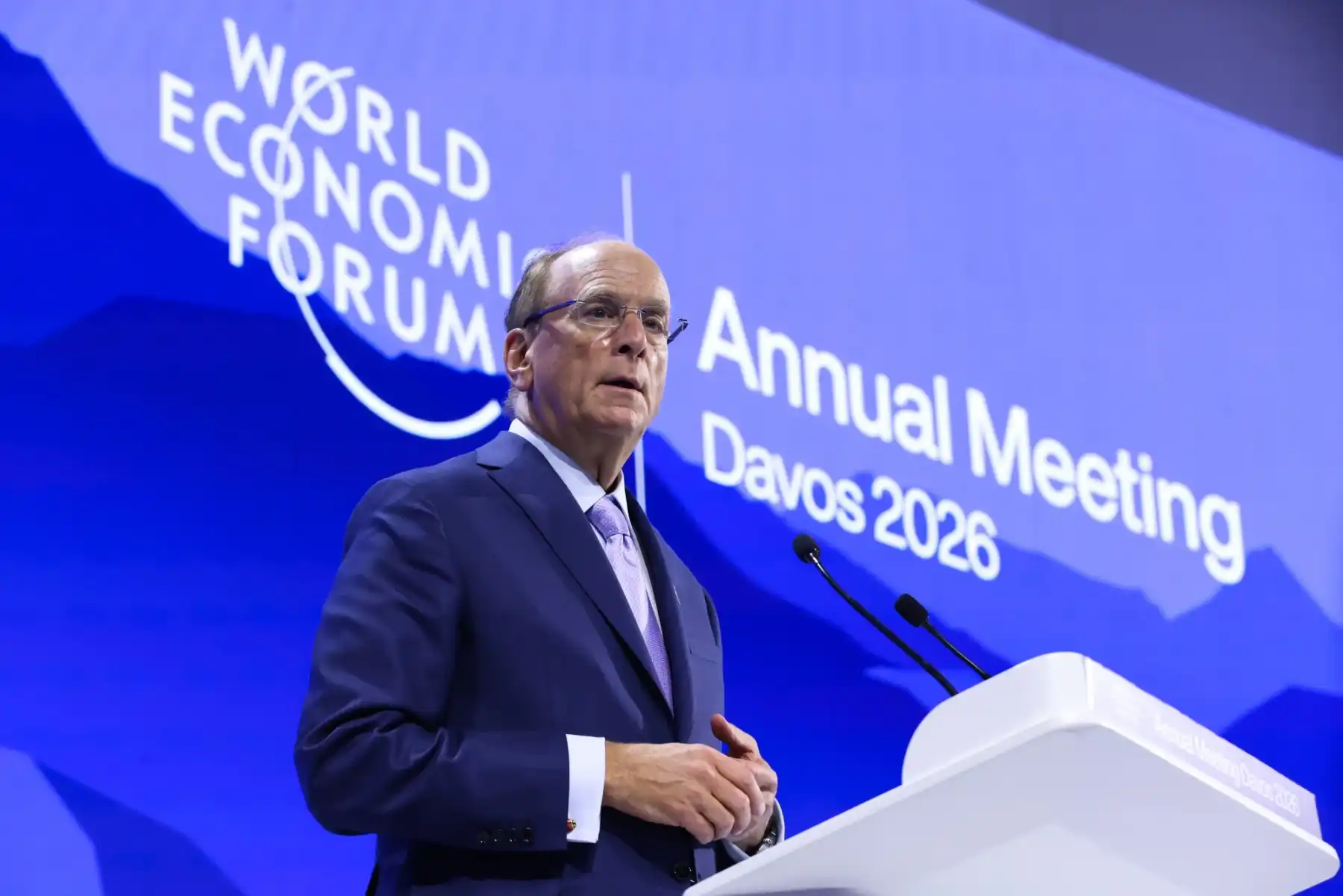
BlackRock CEO Larry Fink believes that tokenization is the future of the financial system, and the entire financial system should migrate to "a common blockchain" (Garrett Jin stated that this blockchain refers to Ethereum) as soon as possible to achieve seamless asset transfers. Tokenization will solve liquidity issues, reduce costs, and make asset transfers between money market funds more efficient. Crypto and tokenization have become themes driving the market, and BlackRock views them as institutional-grade infrastructure.

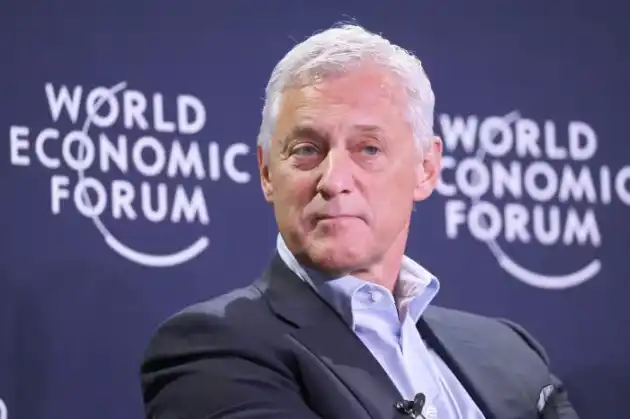
Standard Chartered Bank Group CEO Bill Winters stated that tokenization and stablecoins will bring progress in global financial delivery, including reducing transaction costs and improving cross-border payment efficiency. The integration of traditional banking and blockchain has become a reality, and stablecoins have become the first truly universal blockchain use case.

Other traditional financial giants participating in the main venue roundtable mostly expressed recognition of tokenization, digital assets, and programmable currency in reshaping financial capabilities but also believed that banks should collaborate with blockchain rather than oppose it.

Связанные с этим вопросы

QWhat were the main topics discussed by Web3 leaders at the 2026 Davos Annual Meeting?

AThe main topics included tokenization, stablecoins, the role of banks, Bitcoin's future, and the integration of AI with cryptocurrency payments. Key figures like CZ and Brian Armstrong emphasized the importance of blockchain infrastructure, regulatory compliance, and the transformative potential of Web3 technologies.

QWhat was CZ's (Changpeng Zhao) stance on traditional banks and blockchain technology?

ACZ argued that banks should embrace blockchain infrastructure to improve efficiency and reduce costs. He criticized the fractional reserve system as the root of liquidity crises and advocated for 100% reserve models like those used by crypto exchanges. He also highlighted his discussions with several governments on national asset tokenization.

QHow did Brian Armstrong respond to the French Central Bank Governor's criticism of stablecoins and Bitcoin?

ABrian Armstrong defended Bitcoin's decentralized nature as more independent and inflation-resistant than traditional currencies. He argued that users should have the right to earn interest on stablecoins, viewing it as a matter of national competitiveness. He also emphasized that stablecoins are fully backed by reserves, unlike bank deposits, and that tokenization can democratize investment access.

QWhat principles were outlined in the 'Davos Declaration 2026' signed by Web3 leaders?

AThe declaration emphasized inclusivity, decentralization, sustainability, accountability and trust, and long-term value creation. It called for ensuring that Web3 technologies serve human welfare, particularly benefiting developing countries and marginalized groups, while maintaining core values and avoiding centralization of power.

QHow did traditional financial leaders like Larry Fink and Bill Winters view the future of Web3 and tokenization?

ALarry Fink, CEO of BlackRock, stated that tokenization is the future of the financial system and should migrate to a common blockchain (likely Ethereum) for seamless asset transfers. Bill Winters, CEO of Standard Chartered, highlighted that tokenization and stablecoins would advance global finance by reducing costs and improving cross-border payment efficiency, with stablecoins being the first truly universal blockchain use case.

Похожее

Has Hook Summer Really Arrived? sato, Lo0p, FLOOD Ignite the New Narrative of Uniswap v4

"Hook Summer" Arrives? Sato, Lo0p, FLOOD Ignite Uniswap v4 Narrative Amidst a slight market recovery, attention within the Ethereum ecosystem has shifted to Meme coins built on Uniswap v4's Hook protocol. Following ASTEROID, tokens like sato, sat1, Lo0p, and FLOOD have become market focal points, with market caps ranging from millions to tens of millions, bringing concentrated liquidity to a narrative-dry market. Uniswap v4 Hooks are "plugin smart contracts" that allow developers to inject custom logic at key points in a liquidity pool's lifecycle (initialization, adding/removing liquidity, swaps, etc.), making the AMM programmable. Recent representative projects include: * **sato**: Market cap peaked over $38M; uses a v4 curve mechanism for minting/burning, locking ETH as reserve. * **sat1**: Market cap briefly exceeded $10M, positioning as an "optimized sato," but later declined significantly. * **Lo0p**: Market cap neared $6.6M; a "lending AMM protocol" allowing users to borrow ETH against deposited LO0P tokens without immediate selling pressure. * **FLOOD**: Market cap approached $6M; channels trading reserves into Aave v3 to generate yield, which is retained in the pool. The emergence of these Hook-based tokens could drive long-term growth for the Uniswap ecosystem by attracting users and liquidity to v4 pools. Combined with Uniswap's activated fee switch (partially used to burn UNI), the long-term outlook for UNI appears positive. However, short-term UNI price appreciation is not directly guaranteed. Factors include the sustainability and lifecycle of these new tokens, their price volatility, overall market conditions, and regulatory pressures. Currently, Uniswap v4's TVL ($595M) lags behind v3 and v2, indicating Hook adoption still requires time to mature. In summary, the Hook ecosystem serves as "long-term nourishment" for UNI, but acts more as a "catalyst" than a direct "booster" in the short term. Note: These are early-stage experimental tokens and may carry unknown risks.

marsbit24 мин. назад

Has Hook Summer Really Arrived? sato, Lo0p, FLOOD Ignite the New Narrative of Uniswap v4

marsbit24 мин. назад

Has Hook Summer Truly Arrived? sato, Lo0p, FLOOD Ignite the New Uniswap v4 Narrative

With the broader market showing signs of recovery, a new wave of interest has emerged around Ethereum-based meme coins. Following ASTEROID, tokens like sato, sat1, Lo0p, and FLOOD, built upon the Uniswap v4 Hook protocol, are capturing market attention. Their market capitalizations range from millions to tens of millions of dollars, injecting much-needed focused liquidity into a market lacking narratives. This article explores whether this trend signifies an incoming "Hook Summer" and its potential impact on UNI's price. Hooks are essentially plug-in smart contracts for Uniswap v4 liquidity pools, allowing developers to inject custom logic at key points in a pool's lifecycle (like initialization, adding/removing liquidity, swaps). This transforms the AMM into programmable building blocks. Key highlighted projects include: * **sato**: Peaked over $38M market cap. It utilizes a v4 curve for minting/burning; buying locks ETH as reserve to mint new tokens, while selling redeems ETH from the reserve and burns tokens. * **sat1**: Market cap briefly exceeded $10M, promoted as an "optimized sato," but later declined significantly. * **Lo0p**: Reached nearly $6.6M. It's a lending AMM protocol where buying LO0P tokens locks them as collateral, allowing users to borrow ETH from the pool reserve at 40% LTV, aiming to improve capital efficiency for idle ETH in LPs. * **FLOOD**: Peaked near $6M. Its mechanism directs asset reserves from buys into Aave v3 to generate yield, with fees and interest retained in the pool to potentially influence the token's price long-term. In the long term, the development of the Hook ecosystem can attract users and liquidity to Uniswap v4, benefiting UNI's fundamentals—especially combined with the recent activation of the protocol fee switch, where a portion of fees is used to burn UNI. However, in the short term, these Hook-based tokens are unlikely to directly drive significant UNI price appreciation. Their impact is moderated by factors like token sustainability, price volatility, and broader market and regulatory conditions. Currently, Uniswap v4's TVL ($595M) still trails behind v2 and v3, indicating adoption and growth will take time. The article concludes that while the Hook ecosystem provides long-term "nourishment" for UNI, its short-term role is more of a "catalyst" than a "booster." Readers are cautioned that these are early-stage experimental tokens and may carry unknown risks.

Odaily星球日报36 мин. назад

Has Hook Summer Truly Arrived? sato, Lo0p, FLOOD Ignite the New Uniswap v4 Narrative

Odaily星球日报36 мин. назад

Interview with Michael Saylor: I Did Say I Would Sell Bitcoin, But Never a Net Sale

Interview with Michael Saylor: I Said We'd Sell Bitcoin, But Never Be a Net Seller In a recent podcast, MicroStrategy Executive Chairman Michael Saylor clarified the company's stance on potentially selling Bitcoin. Following MicroStrategy's earnings call statement about being prepared to sell BTC to fund dividends for its STRC (Strategic) credit product, Saylor emphasized the distinction between selling and being a "net seller." Saylor explained the core business model: MicroStrategy sells credit instruments like STRC and uses the proceeds to buy Bitcoin, which is viewed as "digital capital" expected to appreciate around 30-40% annually. A portion of these capital gains can then be used to pay the dividends on the credit products. He stressed that even if the company sells some Bitcoin for dividends, it simultaneously buys much more with new credit issuance. For example, after raising $3.2 billion from STRC sales in April, the dividend obligation was only $80-90 million, making the company a net buyer. The clarification aims to counter market narratives questioning the value of Bitcoin on MicroStrategy's balance sheet if it were never sold, and to dismiss claims of a "Ponzi scheme." Saylor reiterated his personal philosophy for investors: "Don't be a net seller of bitcoin" and ensure your Bitcoin holdings increase each year. Saylor also discussed Bitcoin's role as the foundation for "digital credit," noting that STRC has become the largest and most liquid preferred stock issue in the U.S., offering high risk-adjusted returns (Sharpe ratio). He highlighted Bitcoin's deep liquidity, stating that even large purchases by MicroStrategy do not move the market significantly, which is driven by macro factors, geopolitical tensions, and capital flows from ETFs and credit products. Finally, Saylor reflected on his early inspiration from sci-fi books, which motivated his path to MIT, and maintained his fundamental thesis on Bitcoin remains unchanged: it is superior digital capital enabling superior digital credit.

链捕手40 мин. назад

Interview with Michael Saylor: I Did Say I Would Sell Bitcoin, But Never a Net Sale

链捕手40 мин. назад

Торговля

Спот
Фьючерсы
活动图片