Source: RootData
Recently, RootData initiated a survey questionnaire focusing on cryptocurrency exchange listing decisions, collecting a total of 313 valid responses. Participants included Listing BD personnel, researchers, and listing committee members, among others. The survey results are now compiled into this research report for reference.
Respondent Profile: Covering Frontline Practitioners and Decision-Makers in Listing
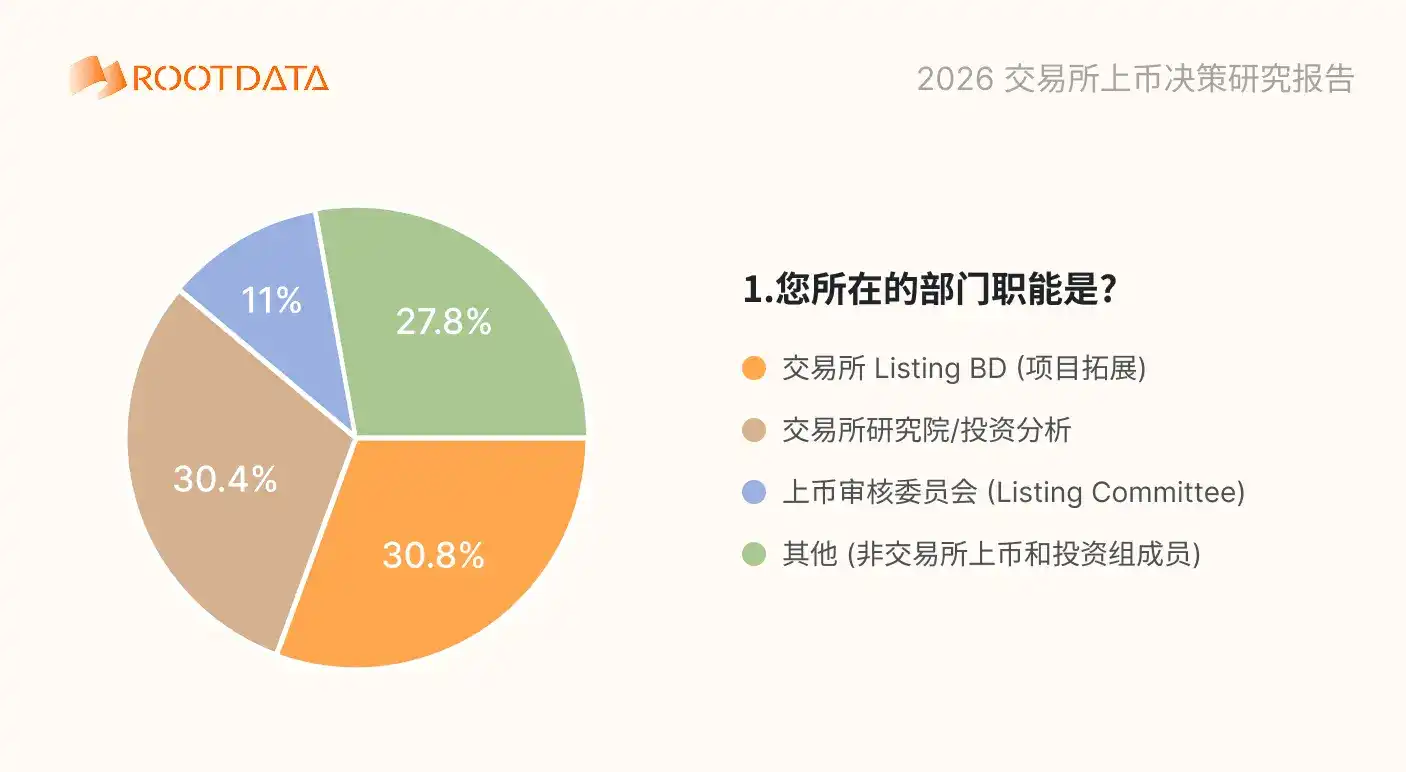
Over 69% of respondents are involved in or directly decision-makers for Listing work. Survey participants were primarily from exchange Listing BD and research institute/investment analysis roles. They are the "value discovery" and "access control" departments of exchanges, and decision-makers face immense information processing pressure.
Decision-Making Pain Points: Fragmented Data and Delayed Updates
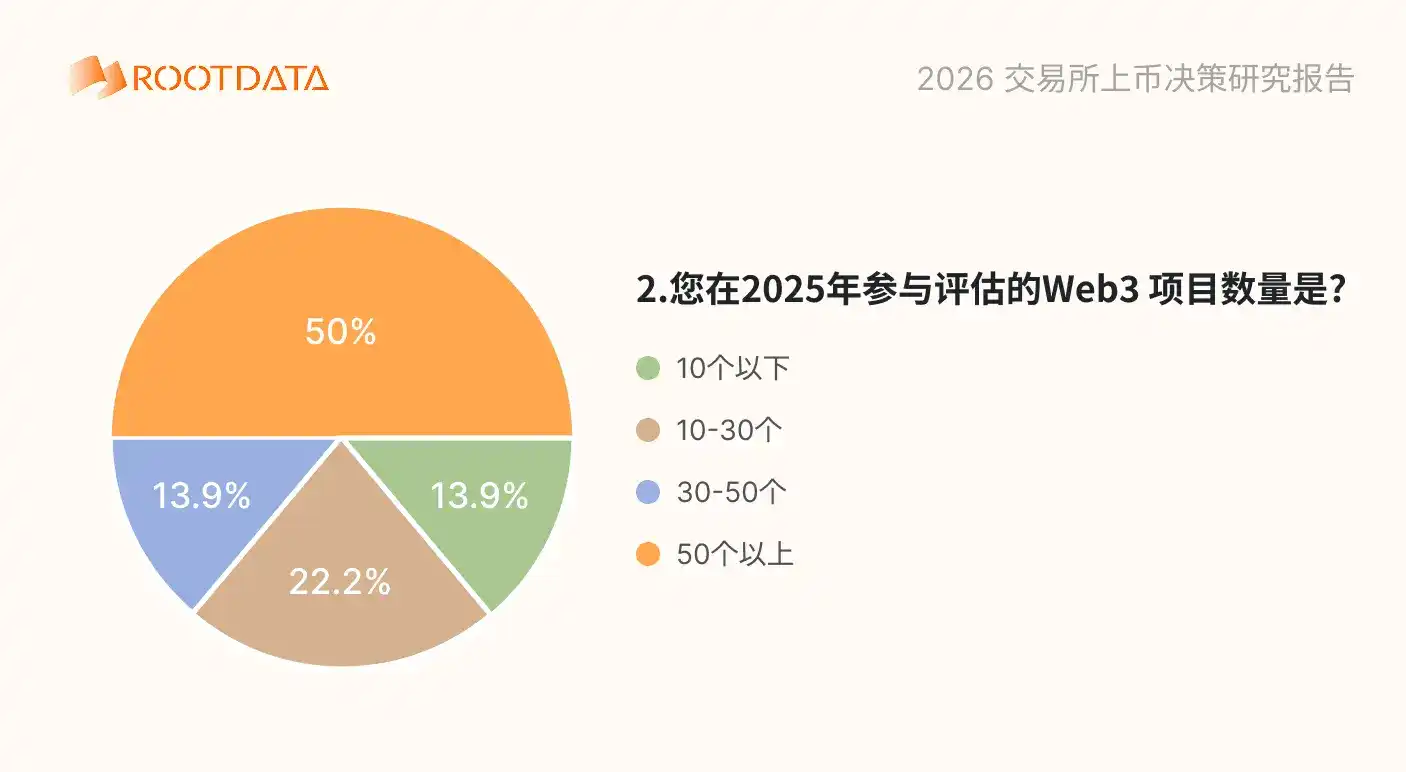
Approximately 50% of respondents evaluate over 50 projects annually. Decision-makers are in a state of severe "information overload." Among the vast number of projects, those that can provide structured and transparent data significantly reduce the cognitive cost for decision-makers. This also indicates that "transparency" has become one of the important metrics for projects to stand out within the extremely short evaluation window.
Distribution of Core Work Responsibilities
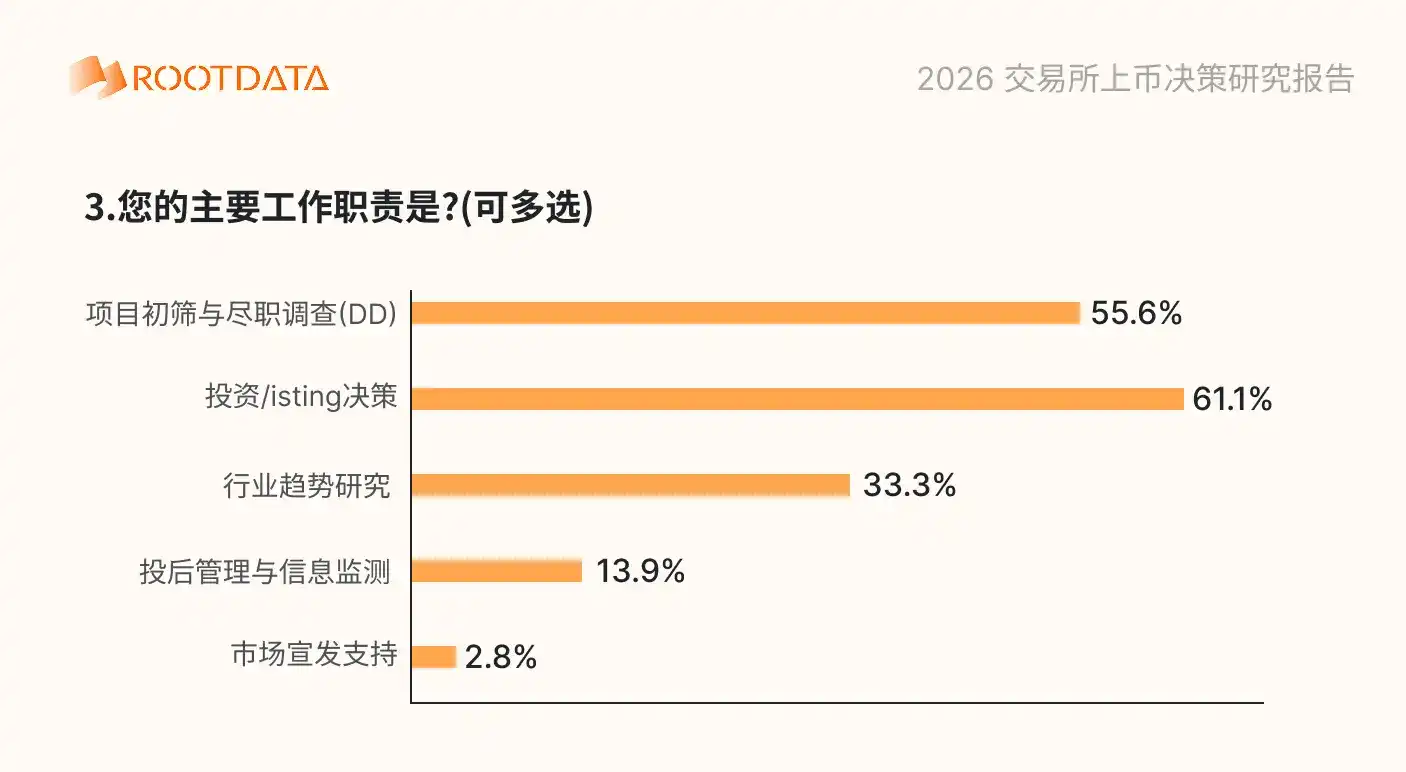
Due diligence and decision-making are highly overlapping functions. This means that data platforms are no longer just auxiliary tools but are integrated into the decision-making chain.
The "Stumbling Block" to Decision-Making Efficiency

"Trust cost" is the most expensive hidden cost for exchanges. Uncertainty in data can cause the decision-making process to repeatedly backtrack. As the compliance trend further intensifies, the accuracy and effectiveness of asset information disclosure will become important factors affecting the exchange listing cycle.
The "Hidden Penalty" of Data Delay
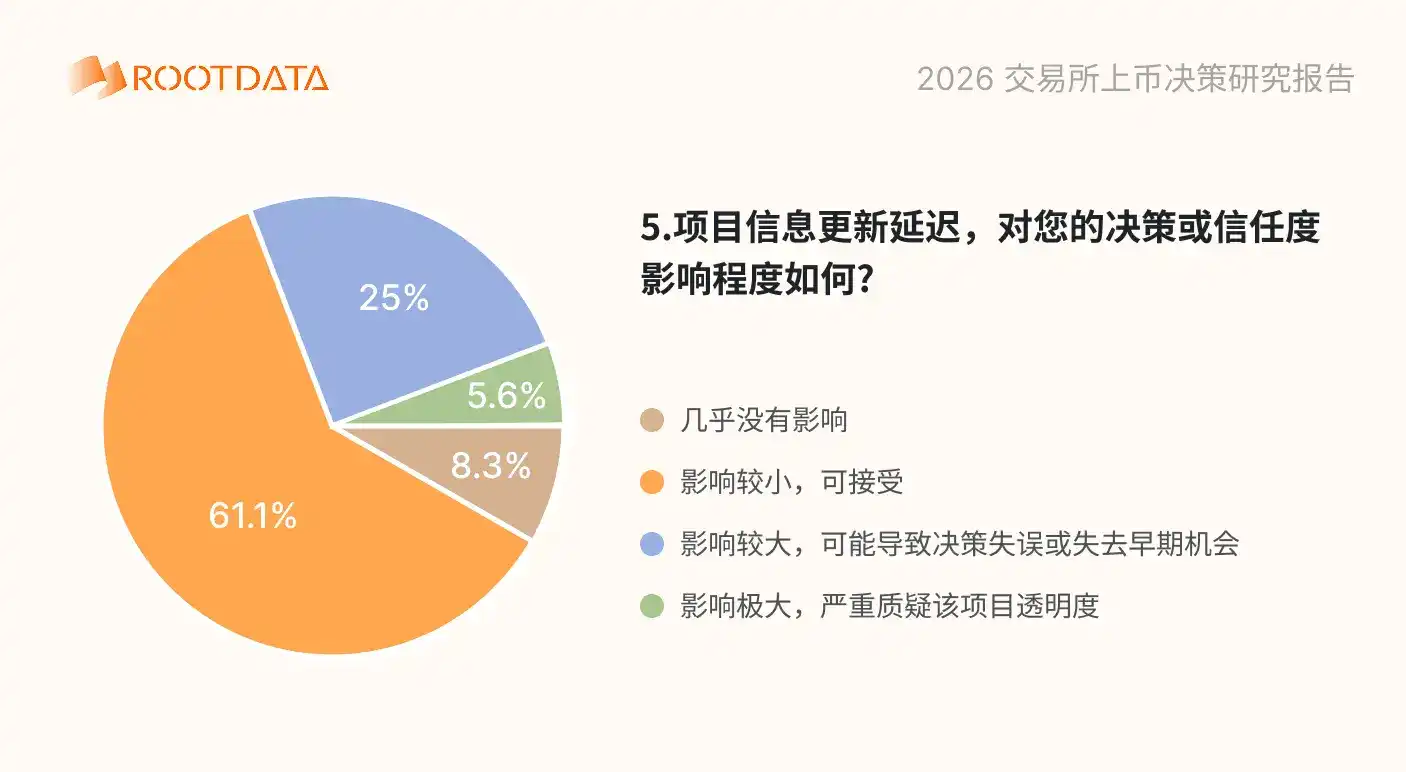
Over 30% of respondents believe delays have a significant or极大 impact, potentially leading to decision-making errors, missed opportunities, or even质疑 project transparency. Even though 60% of respondents表面 "can accept it," delayed information updates from projects may result in a hidden penalty during the Listing evaluation.
Handling of Outdated Information
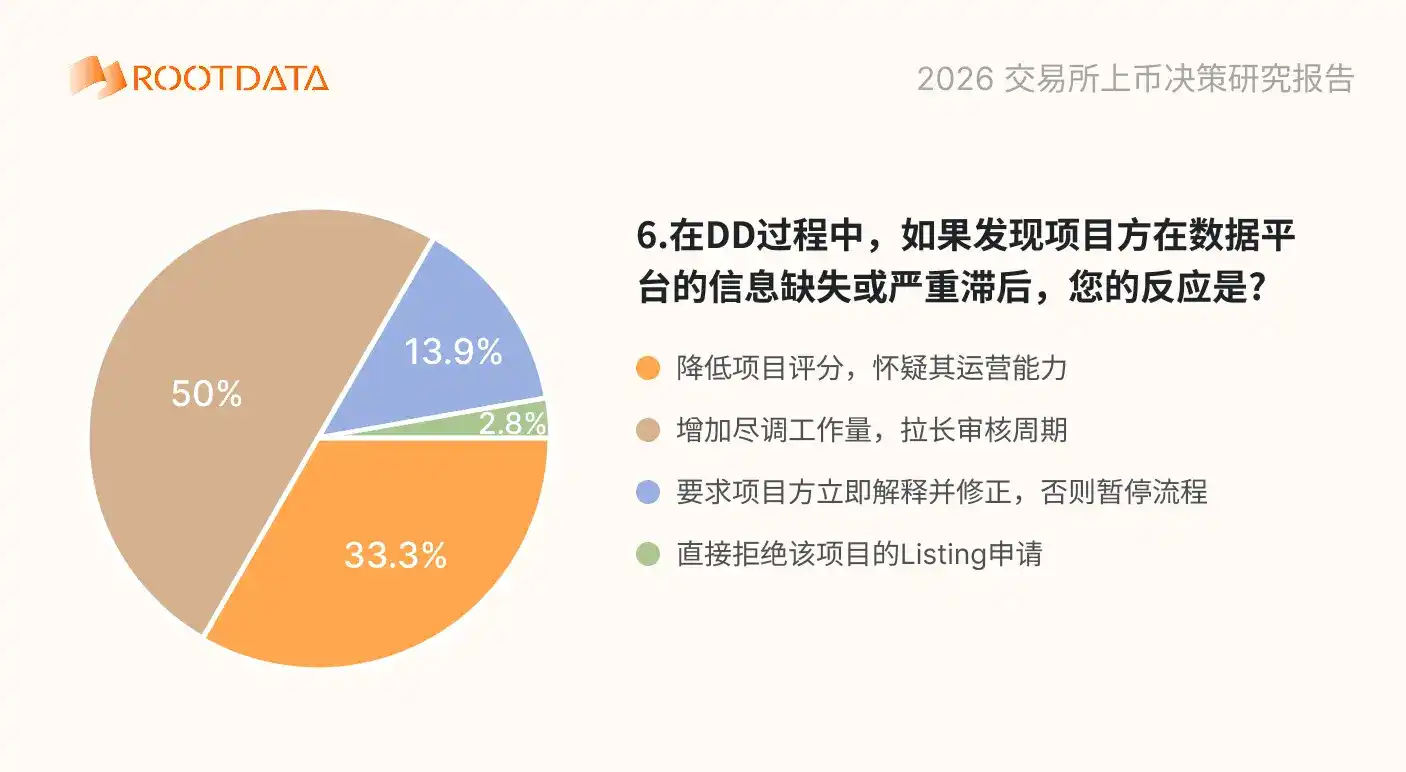
50% of respondents indicated that if project data is not transparent, it will trigger the exchange's "defensive due diligence," prolonging the review time. 16.7% of respondents explicitly stated they would stop the review process or even directly reject the project's Listing application.
The "Required Course" for Listing Review
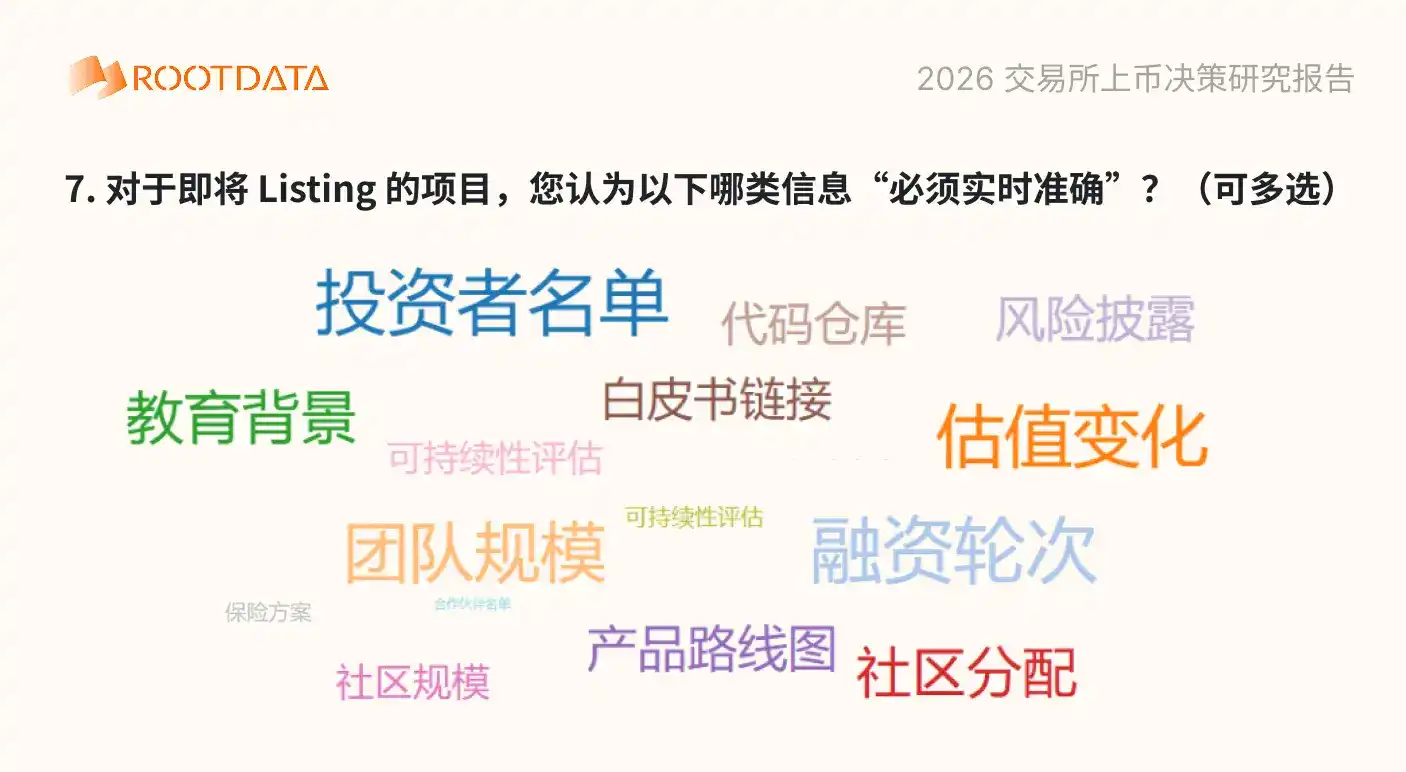
The historical track record of institutional investors, valuation, team, product roadmap, and other asset-related "essential dimensions" constitute the credit cornerstone of Web3 projects. In reality, this information is also very easy to falsify. Therefore, over half of the respondents indicated a strong need for third-party data platforms to help them cross-verify information.
Preferred Commonly Used Data Platforms
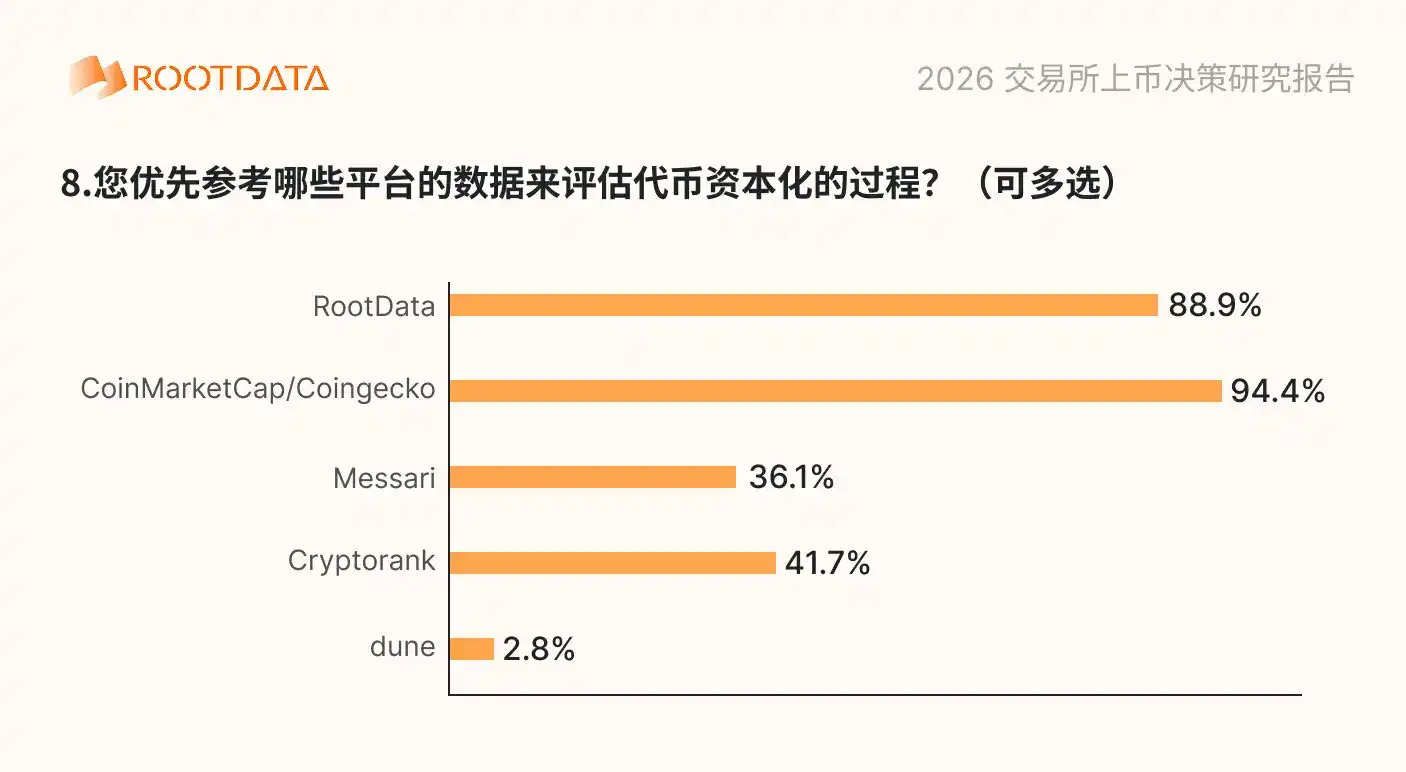
88.9% of respondents stated they choose to reference RootData's data, making it a "desktop essential" tool for exchange Listing teams. This is particularly evident for projects with lower token capitalization (primarily those with their first TGE or not yet listed on major global crypto exchanges). This high penetration rate signifies that the data structure and quality control established by RootData for Web3 projects are becoming an industry standard. For projects with very high token capitalization, 94.4% of respondents会选择 Coingecko or Coinmarketcap platforms for data cross-verification.
Efficiency Boost from Detailed Project Information
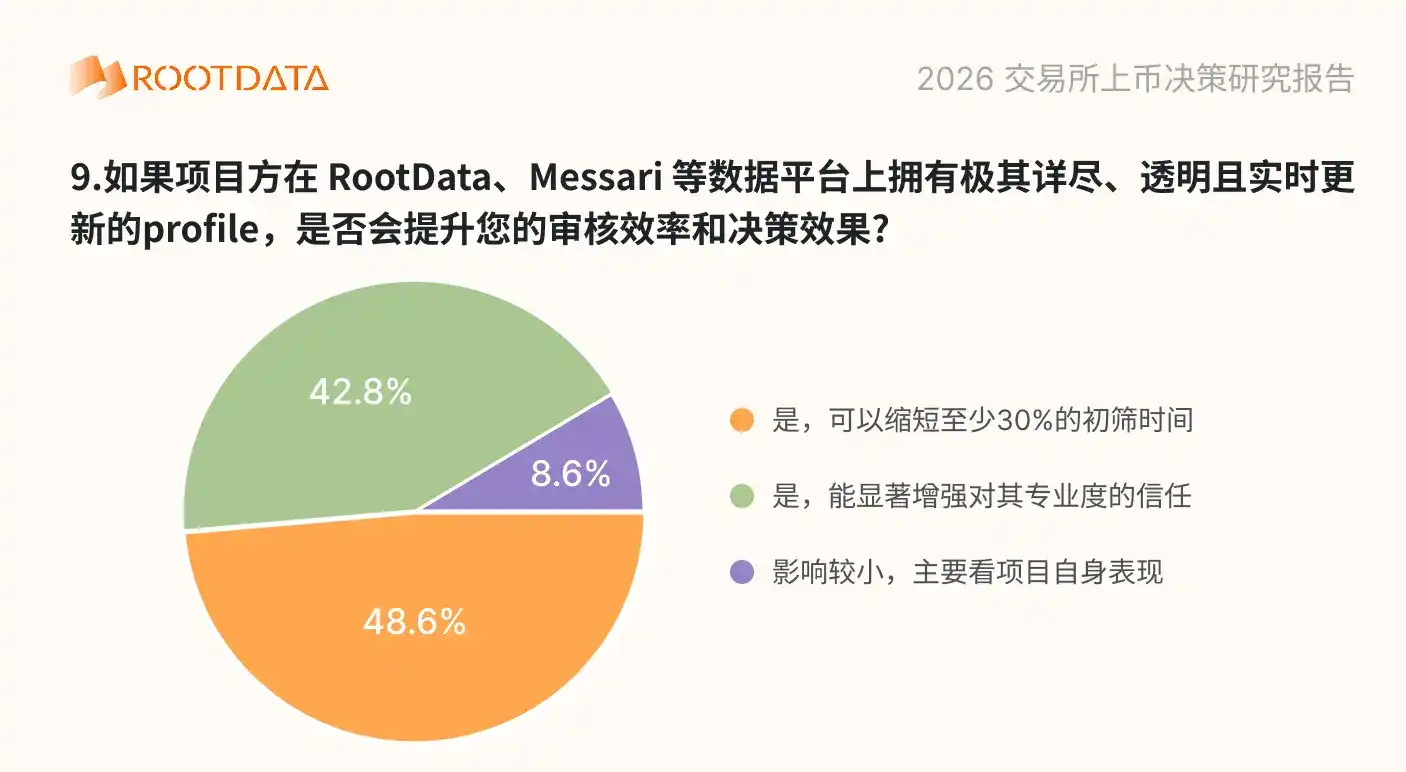
91.4% of respondents explicitly stated that a project being listed on authoritative third-party data platforms like RootData and Crunchbase with detailed information will significantly improve Listing efficiency and好感度,至少可以带来 30% 的审核效率的提升 (at least bringing a 30% improvement in review efficiency).
The Role of Data Platforms in Web3 Development

Only 2.7% of respondents believe projects do not need to focus on data transparency. Listing, being one of the most mysterious links in the industry, has over 80.6% of users agreeing that data platforms are very important for their Listing decisions. This further indicates that whether a project values data information disclosure will directly affect the effectiveness and efficiency of its capitalization.
Summary
The survey results reflect that over half of the professionals in exchange listing departments regard project information transparency as a crucial part of the listing review process, especially information regarding institutional investors, valuation, team, and product roadmap. Sufficient information transparency on third-party data platforms can effectively speed up the review progress (by over 30%), while the review cycle for projects with low transparency will be prolonged.
In the current state of industry development, a large number of projects are陷入 "launching the token only for it to break issue price immediately"窘境, and users have lost trust in the vast majority of crypto projects. The reasons include both the projects' own lack of highlights and reliable business models, as well as many projects being in an information-opaque "black box" state. The disclosure status of a project's core information has become one of the core factors affecting its capitalization progress and effectiveness.