Автор: Kyle Saunders
Компиляция: Chopper, Foresight News
Большинство исследований о криптовалютах вращаются вокруг простого вопроса: кто ими владеет? А кто нет?
Безусловно, это разумная отправная точка для исследования. Владение — это наблюдаемое, измеримое фактическое поведение. Но для рынка с капитализацией в триллионы долларов это, возможно, не самый главный вопрос.
Если вы следите за развитием рынка, регуляторной политикой, политическим дискурсом или будущим криптоактивов, есть вопрос, который может иметь большее практическое значение: кто рассматривает возможность приобретения криптовалюты?
Потому что принятие и распространение активов никогда не является бинарным выбором «или-или», а представляет собой постепенный процесс.
Если изучать только конечную стадию этого процесса, вы упустите всю цепочку преобразований.
Отказ → Рассмотрение → Владение: три этапа принятия криптовалюты
В недавно опубликованной статье, над которой я работал вместе с Эрин Фитц, мы подошли к принятию криптовалюты не как к черно-белому результату, а определили его как постепенный процесс.
В период с конца 2024 по 2025 год мы провели три независимых репрезентативных опроса среди взрослого населения США. На основе результатов мы разделили респондентов на три группы:
- Не владеют и не планируют владеть криптовалютой
- Не владеют, но рассматривают возможность владения криптовалютой
- В настоящее время владеют криптовалютой
Первый вывод, который мы получили, прост, но ключевой: примерно каждый пятый американец не владеет криптовалютой, но рассматривает ее приобретение.
Эта группа ни в коем случае не является незначительным меньшинством, статистической погрешностью или «обреченной на владение» потенциальной группой. Это сегмент с уникальными психологическими характеристиками и моделями поведения, и это свойство делает их чрезвычайно важными.
Почему группа «потенциальных владельцев» так важна?
Если ограничить исследовательскую перспективу бинарным сравнением «владельцев» и «не владельцев», это равносильно предположению, что все, кто не на рынке, представляют собой единую однородную массу.
Но реальный поведенческий выбор никогда не бывает таким.
Классическая теория социальной психологии — теория запланированного поведения — утверждает, что поведение человека развивается из серии предшествующих стадий: убеждения, attitudes, воспринимаемый контроль, поведенческие намерения. Сначала возникает «рассмотрение», затем «намерение действовать»; сначала «намерение действовать», затем предпринимаются реальные действия. И каждая стадия не обязательно переходит в следующую.
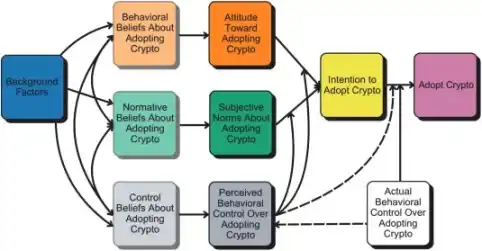
Другими словами, все владельцы когда-то были потенциальными владельцами; но не все потенциальные владельцы в конечном итоге становятся фактическими владельцами.
Когда мы рассматриваем вовлеченность людей в криптовалюты как упорядоченный, постепенный процесс, а не как бинарную характеристику, появляется интересный вывод: факторы, влияющие на «рассмотрение владения», не полностью совпадают с факторами, побуждающими к «фактическому владению».
В этой цепи преобразований существует механизм многоуровневого отбора.
Какие факторы влияют на «рассмотрение владения»? Какие способствуют «фактическому владению»?
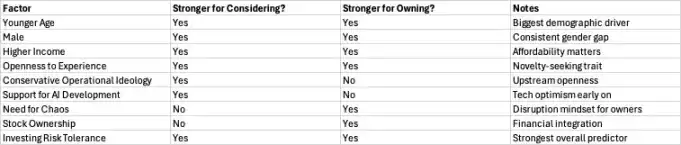
Некоторые распространенные влияющие факторы дали ожидаемые результаты: молодые люди, мужчины, те, кто более открыт к новому опыту, и те, кто более терпим к финансовым рискам, с большей вероятностью преодолевают оба барьера: «отказ → рассмотрение» и «рассмотрение → владение».
Но две группы факторов с заметно различающимся влиянием заслуживают особого внимания.
Факторы, более тесно связанные с «рассмотрением владения»:
- Более консервативная операционная идеология
- Поддержка разработки технологий искусственного интеллекта
Действие этих факторов проявляется на ранних стадиях процесса принятия криптовалюты: они объясняют, почему люди могут быть открыты для криптовалют, но не обязательно побуждают их сделать последний шаг к «фактическому владению».
Факторы, более тесно связанные с «фактическим владением»:
- Владение акциями
- Потребность в хаосе (Need for Chaos)
Толерантность к риску оказалась фактором с наиболее значительным общим влиянием: от самого низкого до самого высокого уровня вероятность выбора респондентами менялась drastically: вероятность отказа от владения криптовалютой снижалась на 32 процентных пункта, а вероятность фактического владения криптовалютой увеличивалась на 27 процентных пунктов.
Краткое изложение ключевых различий:
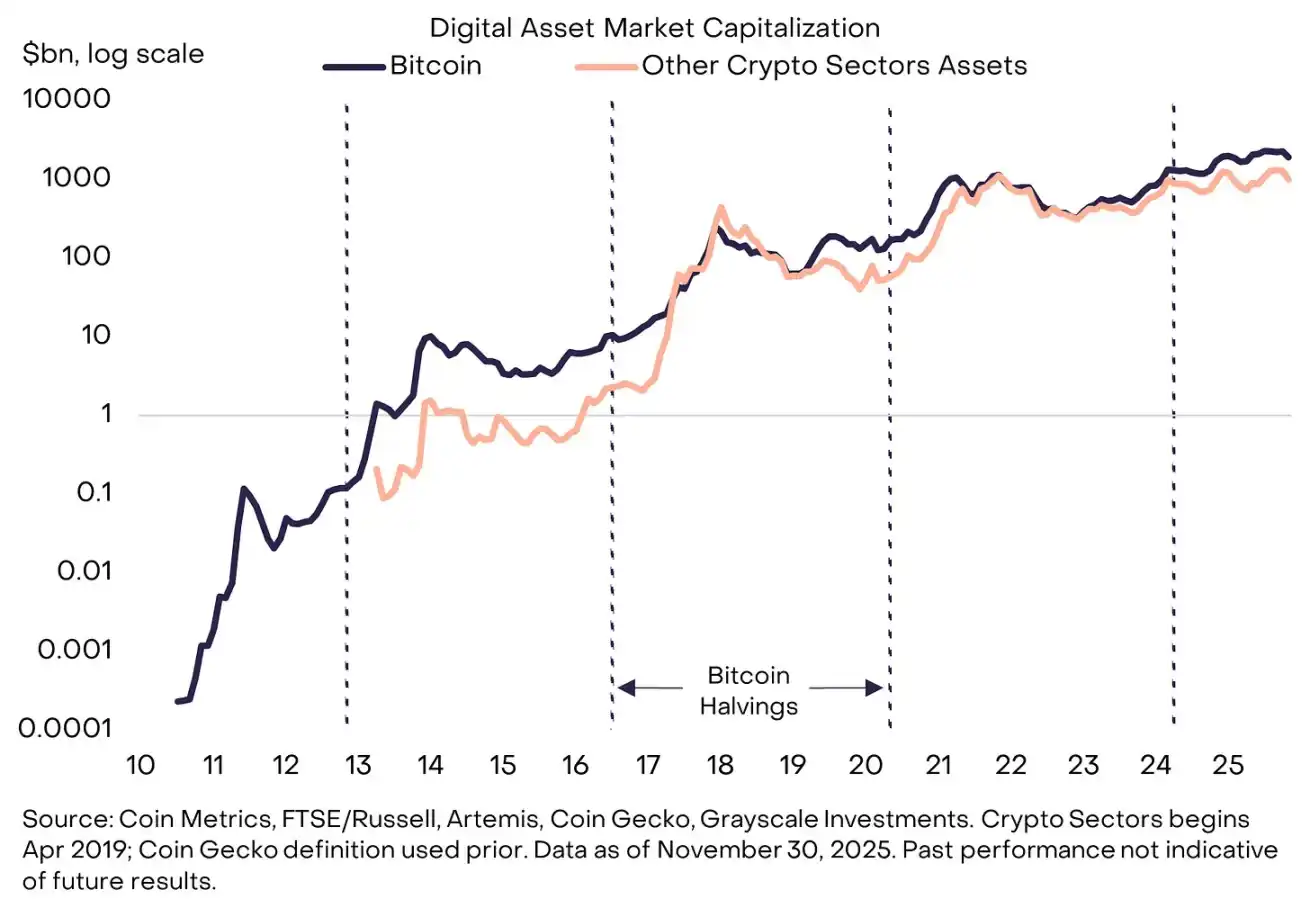
Наши данные опроса также хорошо согласуются с реальной структурой криптовалютного рынка: Bitcoin доминирует как среди «потенциальных», так и среди «фактических» владельцев (Ethereum — на втором месте), и многие готовы иметь дело с несколькими криптовалютами. Сам рынок подтверждает этот вывод.
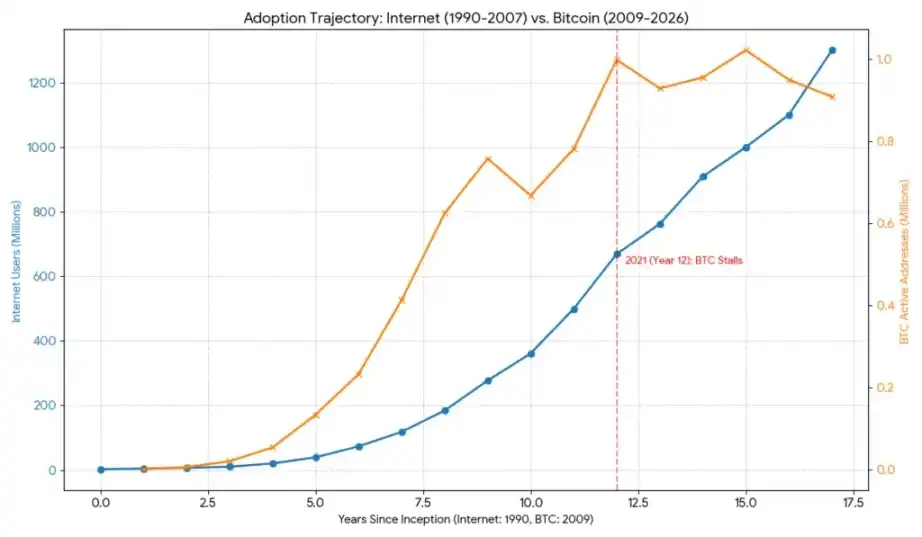
Чтобы понять, как эта структура вписывается в более широкую кривую диффузии инноваций (и почему стадия «потенциального владельца» определит, остановится ли развитие криптовалют или достигнет масштаба), можно сравнить траекторию распространения Bitcoin с ранним интернетом. Данные опроса показывают, что к 2026 году уровень принятия технологий искусственного интеллекта в США достиг примерно 55%.
Кроме того, эта диаграмма из статьи показывает, как принятие криптовалют соответствует кривой диффузии инноваций Роджерса:
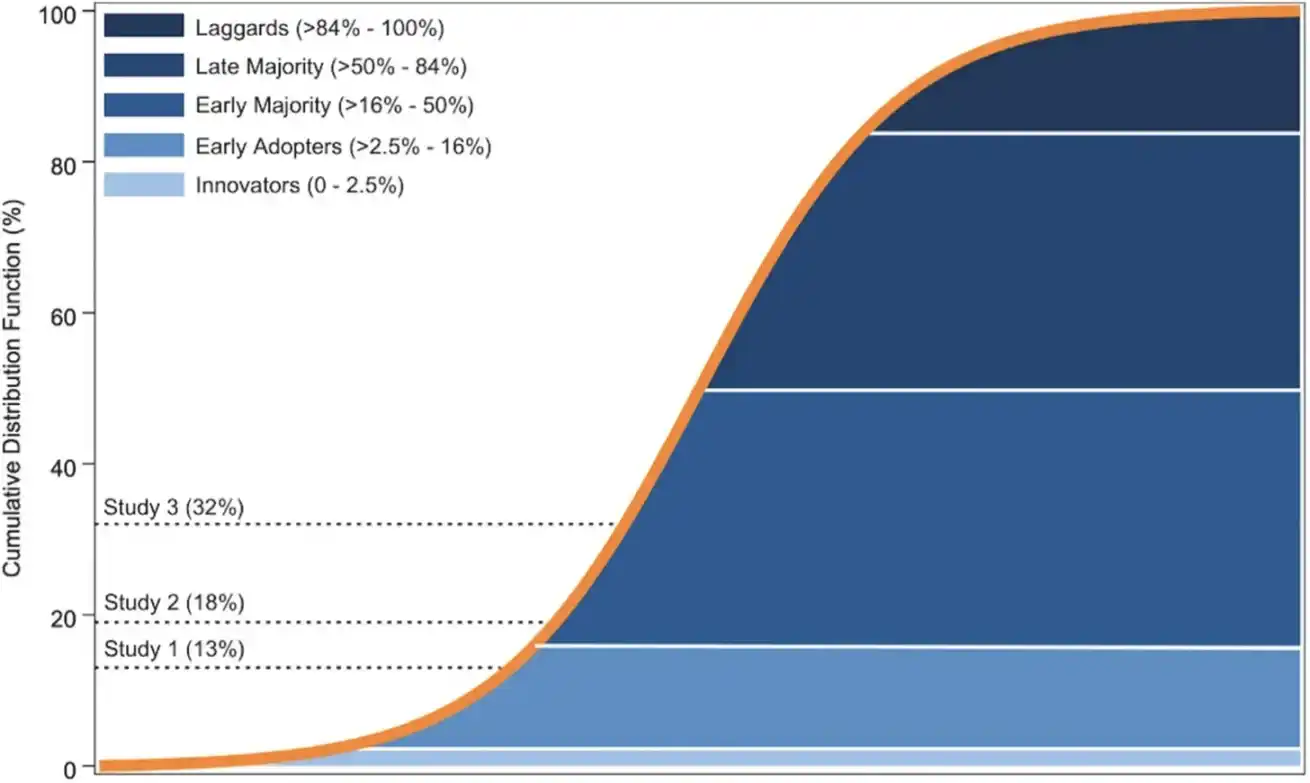
Это адаптированная диаграмма кривой диффузии инноваций Роджерса 2003 года, оранжевая сплошная линия — S-образная кривая (кумулятивная функция распределения, слева от вертикальной оси — шкала). Синяя область под кривой представляет вероятностное распределение пяти групп adopters в модели Роджерса, разделенных на основе стандартных отклонений от среднего в нормальном распределении. В нормальном распределении эти области представляют вероятностную долю каждой группы в общей совокупности: новаторы (2.5%, от 0 до среднее минус 2 стандартных отклонения), ранние последователи (13.5%, от среднее минус 2 ст. откл. до среднее минус 1 ст. откл.), раннее большинство (34%, от среднее минус 1 ст. откл. до среднее), позднее большинство (34%, от среднее до среднее плюс 1 ст. откл.), отстающие (16%, от среднее плюс 1 ст. откл. до 100%). Черные пунктирные линии показывают заявленный уровень владения криптовалютой респондентами в наших трех исследованиях (Исследование 1: 13%, Исследование 2: 18%, Исследование 3: 32%).
Значение этого исследования выходит за рамки криптовалютной сферы
Эти результаты можно узко интерпретировать как сегментацию потребителей, но они имеют более широкое значение.
Для роста рынка
Пространство для расширения криптовалютного рынка заключается не в превращении убежденных «отказников» во владельцев, а в выяснении того, что мешает потенциальным владельцам стать фактическими владельцами. Это препятствие может быть связано не с идеологией, а с восприятием людьми контроля над своими действиями, опасениями по поводу волатильности рынка или проблемами ликвидности активов.
Для регуляторной политики
Если политики рассматривают только владельцев криптовалют как единственную группу, обладающую политическим влиянием, они неверно оценивают текущее состояние рынка. Развитие политики в сфере цифровых активов, вероятно, будет зависеть от этих открытых, но еще не определившихся потенциальных владельцев. Их предпочтения, профиль риска, доверие к институтам имеют ключевое влияние, особенно на фоне формирования нормативной базы для криптовалют к 2026 году.
Для общественного дискурса
Онлайн-дискуссии часто поляризуются: либо за криптовалюты, либо против. Но наши данные опроса показывают, что в реальности существует большая промежуточная группа с уникальными психологическими характеристиками. Исторический опыт показывает, что именно эта промежуточная группа, а не ранние последователи, определяет, достигнет ли innovation широкого распространения, остановится или вызовет backlash.
Принятие и распространение — это по своей природе постепенный процесс
Ключевой вывод этого исследования касается не только сферы криптовалют, но и смены методологии и перспективы познания.
Когда мы сводим сложное поведение к бинарному выбору «или-или», мы рискуем混淆нить закономерности разных стадий. Факторы, которые заставляют людей быть открытыми к чему-то новому, не обязательно побуждают их к действию.
Это применимо не только к криптовалютам, но и к принятию искусственного интеллекта, политическому участию, доверию к институтам и многим другим поведенческим выборам, которые я рассматривал в этой колонке.
В упускаемой промежуточной стадии часто скрываются самые интересные поведенческие закономерности.
Принятие и распространение криптовалют никогда не было просто чертой характера или идеологическим сигналом, а является постепенным behavioral процессом.
Если игнорировать эту промежуточную стадию «потенциального владения», вы одновременно misjudge истинное направление рынка и лежащую в его основе политическую и социальную логику.