FDIC Compensation and USDC Crypto Market Recovery!

HuobiОпубликовано 2023-03-21Обновлено 2023-03-21

Введение

The recent bankruptcy of Silicon Valley Bank (SVB) has sent ripples through the financial industry and the crypto market. As the second-largest bank failure in American history, it has caused widespread concern among investors and users alike. However, the Federal Deposit Insurance Corporation (FDIC) has stepped in to provide compensation and resolution for SVB, fully protecting its users.

The recent bankruptcy of Silicon Valley Bank (SVB) has sent ripples through the financial industry and the crypto market. As the second-largest bank failure in American history, it has caused widespread concern among investors and users alike. However, the Federal Deposit Insurance Corporation (FDIC) has stepped in to provide compensation and resolution for SVB, fully protecting its users. This intervention has helped restore confidence in the crypto market and led to a recovery in the prices of popular tokens such as BTC and ETH. This article explores the impact of the FDIC compensation on the crypto market and how it has contributed to its recovery.

Bankruptcy Overview:

“”

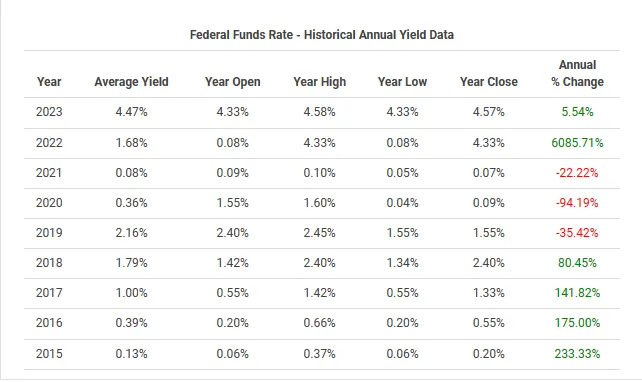
In the last week, two major banks, Silvergate Bank and Silicon Valley Bank (SVB), filed for bankruptcy, marking the second-largest bank failure in American history and the biggest since the 2008 financial crisis. While some people may attribute this to the chaos in the crypto market, the reality is that the main cause is due to the traditional banks’ asset allocation and risk management, coupled with the recent increase in interest rates by the US Federal Reserve. The US Federal Reserve has been gradually increasing rates since 2015. As of March 2023, the federal funds rate stands at 2.25%, compared to 0.25% in 2015.
Crypto Market Impact:

“”

The bankruptcy of SVB has had a significant impact on the crypto market, which started with a popular stablecoin called USDC de-pegging from its $1 USD mark. This popular stablecoin was a significant asset in the crypto ecosystem with a market cap of $39,474,245,476, which ranked this digital asset in the top 5 within Coingecko rankings. The USDC price dropped from $1 to $0.89 as its mother company, Circle, has an investment of $3.3 billion in SVB. BTC also dropped below $20,000, and all popular tokens suffered a significant drop in price.

Solution For Bankruptcy:

“”

The FDIC has recently stepped in to complete the resolution of Silicon Valley Bank, fully protecting its users deposits. Banks usually stand at a cap of $250,000 for each account, meaning that all account above this account level would be in a loss of assets. However, starting March 13, because of FDIC, depositors will have access to all their money even if it’s above the limit of $250,000, which most of the account were above this mark due to the amount of VC’s and big tech business with account in SVC. Next, HSBC offered to acquire Silicon Valley Bank UK for £1. This offer was accepted and has allowed accounts even more security in knowing that funds are safe with this new bank owner. Additionally, a Canadian banking regulator has taken temporary control of Silicon Valley Bank’s unit in the country.

“”

Crypto Market Recovery:

“”

With the FDIC and US Federal Reserve stepping in to cover the losses of SVB, users realize that the bankruptcy was not caused by the crypto market and regained confidence in the cryptocurrency industry. Also, Circle who is the company which owns and executes the USDC stablecoin was assured that all funds in SVB bank would be accessible to the company. The USDC has almost regained it’s dollar peg to bring the market of USDC back almost in line to what it was before SVB had issues within it’s ecosystem. To add, BTC and ETH both increased by 9%+ as a result.

“”

Conclusion:

“”

The FDIC compensation and resolution of Silicon Valley Bank (SVB) have had a significant impact on the crypto market, with the compensation helping to restore confidence among investors and users alike. Furthermore, news of “interest rates may be halted or decrease due to issues with traditional banks” has also contributed to the market’s recovery. This news has caused many investors to shift their focus to alternative investment options, such as cryptocurrencies. Another factor contributing to the market’s recovery could be the increased mainstream adoption of cryptocurrencies, with more companies and institutions recognizing the potential of this emerging asset class. Overall, the three factors of FDIC compensation, the news of potential interest rate changes, and increased adoption of cryptocurrencies, have all played a role in the recent recovery of the crypto market.


Похожее

Podcast Notes: Hyperliquid Has Become the Top Interest Point for Traditional Hedge Funds

Empire Podcast hosts Jason Yanowitz and Santiago Santos discuss the surging institutional interest in Hyperliquid, a decentralized perpetual exchange, marking the highest level of engagement from traditional hedge fund managers since Paul Tudor Jones endorsed Bitcoin in 2020. The primary driver is the demand for weekend trading of commodities like oil, especially during geopolitical tensions such as the Iran conflict, as Hyperliquid provides the only active price discovery venue when traditional markets are closed. Trade XYZ, a front-end on Hyperliquid, has seen significant growth, with weekend oil price predictions having a median error of only 50 basis points. Santos predicts commodity trading volume on Hyperliquid will surpass Bitcoin within the year and that its market cap could rise from $25 billion to $100 billion. Other key points include Kraken raising $200 million at a reduced valuation of $13.3 billion, and the SEC clarifying that self-custodied DeFi frontends like MetaMask are not subject to broker-dealer rules, resolving a major regulatory uncertainty. The hosts also note the strong correlation between crypto and macro markets, with the S&P 500 posting one of its best 10-day rallies since 1950. They highlight MicroStrategy's continued Bitcoin acquisitions and the potential of real-world asset (RWA) tokenization as a key trend. The discussion concludes with skepticism towards many L2 projects, predicting a wave of protocols truly going to zero as capital concentrates in proven assets like Bitcoin and Hyperliquid.

marsbit5 ч. назад

Podcast Notes: Hyperliquid Has Become the Top Interest Point for Traditional Hedge Funds

marsbit5 ч. назад

a16z: The Next Frontier of AI, The Triple Flywheel of Robotics, Autonomous Science, and Brain-Computer Interfaces

a16z presents a comprehensive investment thesis for the next frontier of AI: Physical AI, centered on a synergistic flywheel of robotics, autonomous science, and novel human-computer interfaces (HCIs) like brain-computers. While the current AI paradigm scales on language and code, the most disruptive future capabilities will emerge from three adjacent fields leveraging five core technical primitives: 1) learned representations of physical dynamics (via models like VLA, WAM, and native embodied models), 2) embodied action architectures (e.g., dual-system designs, diffusion-based motion generation, and RL fine-tuning like RECAP), 3) simulation and synthetic data as scaling infrastructure, 4) expanded sensory channels (touch, neural signals, silent speech, olfaction), and 5) closed-loop agent systems for long-horizon tasks. These primitives converge to power three key domains: * **Robotics:** The literal embodiment of AI, requiring all primitives for real-world physical interaction and manipulation. * **Autonomous Science:** Self-driving labs that conduct hypothesis-experiment-analysis loops, generating structured, causally-grounded data to improve physical AI models. * **Novel HCIs:** Devices (AR glasses, EMG wearables, BCIs) that expand human-AI bandwidth and act as massive data-collection networks for real-world human experience. These domains form a mutually reinforcing flywheel: Robotics enable autonomous labs, which in turn generate valuable data for robotics and materials science. New interfaces provide rich human-physical interaction data to train better robots and scientists. Together, they represent a new scaling axis for AI, moving beyond the digital realm to interact with and learn from physical reality, promising significant emergent capabilities and value.

marsbit6 ч. назад

a16z: The Next Frontier of AI, The Triple Flywheel of Robotics, Autonomous Science, and Brain-Computer Interfaces

marsbit6 ч. назад

Торговля

Спот
Фьючерсы
活动图片