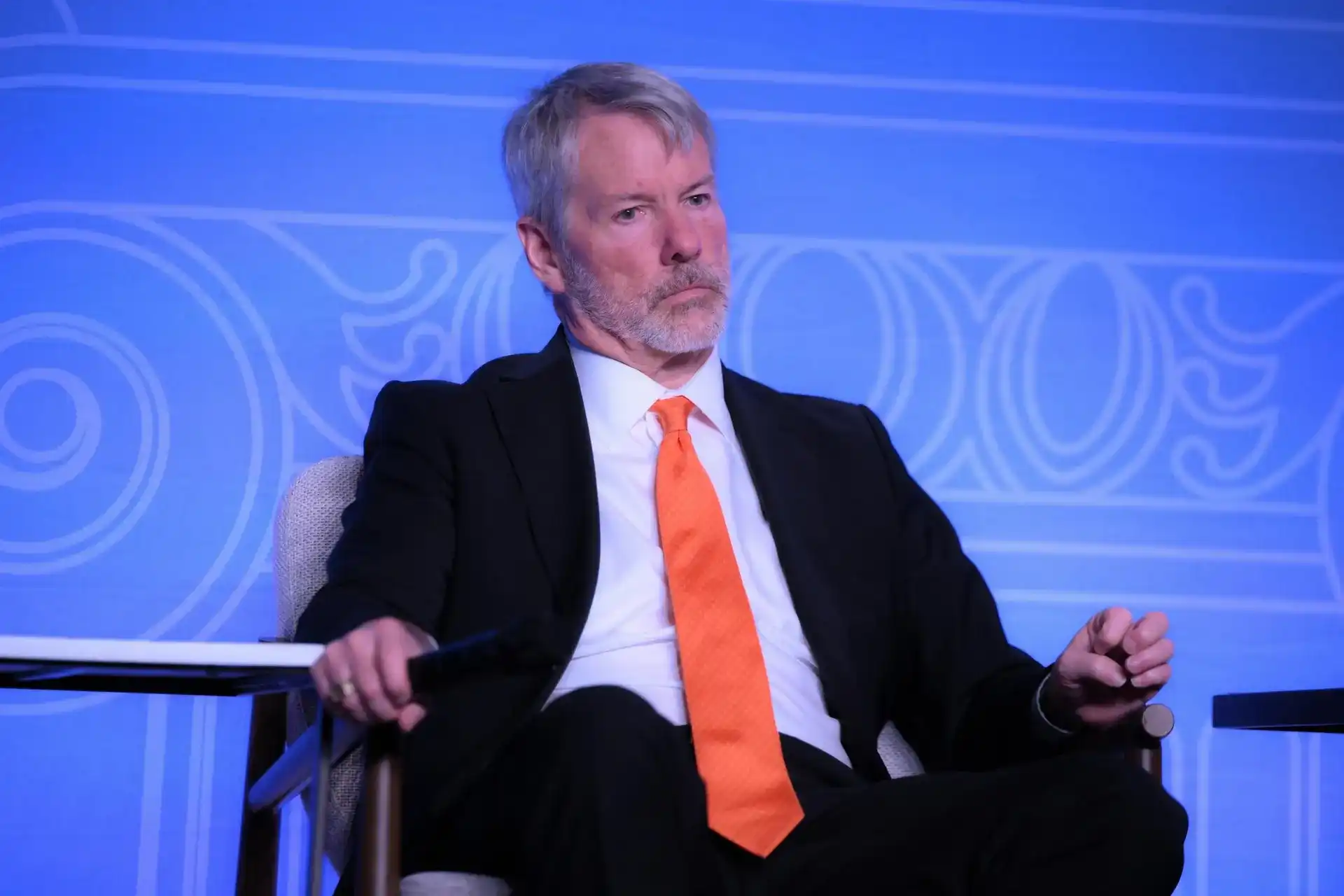
Coinbase Founder Is Now Researching Immortality

Odaily星球日报Published on 2026-06-03Last updated on 2026-06-03

Abstract

Coinbase Founder Invests in the "Fountain of Youth": NewLimit's $435M Funding to Reverse Aging Brian Armstrong, co-founder and CEO of Coinbase, is now targeting a new frontier: human longevity. His biotech startup, NewLimit, has just raised $435 million in a Series C round led by Peter Thiel’s Founders Fund, valuing the company at $3.1 billion. The funding will advance its mission to develop therapies that slow or even reverse cellular aging, with its first drug targeting alcohol-related liver disease set to enter clinical trials next year. Founded in 2021 by Armstrong, former GV partner Blake Byers, and stem cell biologist Jacob Kimmel, NewLimit builds on Nobel Prize-winning research by Shinya Yamanaka, who discovered that adult cells can be reprogrammed to a younger state. NewLimit’s approach focuses on identifying specific gene combinations to reset the "epigenetic age" of cells, aiming first to treat diseases viewed as accelerated aging before broadening its applications. The company joins a growing field of longevity startups backed by tech billionaires, including Sam Altman’s investment in Retro Biosciences and Jeff Bezos’s support for Altos Labs. For these ultra-wealthy backers, conquering aging represents the ultimate investment—extending the one resource even immense wealth cannot buy: time.

Original | Odaily Planet Daily (@OdailyChina)

Author | Azuma (@azuma_eth)
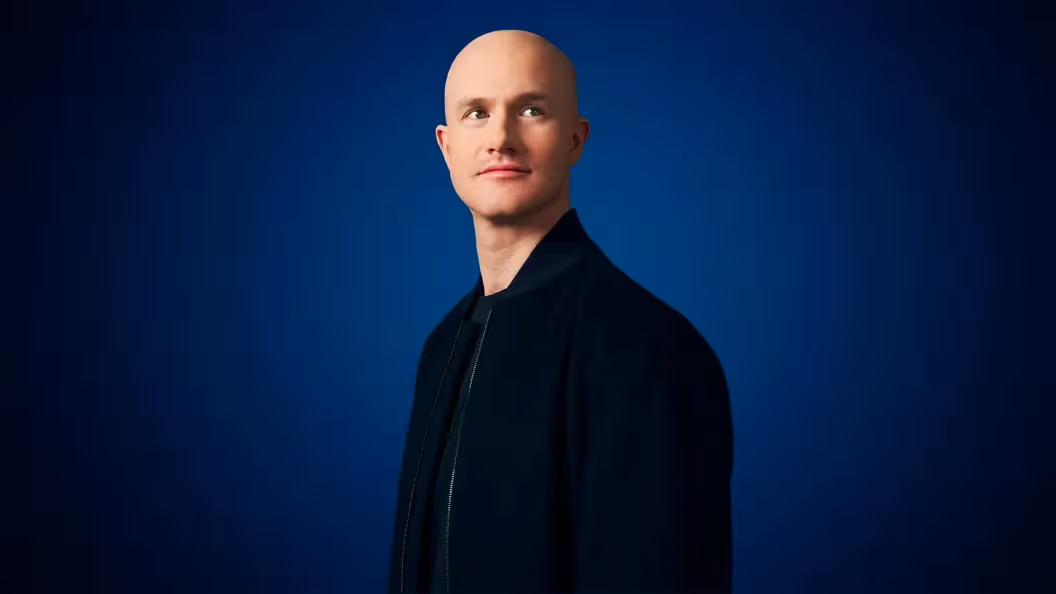
At 3 AM Beijing time on June 3, longevity tech startup NewLimit announced the completion of a $435 million Series C funding round. This round was led by Founders Fund, the fund under Peter Thiel, with continued participation from Abstract Ventures, Kleiner Perkins, NFDG, Eli Lilly Ventures, Valor Equity Partners, among others. New investors including Thrive Capital, Greenoaks, and Quiet Capital also joined this round.

WSJ reported that NewLimit's valuation in this round reached $3.1 billion, more than tripling its valuation from a year ago.
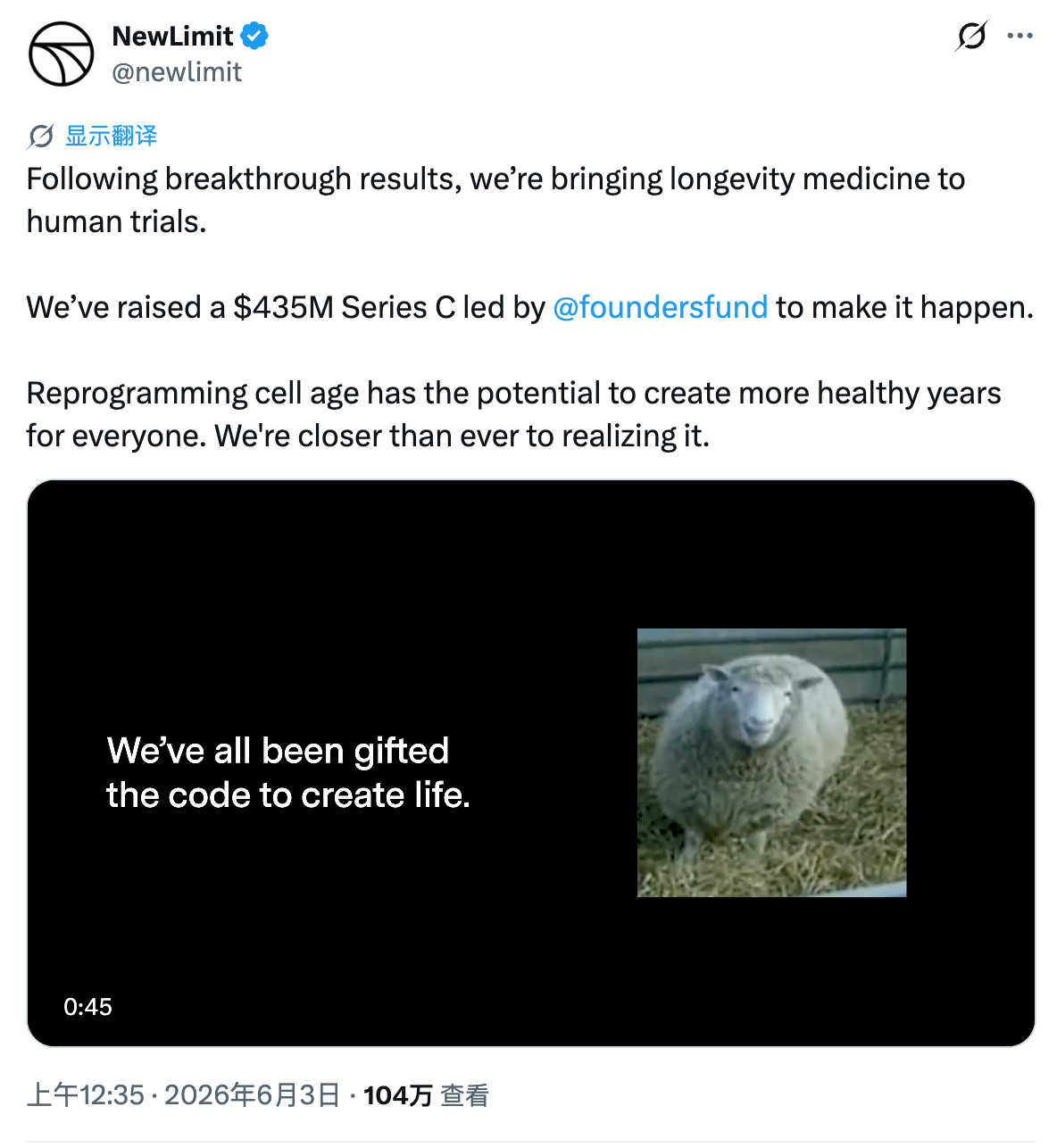
In the funding announcement, NewLimit revealed that following breakthrough research achievements, the company is advancing longevity medicine to the stage of human clinical trials. Its first drug targeting alcohol-associated liver disease is expected to commence clinical trials next year.

NewLimit further emphasized: "By reprogramming cell age, humans have the potential to achieve longer healthspans. Now, humanity is closer than ever to the goal of 'slowing down or even reversing aging.'"

The Founder is an Old Acquaintance

It's worth noting that NewLimit's co-founder is none other than a familiar name – Brian Armstrong, the founder and CEO of Coinbase.

In 2021, Brian Armstrong, alongside former GV partner and bioengineer Blake Byers, and stem cell biologist Jacob Kimmel, jointly invested $110 million to establish NewLimit in the southern part of San Francisco.
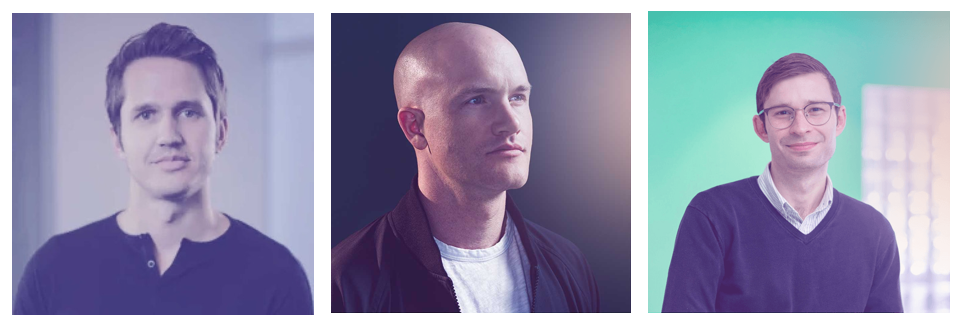
Photo: NewLimit founding team

Prior to this Series C round, NewLimit had completed three rounds of funding, detailed as follows.

  • Completed a $40 million Series A round in May 2023, with investors including Dimension, Founders Fund, and Kleiner Perkins;
  • Completed a $130 million Series B round in May 2025, valuing the company at $810 million, led by Kleiner Perkins with participation from Founders Fund, Khosla Ventures, and Human Capital, among others;
  • Secured an additional $45 million in funding in October 2025, bringing the post-money valuation to $1.62 billion, with investors including Lilly Ventures, Duke University, Section 32, etc.;

According to NewLimit's official introduction, the company is committed to developing drugs that extend people's healthspan – "As we age, our cells' functions gradually decline, making us more susceptible to disease. It was once thought that aging was inevitable, but emerging science suggests the aging process can be reversed at the cellular level. We are developing the first drugs based on these discoveries to restore youthful function to aged cells."

In simpler terms, NewLimit is researching immortality using scientific methods!

Reversing Aging is Not a Fantasy

Over the past few decades, the scientific community has long recognized the connection between aging and cellular functional decline but couldn't find precise methods to make cells 'rejuvenate'. The turning point came in 2006 when Japanese scientist Shinya Yamanaka discovered that activating just a few specific transcription factors could reprogram adult cells into a younger state similar to embryonic stem cells. This discovery was later named "Yamanaka Factors" and earned him the 2012 Nobel Prize in Physiology or Medicine.

Odaily Note: Photo of Shinya Yamanaka speaking in Tokyo

Yamanaka's research first proved something previously thought impossible – that cellular age is not irreversible. The story NewLimit is telling is built precisely upon this discovery.

NewLimit writes on its website: "Our drugs work by reprogramming a cell's epigenome to a more youthful state by activating specific transcription factor genes. We already know this reversal is possible. But for different types of cells, exactly which combination of transcription factors is needed to restore their youthful function remains unknown. The core challenge of our work is finding and discovering these effective gene payloads."

NewLimit's strategy is to first target a specific disease to secure drug approval, then explore broader applications. As mentioned earlier, NewLimit is advancing a drug for alcohol-associated liver disease into clinical trials.

Jacob Kimmel, co-founder and CEO of NewLimit, further explained this: Liver disease can essentially be viewed as a form of 'accelerated aging,' where the aging process everyone experiences manifests faster and more severely.

The Biggest Investors in This Sector Are All Billionaires

NewLimit is not the only tech company currently targeting "immortality."

In 2022, Sam Altman invested $180 million in Retro Biosciences, which is developing drugs to rejuvenate aging cells and revealed last month its valuation had reached $1.8 billion.

Additionally, Altos Labs, reportedly backed by Jeff Bezos's funding, launched in 2022 with $3 billion and has since raised nearly twice that amount cumulatively.

It's not hard to see that from Peter Thiel to Sam Altman, to Jeff Bezos, the biggest investors in this sector are invariably super-wealthy individuals at the pinnacle of the tech and wealth pyramid. Peter Thiel has publicly expressed extreme aversion to death, stating views like: "Death is humanity's greatest enemy, yet we treat it as a natural law..."

The logic behind these tech tycoons' willingness to invest hundreds of millions of dollars isn't hard to understand – when wealth and power reach their peak, time becomes the only enemy, the one luxury that cannot be directly purchased with money.

Having made enough money, "how to live longer" becomes the ultimate quest.

Related Questions

QWho is the founder of NewLimit, and what other company is he known for?

AThe founder of NewLimit is Brian Armstrong, who is also the founder and CEO of Coinbase.

QWhat is the key scientific breakthrough that NewLimit's research is built upon?

ANewLimit's research is built upon the discovery of the 'Yamanaka Factors' by Shinya Yamanaka, which demonstrated that adult cells can be reprogrammed to a younger, embryonic-like state.

QWhat is NewLimit's primary approach to developing its age-reversing drugs?

ANewLimit's primary approach is to discover the specific combinations of transcription factor genes that can reprogram the epigenome of different cell types to a younger state, aiming to restore their youthful function.

QWhat is the significance of liver disease in NewLimit's current clinical trial plans?

AAccording to NewLimit's co-founder Jacob Kimmel, liver disease can be seen as an 'accelerated version of aging,' making it a strategic starting point to develop and test drugs before exploring broader anti-aging applications.

QWhich other prominent tech billionaires are investing in similar longevity research companies?

AOther prominent tech billionaires investing in similar longevity research include Peter Thiel (investing in NewLimit), Sam Altman (investing in Retro Biosciences), and Jeff Bezos (investing in Altos Labs).

Related Reads

Claude Code Introduces Dynamic Workflows: Enabling AI to Form Teams and Collaborate

Claude Code introduces dynamic workflows, enabling AI to coordinate teams of specialized agents for complex tasks. This transforms Claude from a code assistant into a programmable workbench. Workflows address key limitations of single-agent systems: agentic laziness (premature task completion), self-preferential bias (favoring own outputs), and goal drift (losing sight of original objectives). The system allows Claude to dynamically create execution frameworks using JavaScript. It can split tasks, dispatch parallel agents for isolated work (e.g., in separate worktrees), implement adversarial validation, run tournaments, and synthesize results. This multi-agent approach is valuable for tasks requiring deep research, factual verification, code migration, root cause analysis, large-scale triage, and qualitative sorting. Key patterns include: classify-and-route, fan-out-and-synthesize, adversarial verification, generate-and-filter, tournaments, and loop-until-done. While token usage is higher, workflows excel where tasks resemble programming—needing problem decomposition, isolated context, hypothesis testing, and handling many details. They extend Claude Code's utility beyond technical work to areas like business plan review, resume screening, and naming brainstorm. The feature is not a universal solution but points to a future where AI tool competitiveness depends on organizing reliable, reusable, and auditable execution flows for complex goals.

marsbit34m ago

Claude Code Introduces Dynamic Workflows: Enabling AI to Form Teams and Collaborate

marsbit34m ago

Hyperliquid, Wall Street's 24/7 Trading Convenience Store

Hyperliquid: The 24/7 Trading "Convenience Store" for Wall Street Hyperliquid, a decentralized cryptocurrency exchange, has become a go-to platform for Wall Street traders seeking to trade around the clock, especially during traditional market closures. Founded by Jeff Yan, a former quantitative trader, after the FTX collapse, the platform emphasizes user self-custody of assets. It offers a wide range of perpetual contracts—leveraged derivatives with no expiry—on assets from Bitcoin and crude oil to the S&P 500 and even pre-IPO companies like SpaceX. A notable example involves a hedge fund trader who capitalized on geopolitical news over a weekend, securing a 243% return on oil derivatives before markets reopened. The platform, run by just 11 employees, generated approximately $800 million in revenue last year, and its native token HYPE has seen significant growth. Its rise highlights the merging of traditional finance and crypto. While U.S. users are currently restricted, recent CFTC rule changes could open access. The platform is known for its transparency, having processed $10 billion in liquidations during a market crash while competitors faltered. Regulators warn of the high risks and complexity of perpetual contracts for retail investors. Key to its appeal is a strong community culture, direct engagement with founders, and a simple interface. Despite rules against VPN use, it attracts global users with its permissionless approach. Hyperliquid plans to expand into prediction markets and options, aiming to eventually host all financial activity.

marsbit34m ago

Hyperliquid, Wall Street's 24/7 Trading Convenience Store

marsbit34m ago

Who Funds the Agents?

**Summary: Who Funds AI Agents?** OpenAI recently shut down a feature allowing AI agents to shop for users, highlighting the challenge of creating a secure and regulated environment for agent-driven transactions. While payment infrastructure exists, a crucial governance layer—defining spending limits, fraud detection, tax handling, and return policies—is largely missing. The potential is enormous: AI agents already processed $73M across 176M transactions last year, with McKinsey forecasting this could grow to $3-5T in global consumer commerce by 2030. The core competition isn't just about processing payments, which can be very cheap (especially with crypto-based settlement), but about controlling the rules that govern agent spending. Key players like Stripe and Coinbase are racing to dominate this governance layer. Stripe's acquisition of wallet provider Privy allows it to set spending policies, identity checks, and human-in-the-loop approvals directly at the wallet level. Similarly, Coinbase's stack, including its x402 protocol and AgentKit, embeds governance rules. This vertical integration across settlement, wallet, and governance layers is becoming the dominant strategy. Control over the governance layer is where significant future value lies. If agents handle trillions in transactions, even a small fee for managing compliance, fraud prevention, and policy enforcement could generate billions in annual revenue. The companies that successfully integrate across the payment stack will capture value from idle agent balances, transaction fees, and governance services, positioning themselves as the foundational banks of the AI agent economy.

marsbit1h ago

Who Funds the Agents?

marsbit1h ago

Trading

Spot
Futures
活动图片