4 Years After Terra’s Collapse, Hodlnaut’s Former CEO Faces Fraud Charges In Singapore Court

bitcoinistPublished on 2026-05-26Last updated on 2026-05-26

Abstract

Zhu Juntao, co-founder and former CEO of the defunct Singapore crypto lender Hodlnaut, has been charged with fraud by false representation in a Singapore court. The charges relate to alleged misleading statements made to users in mid-2022, claiming the platform had no exposure or losses from the Terra (UST) collapse. Investigations later revealed Hodlnaut lost nearly $190 million from Terra, contributing to a $193 million shortfall that led to its liquidation. Zhu pleaded not guilty to all six charges, which carry potential imprisonment of up to 20 years. His case highlights ongoing legal accountability efforts stemming from the 2022 crypto market contagion.

Zhu Juntao, co-founder and former Chief Executive Officer of the now-defunct Singapore-based crypto lending platform Hodlnaut, was charged in a Singapore court on May 26, 2026 with fraud by false representation — nearly four years after the Terra/LUNA ecosystem implosion triggered a $193 million financial shortfall that ultimately ended the platform and stranded more than 30,000 users worldwide.

The charges were announced by the Commercial Affairs Department of the Singapore Police Force, which has been investigating Hodlnaut and its directors since November 2022. Zhu, 36, faces six counts in total — three under Section 424A(1)(a) read with Section 424A(3) of Singapore’s Penal Code 1871, and three under the same provision read together with Section 109 of the same code, which covers abetment. If convicted on each charge, he faces imprisonment of up to 20 years, a fine, or both, per the police statement.
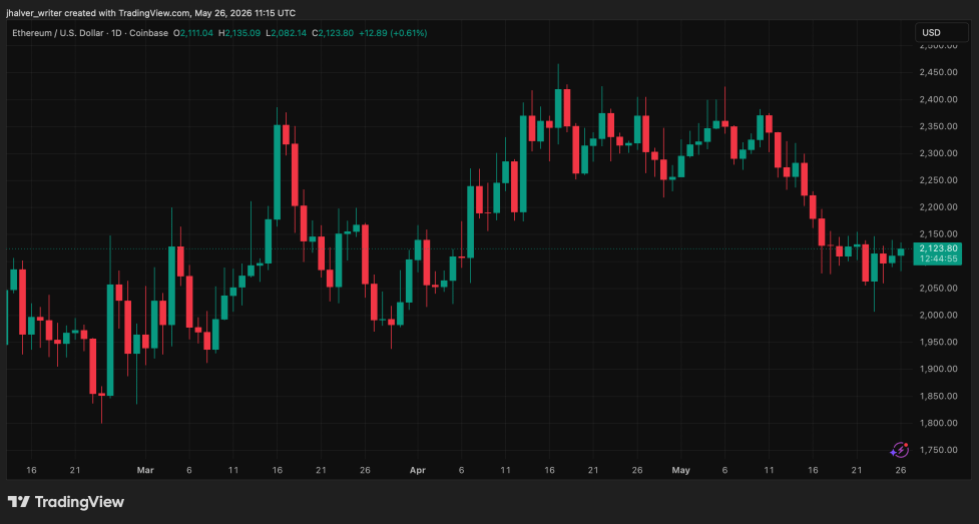
ETH's price moving sideways, per the daily chart. Source: ETHUSD on Tradingview

What The Charges Allege

The fraud charges center on a specific window: May to July 2022, the weeks immediately following TerraUSD’s catastrophic de-pegging in early May of that year. According to the Singapore Police Force’s official statement, Zhu allegedly directed Hodlnaut employees to make misleading statements on the company’s official Telegram group and in emails sent directly to users — assertions that Hodlnaut had no direct exposure to UST and had not suffered losses from the collapse.

The statements, as documented in Mothership SG’s reporting of court filings, included a post in which Hodlnaut wrote that it had “not taken any losses as a firm” and that only users who personally held UST were affected. Zhu also allegedly directed a separate employee to email 30 recipients stating the company had assumed no losses. Those statements, prosecutors now allege, were false and intended to deceive users during the most critical period of the platform’s deterioration.

What Actually Happened With Terra

The judicial record that emerged after Hodlnaut suspended withdrawals in August 2022 told a starkly different story. An interim judicial managers’ report seen by Bloomberg found that Hodlnaut had lost nearly $190 million through its exposure to the collapsed Terra ecosystem — a figure the platform had actively downplayed to users while the losses accumulated. On-chain analytics firms subsequently confirmed material exposure to UST and TerraForm Labs-linked activity that Hodlnaut had not previously acknowledged.

Court documents filed in Singapore in August 2022, when the platform sought creditor protection, disclosed a $193 million financial shortfall. Court-appointed managers later confirmed an additional $13.1 million in user assets were stranded on the collapsed FTX exchange.

Hodlnaut was subsequently ordered to liquidate by Singapore’s High Court, with EY partners appointed as joint liquidators. Zhu indicated he was not guilty and disputed all charges at his May 26 hearing — a pre-trial conference has been scheduled for June 2026, per Channel News Asia.

This development marks a significant moment for the nascent sector’s long-running accountability reckoning following the 2022 crypto contagion. The Terra collapse set off a chain of platform failures — Celsius, Voyager, Three Arrows Capital, and eventually FTX among them — that collectively cost retail users hundreds of billions of dollars.

That four years have elapsed between Hodlnaut’s collapse and its former CEO’s first day in court is itself a reflection of how slowly the legal system processes crypto’s most consequential failures — and a reminder that the cases are far from closed.

Cover image from Grok, ETHUSD chart from Tradingview

Related Questions

QWhat specific charges does Zhu Juntao face in the Singapore court, and under which laws?

AZhu Juntao faces six counts of fraud by false representation. Three counts are under Section 424A(1)(a) read with Section 424A(3) of Singapore's Penal Code 1871, and three counts are under the same provision read together with Section 109 of the same code, which covers abetment.

QWhat was the alleged falsehood communicated by Hodlnaut during the May-July 2022 period, according to the charges?

AAccording to the charges, Zhu Juntao allegedly directed employees to make misleading statements on Telegram and via email, asserting that Hodlnaut had no direct exposure to UST and had not suffered any losses from the Terra collapse. In reality, the platform had lost nearly $190 million from its exposure.

QWhat was the total financial shortfall and additional user asset loss reported for Hodlnaut following the Terra collapse?

ACourt documents disclosed a $193 million financial shortfall. Additionally, court-appointed managers later confirmed that an extra $13.1 million in user assets were stranded on the collapsed FTX exchange.

QWhat was the final outcome for the Hodlnaut platform as ordered by the Singapore High Court?

AHodlnaut was ordered to be liquidated by Singapore's High Court, with EY partners appointed as joint liquidators.

QHow did Zhu Juntao plead to the charges during his court hearing on May 26, 2026?

ADuring his hearing on May 26, 2026, Zhu Juntao indicated he was not guilty and disputed all charges.

Related Reads

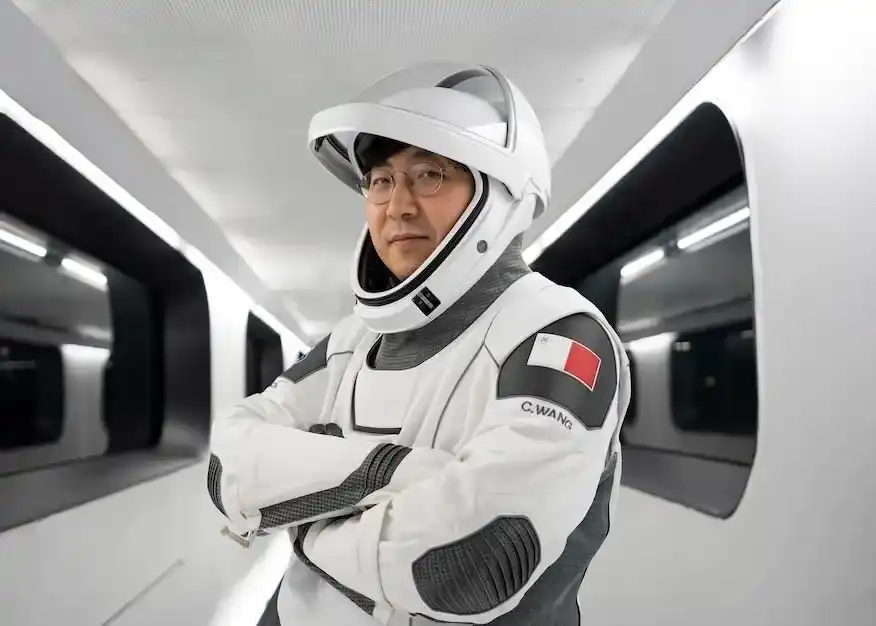
From Mining Pool to Mars: Why Is Wang Chun in the SpaceX Cockpit?

Title: From Mining Pool to Mars: Why Wang Chun is in the SpaceX Cockpit? When SpaceX announced that Wang Chun, co-founder of F2Pool, would command the first commercial crewed interplanetary mission, many were shocked. Why would a Bitcoin mining pool founder be on a Mars mission roster? However, understanding Wang Chun's journey over the past decade and the deepening ties between the crypto industry and SpaceX reveals this is not accidental, but an inevitable result of a new era taking shape. Today's Mars plan is no longer just a space engineering project; it is evolving into a civilization-upgrading experiment driven by global tech capital, AI, computing power, energy, and the crypto economy. Wang Chun stands precisely at the intersection of these forces. Part 1: From F2Pool to SpaceX – Wang Chun's Leap F2Pool, founded when Bitcoin was still niche, is one of the earliest large-scale mining pools and once held a significant share of global Bitcoin hash rate. Wang Chun belongs to the first generation of Chinese Bitcoin advocates and infrastructure builders—idealists and engineers who believed in a new value network independent of traditional finance. Miners like him built the hardware, energy, and computing power foundational to decentralized networks. This aligns with the long-term, high-engineering, future-oriented vision required for space civilization. Elon Musk’s space endeavors value such long-term builders over mere capital players, which explains Wang Chun's entry into the SpaceX ecosystem. Part 2: Why Crypto and SpaceX Are Growing Closer The core of global tech competition is shifting from internet applications to next-generation infrastructure. Both crypto and SpaceX are part of this. SpaceX's goal is to drastically reduce space access costs. If successful, it could enable orbital servers, space-based energy, global satellite internet, and Martian bases. These new frontiers will require new payment systems, value networks, and global financial architectures. Cryptocurrencies, inherently global and trustless, are poised to become key to off-planet economies. Moreover, crypto and SpaceX share a high-risk, long-termist ethos—believing in ambitious, world-changing goals despite early skepticism. Part 3: Human Spaceflight Enters the Commercial Era Space exploration, long dominated by state actors, is now being transformed by commercial entities like SpaceX. Wang Chun's involvement signifies that future deep-space participants may include not just career astronauts, but also entrepreneurs, engineers, and AI researchers. This mirrors the Age of Exploration, where commercial capital eventually drove global expansion. Wang Chun has emphasized that Mars colonization must not be delayed for future generations, countering a potential over-focus on nearer-term, commercial lunar projects. His presence symbolizes how new capital, technical communities, and idealists from the crypto world are now entering the interstellar age. In summary, the true significance is not an individual's journey to Mars, but the shift in the driving force of human civilization expansion from state machinery to tech companies, AI systems, and global technology capital. Wang Chun's path—from mining pool to Mars, from the Bitcoin network to starships—may be a preview of technological civilization's evolution in the coming decades.

marsbit6h ago

From Mining Pool to Mars: Why Is Wang Chun in the SpaceX Cockpit?

marsbit6h ago

Trading

Spot
Futures

Hot Articles

Discussions

Welcome to the HTX Community. Here, you can stay informed about the latest platform developments and gain access to professional market insights. Users' opinions on the price of S (S) are presented below.

活动图片