XRP’s DeFi Moment? On-Chain Numbers From Flare Tell A Different Story

bitcoinistPublished on 2026-03-14Last updated on 2026-03-14

Abstract

The on-chain data from the Flare Network suggests growing DeFi activity within the XRP ecosystem. Over 132 million FXRP are in supply, with nearly 80% locked in DeFi protocols on Flare. The ecosystem has secured over $149 million in value and processed more than 2.8 million transactions, with user growth accelerating. This indicates that XRP holders are increasingly using their assets for lending, liquidity provision, swaps, and yield generation—moving beyond simple transfers. Additionally, Ripple’s recent $50 million share buyback signals strong institutional confidence, which could lead to further development and integration of XRP-based infrastructure in global payment systems.

Momentum around XRP may be entering a new phase as emerging on-chain data shows a growing activity within its broader ecosystem. Recent metrics from Flare, a network designed to bring smart contract functionality and DeFi capabilities to assets like XRP, suggest that decentralized finance participation tied to the network could be gaining traction.

What The Latest Flare Metrics Reveal About XRP Activity

A notable shift may be unfolding around XRP that many market participants have not yet fully recognized. An analyst known as XFinanceBull on X has revealed that recent data from the Flare network shows a supply of more than 132 million FXRP, with nearly 80% already locked into DeFi protocols on Flare Network.

The ecosystem has also secured over $149 million in value and processed more than 2.8 million transactions, while user growth continues to accelerate. These figures are derived from verifiable on-chain activity that any participant can verify, rather than being promotional estimates.

For years, one of the most common critiques of the altcoin was its lack of decentralized finance, and the bottleneck limited what holders could actually do with their assets beyond the transfers and storage. XFinanceBull argues that Flare is beginning to address that gap by enabling the token to interact with decentralized financial applications through the Flare system.

Through the Flare framework, holders can now deploy their assets across DeFi activities such as lending, liquidity provisioning, token swaps, and yield generation. The charts show activity is rising, user counts are increasing, and more capital is being locked into the ecosystem. From XFinanceBull’s perspective, these trends suggest that XRP holders are gradually shifting from holding the asset to actively utilizing it within decentralized finance, and this is just the start.

How A Stronger Ripple Could Expand The Network

Many market participants focus primarily on XRP price movements, while overlooking the companies building the infrastructure behind it. Analyst XFinanceBull has also highlighted that Ripple’s announcement of a share buyback, which implies a valuation of roughly $50 million, reveals something important about where the industry is heading.

XFinanceBull believes that the institutional investors do not place that level of confidence in infrastructure companies without seeing long-term demand. Ripple’s long-term strategy has centered on developing enterprise blockchain rails that connect banks, payment networks, and financial institutions across global markets. At the core of that settlement framework is the XRP Ledger.

A stronger company could mean larger development terms, deeper partnerships, and broader integration into global payment systems. Over time, these developments would help grow the network surrounding the asset powering those payment rails.

The analyst noted that by following crypto infrastructure for years, it becomes clear that as the companies building the system get stronger, the ecosystems around them often grow even faster. That is the aspect that many participants overlook about the altcoin.

XRP trading at $1.38 on the 1D chart | Source: XRPUSDT on Tradingview.com

Related Questions

QWhat does the recent on-chain activity from the Flare network indicate about XRP's DeFi ecosystem?

ARecent on-chain data from Flare shows over 132 million FXRP supplied, with nearly 80% locked into DeFi protocols, $149 million in value secured, and over 2.8 million transactions processed, indicating growing DeFi participation and activity in the XRP ecosystem.

QHow is Flare Network addressing the historical criticism of XRP's lack of decentralized finance capabilities?

AFlare Network enables XRP holders to interact with decentralized financial applications, allowing them to deploy assets in activities like lending, liquidity provisioning, token swaps, and yield generation, thus addressing the previous limitation of only transfers and storage.

QWhat does Ripple's share buyback announcement suggest about institutional confidence and long-term strategy?

ARipple's share buyback, implying a valuation of roughly $50 million, suggests strong institutional confidence in its long-term strategy of developing enterprise blockchain rails for global banks and financial institutions, with the XRP Ledger at the core of this settlement framework.

QAccording to the analyst XFinanceBull, what trend are XRP holders gradually shifting towards?

AXRP holders are gradually moving from merely holding the asset to actively utilizing it within decentralized finance applications, as evidenced by rising activity, increasing user counts, and more capital being locked into the ecosystem.

QWhy might a stronger Ripple company lead to broader growth in the XRP ecosystem?

AA stronger Ripple could result in larger development terms, deeper partnerships, and broader integration into global payment systems, which would subsequently help grow the network and ecosystem surrounding the XRP asset that powers these payment rails.

Related Reads

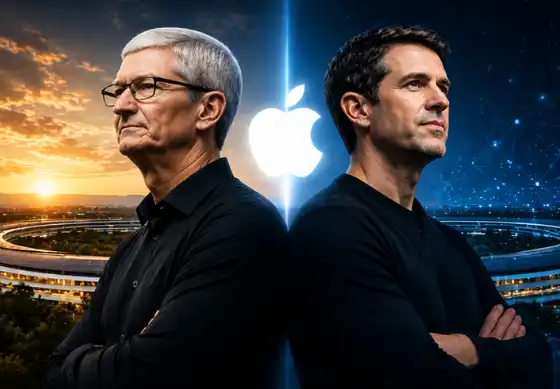
Cook's Curtain Call and Ternus Takes the Helm: The Disruption and Reboot of Apple's 4 Trillion Dollar Empire

Tim Cook has officially announced he will step down as CEO of Apple in September, transitioning to executive chairman after a 15-year tenure during which he grew the company’s market value from around $350 billion to nearly $4 trillion. He will be succeeded by John Ternus, a 50-year-old hardware engineering veteran who has been groomed for the role through increasing public visibility and internal responsibility. Ternus’s appointment signals a strategic shift toward hardware and engineering leadership, with Johny Srouji—head of Apple Silicon—taking on an expanded role as Chief Hardware Officer. This consolidation aims to strengthen Apple’s core technological capabilities. However, Cook’s departure highlights a significant unresolved issue: Apple’s delayed and fragmented approach to artificial intelligence. Despite early efforts, such as hiring John Giannandrea from Google in 2018, Apple’s AI initiatives—particularly around Siri—have struggled with internal restructuring and reliance on external partnerships, including with Google. The transition comes at a critical moment as Apple faces paradigm shifts with the rise of artificial general intelligence (ASI). The company’s closed ecosystem of hardware, software, and services—once a major advantage—now presents challenges in adapting to an AI-centric world where intelligence may matter more than the device itself. Ternus must quickly articulate a clear AI strategy, possibly starting at WWDC, to reassure markets and redefine Apple’s role in a new technological era. His task is not only to maintain Apple’s operational excellence but also to reinvigorate its capacity to innovate and lead in the age of AI.

marsbit1h ago

Cook's Curtain Call and Ternus Takes the Helm: The Disruption and Reboot of Apple's 4 Trillion Dollar Empire

marsbit1h ago

Trading

Spot
Futures

Hot Articles

Discussions

Welcome to the HTX Community. Here, you can stay informed about the latest platform developments and gain access to professional market insights. Users' opinions on the price of S (S) are presented below.

活动图片