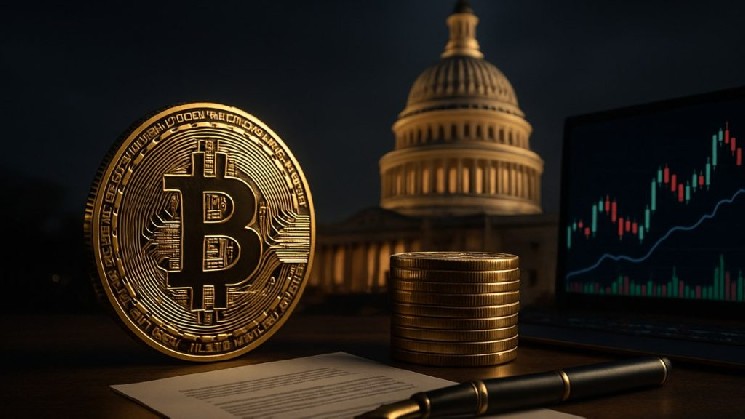
‘Win-win-win’: Coinbase CEO backs April deadline for CLARITY Act

ambcryptoPublished on 2026-02-19Last updated on 2026-02-19

Abstract

Coinbase CEO Brian Armstrong and Senator Bernie Moreno are pushing for the stalled CLARITY Act to pass by April 2026, framing it as a "win-win-win" for the crypto industry, traditional banks, and American consumers. The main dispute centers on whether stablecoins should offer rewards, which banks opposing due to fears of deposit outflows. Armstrong, who had previously withdrawn support over regulatory concerns, now believes a compromise is achievable. Political timing is critical, with Moreno aiming to pass the bill before the 2026 midterms slow progress. Polymarket odds for passage have surged to 90%, indicating growing optimism. The effort is positioned as part of a broader push to advance crypto policy under the Trump administration.

At Mar-a-Lago this week, Coinbase CEO Brian Armstrong and Senator Bernie Moreno signaled a possible comeback for the stalled CLARITY Act.

Speaking at the World Liberty Forum, they pushed back against claims that the crypto industry blocked the bill, with Armstrong framing the earlier setback as a strategic pause to secure better protections for Americans.

Meanwhile, traditional banks are lobbying to remove stablecoin rewards from the bill. Against this backdrop, the CNBC appearance of Armstrong and Moreno shows that the debate is no longer just about technical rules.

It has become a larger fight over the future of finance in the U.S.

Coinbase CEO says CLARITY Act is close to approval

The duo believes there is now a real chance for the CLARITY Act to pass by April 2026.

Remarking on the same, Armstrong said,

“We are going to get this across the finish line, hopefully by April.”

Earlier this year, Armstrong withdrew his support because he was concerned about the SEC’s role and limits on stablecoins. Now, he says a compromise is possible.

Providing further insight on the why, Armstrong added,

“There’s now a path forward where we can get a win-win-win outcome here. A win for the crypto industry, a win for the banks, and a win for the American consumer to get President Trump’s crypto agenda through to the finish line.”

Reasons behind the delay in approval

As it’s now established, the main dispute in the bill is whether stablecoins should be allowed to offer rewards or interest. Banks fear that higher returns from stablecoin wallets will pull money out of savings accounts and weaken deposits.

However, Moreno rejects this view, arguing that people should not have to protect banks and that competition will force them to offer better rates. He also supports faster payments, including daily wages instead of the usual twice-a-month cycle.

Meanwhile, politics is also affecting the bill’s timeline. With the 2026 midterms approaching, Moreno wants it passed by April before election season slows progress.

He doubts Democrats will regain the House, citing voter frustration over inflation and border issues.

Moreno said,

“The Democrats only have one idea, which is hatred of President Trump. And that’s not a very good idea in terms of actually advancing the lives of working Americans.”

Yet, both he and Armstrong praised the Trump administration for actively pushing crypto policy forward.

Polymarket data shows further optimism

This further coincided with Polymarket odds surging to 90% for passage in 2026. This shows growing confidence that the legislative deadlock is finally easing.

Still, getting the bill to President Trump’s desk will be a race against time and will require strong cooperation between different committees.

As Patrick Witt outlined, the bill’s journey is now a matter of procedural endurance rather than just conceptual debate. To reach the finish line before the November 2026 midterms, several critical steps remain.


Final Summary

  • The April target is forcing faster negotiations and limiting political delay tactics.
  • Lawmakers are positioning the bill as a win for everyday Americans, not just crypto firms.

Trending Cryptos

Related Questions

QWhat is the new deadline for the CLARITY Act that Coinbase CEO Brian Armstrong is backing?

AApril 2026.

QAccording to the article, what is the main point of dispute in the CLARITY Act?

AWhether stablecoins should be allowed to offer rewards or interest.

QWhy do traditional banks oppose the inclusion of stablecoin rewards in the bill?

ABanks fear that higher returns from stablecoin wallets will pull money out of savings accounts and weaken their deposits.

QWhat does Senator Bernie Moreno believe competition from stablecoins will force traditional banks to do?

AHe argues that competition will force banks to offer better rates to consumers.

QAccording to the Polymarket data mentioned in the article, what are the odds that the CLARITY Act will pass in 2026?

AThe odds have surged to 90% for passage in 2026.

Related Reads

US Senate Makes Important Amendments to "Conflict of Interest" Section of Cryptocurrency Bill

The U.S. Senate has taken a key step regarding the CLARITY Act, which could shape the future of the U.S. crypto market. On July 29, Senators Tom Tillis and Ruben Gallego finalized amendments to the bill's "conflict of interest" rules, one of its most contentious aspects. The bipartisan bill aims to tighten restrictions on high-level federal officials' ties to digital assets. The new text, crafted as an alternative to a White House-endorsed ethics code, is expected to impose stricter rules limiting officials' ability to issue or directly participate in digital asset projects. However, with Congress entering an August recess and the revised text not yet reviewed by much of the Senate, the bill's timeline is uncertain. Senate Majority Leader John Thune indicated a procedural vote could occur between July 29 and August 1 but expressed doubt the full bill could pass before the break. The House-approved CLARITY Act, passed in July 2025, has been under Senate negotiation for over a year. Key goals of the CLARITY Act include clarifying jurisdictional boundaries between the SEC and CFTC, setting rules for digital commodity spot markets, and addressing topics like stablecoin yields, DeFi, and illicit financing. The stablecoin yield provisions could significantly impact U.S.-based DeFi protocols, exchanges, and issuers, affecting their global competitiveness. The outcome is being closely watched by both the U.S. and global digital asset markets.

cryptonews.ru43m ago

US Senate Makes Important Amendments to "Conflict of Interest" Section of Cryptocurrency Bill

cryptonews.ru43m ago

Pavel Durov Designated as a Terrorist in Russia. What Does This Mean for Telegram Users?

Pavel Durov, the founder of Telegram, has been added to Russia's list of terrorists and extremists by Rosfinmonitoring, as published on July 30. The entry includes his name and date of birth. The designation follows an announcement by the Russian Federal Security Service (FSB) on July 29, which charged Durov with aiding terrorist activity. The FSB alleges that a Telegram dating bot named "DaiVinchik" was used to recruit 46 individuals for attacks on police and arson, orchestrated by Ukrainian special services. The FSB also accuses Telegram's administration of failing to remove channels and bots used by Ukrainian intelligence and extremist groups. Durov is reportedly subject to an international arrest warrant. Inclusion on the Rosfinmonitoring list leads to significant restrictions: the freezing of Durov's bank accounts and assets, severe limitations on financial transactions, and a ban on election participation, media interaction, and event organization. Transfers to his accounts may be considered terrorism financing. For ordinary Russian Telegram users, purchasing Telegram Premium is not classified as financing terrorism, according to an IT expert. General use of the messenger—messaging, managing channels—does not automatically make a user a participant in extremist activity. There has been no official decision to ban Telegram itself. It is noted that French authorities are also investigating Durov over allegations of inadequate measures against criminal activity on the platform and insufficient cooperation with law enforcement. Durov denies all charges.

cryptonews.ru52m ago

Pavel Durov Designated as a Terrorist in Russia. What Does This Mean for Telegram Users?

cryptonews.ru52m ago

Trading

Spot

Hot Articles

How to Buy WIN

Welcome to HTX.com! We've made purchasing WINkLink (WIN) simple and convenient. Follow our step-by-step guide to embark on your crypto journey.Step 1: Create Your HTX AccountUse your email or phone number to sign up for a free account on HTX. Experience a hassle-free registration journey and unlock all features.Get My AccountStep 2: Go to Buy Crypto and Choose Your Payment MethodCredit/Debit Card: Use your Visa or Mastercard to buy WINkLink (WIN) instantly.Balance: Use funds from your HTX account balance to trade seamlessly.Third Parties: We've added popular payment methods such as Google Pay and Apple Pay to enhance convenience.P2P: Trade directly with other users on HTX.Over-the-Counter (OTC): We offer tailor-made services and competitive exchange rates for traders.Step 3: Store Your WINkLink (WIN)After purchasing your WINkLink (WIN), store it in your HTX account. Alternatively, you can send it elsewhere via blockchain transfer or use it to trade other cryptocurrencies.Step 4: Trade WINkLink (WIN)Easily trade WINkLink (WIN) on HTX's spot market. Simply access your account, select your trading pair, execute your trades, and monitor in real-time. We offer a user-friendly experience for both beginners and seasoned traders.

5.6k Total ViewsPublished 2024.03.29Updated 2026.06.02

How to Buy WIN

Discussions

Welcome to the HTX Community. Here, you can stay informed about the latest platform developments and gain access to professional market insights. Users' opinions on the price of WIN (WIN) are presented below.

活动图片