Will Morgan Stanley’s Bitcoin ETF filing add pressure on BTC in H2?

ambcryptoPublished on 2026-03-21Last updated on 2026-03-21

Abstract

Recent Bitcoin ETF outflows, triggered by macro events like inflation reports, are directly impacting BTC's price movements, making ETFs a key short-term indicator. Despite initial resilience, ETFs recorded $250 million in outflows, causing a 5.5% BTC drop to $70k. Institutional investors have withdrawn nearly $15 billion since January amid ongoing inflation and rate-cut uncertainties, reinforcing risk-off behavior. Morgan Stanley’s Bitcoin ETF filing could face similar headwinds in H2 if macro conditions remain unstable, potentially adding bearish pressure to BTC during risk-off periods.

The way ETFs move the market during risk-off periods is really showing up right now.

Last October, Bitcoin [BTC] ETFs were bleeding billions in outflows week after week, matching BTC’s nearly 35% crash. This time around, even with macro jitters from the Middle East, BTC ETFs (Exchange Traded Funds) have been holding up surprisingly well.

That said, after seven days of steady inflows, BTC ETFs recorded about $250 million in outflows over the past two days, following the inflation report that dampened hopes for a near-term rate cut. The result? Bitcoin slipped roughly 5.5% to $70k during the same window.
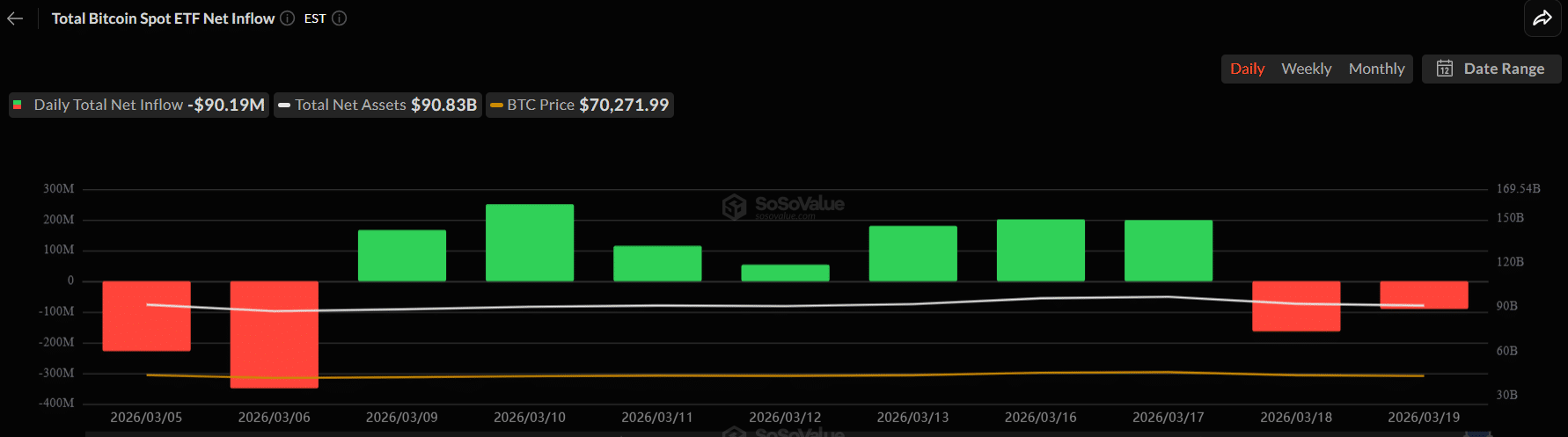
Source: SoSoValue

Looking at the bigger picture, ETF flows and BTC price action have been clearly moving mostly in lockstep lately. However, the interesting part is that Bitcoin didn’t drive these outflows. Instead, the inflation report and broader market sentiment triggered them.

In other words, the bleeding in ETFs is what’s translating into BTC price swings, rather than Bitcoin moves triggering ETF flows. From a technical angle, that makes ETFs a solid indicator for short-term BTC moves. Currently, the signals are skewing bearish as these outflows have pushed BTC lower.

Against that backdrop, what’s Morgan Stanley’s latest Bitcoin spot ETF filing with the SEC really telling us? Could it make BTC’s short-term swings even messier during risk-off periods, or could it actually turn into a bullish catalyst for the market?

Institutional flows and inflation worries keep Bitcoin under pressure

The ongoing impact of macro headwinds on ETF flows is not the first this year.

Back in late January, the buildup to the FOMC coincided with massive outflows from Bitcoin ETFs. According to Farside Investors, ten straight days of selling totaled a staggering $3 billion+, showing how even a “no change” decision from the Federal Reserve sparked risk-off behavior among institutional investors.

From a technical perspective, Bitcoin reacted quickly.

During the same period of ETF outflows, BTC dropped nearly 40%, forming a local top around $97k, a level it has yet to reclaim despite subsequent steady ETF inflows. This episode underscores how institutional flows and macro sentiment continue to define key resistance and support levels for Bitcoin.
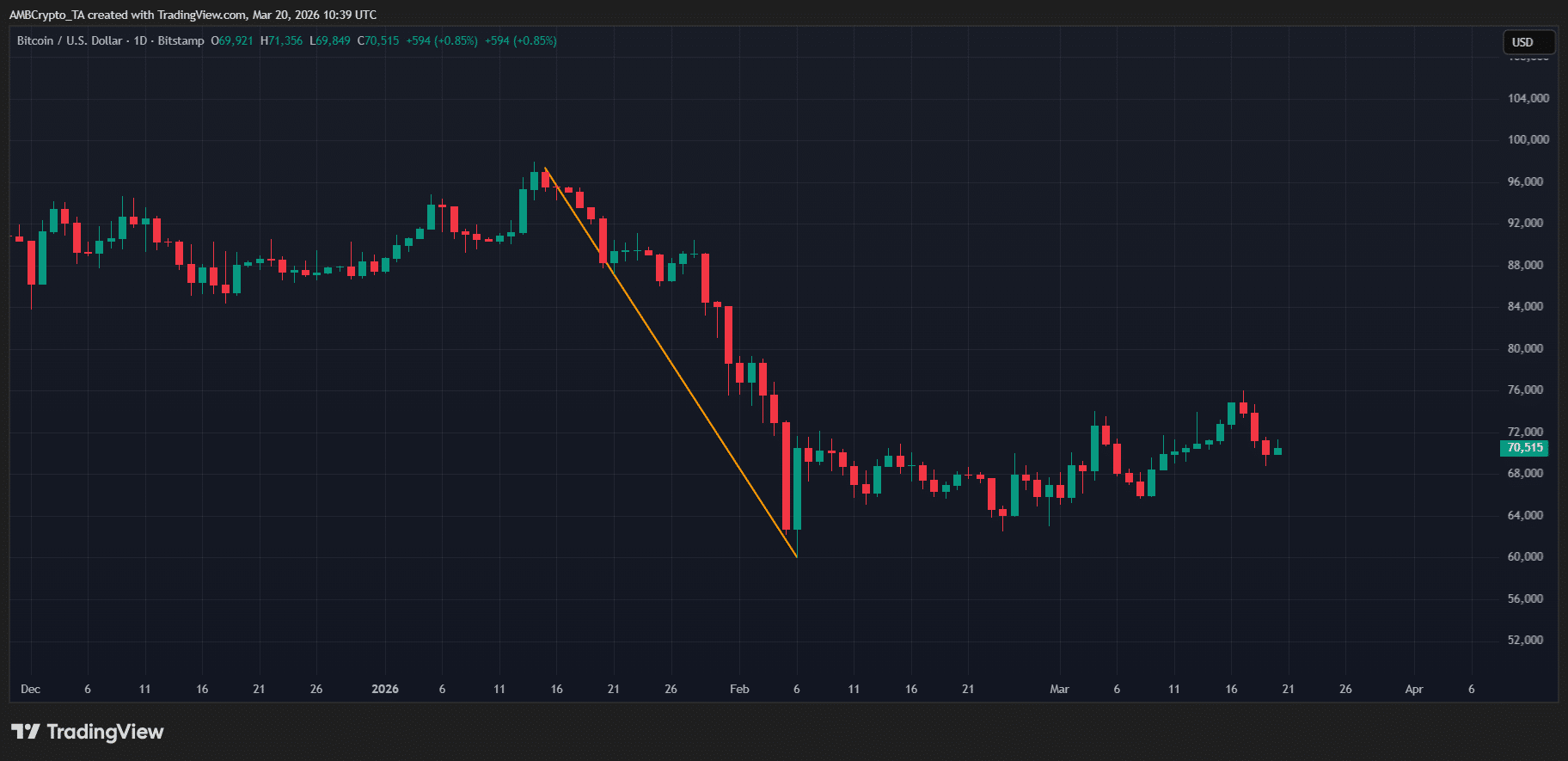
Source: TradingView (BTC/USDT)

Now with Morgan Stanley’s Bitcoin spot ETF filing, the impact really depends on the macro setup at launch. Since ETF flows already swing with market vibes, bigger outflows are definitely a real risk, especially with recent reports calling this a “forever conflict.”

Meanwhile, ongoing economic stress, from stubborn inflation to fading rate-cut odds, is keeping sentiment shaky, and institutional investors have already pulled nearly $15 billion from Bitcoin ETFs since early January, reinforcing risk-off behavior.

Taken together, these factors suggest that crypto is likely heading into H2 on a bearish footing, meaning any ETF launch could face headwinds unless macro conditions stabilize.


Final Summary

  • Outflows triggered by macro reports are translating directly into Bitcoin price swings, making ETFs a key short-term indicator.
  • With $15 billion pulled from Bitcoin ETFs since January and ongoing inflation and rate-cut uncertainty, any ETF launch, including Morgan Stanley’s, faces potential bearish pressure.

Related Questions

QWhat recent event triggered outflows from Bitcoin ETFs and how did it affect BTC's price?

AThe inflation report that dampened hopes for a near-term rate cut triggered about $250 million in outflows from Bitcoin ETFs over two days, causing Bitcoin's price to slip roughly 5.5% to $70k.

QAccording to the article, what is the relationship between ETF flows and Bitcoin price action?

AETF flows and BTC price action have been moving mostly in lockstep, with ETF outflows translating into BTC price swings rather than Bitcoin moves triggering ETF flows, making ETFs a solid indicator for short-term BTC moves.

QHow did institutional investors react to the FOMC meeting in late January, and what was the impact on Bitcoin?

AInstitutional investors showed risk-off behavior with ten straight days of selling totaling over $3 billion in Bitcoin ETF outflows around the FOMC meeting, which coincided with BTC dropping nearly 40% and forming a local top around $97k.

QWhat macro factors are currently keeping sentiment shaky for Bitcoin and institutional investors?

AOngoing economic stress from stubborn inflation, fading rate-cut odds, and reports of a 'forever conflict' are keeping sentiment shaky, with institutional investors having pulled nearly $15 billion from Bitcoin ETFs since early January.

QHow could Morgan Stanley's Bitcoin spot ETF filing impact the market in the current environment?

AIn the current bearish macro environment with shaky sentiment and significant outflows, Morgan Stanley's ETF launch could face headwinds and potentially lead to bigger outflows during risk-off periods, unless macro conditions stabilize.

Related Reads

You Bet on the News, the Pros Read the Rules: The True Cognitive Gap in Losing Money on Polymarket

The article explains that the key to profiting on Polymarket, a prediction market platform, lies not just predicting real-world events correctly, but in meticulously understanding the specific rules that govern how each market will be resolved. It illustrates this with examples, such as a market on Venezuela's 2026 leader, where the official rules defining "officially holds" the office overruled the intuitive answer of who was in practical control. Other examples include debates over the definition of a "token" or what constitutes an "agreement." The core argument is that a "reality vs. rules" gap creates pricing discrepancies that savvy traders ("车头" or "whales") exploit. The platform has a formal dispute resolution process managed by UMA token holders to settle ambiguous outcomes. This process involves proposal submission, a challenge window, a discussion period, and a final vote. However, the article highlights a critical flaw in this system compared to a traditional court: the lack of separation between the arbiters (UMA voters) and the interested parties (traders with financial stakes in the outcome). This conflict of interest undermines the discussion phase, leads to herd mentality, and results in opaque final decisions without explanatory rulings. Consequently, the system lacks a body of precedent, making it difficult for users to learn from past disputes. The ultimate takeaway is that success on Polymarket requires a lawyer-like scrutiny of the rules to identify and capitalize on the cognitive gap between how events appear and how they are contractually defined for settlement.

marsbit1h ago

You Bet on the News, the Pros Read the Rules: The True Cognitive Gap in Losing Money on Polymarket

marsbit1h ago

Trading

Spot
Futures

Hot Articles

Discussions

Welcome to the HTX Community. Here, you can stay informed about the latest platform developments and gain access to professional market insights. Users' opinions on the price of S (S) are presented below.

活动图片