Venezuela’s Currency Troubles Drive Stablecoin Use Higher — Research

bitcoinistPublished on 2025-12-15Last updated on 2025-12-15

Abstract

Venezuela's hyperinflation, estimated in the 100s–200s% range year-on-year in 2025, is driving rapid adoption of US-dollar stablecoins like USDT. With the local bolívar depreciating quickly, individuals and businesses are increasingly using stablecoins to preserve savings, pay for daily expenses such as groceries and rent, and even process salaries. Peer-to-peer platforms and local crypto exchanges facilitate these transactions, often bypassing traditional banks. Blockchain analytics firms report a significant rise in stablecoin volumes across Latin America, reflecting their growing role in remittances and commerce. While the government response has been mixed, regulatory uncertainty remains a key risk for users relying on crypto for financial stability.

Venezuela’s cash is losing value quickly. People and businesses are shifting to US-dollar stablecoins, especially USDT, to protect savings and make everyday payments.

According to market data, the peso-like bolívar has quoted around 267 per US dollar on December 12, 2025, after roughly 254 on December 5, showing how fast the local currency can move.

Why The Shift Is Accelerating

Based on reports from exchanges and on-chain firms, inflation has been estimated in the 100s–200s% range year-on-year in 2025. Prices rise fast under those conditions.

Wages lose value within days, sometimes hours. To avoid that loss, workers, freelancers and small shops are turning to stablecoins tied to the US dollar, which hold value better than the local currency.
Stablecoins As Daily Money

USDT is now being used for groceries, rent and even salaries in several cities. Peer-to-peer platforms and small crypto desks help users swap between bolívars and stablecoins without relying on traditional banks.

In some neighborhoods, merchants accept stablecoins directly, cutting out currency exchange altogether. Payments that once required cash stacks or quick conversions are now handled through mobile wallets.

Total crypto market cap currently at $3.01 trillion. Chart: TradingView

Rising On-Chain Flows And Regional Trends

Blockchain analytics firms tracking activity across Latin America have reported a sharp rise in stablecoin volumes during 2024 and 2025.

TRM Labs and similar groups point to higher transaction counts and more active wallets linked to dollar-backed tokens. These increases match what residents describe on the ground. Crypto is not just held. It is being spent, saved and passed along as money.
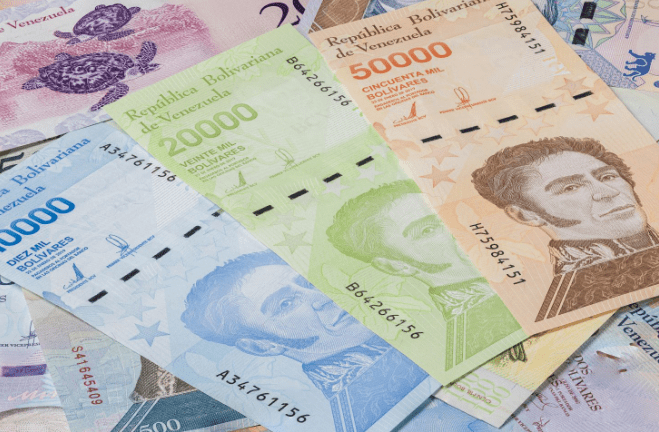
Venezuelan bolivar. Source: Holger Kleine/Shutterstock

Many Venezuelans receive remittances from abroad and convert them into USDT before bringing value back home. Others sell goods or services and ask to be paid in stablecoins to avoid sudden losses.

Conversion usually happens through messaging apps, local brokers or P2P platforms. The process is simple, but it depends heavily on trust and access to liquidity.

Government Reaction And Market Risks

Authorities have responded in mixed ways. Some unofficial dollar markets have been targeted, while limited crypto-based currency conversions have been allowed in certain cases.

Reports have also linked state-owned firms to crypto use for accessing foreign funds. At the same time, sudden rule changes remain a risk. Crackdowns, new compliance demands or exchange restrictions can disrupt access overnight.

Featured image from Pexels, chart from TradingView

Trending Cryptos

Related Reads

BitMart Research Institute Weekly Highlights: Rising Rate Hike Expectations, Crypto Market Stabilizes Amid Fluctuations

BitMart Research Weekly Market Review: Rate Hike Expectations Rise, Crypto Market Stabilizes Macro & Traditional Markets: U.S. stocks weakened with tech and semiconductors leading losses (Nasdaq down 1.55%, Philly Semi Index down 4.78%), while Apple bucked the trend. Brent oil surged 9.3% after Middle East ceasefire破裂, but gold fell 1% as美元 strengthened. The Fed's June FOMC纪要 was hawkish, shifting market expectations toward potential rate hikes, pushing the 10-year Treasury yield to 4.56%. Crypto Market Overview: BTC saw a slight 0.2% weekly gain, trading between ~$61.3K and $64.7K and settling near $64K. ETH outperformed, rising 1.2%. Market fear eased slightly but remained in "Fear" territory. Altcoin performance was mixed, with gains concentrated in large-cap assets. Key Developments: U.S. spot Bitcoin ETFs ended an 8-week outflow streak with a $197.4M net inflow, aiding price stabilization. On-chain, stablecoin growth was minimal. Robinhood Chain's TVL surpassed $132M within two weeks, largely driven by institutional stablecoin deposits. MicroStrategy executed its first major BTC sale (3,588 BTC for $216M) to fund dividends, while maintaining a large BTC reserve. Institutional infrastructure advanced with Swift's blockchain pilot for tokenized deposits and growing Asia-Pacific stablecoin initiatives. *This is market analysis, not investment advice. Cryptocurrency investment is high-risk; assess your risk tolerance and implement strict risk management.*

marsbit19m ago

BitMart Research Institute Weekly Highlights: Rising Rate Hike Expectations, Crypto Market Stabilizes Amid Fluctuations

marsbit19m ago

Trading

Spot

Hot Articles

Discussions

Welcome to the HTX Community. Here, you can stay informed about the latest platform developments and gain access to professional market insights. Users' opinions on the price of S (S) are presented below.

活动图片