Strikes launched on Sunday, August 30, have again created a serious military threat to one of the world's most crucial energy corridors after more than six months of periodic clashes. Iran reported casualties and immediately promised military and economic consequences.
U.S. destroys Iranian launchers amid renewed threat in Strait of Hormuz
U.S. Central Command stated that units of the Islamic Revolutionary Guard Corps were preparing to launch missiles equipped with naval mines into the strait. CENTCOM spokesman Tim Hawkins reported that U.S. forces observed the preparation process before launching the strike.
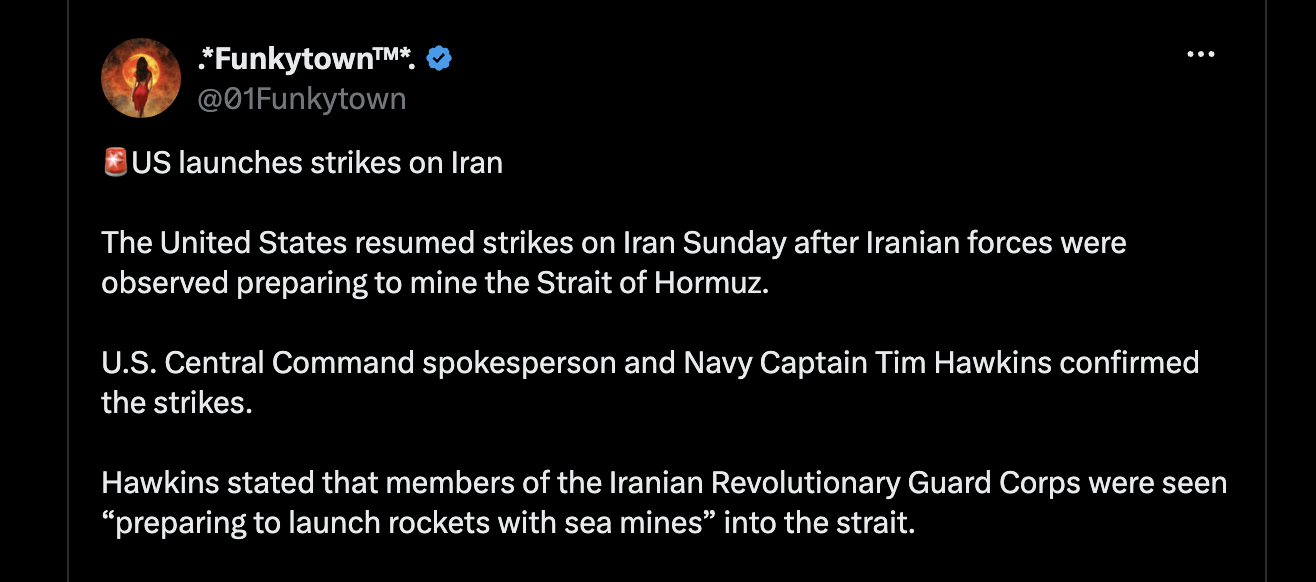
The Pentagon characterized the operation as preemptive. U.S. forces had only recently completed clearing internationally recognized shipping lanes of Iranian naval mines, so preparations for another mine-laying operation posed an immediate threat to commercial shipping in the Strait of Hormuz.
Iran portrayed the events in a completely different light. Islamic Revolutionary Guard Corps spokesman General Hossein Mohebbi called this a "fatal mistake by the Trump regime in the course of economic war" and promised countermeasures. Iranian media reported dead and wounded, while semi-official sources reported explosions near Larak Island.
Strait of Hormuz again finds itself at the epicenter of a six-month war
Its geographical position makes even a limited exchange of strikes economically dangerous. The Strait of Hormuz separates Iran from Oman and connects the Persian Gulf with the Gulf of Oman and the Arabian Sea, placing a critical artery for global energy supplies directly in the conflict zone.
The latest attack followed months of hostilities that began on February 28 with joint U.S. and Israeli strikes. An agreement on June 17, intended to halt hostilities and reopen the strait for 60-day talks, fell apart in July. Since then, Washington has combined military pressure, a naval blockade, and sanctions threats in an attempt to limit Iran's ability to disrupt maritime traffic. Tehran maintains its position in the Hormuz area as leverage against the U.S. and its regional partners.
Brent crude breaches $90 mark amid renewed Persian Gulf risks
Oil traders reacted immediately. Brent crude futures, which closed on Friday around $88.10, traded on Sunday evening in a range of roughly $89.71 to $90.60, rising approximately 1.7–2% and briefly breaching the closely watched $90 threshold once more.
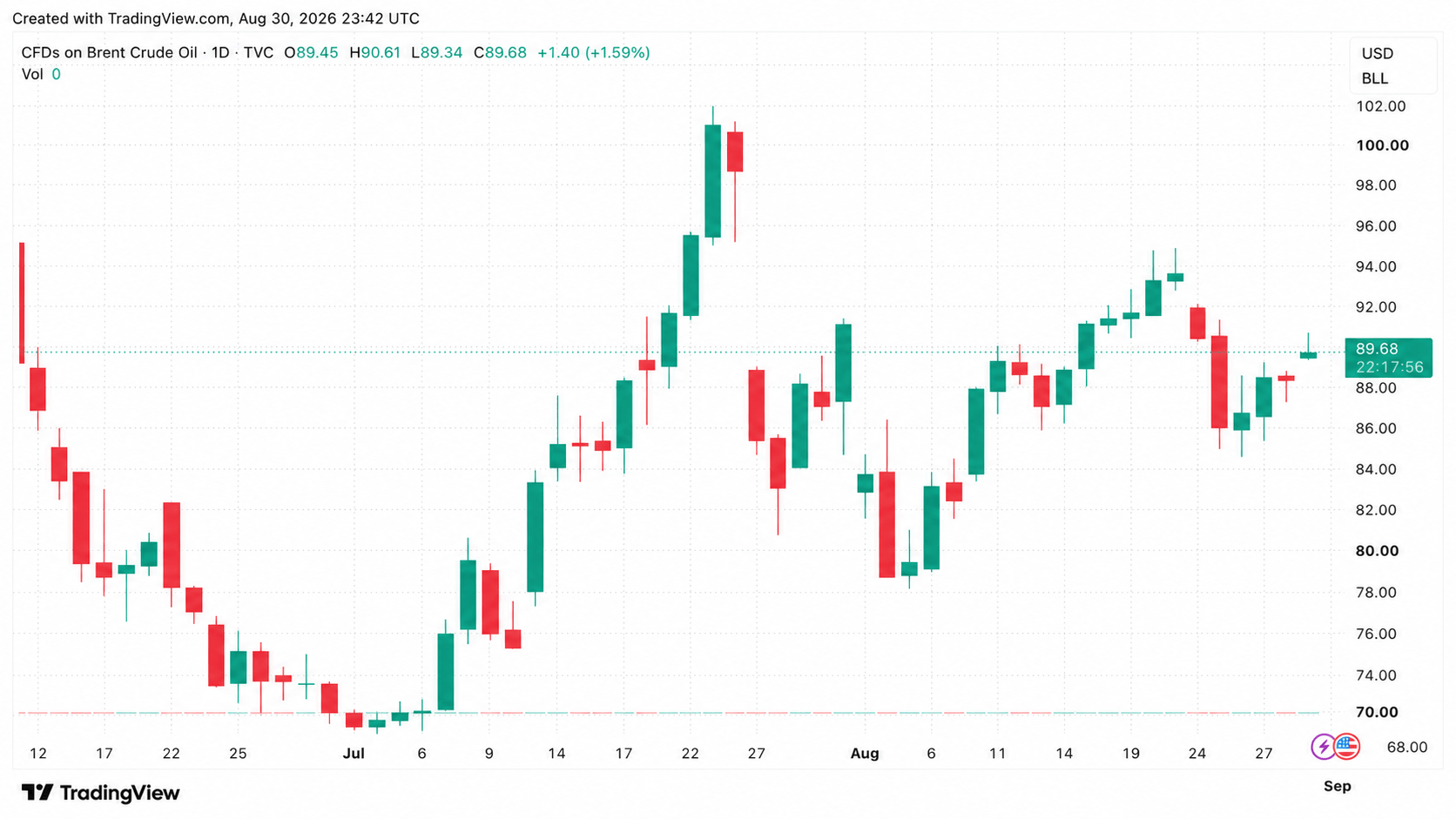
West Texas Intermediate (WTI) crude oil rose towards the mid-$84 range. This move reflects the familiar calculus: renewed hostilities increase the likelihood of further reductions in shipping through the Strait of Hormuz, which has already dwindled to just a handful of vessels on some days.
Panic was much less pronounced on other markets. Dow Jones futures fell about 0.1%, S&P 500 futures were down roughly 0.1–0.17%, and Nasdaq-100 futures fluctuated from nearly flat to slightly lower. Traders appear to have assessed this operation as localized rather than an immediate resumption of the large-scale bombardment seen in July.
Bitcoin also gave up gains made earlier on Sunday as news of the strikes emerged, falling about 0.6% over the next hour and trading around $77,000 by 8 p.m. ET. This reaction served as another reminder that geopolitical risks can quickly hit cryptocurrencies as traders begin to de-risk their portfolios.
Threat of Iranian retaliation keeps markets on edge
The next move is Tehran's. A limited retaliatory action could maintain the unstable rhythm of restrained interactions, while another attempt to mine the strait or attacks on U.S. assets could widen the conflict and put additional pressure on energy markets.
Markets will also watch closely whether Washington views Sunday's strike as a one-off operation or the first shot in a new prolonged military campaign. Brent crude's return to the $90 mark and Bitcoin's shedding of earlier gains are the clearest immediate signals that traders still consider further disruption in the Hormuz area highly likely.
end-content