US Lawmakers Slam $500M WLFI-UAE Deal, Call For Anti-Corruption Reform

bitcoinistPublished on 2026-02-04Last updated on 2026-02-04

Abstract

US lawmakers, led by Senator Chris Murphy, are demanding anti-corruption reforms following a $500 million deal between the Trump-linked crypto firm World Liberty Financial (WLFI) and a UAE-backed entity. The deal, which gave a 49% stake to an Abu Dhabi investment group just before Trump's inauguration, is being called "brazen, open corruption" and a potential national security breach. Critics allege the payment, with millions going to Trump-affiliated entities, was followed by the administration approving expanded UAE access to advanced US AI chips. President Trump denied any involvement, stating his sons handle the business. Lawmakers warn this constitutes potential criminal conduct and are calling for investigations.

US Lawmakers have called for better anti-corruption measures over the $500 million deal between an Abu Dhabi-backed entity and World Liberty Financial Invest (WLFI), the main crypto venture of the Trump family.

Congressmen Question WLFI’s UAE-Backed Deal

On Monday, Democratic Senator Chris Murphy criticized the recently unveiled deal involving United Arab Emirates (UAE) investors and a US President Trump-linked crypto company, World Liberty Financial.

In an X post, the congressman expressed his concerns over the deal, warning that it had broken “decades of national security precedent” and constituted “brazen, open corruption” that Americans “shouldn’t pretend it’s normal.”

The concern follows a Wall Street Journal report alleging that Aryam Investment, a UAE-backed entity linked to Sheikh Tahnoon bin Zayed, an Abu Dhabi royal tied to the emirate’s state investment machinery, purchased 49% stake of WLFI for $500 million just days before Trump’s inauguration.

As reported by Bitcoinist, the news media outlet claimed that the buyers paid half of the sum upfront, citing company documents and people familiar with the matter, with around $187 million paid to entities connected to the Trump family.

Meanwhile, at least $31 million was reportedly directed to entities affiliated with Steve Witkoff, President Trump’s envoy to the Middle East and one of WLFI’s co-founders, who was questioned by US senators last year.

Months after the WLFI-UAE deal, the Trump administration approved expanded access for the UAE to advanced US-made AI chips despite restrictions from the Biden administration over concerns about potential diversion to China.

“This is a case where they knew it was so outrageous, it was so wrong that they did it in private,” Murphy affirmed, noting that the payments could be considered “the elements of a bribe.”

What we are talking about here is stunning. It’s a secret payment (...), and then, soon after, a gift of national security secrets to the UAE, that up until those two secret payments, every American president had refused to give. This is corruption (...). This is potentially criminal conduct.

Moreover, the senator asserted that “the rule of law may be suspended today,” but declared that it “is coming back, and when it does, everyone who has greased their palms off government services, trading government favors for cash, and violating the laws of this nation are going to jail.”

Similarly, House of Representatives member Greg Landsman also deemed the World Liberty Financial deal “blatant corruption,” affirming that “Trump gets $500 million in cash then approves the deal sending advanced AI chips to the UAE (...). He gets richer every day. You get poorer. That’s his presidency.”

The congressman called for new leadership in his X post, urging “massive anti-corruption reforms” to avert future secret deals.

Trump Denies Conflict Of Interest Concerns

President Trump denied any involvement in the UAE-backed investment into WLFI during a press conference on Monday at the White House, asserting that he was unaware of the $500 million stake deal.

He explained that he is not involved in WLFI’s day-to-day operations, as his sons oversee the crypto firm. “Well, I don’t know about it. I know that crypto is a big thing, and they like it. A lot of people like it,” the US president said. “The people behind me like it. My sons are handling that. My family is handling it. And I guess they get investments from different people. But I’m not.”

Notably, President Trump and his administration have been repeatedly questioned about potential conflicts of interest and corruption concerns. Democrats have pressed multiple government officials, including the Securities and Exchange Commission (SEC)’s former acting chairman and the head of the Office of the Comptroller of the Currency (OCC), about Trump’s crypto ventures.

In November, US senators expressed concerns about potential national security risks in a letter, demanding that the Department of Justice (DOJ) and the Treasury Department investigate WLFI over token sales allegedly linked to illicit actors.

They argued that World Liberty Financial and its token “lack adequate safeguards to prevent bad actors from moving funds or gaining influence over its governance,” raising the alarm over a potential conflict of interest.
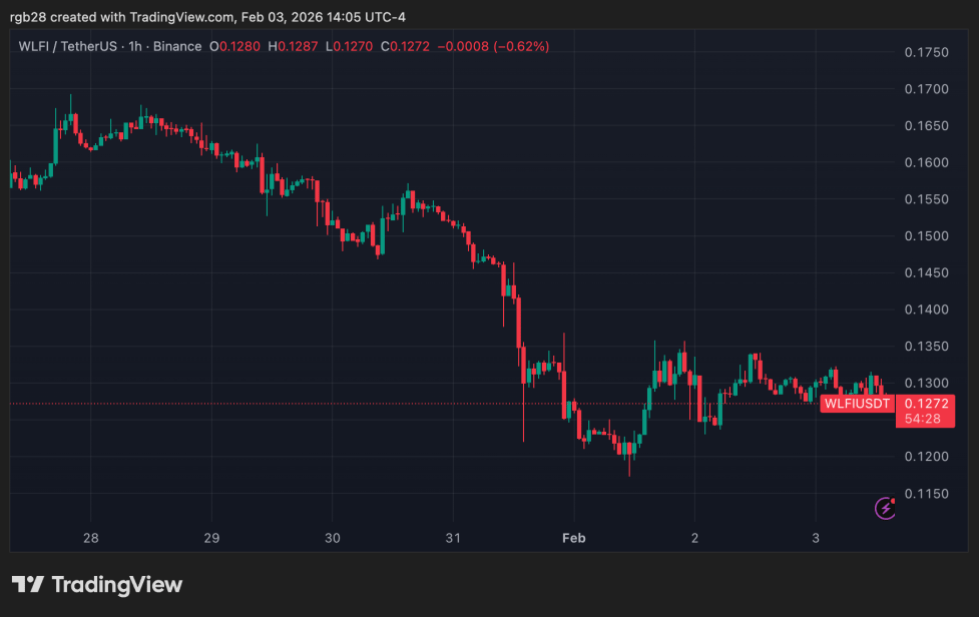
WLFI trades at $0.127 in the one-week chart. Source: WLFIUSDT on TradingView


Related Questions

QWhat is the main concern raised by US lawmakers regarding the WLFI-UAE deal?

AUS lawmakers, including Senator Chris Murphy, have raised concerns that the $500 million deal between a UAE-backed entity and World Liberty Financial (WLFI) constitutes 'brazen, open corruption' and a breach of national security precedent, with payments potentially being considered 'the elements of a bribe.'

QWhich UAE entity is involved in the investment, and who is it linked to?

AThe UAE entity involved is Aryam Investment, which is linked to Sheikh Tahnoon bin Zayed, an Abu Dhabi royal with ties to the emirate's state investment machinery.

QHow did President Trump respond to allegations about his involvement in the WLFI-UAE deal?

APresident Trump denied any involvement or knowledge of the $500 million stake deal, stating that he is not involved in WLFI's day-to-day operations and that his sons are handling the business.

QWhat action did the Trump administration take regarding the UAE shortly after the WLFI deal was finalized?

AMonths after the deal, the Trump administration approved expanded access for the UAE to advanced US-made AI chips, despite restrictions from the Biden administration over concerns about potential diversion to China.

QWhat reforms have lawmakers called for in response to the WLFI-UAE deal?

ALawmakers, such as Representative Greg Landsman, have called for 'massive anti-corruption reforms' to prevent future secret deals and ensure accountability.

Related Reads

What's the Connection Between Pinduoduo's Huang Zheng and Blockchain?

This text explores the unexpected connection between Pinduoduo founder Colin Huang and blockchain, as suggested in his article *Turning Capitalism Upside Down*. Huang argues Pinduoduo's core business is about managing "uncertainty." He posits that wealth flows to the rich because they absorb life's uncertainties (e.g., illness, job loss) that devastate the poor, who pay a premium for certainty through insurance or stable prices. Pinduoduo's model attempts a "reverse insurance": by aggregating consumer demand via group-buying and flash sales, it creates a large, predictable order for manufacturers. This certainty allows factories to remove risk premiums, passing savings back as lower prices, thus partially reversing the wealth flow. The key obstacle, Huang notes, is that an individual's buying intent is an unreliable promise. He then asks if blockchain is the natural solution for this "reverse insurance." The text elaborates that blockchain, through smart contracts with binding deposits, could transform casual intent into a costly-to-break, enforceable commitment. This replaces interpersonal trust with coded rules, making promises credible, pricable, and resistant to fraud. Finally, the author draws a parallel to Bitcoin, framing two paths to creating certainty: the "Pinduoduo path" of aggregating decentralized will into scale, and the "Bitcoin path" of locking rules into immutable code. Both sacrifice something—personal freedom or system flexibility—to manufacture trust and predictability.

链捕手18m ago

What's the Connection Between Pinduoduo's Huang Zheng and Blockchain?

链捕手18m ago

The Storage Magnate Who Conquered a Trillion-Dollar Kingdom, Yet Ultimately Could Not Become the Richest

**Summary:** "The Memory Magnate Who Built a Trillion-Dollar Empire, Yet Never Became the Richest" explores the journey of Zhu Yiming, founder of GigaDevice (603986) and co-founder of the soon-to-IPO ChangXin Memory Technologies (CXMT). The article positions GigaDevice, a fabless chip designer now valued at ~¥340 billion, as a prequel to the massive IDM (Integrated Device Manufacturer) venture, CXMT. Starting in 2005 with minimal capital, Zhu strategically "picked up the pieces" by focusing on niche markets like NOR Flash and microcontrollers (MCUs), areas major players were exiting. This allowed GigaDevice to grow into a diversified semiconductor company, maintaining robust profitability even during industry downturns by controlling costs. However, the piece argues that in the highly cyclical and capital-intensive memory chip industry, the fabless model has limits. True resilience and scale require the ability for "counter-cyclical expansion" – investing heavily during downturns – a tactic only possible for IDMs like Samsung or SK Hynix. This insight led Zhu to partner with the Hefei city government in 2016 to establish CXMT, an IDM focused on DRAM. Zhu's symbolic moves, like forfeiting salary and diluting his equity, were crucial in securing the massive state and bank funding needed. CXMT's equipment base is now valued even higher than that of BYD's vast auto manufacturing empire. Despite the potential for CXMT to reach a market cap of ¥1-2 trillion upon its IPO, Zhu's indirect stake in both companies is estimated below 3%, placing his personal wealth far below that of China's top billionaires. The article concludes that his strategic vision built a trillion-yuan memory landscape, but the capital structure necessary to achieve it precluded a personal fortune of similar scale.

marsbit25m ago

The Storage Magnate Who Conquered a Trillion-Dollar Kingdom, Yet Ultimately Could Not Become the Richest

marsbit25m ago

XRP Ledger Daily Fees Drop Below $400 As Network Activity Question Returns

The XRP Ledger is drawing attention as daily network fees have fallen below $400. While low fees align with XRPL's design for affordable transactions and are often seen as a strength, the metric can also serve as an indicator of network demand and paid transaction volume. This data point of around $3,100 in weekly fee burn highlights the stark contrast with higher-fee chains like Ethereum and Bitcoin. The development fuels an ongoing debate. Proponents view low fees as a sign of efficiency and accessibility, while critics may question if the network is generating sufficient high-value activity relative to its market cap and payments-focused narrative. The article cautions against overstating the finding, noting a single low-fee day does not signify network failure. It instead adds context to discussions about XRPL's usage, especially alongside Ripple's broader initiatives in stablecoins (RLUSD), AI payments, and enterprise infrastructure. The report recommends monitoring for a fee rebound, checking transaction counts for a fuller picture, and confirming the trend via native explorers like Bithomp. It frames the story within a larger market shift where on-chain data, protocol updates, and infrastructure developments are becoming crucial alongside price action. The editorial stance is to present the verified data, explain its significance for assessing network activity, and avoid hype, positioning it as part of the daily crypto conversation.

bitcoinist4h ago

XRP Ledger Daily Fees Drop Below $400 As Network Activity Question Returns

bitcoinist4h ago

Trading

Spot
Futures

Hot Articles

How to Buy WLFI

Welcome to HTX.com! We've made purchasing Official World Liberty Financial (WLFI) simple and convenient. Follow our step-by-step guide to embark on your crypto journey.Step 1: Create Your HTX AccountUse your email or phone number to sign up for a free account on HTX. Experience a hassle-free registration journey and unlock all features.Get My AccountStep 2: Go to Buy Crypto and Choose Your Payment MethodCredit/Debit Card: Use your Visa or Mastercard to buy Official World Liberty Financial (WLFI) instantly.Balance: Use funds from your HTX account balance to trade seamlessly.Third Parties: We've added popular payment methods such as Google Pay and Apple Pay to enhance convenience.P2P: Trade directly with other users on HTX.Over-the-Counter (OTC): We offer tailor-made services and competitive exchange rates for traders.Step 3: Store Your Official World Liberty Financial (WLFI)After purchasing your Official World Liberty Financial (WLFI), store it in your HTX account. Alternatively, you can send it elsewhere via blockchain transfer or use it to trade other cryptocurrencies.Step 4: Trade Official World Liberty Financial (WLFI)Easily trade Official World Liberty Financial (WLFI) on HTX's spot market. Simply access your account, select your trading pair, execute your trades, and monitor in real-time. We offer a user-friendly experience for both beginners and seasoned traders.

5.9k Total ViewsPublished 2025.09.01Updated 2026.06.02

How to Buy WLFI

Discussions

Welcome to the HTX Community. Here, you can stay informed about the latest platform developments and gain access to professional market insights. Users' opinions on the price of WLFI (WLFI) are presented below.

活动图片