US Hits Iran With $500M Crypto Seizure In Major Financial Offensive

bitcoinistPublished on 2026-05-02Last updated on 2026-05-02

Iran’s currency has lost between 60% and 70% of its value against the US dollar. One of the country’s largest banks collapsed last December. And now, nearly half a billion dollars in cryptocurrency tied to the Iranian government has been seized by the United States.

Currency In Free Fall

Treasury Secretary Scott Bessent confirmed Wednesday that American authorities have taken control of close to $500 million in Iranian crypto assets — a figure well above the $344 million that had been publicly reported just days earlier.

Bessent disclosed the updated number during an appearance on Fox Business’s “Kudlow,” where he laid out the scale of a campaign that has been targeting Tehran’s finances on multiple fronts.

“We are freezing bank accounts everywhere,” Bessent said. “More importantly, we are making people less willing to deal with the regime.” He added that retirement funds and overseas real estate belonging to Tehran officials are also being targeted.

The gap between the two figures — $344 million and $500 million — has not been explained. No response was received from the US Treasury or Tether regarding the discrepancy at the time of publication.

Operation Economic Fury

The seizures are part of Operation Economic Fury, a campaign ordered by US President Donald Trump in March 2025. The operation aims to cut off the country’s access to the global financial system through asset seizures, frozen bank accounts, and secondary sanctions on countries that continue purchasing Iranian oil.

On Tuesday alone, the Treasury Department’s Office of Foreign Assets Control sanctioned 35 entities and individuals connected to Iran’s shadow banking network.

Separately, a Chinese oil refinery and around 40 shipping companies were targeted for moving Iranian crude oil to buyers in China and elsewhere in violation of sanctions.
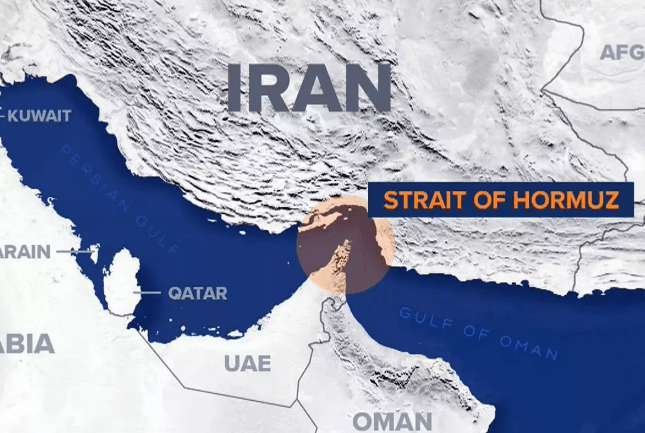
Photo credit: Bloomberg

Fourteen additional individuals and entities were sanctioned for sourcing components used in Shahed-series attack drones and ballistic missile propellants.

Since February 2025, OFAC has sanctioned more than 1,000 Iran-related persons, vessels, and aircraft under the operation.

The $344 million portion of the seizure involved frozen Tether stablecoins. Tether confirmed it had locked the funds — held in USDT — after a request from US authorities. The wallets were tied to Iran through sanctions designations made by OFAC.

BTCUSD trading at $77,367 on the 24-hour chart: TradingView

Strait Of Hormuz Enters The Picture

While the US moves to cut off Iran’s crypto holdings, Tehran has been exploring ways to use digital currency to generate income of its own.

Reports emerged earlier this month that Iran was weighing a plan to charge ships Bitcoin tolls for passage through the Strait of Hormuz. Loaded vessels would be charged roughly $1 per barrel of oil. Empty tankers would pass freely.

According to reports, Iran had already collected revenue from such tolls, though the Iranian government has not publicly confirmed this.

Adding to the confusion, maritime risk firm Marisks warned that fraudsters were posing as Iranian security services and demanding Bitcoin or USDT payments from shipowners stuck near the strait.

Featured image from Trends Research & Advisory, chart from TradingView

Trending Cryptos

Related Reads

CPU Makes a Comeback to the Table, A $170 Billion "Power Seizure" Drama Begins

A new era is dawning for the server CPU (Central Processing Unit), driven by the shift from AI model training to large-scale reasoning and the rise of Agentic AI. This article explores how the CPU is reclaiming a central role in the AI data center. For years, the focus has been on the GPU (Graphics Processing Unit) for AI training. However, as AI moves to the inference and Agent phase—where tasks involve complex, multi-step reasoning, tool calls, and data management—the workload balance is flipping. Studies show CPUs now handle over 70% of the workload in Agentic AI, up from 10-30% in training. This is because Agent tasks generate massive intermediate data (KV Cache) that exceeds GPU memory, forcing it to be offloaded to the CPU's larger, more scalable memory pools. This increased importance is translating into market changes. Major players are taking note: NVIDIA launched its first standalone CPU line, Vera, based on ARM architecture and optimized for Agent performance. AMD doubled its server CPU market forecast to over $1200 billion by 2030. Analyst reports project the total server CPU market could reach $1700 billion by 2030, with AI-driven demand being a primary driver. Furthermore, the classic ratio of CPUs to GPUs in AI servers is rapidly changing, converging from 1:8 toward 1:1 for Agent deployments. This surge in demand has led to a rare industry-wide price increase of 10-15% for server CPUs from Intel and AMD, breaking a decade-long trend of "more performance for the same price." Demand is bifurcating into high-core-count CPUs for in-rack GPU support and moderate-core CPUs for standalone Agent task orchestration. In China, this global trend presents an opportunity for domestic CPU manufacturers like Hygon (海光信息) and Huawei Kunpeng, who are bolstered by both growing AI infrastructure needs and national policies promoting technological self-reliance ("xin chuang"). The maturity of their software ecosystems is also accelerating, evidenced by faster adaptation to new AI models. In conclusion, the narrative is shifting from a GPU-centric view to one where CPU-GPU synergy is critical. The CPU is no longer a peripheral component but a performance-defining bottleneck and a key growth driver in the AI hardware stack, opening a massive new market estimated in the hundreds of billions of dollars.

marsbit1h ago

CPU Makes a Comeback to the Table, A $170 Billion "Power Seizure" Drama Begins

marsbit1h ago

TechFlow Intelligence: AMD AI Director Publicly Criticizes Claude Code for "Becoming Dumber and Lazier", Trump Claims Full Ceasefire in Hormuz But Strait Still Has 80 Unexploded Mines

TechFlow Intelligence Report: This daily digest covers key developments in AI, crypto, hardware, and geopolitics. In AI, SK Telecom faces US export control scrutiny over its partnership with Anthropic, while a Gemini user reports being misled in a scam scenario, sparking safety debates. China's Z.AI launches the GLM-5.2 model, rivaling Claude Opus without NVIDIA chips. In crypto, Bithumb lists ReProtocol, and Upbit delists KernelDAO. On the hardware front, MIT researchers build a custom OS to study chips, ASML denies US claims its advanced lithography machines are in China, and Amazon considers selling its in-house AI chips. Apple's future A21 Pro chip may use TSMC's latest N2P process. Major tech issues include 10,000 GitHub repositories distributing malware and Apple patching a critical eavesdropping flaw in Beats earbuds. US stocks rise, led by semiconductors, with Intel surging 10.6%, while SpaceX falls 3.5%. Geopolitically, despite a US-Iran deal, the Strait of Hormuz remains risky with ~80 uncleared mines, stalling 80M barrels of oil on standby tankers. Iran postpones Switzerland talks, and Trump calls the agreement an "unconditional surrender." The report highlights a contrast: temporary geopolitical calm versus the ongoing, fundamental restructuring of tech supply chains and chip independence.

marsbit1h ago

TechFlow Intelligence: AMD AI Director Publicly Criticizes Claude Code for "Becoming Dumber and Lazier", Trump Claims Full Ceasefire in Hormuz But Strait Still Has 80 Unexploded Mines

marsbit1h ago

Trading

Spot
Futures

Hot Articles

Discussions

Welcome to the HTX Community. Here, you can stay informed about the latest platform developments and gain access to professional market insights. Users' opinions on the price of S (S) are presented below.

活动图片