Trading Volume Hits New Highs Repeatedly, Why Is Kalshi's Pre-IPO Stock Price Experiencing a Tale of Extremes?

比推Published on 2026-02-11Last updated on 2026-02-11

Abstract

Amidst a declining broader market, the prediction market sector has shown remarkable resilience, with trading activity hitting record highs. Kalshi, the largest regulated prediction market platform in the U.S., reached over $9.5 billion in trading volume in January, ranking first in the sector and setting a new monthly record. This has sparked renewed discussions about the fair pre-IPO share price of Kalshi, which is poised to become the "first prediction market stock." Currently, significant price discrepancies exist on crypto-based pre-IPO trading platforms: PreStocks lists Kalshi shares between $364 and $369, while Jarsy shows a price of around $504. In traditional markets, Nasdaq Private Market prices shares at approximately $320, and Hiive at $358. Kalshi completed a Series E funding round last year at a $11 billion valuation. Based on this, the reasonable pre-IPO share price range is estimated to be between $320 and $358. However, considering Kalshi's dominant market share and January volume nearing the entire prediction market's size from October last year, its implied valuation could be at least $15 billion. This would adjust the reasonable share price range to approximately $320–$423. Thus, Jarsy's current pricing appears high, while PreStocks may present arbitrage opportunities. With 2026 being a major year for global sporting events, Kalshi's annual revenue potential is significant, likely exceeding earlier estimates for competitor Polymarket, which could furthe...

Author: Wenser

Original Title: Kalshi's Trading Volume Continues to Break New Highs, What Is a Reasonable Pre-IPO Stock Price?


During the market downturn, prediction markets have become the most eye-catching sector in the crypto market. In early February, when the market plummeted, BTC and ETH once fell by over 10%, but prediction market trading remained active, with weekly transactions reaching 26.39 million, setting a historical record. Meanwhile, as the largest compliant prediction market platform in the United States, Kalshi also surged to the top of the sector with over $9.5 billion in trading volume in January this year, setting a new historical high for monthly trading volume. This has led to a new round of pricing for Kalshi's pre-IPO stock.

Today, the question we are discussing is—what should be the reasonable price range for the pre-IPO stock of Kalshi, which is poised to become the "first stock in the prediction market"?

Overview of Current Pricing on Tokenized Stock Trading Platforms: PreStocks, Jarsy

As of the time of writing, there is a significant price difference for Kalshi's pre-IPO stock on two major tokenized stock trading platforms:

On the PreStocks platform, Kalshi's pre-IPO stock pricing includes two prices—

One price is the token price under the implied market capitalization (market liquidity pricing level), with a per-share price of around $369;

The other price is the marked price under the capital market capitalization (existing financing pricing level), with a per-share price of around $364.
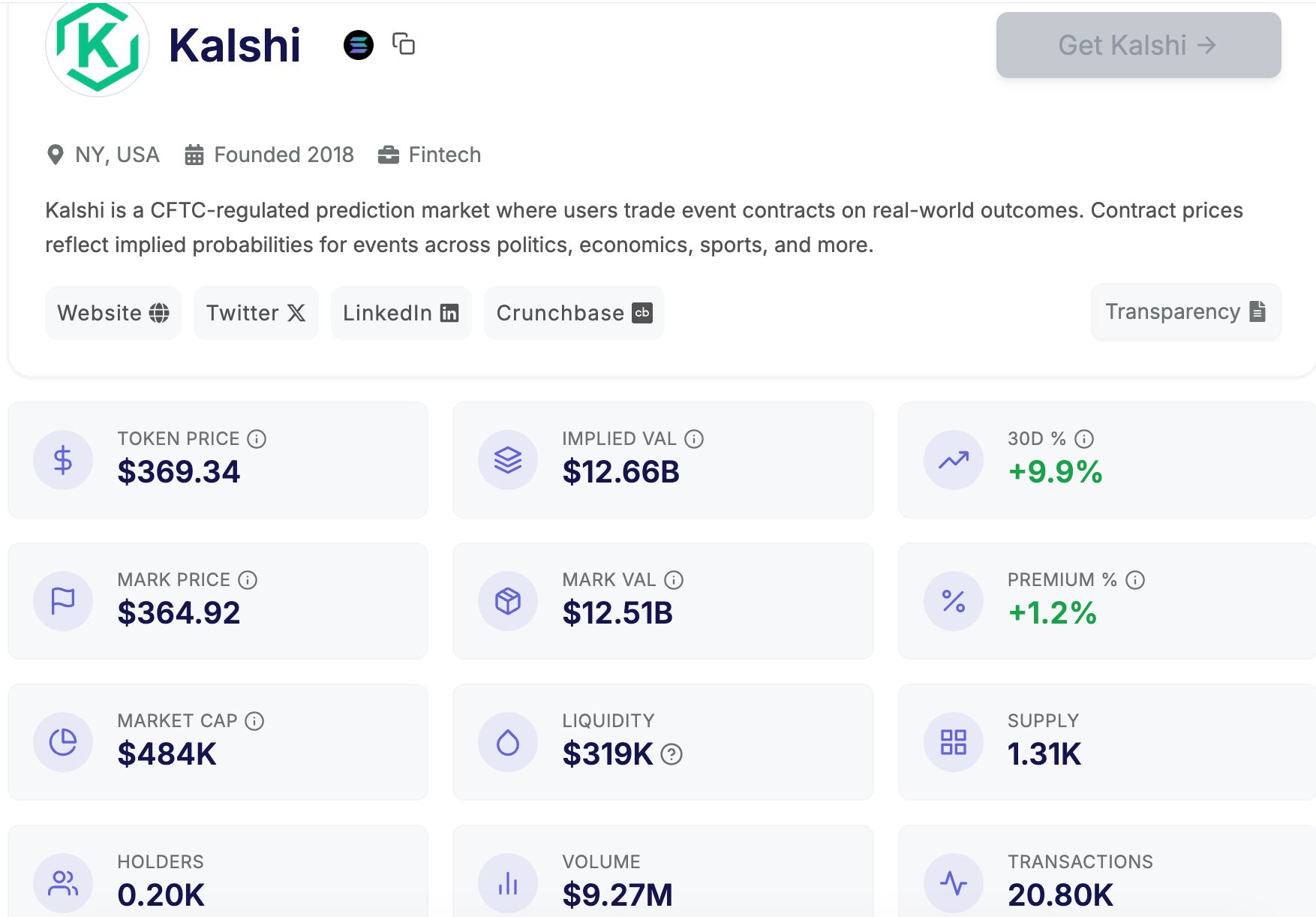
On the Jarsy platform, Kalshi's pre-IPO per-share price has already jumped to around $504.

It is worth mentioning that compared to when we previously wrote the article "Kalshi's Pre-IPO Stock Price Soars, Is It Still Worth Buying Now?", the pre-IPO prices of Kalshi stock on both platforms have experienced varying degrees of increases and decreases. The price situation at that time was as follows:

  • On PreStocks, Kalshi's implied market capitalization was approximately $14 billion, with a per-share price of around $407;

  • On Jarsy, Kalshi's market valuation was $11 billion, with a per-share price of $450.

In other words, the price on PreStocks dropped from $407 to around $369; while the price on Jarsy increased from $450 to around $504.

As a comparison, the pre-market pricing for Kalshi stock in traditional financial markets has also changed—

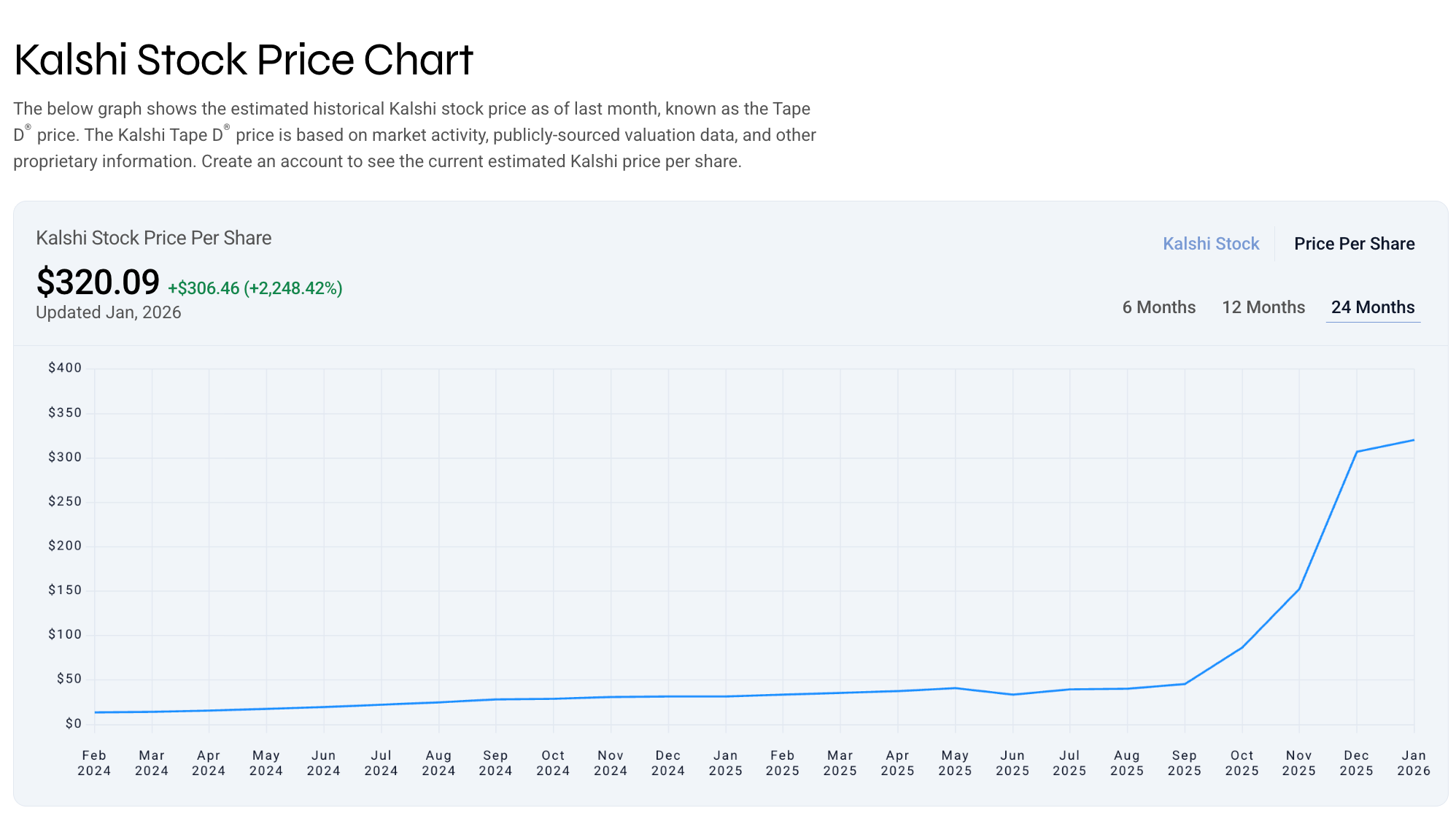
  • On Nasdaq Private Market, Kalshi's per-share price increased from around $307 to around $320;
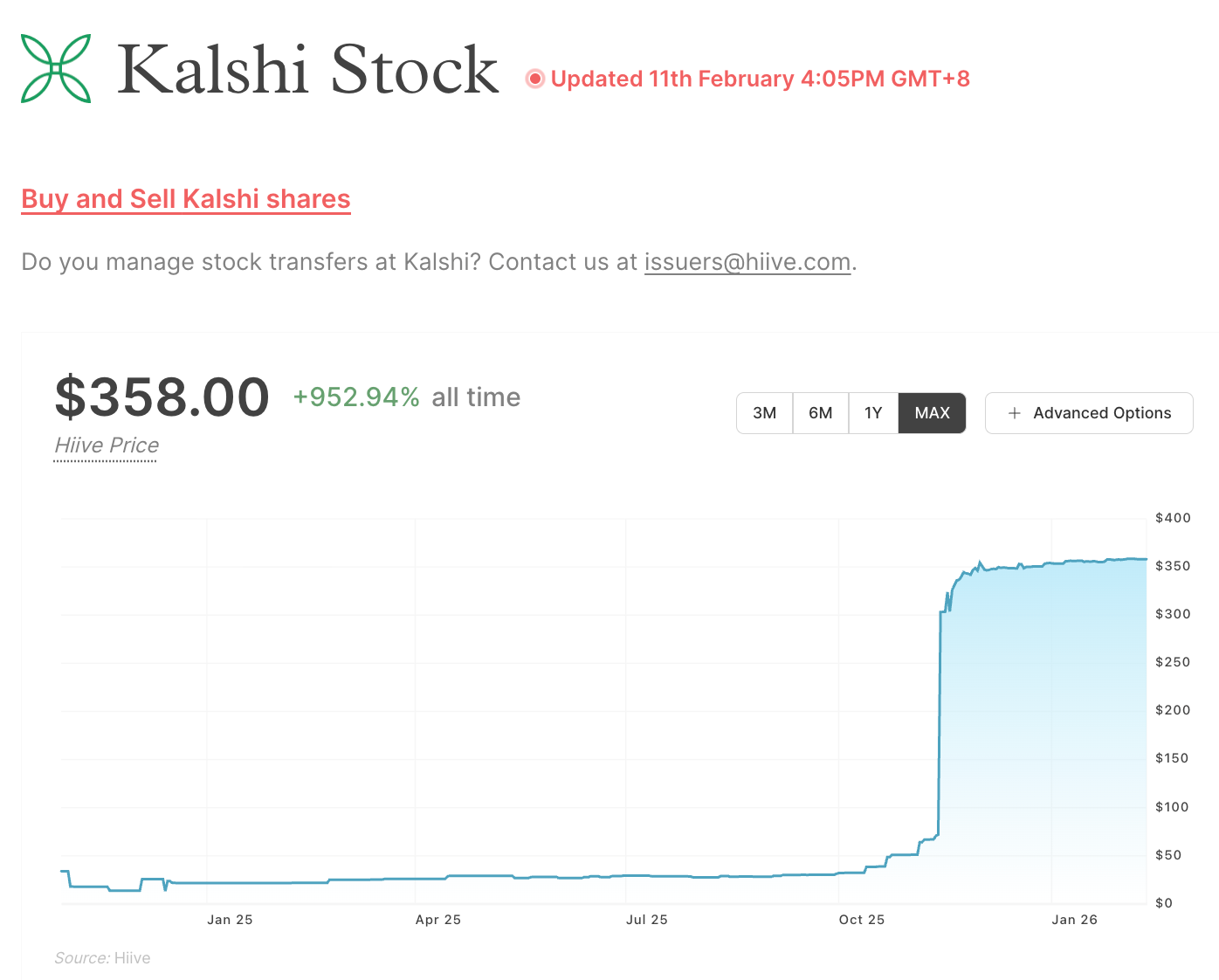
  • On Hiive, Kalshi's per-share price increased by $1 from around $357 to around $358.
Reasonable Pre-IPO Pricing Range for Kalshi Stock: Around $320~$423

Last year, Kalshi completed a $1 billion Series E funding round, valuing the company at $11 billion.

Based on the market capitalization and corresponding stock prices mentioned above, the number of Kalshi shares is approximately between 30.72 million and 34.30 million.

Specifically, the calculation of the number of shares is as follows—

Based on a $11 billion market capitalization corresponding to pre-market prices of $320 and $358 in traditional financial markets, the number of Kalshi shares is approximately 30.72 million to 34.37 million;

Based on the implied market capitalization/token price and capital market capitalization/marked price on PreStocks, the number of Kalshi shares is approximately 34.27 million to 34.30 million;

Based on the pre-IPO purchase price per share on Jarsy, Kalshi's market capitalization caps at $18.665 billion, with a per-share price of $604.84, and the number of shares is around 30.86 million.

Based on the above information, we can make the following deductions:

First, based on the $11 billion valuation, the reasonable pre-IPO pricing range for Kalshi stock is approximately $320-$358. In other words, the current pricing on crypto market tokenized stock trading platforms like PreStocks and Jarsy is relatively high;

Second, Kalshi's trading volume in January reached $9.5 billion, close to the overall prediction market size of about $10 billion in October last year; in October last year, its market share was about 50% of the prediction market. From this perspective, Kalshi's current capital market valuation is at least above $15 billion.

Third, based on a $15 billion valuation and combined with data such as the range of Kalshi's share count, the pre-IPO pricing range for Kalshi stock is approximately $436~$488.

Therefore, if the number of Kalshi shares meets expectations, and under the premise of a $15 billion implied market capitalization, conservatively estimated, the reasonable pre-IPO pricing range for Kalshi stock might be $320~$378 (calculated based on the average of the lowest prices in the pricing range); optimistically estimated, the reasonable pre-IPO pricing range for Kalshi stock might be $358~$423 (calculated based on the average of the highest prices in the pricing range).

Based on the above data conclusions, the pre-IPO pricing for Kalshi stock on the Jarsy platform is偏高 (high), while the PreStocks platform offers some arbitrage opportunities.

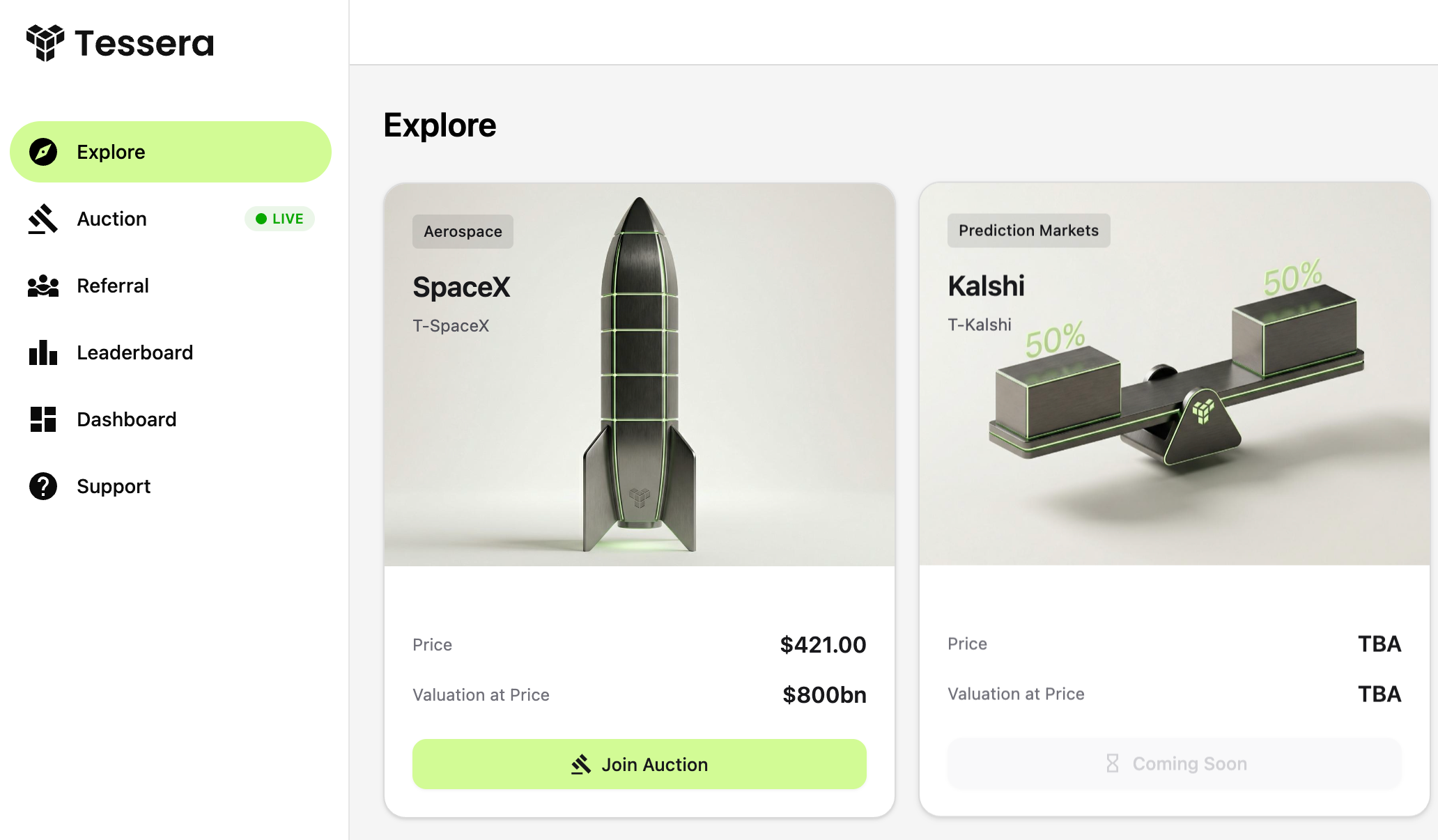
In addition, the latest tokenized stock trading platform, Tessera, plans to open equity public offerings in the future, which readers can also consider as an alternative reference (invitation code can be found here).
Combined with the relevant information mentioned in the previously published Odaily Planet Daily article "Data Calculation Shows Polymarket's Annual Revenue Exceeding $100 Million Is Not Difficult, Provided That...":

Based on a static calculation of the trading volume and fee ratio in the "15-minute cryptocurrency rise and fall" market on Polymarket, under the current trading volume level and structure, if Polymarket introduces a similar fee model in all markets, it is expected to bring in $418 million in annual revenue for the platform.

As a prediction market platform with larger trading volume and higher fees, and taking advantage of the timing of the major sports year in 2026, Kalshi's annual revenue is expected to exceed this estimated revenue of Polymarket. From this perspective, the capital market may further raise the pre-IPO pricing of Kalshi stock in the future.


Twitter:https://twitter.com/BitpushNewsCN

BitPush TG Discussion Group:https://t.me/BitPushCommunity

BitPush TG Subscription: https://t.me/bitpush

Original link:https://www.bitpush.news/articles/7611114

Related Questions

QWhat is the current pre-market stock price range for Kalshi on PreStocks and Jarsy platforms?

AOn PreStocks, the pre-market stock price for Kalshi is around $369 (implied market cap pricing) and $364 (capital market cap pricing). On Jarsy, the price is around $504.

QWhat was the valuation of Kalshi after its Series E funding round last year?

AKalshi completed a $1 billion Series E funding round last year with a valuation of $11 billion.

QWhat is the estimated reasonable pre-market stock price range for Kalshi based on a $11 billion valuation?

ABased on a $11 billion valuation, the reasonable pre-market stock price range for Kalshi is estimated to be between $320 and $358.

QWhat is the estimated pre-market stock price range for Kalshi if assuming a $15 billion implied market cap?

AAssuming a $15 billion implied market cap, the estimated pre-market stock price range for Kalshi is between $436 and $488.

QWhich platform's pre-market pricing for Kalshi stock is considered relatively high, and which platform may present arbitrage opportunities?

AJarsy's pre-market pricing for Kalshi stock is considered relatively high, while PreStocks may present some arbitrage opportunities.

Related Reads

Will the Fed Still Cut Interest Rates? Tonight's Data Is Crucial

The core debate surrounding the Federal Reserve's potential interest rate cuts is intensifying amid geopolitical conflict and rebounding inflation. The key question is whether high energy prices will cause persistent inflation or weaken consumer demand enough to force the Fed to cut rates. Citigroup presents a bullish case for cuts, arguing that oil supply disruptions from the Strait of Hormuz are temporary and will not lead to lasting inflationary pressure. They point to receding bond yields and oil prices as evidence the market is pricing in a short-lived shock. Citi's data also shows tightening financial conditions, a stabilizing labor market, and healthy tax returns, supporting their view that the path to lower rates remains open. Conversely, Deutsche Bank offers a starkly contrasting, more hawkish outlook. They argue the Fed's current policy is already neutral and expect rates to remain unchanged indefinitely. Their view is based on stalled disinflation progress and a shift toward more hawkish rhetoric from key Fed officials like Waller, who cited risks from prolonged Middle East conflict and tariffs. Other officials, including Williams and Hammack, signaled rates would likely stay on hold for a "considerable time." The market pricing has shifted dramatically, now forecasting zero cuts in 2026. The imminent release of the March retail sales "control group" data is highlighted as a critical test. This metric, which excludes gas station sales, will reveal if high gasoline prices are eroding consumer spending in other areas. A weak reading could support the case for imminent rate cuts, while a strong one would bolster the argument for the Fed to hold steady. This data is pivotal for determining the near-term policy path.

marsbitJust now

Will the Fed Still Cut Interest Rates? Tonight's Data Is Crucial

marsbitJust now

The Second Half of Macro Influencer Fu Peng's Career

Fu Peng, a prominent Chinese macroeconomist and former chief economist of Northeast Securities, has joined Hong Kong-based digital asset management firm Bitfire Group (formerly New Huo Group) as its chief economist. This move, announced in April 2026, triggered an 11% surge in Bitfire's stock price. Fu, known for his accessible macroeconomic commentary and large social media following, will focus on integrating digital assets into global asset allocation frameworks, particularly combining FICC (fixed income, currencies, and commodities) with cryptocurrencies for institutional clients. His career includes roles at Lehman Brothers and Solomon International, with significant influence gained through public communication. However, in late 2024, Fu faced temporary social media bans after a controversial private speech at HSBC on China's economic challenges, though he denied regulatory sanctions. He later left Northeast Securities citing health reasons. Bitfire, a licensed virtual asset manager serving high-net-worth clients, seeks to build trust and attract traditional capital through Fu’s expertise and credibility. The partnership represents a strategic shift for both: Fu enters the crypto sector after a traditional finance peak, while Bitfire aims to leverage his macro framework for institutional adoption. Outcomes remain uncertain regarding capital inflows and compatibility within corporate structure.

marsbit1h ago

The Second Half of Macro Influencer Fu Peng's Career

marsbit1h ago

Trading

Spot
Futures
活动图片