The True Replay of the Internet Bubble Is Web3, Not AI

marsbitPublished on 2026-03-13Last updated on 2026-03-13

Abstract

Author TVBee argues that Web3, not AI, is the true reenactment of the 2000 dot-com bubble. The article compares the three sectors: the historical internet bubble, the current AI boom, and Web3. During the 2000 bubble, capital was focused on the supply side with many unprofitable companies, while demand-side applications were scarce due to limited internet access and primitive technology. In contrast, the current AI boom is primarily driven by infrastructure leaders like NVIDIA and AMD, which have substantial profits. Demand-side applications, such as various AI models and tools, are growing and integrating into more use cases, though the ecosystem is still developing. Web3, however, is criticized for its significant supply-side speculation with high valuations based on minimal revenue (e.g., ZKsync's $1.76B市值 vs. $458 daily income). Demand-side applications are limited mostly to DeFi, memecoins, and prediction markets, with much activity driven by airdrop farming rather than genuine utility. The author concludes that Web3, with its hype-driven capital and lack of practical products, mirrors the 2000 bubble most closely. Predictions include a likely U.S. stock market correction (but not a crash), a moderate impact on Bitcoin, and a prolonged, painful consolidation for altcoins to separate valuable projects from speculative ones. The author warns that the altcoin market decline since late 2024 is not yet over.

Author: TVBee

Both stock market and crypto players are worried that AI might repeat the 2000 internet bubble, but in reality, Web3 is the true replay of the internet bubble.

Bubble: Supply-Side Self-Indulgence, Lackluster Demand

During the 2000 internet bubble phase, capital was self-indulgent on the supply side. Many internet-listed companies had no profits or cash flow, yet their stock prices soared wildly.

On the other end, internet applications on the demand side were pitifully few... Before 2000, there was no Douyin or Kuaishou, no Alibaba or JD.com, no WeChat.

The mainstream internet applications at the time were only the雏形 of QQ like OICQ, MSN and other chat software, download tools like FlashGet and NetAnts, information platforms like Yahoo,网易, and搜狐, basic applications like Google Search and email, and the early stages of e-commerce like Amazon and eBay, which had very few users.

At that time, there was no mobile internet. Personal computers were considered luxury items, and most households in China did not have one. Monitors were those big, bulky CRT monitors. Laptops were as thick as bricks, and internet access relied on dial-up connections through telephone lines. Even older were the storage media; the primary storage was floppy disks—yes, the A drive. Their capacity was only 1.44MB, not even enough to hold a single moderately sized image today.
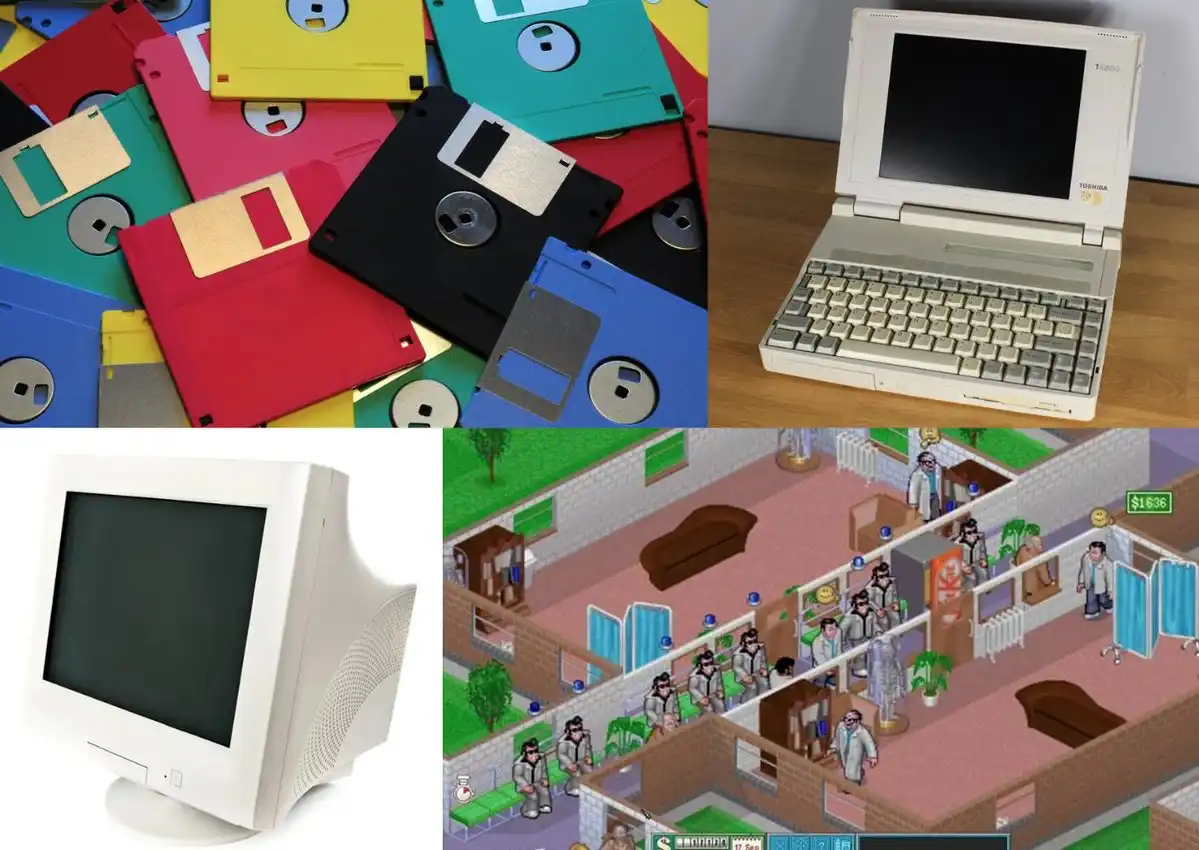
It's worth mentioning that there were single-player games back then, but they were pixelated games.

AI: Infrastructure Leaders Soar, Products Growing

Looking at the AI industry, stock prices have surged, but the main gainers are AI leaders, primarily in infrastructure—NVIDIA, AMD, SK Hynix, Samsung, Micron... This is because AI requires extensive training before deployment. On the supply side, AI does not have the exaggerated bubble seen in 2000. At least these leading AI companies do have considerable profits.

On the demand side, we can at least see Gemini, Claude, GPT, Doubao... various UGC applications. And the recently popular Lobster, the newly launched Perplexity Personal Computer... the highly eye-catching AI robots at the Spring Festival Gala... Although the breadth of AI products still can't be compared to that of the internet in 2000, this is because AI development has high infrastructure requirements. AI needs to develop its infrastructure first before it can integrate into more types of applications.

Web3: Technology as a Gimmick, Applications Few and Far Between

Circulating Market Cap and Profit

Now look at the Web3 industry. Various technological narratives emerge one after another, but how many applications actually have users? Aside from a handful of DeFi leaders, there might only be MEME platforms, prediction markets, and Perp DEXs, with much of the activity in the latter two coming from interaction behaviors driven by airdrop expectations.

Corresponding to the scarcity of products on the demand side is the self-indulgence on the supply side.

⏵ Example from the ZK track: ZKsync with a daily income of $458 has a circulating market cap of $176 million, equivalent to a P/E ratio of 1052.

⏵ Example from the L2 track: Optimism with a daily income of $2,427 has a circulating market cap of $253 million, equivalent to a P/E ratio of 285.

⏵ Example from the L1 track: Sei with a daily income of $3,564 has a circulating market cap of $424 million, equivalent to a P/E ratio of 327.

And there's Blast with a daily income of -$6...
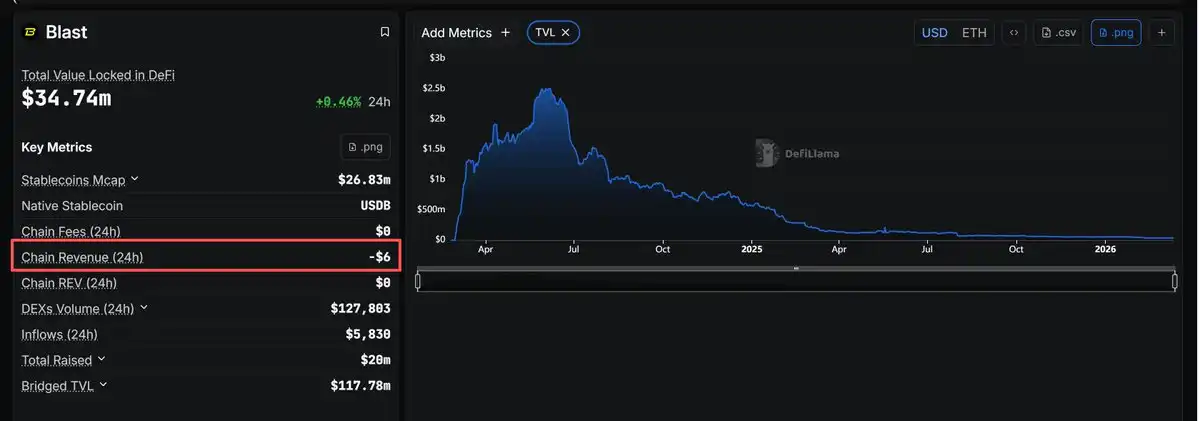
If we follow stock market logic, shareholders of the first three projects would have to wait 1052 years, 285 years, and 327 years respectively to break even, and this doesn't even include the infrastructure and operational costs required to keep these chains running.

Although these ecosystems are not meant to break even and profit from on-chain revenue, for shareholders, i.e., token holders, this is a nightmare...

What Web3 Applications Are There?

Now, what Web3 applications are there?

Former applications like the metaverse,链游, inscriptions, social... and probably some others we can't even remember are almost never mentioned now.

Currently, besides DeFi and RWA, the only ones with users are almost just meme coins, prediction markets, and perp DEXs. Among these, meme coins are PvP among existing capital, and part of the activity in prediction markets and Perp DEXs is still driven by interaction behaviors due to airdrop expectations.

Compared to the internet applications mentioned from 2000, Web3 applications are truly few and far between...

Final Thoughts

Therefore, the sector that is truly indulging on the supply side while lacking achievement on the demand side is not AI, but Web3.

US stock market players overlap with those from 26 years ago. Investors and Wall Street are deliberately avoiding a repeat of history. AI has a bubble, but it differs from the 2000 internet bubble.

Instead, it's the younger Web3 field where capital is speculating on technology on the supply side, while the demand side has few truly practical products. This is the true reappearance of the 2000 internet bubble.

Based on the reasoning of a moderate AI泡沫 and a high Web3泡沫:

  • First, the US stock market will correct, but a crash like in 2000 is unlikely.
  • Second, BTC, which is correlated with US stocks, will be moderately affected.
  • Third, just like the 2000 internet bubble,山寨币 will continue to be washed out, forming a painful process of separating the wheat from the chaff. This process might be even longer than I imagine.

So far,山寨币 have generally been falling for about 15 months since the end of 2024, but this is not the end.

Don't believe the talk that山寨币 have bottomed out. Some have, others have no bottom.

Trending Cryptos

Related Questions

QAccording to the article, which sector is more likely to repeat the 2000 internet bubble: AI or Web3?

AThe article argues that Web3 is more likely to repeat the 2000 internet bubble, not AI.

QWhat was a key characteristic of the supply side during the 2000 internet bubble?

AA key characteristic was that capital was indulging in self-amusement on the supply side, with many internet companies having no profits or cash flow but their stock prices soared wildly.

QHow does the article describe the current state of Web3 applications?

AThe article describes Web3 applications as scarce and lacking truly practical products, with only a handful like some DeFi leaders, meme platforms, prediction markets, and perpetual DEXs having users, some of which are driven by airdrop expectations.

QWhat is the article's view on the profitability and valuation of major Web3 infrastructure projects like ZKsync, Optimism, and Sei?

AThe article highlights their extremely high Price-to-Earnings (PE) ratios (e.g., 1052 for ZKsync) based on meager daily revenues, suggesting it would take centuries for token holders to recoup their investment, representing a nightmare for them.

QWhat are the article's three main predictions based on its analysis of AI and Web3 bubbles?

A1. The U.S. stock market will correct but is unlikely to crash like in 2000. 2. Bitcoin, being associated with U.S. stocks, will be moderately affected. 3. Altcoins will continue to be washed out in a painful process of eliminating the false and preserving the true, which may be a prolonged cycle.

Related Reads

In Conversation with Ray Dalio: We Are Currently in an AI Bubble, with 1% of My Portfolio in Bitcoin

Ray Dalio, founder of Bridgewater Associates, warns in an interview that the current AI boom shows classic bubble characteristics, which could lead to significant economic downturns as seen in past cycles like 1929 or 2000. He explains that speculative enthusiasm, fueled by debt and overvaluation, often precedes a crash when rising rates or taxation force asset sales, causing widespread losses and recession. Dalio also outlines his "Big Cycle" theory, describing an approximate 80-year pattern where widening wealth gaps, massive government deficits, and shifting geopolitical power (like China's rise) create internal conflict and global instability. He emphasizes that we are in a late-cycle, transitional phase where traditional powers like the US and UK face decline. For personal wealth protection, Dalio advises diversification beyond cash into assets like stocks, bonds, real estate, and particularly gold, which he prefers over Bitcoin. While he holds about 1% of his portfolio in Bitcoin as a non-printable hard asset, he views gold as more secure from technological or governmental threats. Regarding AI's impact, Dalio believes it will disproportionately benefit capital owners, worsening inequality by replacing both physical and cognitive labor. He suggests that human intuition and emotional intelligence, combined with AI, will be key for future workers. On taxation, Dalio argues that wealth taxes are impractical and risk triggering asset sell-offs, reducing productive investment. He points to the UK as a cautionary example of debt, low productivity, and political strife. Geopolitically, Dalio foresees a more regionalized world, with the US showing weakness in prolonged conflicts like with Iran, akin to past imperial declines. The ideal outcome, he suggests, is coexisting powerful blocs (e.g., Americas, China-Asia Pacific) without major war.

marsbit1h ago

In Conversation with Ray Dalio: We Are Currently in an AI Bubble, with 1% of My Portfolio in Bitcoin

marsbit1h ago

Daily 7.2 Trillion KRW: Foreign Capital's Record Net Buying on Friday! Wall Street Says Headwinds for Korean Stock Fund Flows Have Subsided

South Korean stock market sees a dramatic shift in fund flows. On July 31, foreign investors made a record net purchase of approximately KRW 7.2 trillion in KOSPI stocks, marking a fundamental reversal from the persistent large-scale net outflows seen in previous months. This contributed to a significant narrowing of foreign net selling in July to KRW 9.8 trillion, down sharply from KRW 48.4 trillion in June and KRW 44.5 trillion in May. Simultaneously, domestic institutional pressure eased. South Korean pension funds and asset managers turned to a net buying position in July, purchasing KRW 1.0 trillion worth of KOSPI shares, contrasting with net sales in May and June. Market volatility is expected to be dampened by new financial regulations. Effective July 31, the Financial Services Commission tightened access for retail investors to single-stock leveraged ETFs by raising the minimum cash deposit requirement. Trading volumes for these products subsequently dropped to about 50% of their monthly average. Citigroup Research maintains its year-end KOSPI target of 10,000 points. The firm cites several supportive factors: the substantial easing of headwinds from capital outflows, a robust fundamental outlook for the semiconductor sector, historically low market valuations, strong economic fundamentals, and the potential for policy support from financial authorities if needed.

marsbit1h ago

Daily 7.2 Trillion KRW: Foreign Capital's Record Net Buying on Friday! Wall Street Says Headwinds for Korean Stock Fund Flows Have Subsided

marsbit1h ago

Thanks to Dice Rolls, Bitcoin Keys Are Stored Offline, But Not Everyone Will Do It

The article discusses using dice rolls to generate secure Bitcoin wallet seeds, providing entropy independent of potentially flawed hardware random number generators. It explains that each fair dice roll offers about 2.585 bits of entropy, with around 50 rolls needed for a standard 12-word seed phrase and 99+ recommended for higher security. This method gained attention after a vulnerability was revealed in some Coldcard hardware wallets, where a faulty firmware RNG (dating back to 2021) compromised generated keys. The analysis notes that while a dice-generated main seed was safe from this specific flaw, other Coldcard functions (like creating paper wallets, backup keys, or passwords) could still be vulnerable if they used the defective RNG. The piece argues that while dice-based entropy is technically robust, the manual process is error-prone, tedious, and unrealistic for most new users, who might make mistakes in recording or inputting rolls. It concludes that while manual entropy generation should remain an option for advanced users, the long-term goal is to develop reliable, user-friendly hardware and software that securely generates randomness without requiring specialized knowledge. Coldcard users are advised to check their firmware version and replace any secondary secrets (like paper wallet keys) created with vulnerable devices, while also considering multi-signature setups with devices from different manufacturers for added security.

cryptonews.ru6h ago

Thanks to Dice Rolls, Bitcoin Keys Are Stored Offline, But Not Everyone Will Do It

cryptonews.ru6h ago

Trading

Spot

Hot Articles

Discussions

Welcome to the HTX Community. Here, you can stay informed about the latest platform developments and gain access to professional market insights. Users' opinions on the price of AI (AI) are presented below.

活动图片















