Who would have thought that philosophy, a once niche major, would become a hot topic in the current AI scene.
This was our unexpected discovery while browsing WAIC this year – the philosophical content was surprisingly high.

△
For example, at the parallel session “Mind and Intelligence · Youth Ecology Forum” of the WAIC Scientific Intelligence Open Forum, the first speaker was Sun Ning, a professor from the School of Philosophy at Fudan University. In the main forum discussion “Original Innovation in the AI-Native Era,” Sun Xiangchen, another professor from the School of Philosophy at Fudan University, also joined the panel for a summit dialogue.
Coincidentally, during WAIC, the “2026 Blue Book on Intelligent Development in Humanities and Social Sciences” released by the National Development and Intelligent Governance Comprehensive Laboratory of Fudan University brought deep thinking, research credibility, and AI governance into the spotlight.
But to be fair, this seemingly sudden wave of philosophical interest actually has a clear trajectory.
A few years ago at AI conferences, people mostly talked about parameters, computing power, and leaderboards. Now, AI can write papers, perform mathematical proofs, generate protein conformations, and simulate societies with a group of agents.
While AI capabilities are advancing triumphantly, the ensuing problems are becoming increasingly philosophical:
- Does a model's ability to answer questions fluently mean it truly understands?
- If AI can autonomously discover knowledge, does it count as a new scientist?
- If AI discovers laws that humans cannot explain but can be verified experimentally, should we believe them?
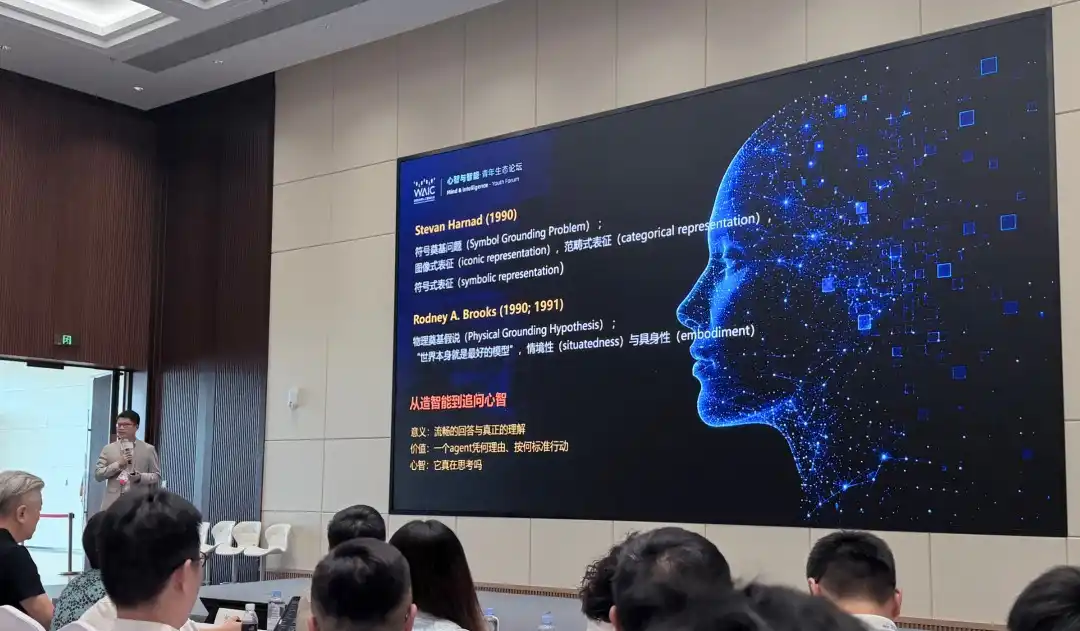
In his speech titled “Before Intelligence, There is a World,” Sun Ning brought the questions back to the source.
As early as the 1990s, cognitive scientist Stevan Harnad proposed the Symbol Grounding Problem, questioning how a symbol system acquires true meaning through perception and interaction. Around the same time, robotics engineer Rodney Brooks proposed the Physical Grounding Hypothesis, leaving behind an influential statement—the world is its own best model.
△
Following this line of thought, Sun Ning proposed that a kind of intelligence deeply rooted in the world requires at least a body, an environment, others, and history. The body gives action a cost, the environment provides feedback, others bring norms, and history allows failures to accumulate into experience.
He summarized it in two sentences:
Before intelligence, there is a world. Before mind, there is relationship.
This also set the tone for the day's discussions.
This Youth Forum was jointly organized by the National Development and Intelligent Governance Comprehensive Laboratory of Fudan University, Shanghai AI Lab, the School of Philosophy at Fudan University, Qingpu Fudan Future Technology Research Institute, and Datawhale.
The stage featured young scientists, philosophers, social scientists, and entrepreneurs. Conversations ranged from self-evolving models to mathematical proofs, from protein dynamics to social simulations, and finally settled on governance and industry.
Issues seemingly scattered across different disciplines were thus strung together.
AI Starts Doing Science Itself
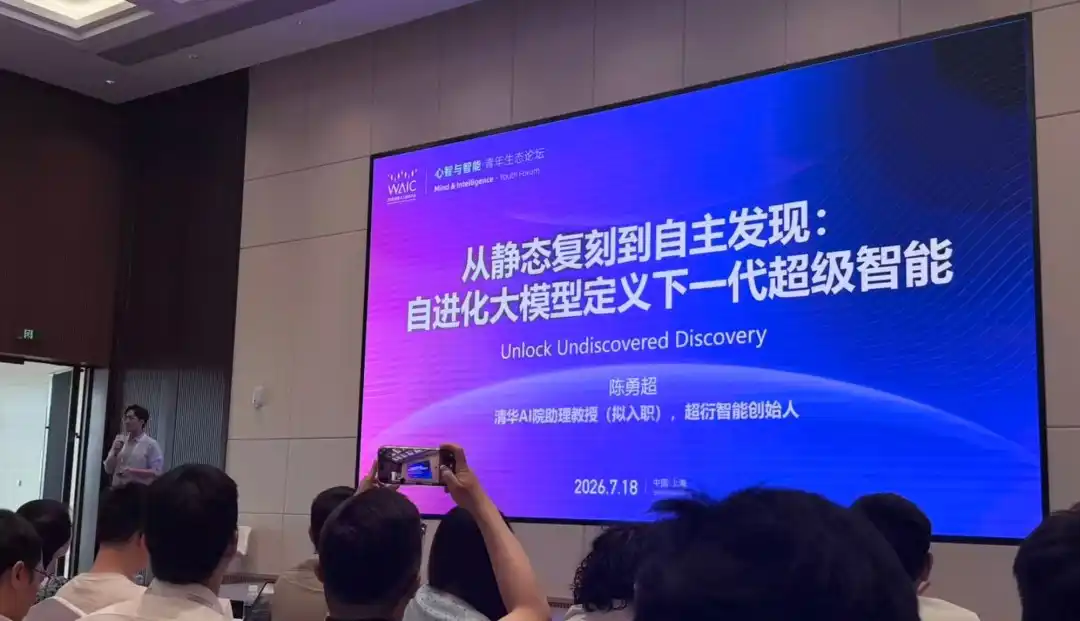
Just after philosophers questioned “what is intelligence,” Chen Yongchao, founder of Chaoyan Intelligence, raised a more specific question—Can AI become a new scientist?
△
Past large models mainly learned existing human knowledge from internet data. The self-evolving models Chen Yongchao described aim to engage in real-world tasks and continuously learn from the research process and environmental feedback.
Specifically, the model can generate its own ideas, write code, run experiments, analyze data, and then incorporate the trajectories of successes and failures to adjust data, the model, and the Harness.
Chen Yongchao also showcased some eye-catching results.
The Apex Search developed by his team generated 34 papers, submitted to academic peer-review systems like ACL and ARR. According to results disclosed on-site, about 10 had the chance to enter Findings or the main conference, with two papers scoring 3.67, higher than about 95% of human submissions.
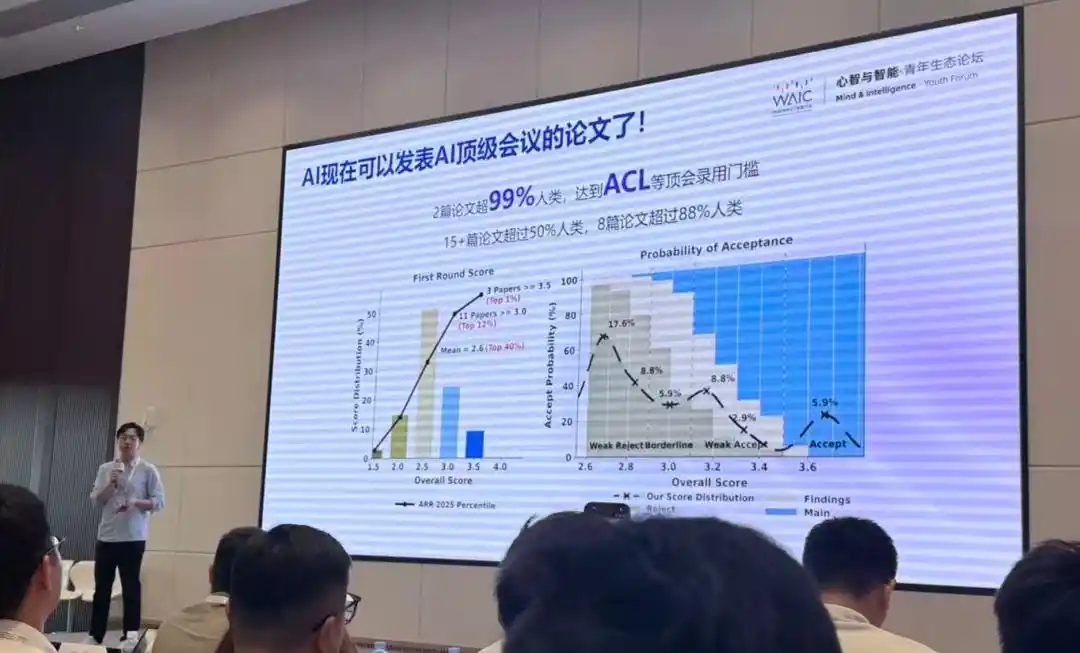
Some peer reviews even gave comments like “the first study in the field,” “rigorous experiments,” and “addresses key issues.”
In other words, AI-generated research results could already pass the first round of scrutiny by human reviewers.
But problems followed.
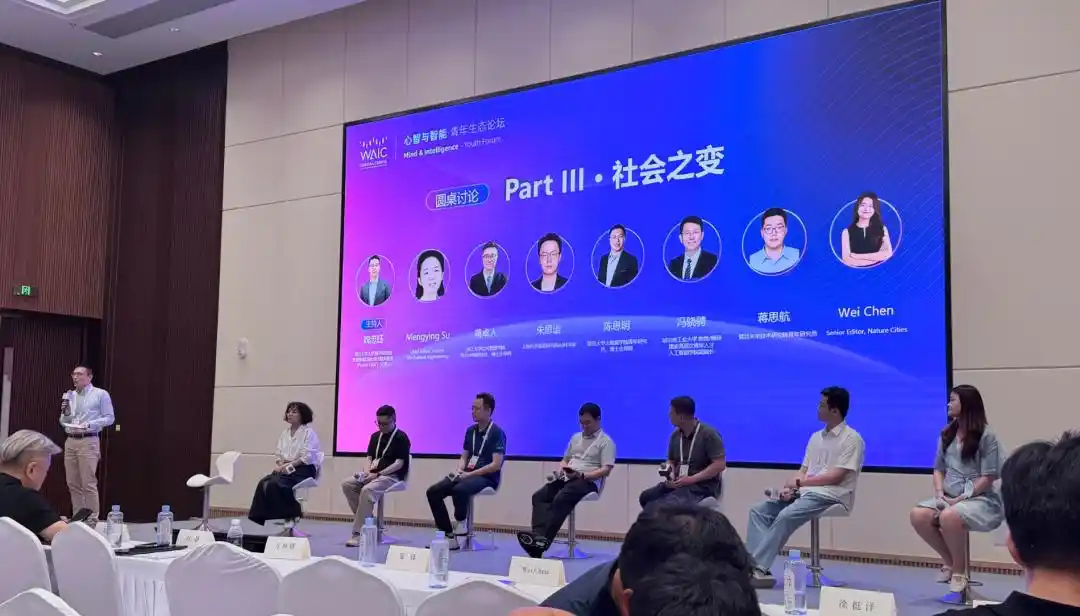
In the later “Changes in Society” panel, Wei Zhongyu, a professor at the School of Data Science, Fudan University, raised the question: if AI generates and submits dozens of papers at once, and a few receive high scores, how should we judge its research capabilities? Does this mean the system's research ability has reached top conference publication level, or has it merely found weak points in the existing peer-review mechanism?
As papers are generated faster and faster, evaluation may become more difficult than generation itself.
Chen Yongchao himself left a series of questions. Can AI produce a breakthrough like Transformer? How to evaluate massive scientific discoveries? Who owns AI research outcomes? If the system is used for harmful research, how should responsibility be allocated?
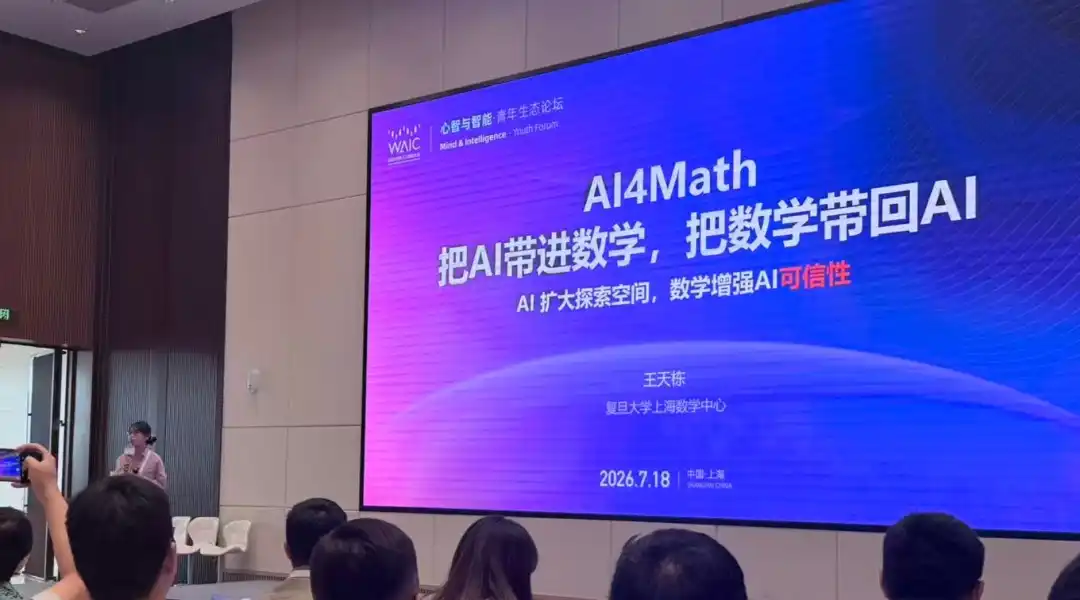
Next on stage, Wang Tiandong, a tenure-track associate professor at the Shanghai Center for Mathematical Sciences, Fudan University, offered a clearer division of labor between humans and machines.
△
AI excels at retrieval, summarization, finding special and counterexamples, and generating dozens of candidate proof paths simultaneously. Mathematicians are responsible for judging the importance of problems, whether conjectures are worth studying, and applying rigorous concepts and structures to constrain results. Finally, machine verification is added to check for missing steps in reasoning or errors in calculations.
Simply put:
AI expands the search space, humans define value, and machines are responsible for verification.
In this process, mathematics can provide structural constraints, formal verification, error analysis, and applicability boundaries for AI. Trustworthiness does not mean never making mistakes; a more realistic standard is that errors can be discovered, risks can be defined, and conclusions can withstand review.
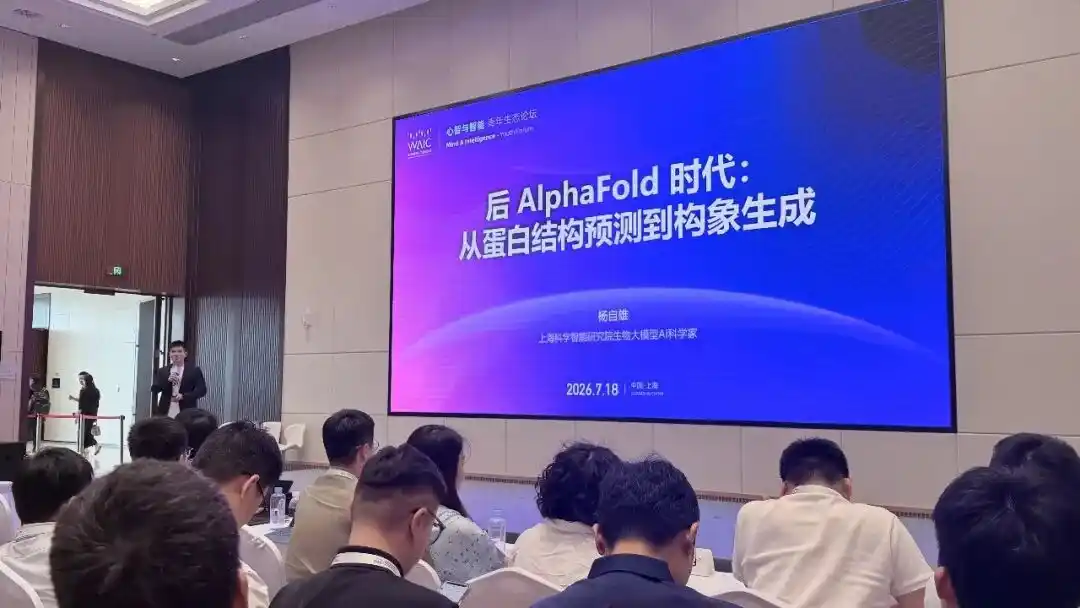
Subsequently, Yang Zixiong, an AI scientist at the Shanghai Institute for Science and Technology Artificial Intelligence, brought the trustworthiness issue into the more complex world of life.
△
AlphaFold's core solution infers highly probable static structures from sequences. But biological molecules like proteins and RNA are always in motion, with many functions dependent on conformational distributions, state transitions, and timescales.
Therefore, the research goal in the post-AlphaFold era has shifted from “predicting a structure” to “generating a dynamic trajectory.”
This means the model must cover rare but important conformations, maintain structural stability over long generation times, and satisfy thermodynamics, kinetics, and physical laws. While static structures have accumulated vast data, dynamic molecular data is very limited, and related evaluation systems still need improvement.
From mathematical proofs to protein dynamics, AI can indeed explore faster and more broadly. But once it comes to effective scientific discovery, evidence, experiments, and real-world feedback are all indispensable.
If mathematics and life sciences have relatively clear verification paths, things get more complicated when AI starts simulating humans and society.
When Intelligence Enters Society, Governance Can’t Lag Behind
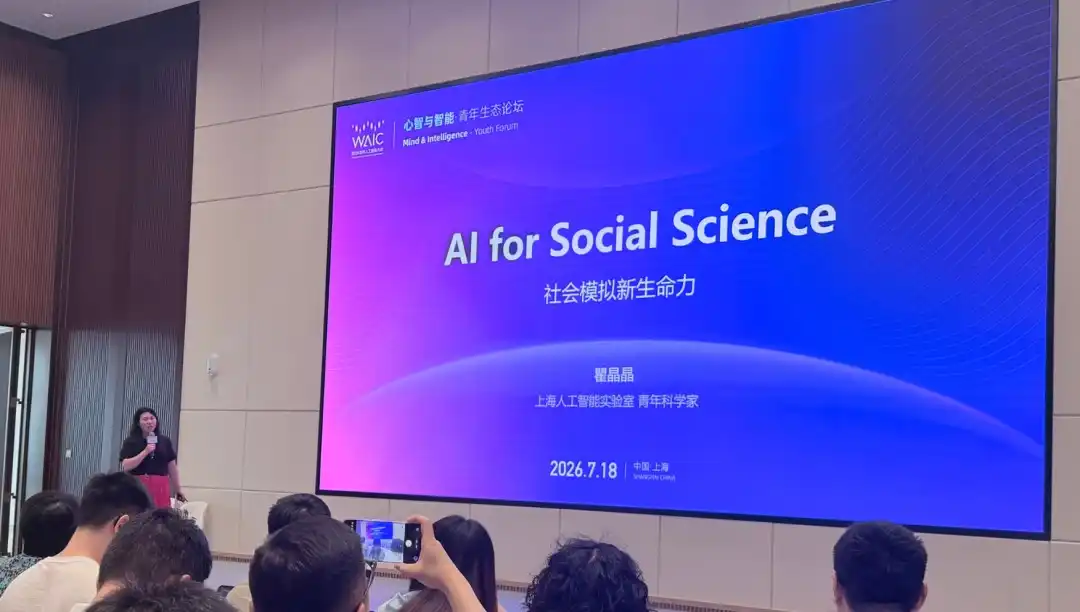
Qu Jingjing, a young scientist at the Shanghai AI Lab, researches precisely the intersection of AI and social sciences.
△
In her view, social sciences are a core foundation for AI development. Alan Turing's research on “whether machines can think” was published in the philosophy journal Mind. Herbert A. Simon proposed the theory of bounded rationality, co-founded the physical symbol system hypothesis with Allen Newell, initiating symbolic AI. Geoffrey Hinton combined psychology and cognitive science to develop neural networks simulating the human brain, paving the way for today's large models.
Now, this relationship is running in reverse, with AI bringing new experimental methods to the social sciences. However, as AGI develops socially and at scale, a core challenge remains: in large-scale, complex social evolutionary games, it's difficult to balance logical consistency with the credibility of experimental results.
Qu Jingjing showcased the social simulation platform Epitome. In terms of high-throughput efficiency, the platform can simulate thousands of virtual samples with one click, compressing a decade of social evolution into 14 hours. Researchers can freely adjust variables like intervention policies and group relationships to quickly observe their long-term social impacts.
This method is particularly suitable for experiments that are difficult to conduct directly in the real world.
For example, how to simulate a child growing from third to fifth grade? The model must reflect knowledge changes and simulate psychological, behavioral, and social relationships. Researchers also want to test different education policies in this virtual environment to observe which methods benefit child development.
While the idea is attractive, risks are also embedded.
After all, a large model can simulate an expert but may not accurately simulate a child in a specific family, region, and social context. Do the attitudes displayed by virtual roles come from real social patterns or stereotypes in the training data?
In the “Changes in Society” panel, Jiang Zhuoren, a Hundred-Talent-Plan researcher and doctoral supervisor at the School of Public Administration, Zhejiang University, shared a set of more cautionary data.
In a cross-national trust study, the correlation coefficient of data generated by large models at the national mean level could reach over 90%. But when entering regression analysis, the significance coverage dropped to 34%–37%; when researchers tried to recover country types using this data, the results were close to random.
In other words, the model looks very much like real society at a macro level, but once entering specific populations and causal relationships, biases are exposed.
More troublesome, social data can form a loop.
Real-world biases enter training data, models then participate in recruitment, education, content distribution, and public decision-making, and new results become materials for the next training round. Without auditing and correction, original biases may be continuously amplified in the loop.
Thus, a straightforward reminder appeared on the panel:
Large models can be used to simulate society, but don't take simulation results as the voice of real society.
Once AI enters society, governance cannot remain at the level of “is the model accurate.”
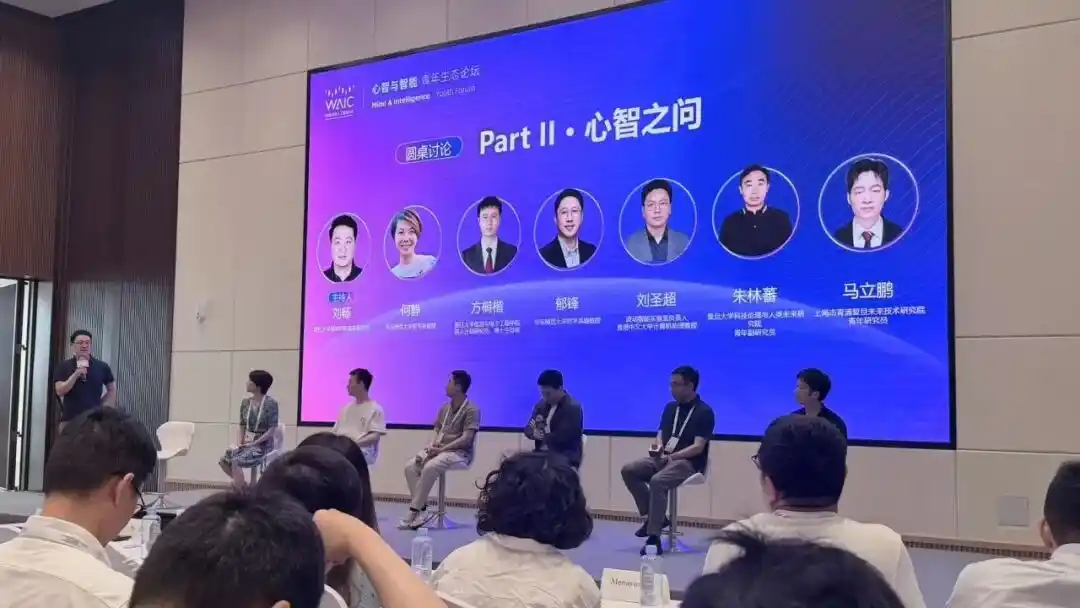
The “Questions of Mind” panel discussed risks like attacks, harmful biological research, and psychological dependence. Zhu Linfan, a young associate researcher at the Institute for Science, Technology and Human Future Ethics, Fudan University, also mentioned that current AI governance generally faces the dilemma of “over-regulation stifles, under-regulation leads to chaos,” requiring technology, policy, ethics, and international cooperation to find more nuanced solutions.
Ma Lipeng, a young researcher at the Qingpu Fudan Future Technology Research Institute, added a technical layer. Today's AI can answer almost anything but lacks the meta-cognitive ability to “know what it doesn't know.” Only by first helping AI recognize its own capabilities and boundaries can subsequent evaluation and governance have better handles. This also requires participation from different disciplines like philosophy, education, and computer science.
The responsibility issue is also becoming more complex.
When AI agents possess stronger initiative, can they become legal or moral actors? If they cannot bear responsibility independently, how should responsibility be divided among developers, deployers, users, and final decision-makers?
Given this, it's not hard to understand why the National Development and Intelligent Governance Comprehensive Laboratory of Fudan University appeared as an organizer of this Scientific Intelligence Forum.
This laboratory's research spans artificial intelligence, big data, humanities and social sciences, public governance, etc., and is one of the first Ministry of Education key laboratories for philosophy and social sciences. An important task it undertakes is observing technological changes within real social and institutional environments and then bridging academic research with policy needs.
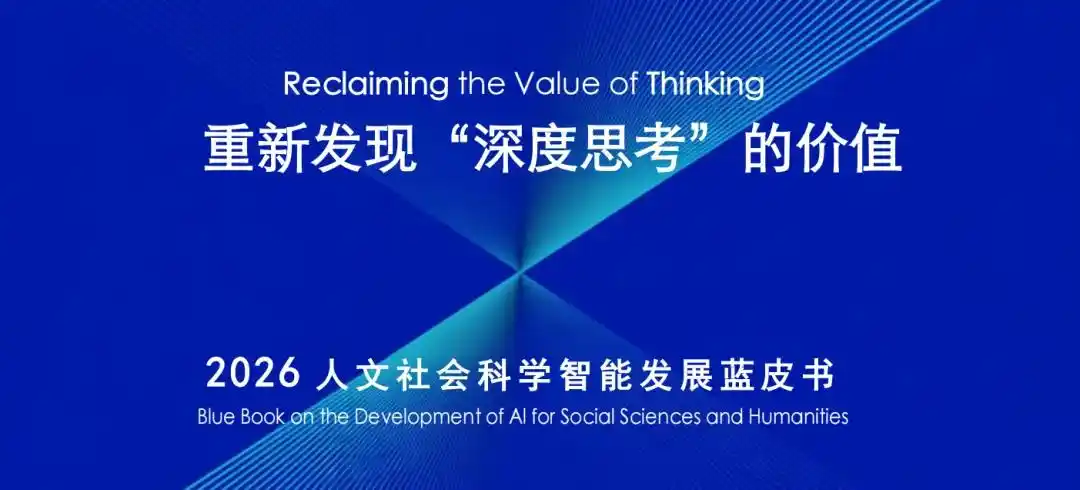
The “2026 Blue Book on Intelligent Development in Humanities and Social Sciences,” compiled by the Fudan AI+New Liberal Arts ecosystem led by the lab, in collaboration with the Shanghai AI Lab, bringing together over 40 experts from nearly 20 disciplines, attempts to transform many seemingly abstract governance principles into actionable research and institutional processes.
For example, when AI enters research, the final output cannot just be a fluently written paper. The research question, data dictionary, analysis scripts, execution records, review comments, and human adjudication should also be preserved, allowing others to follow the evidence chain.
The STRIDES framework proposed in the Blue Book sets checkpoints at theory, method, data, execution, and review stages. Which hypotheses need to be stated, which evidence needs to be located, which low-confidence conclusions need to be referred back to human judgment—all are incorporated into the process.
In the field of public governance, the questions are more direct.
The Blue Book distinguishes between agentic and auxiliary AI embedding modes. The former allows the algorithm to participate all the way to the output decision, with humans often only appearing in case of system failure or appeal. The latter mode assigns AI tasks like retrieval, calculation, risk prompts, and solution generation, with the final decision still made by humans.
And so-called “human-in-the-loop” cannot just be a confirmation button. Humans need rights to intervene, correct, and explain.
From this perspective, governance is more like building roads for technology. Which scenarios can accelerate, which places need guardrails, who reviews, who explains, and who takes responsibility when problems arise must all be written into the rules beforehand.
Additionally, the 2026 Blue Book constructs the “Chinese Universities AI4SSH Index,” observing the integration level of AI and humanities/social sciences in universities from dimensions like core research capability, innovative development potential, and social dissemination capability.
The judgment it conveys is clear. For a field to develop long-term capacity, a few papers and models are not enough. Data, computing power, toolchains, talent cultivation, organizational collaboration, and evaluation systems all need to keep up.
This is the significance of the National Development and Intelligent Governance Comprehensive Laboratory connecting academia and policy. Technology provides new possibilities, social sciences explain impacts, economics studies incentives and distribution, and governance research transforms these understandings into procedures and institutions.
In Shanghai, Academia, Policy, and Industry Are Connected
Following governance issues further down, one eventually encounters industry.
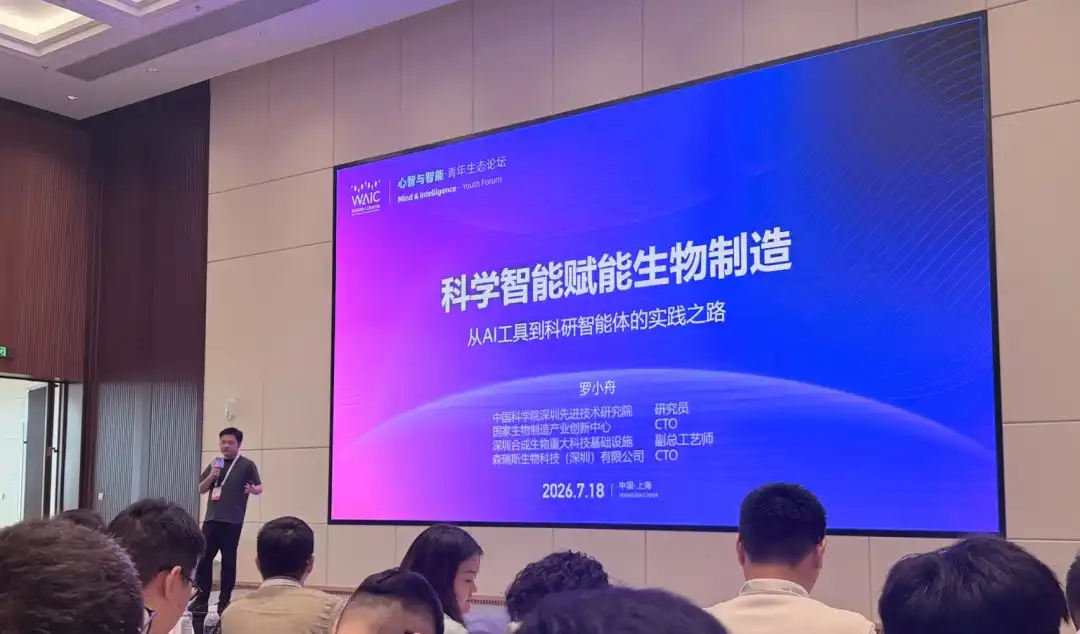
Luo Xiaozhou, a researcher at the Shenzhen Institute of Advanced Technology, Chinese Academy of Sciences, and founder of SynbioTech, vividly described a key difference on-site.
△
When AI writes code or does math, many processes can form closed loops within computers. But bio-manufacturing must cross the chasm between the digital and physical worlds.
After the model proposes a scientific hypothesis, experimental equipment must physically realize it, then feed the detection results back to the model. If any single link is broken, self-evolution stops.
Relying on the Shenzhen Synthetic Biology Major Science Facility with over 2 billion RMB investment, Luo Xiaozhou's team uses automated equipment as the “body and hands,” letting AI handle experimental design and decision-making. They hope that upon inputting a demand, the system can automatically design experiments, write scripts, execute operations, collect data, and proceed to the next round of optimization.
Related technologies have been used in R&D and production of products like squalene and squalane. Among them, squalene products have entered Merck's supply chain, and squalane has entered cosmetic supply chains.
But deep integration of research and industry involves more than just the model.
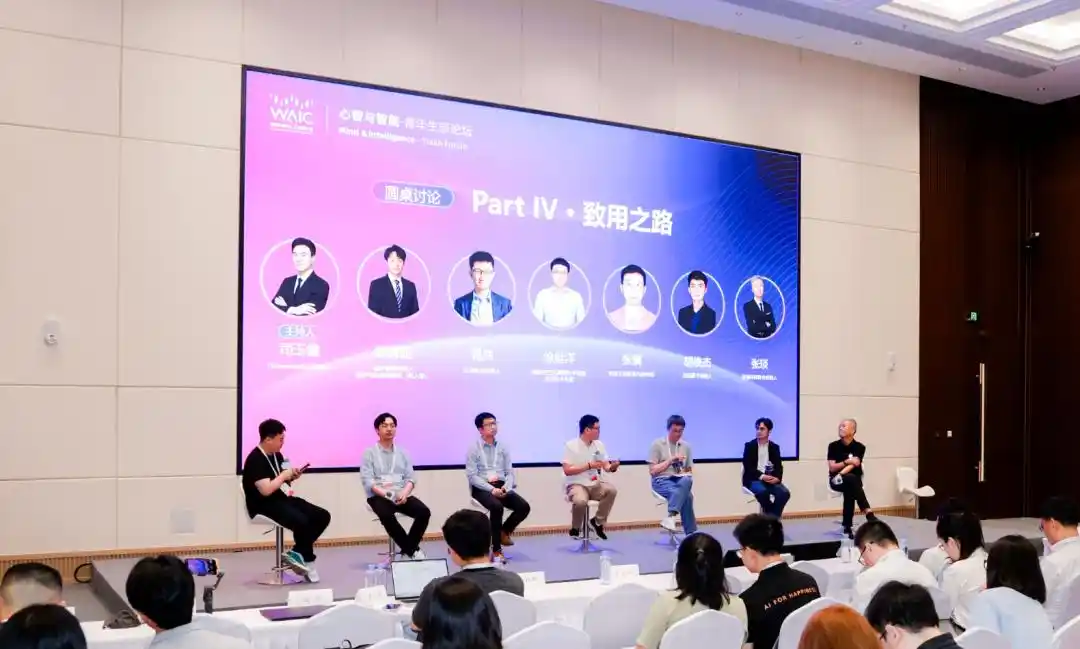
The “Path to Application” panel was quite candid. AI can accelerate antibody design, protein optimization, and strain engineering, but there are still wet lab experiments, clinical trials, approvals, process development, production, and markets.
Zhang Yan, co-founder and senior vice president of MGI Tech, summarized the difficulty as the “last mile” for AI landing in the physical world. In his view, lab automation and robotics technologies are relatively mature; the harder part is truly integrating AI, software systems, instruments, and specific disciplinary needs. To this end, MGI Tech attempts to control lab instruments and robots like computer peripherals, then connect models, automated experiments, and data feedback into a closed loop.
Upstream shortens R&D time, but bottlenecks may quickly shift to the next link. If regulatory systems, industry inertia, and organizational processes don't change simultaneously, the acceleration brought by technology is hard to pass along the value chain.
Of course, the money issue is also unavoidable.
When data providers, model developers, automation platforms, and industry clients jointly create a result, how should they charge, and how should revenue be distributed? Zhang Yan was also direct: new productivity changes production relations; besides “how to make money,” one must figure out “how to share the money” among parties in the chain.
It sounds down-to-earth but touches on deep changes as AI enters industry.
In the past, parties charged based on work stages; now, AI pushes industries from process delivery to outcome delivery, with participants beginning to share responsibility for the final result.
New productivity is also giving birth to new production relations.
This also falls within the scope of AI governance. Besides safety, ethics, and rights, how technological dividends are distributed, how industry rules adjust, and how traditional regulation adapts to new research speeds all require study.
Looking back, the composition of guests at this Youth Forum was actually quite interesting.
Some study self-evolving models, some build trustworthy boundaries for AI, some explore protein dynamics and social simulations, journal editors question what real problems AI research solves from an academic evaluation perspective; others move from labs to startups, advancing research results to automated experiments and industrial production.
They come from different specialties and institutions but gathered together in Shanghai.
That same afternoon, the main Scientific Intelligence Open Forum unfolded along the themes of “Path of Discovery, Foundation of Closed Loop, Road to Implementation,” with guests like Nobel laureate Arieh Warshel and Turing Award winner Gilles Brassard discussing scientific intelligence and original innovation.
The Youth Forum turned the lens towards research credibility, social governance, and industry chains.
One side discusses how far scientific intelligence can go, the other continues to ask how it can steadily enter reality.
Behind this lies a Youth Scientific Intelligence Ecosystem taking shape in Shanghai.
Shanghai provides universities, research institutions, industry resources, and policy research platforms, while young people cross disciplinary boundaries here, placing models, society, and industry within the same set of questions.
Therefore, philosophy heating up again in AI circles is just the visible part of this change.
Deeper down, AI has entered knowledge production and social operation, and technical issues have begun intertwining with governance, economics, ethics, and public policy.
The better AI answers, the more seriously humans must decide what to ask, what to believe, and where to steer the technology.
This article comes from the WeChat public account “QbitAI” (ID: QbitAI), author: Jin Lei.