The Man Who Struck a Chord with America's Social Sentiment Has Launched a Token

Odaily星球日报Published on 2025-12-29Last updated on 2025-12-29

Abstract

A man named Nick Shirley has become a viral sensation in the U.S. after releasing investigative videos exposing alleged fraud and corruption in Minnesota's daycare system. His footage, viewed hundreds of millions of times, showed a seemingly non-operational daycare that received $1.9 million in tax-free funding despite misspelling "learning" as "learing." The story attracted attention from high-profile figures like Vice President Vance and Elon Musk. Capitalizing on the momentum, Shirley launched his own creator token, $thenickshirley, on Base via Zora, earning over $41,000 in royalties. The incident also sparked meme token activity, including a token based on the misspelling "learing." Shirley has since openly shared his Venmo and crypto addresses for donations. This event is seen as a real-world experiment in creator monetization via blockchain—demonstrating how public influence can be directly converted into value through decentralized platforms, potentially signaling a new model for media and content economy.

Original | Odaily Planet Daily (@OdailyChina)

Author | Azuma (@azuma_eth)
Who is the most viral person in America right now? The answer might not be the familiar names like Trump or Musk, but a man named Nick Shirley.

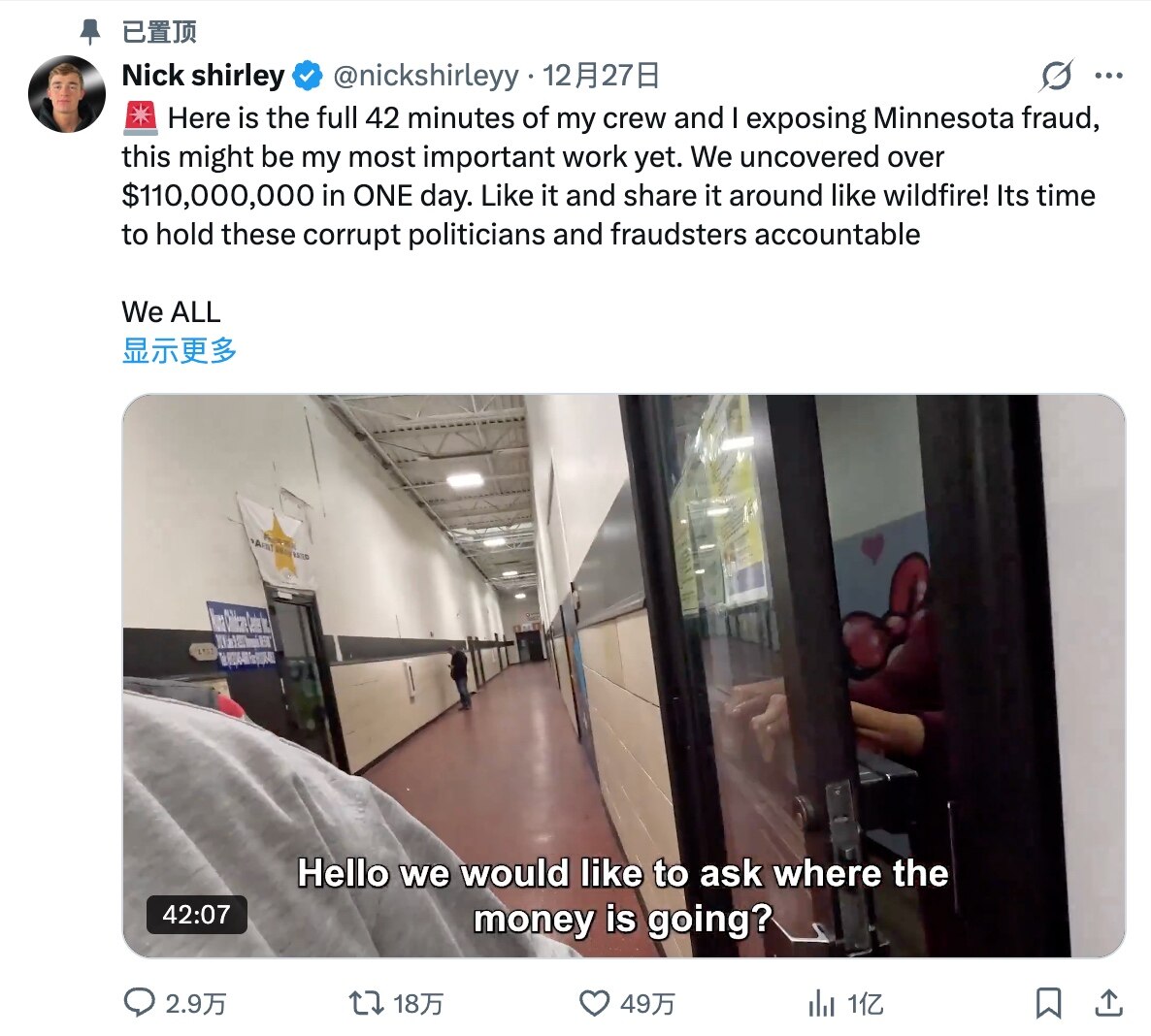
Who is Nick Shirley? He is the independent investigative journalist currently stirring America's social sentiment. On December 27th, Nick Shirley posted multiple videos of his field investigations on social media platforms like X, Instagram, and YouTube, alleging rampant fraud and corruption in the state of Minnesota.

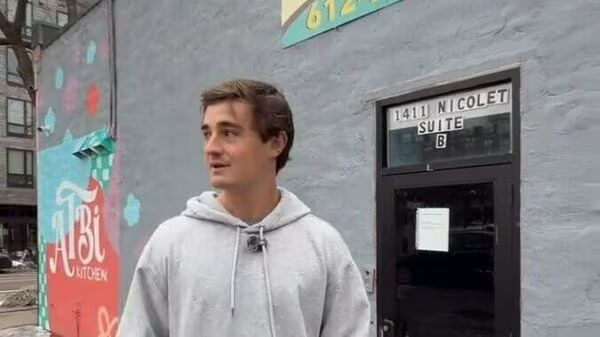
In the videos, Nick Shirley visited a daycare center in the state. The center was supposed to be open during operating hours, but its doors were closed, and the 99 registered students listed in public records were nowhere to be seen. Nick Shirley asked a local resident who had lived in the area for 8 years about this. The respondent said: "I've lived here since 2017, but I've never seen any children."
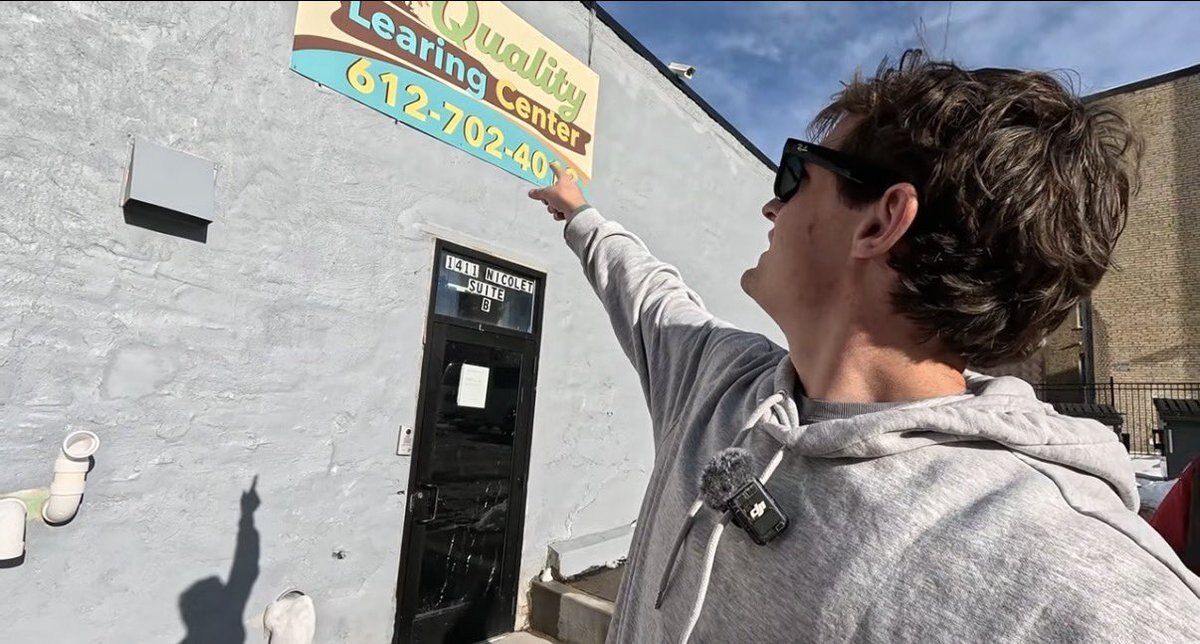
Nick Shirley stated in the video: "This is one of hundreds of 'daycares' receiving millions of dollars in government funds. This one, which can't even spell 'learning' correctly (it was spelled 'learing'), received $1.9 million in tax-free funding... And this is just one case among thousands of businesses in Minnesota suspected of fraudulent operations... Minnesota Governor Tim Walz is aware of these frauds but has never reported them."

Nick Shirley's videos triggered massive attention and discussion across the United States. Within just two days, the total views of the videos reached hundreds of millions, with the full 42-minute investigative video on X alone garnering over a hundred million views.
Prominent figures from politics and business also jumped in to interact with Nick Shirley. U.S. Vice President Vance repeatedly reposted and replied, bluntly stating that Nick Shirley's investigation was more valuable than all the 2024 Pulitzer Prize winners; Musk also followed Nick Shirley's account, highly praising him for fulfilling the value of media and dubbing 'learing' the 'Word of the Year'.

Here's some additional U.S. political context: Minnesota is generally considered a‌ traditional Democratic stronghold‌ in American politics, but its political landscape has significantly changed in recent years, showing characteristics of a‌ swing state‌. More crucially, the current governor, Tim Walz, was Harris's running mate during the 2024 election and had a chance to be in Vance's current position as Vice President... So it's no surprise why Vance personally entered the fray.

Faced with such a high-profile topic, especially one with the social and political attributes that Memes love, the on-chain world was naturally not late to the party.

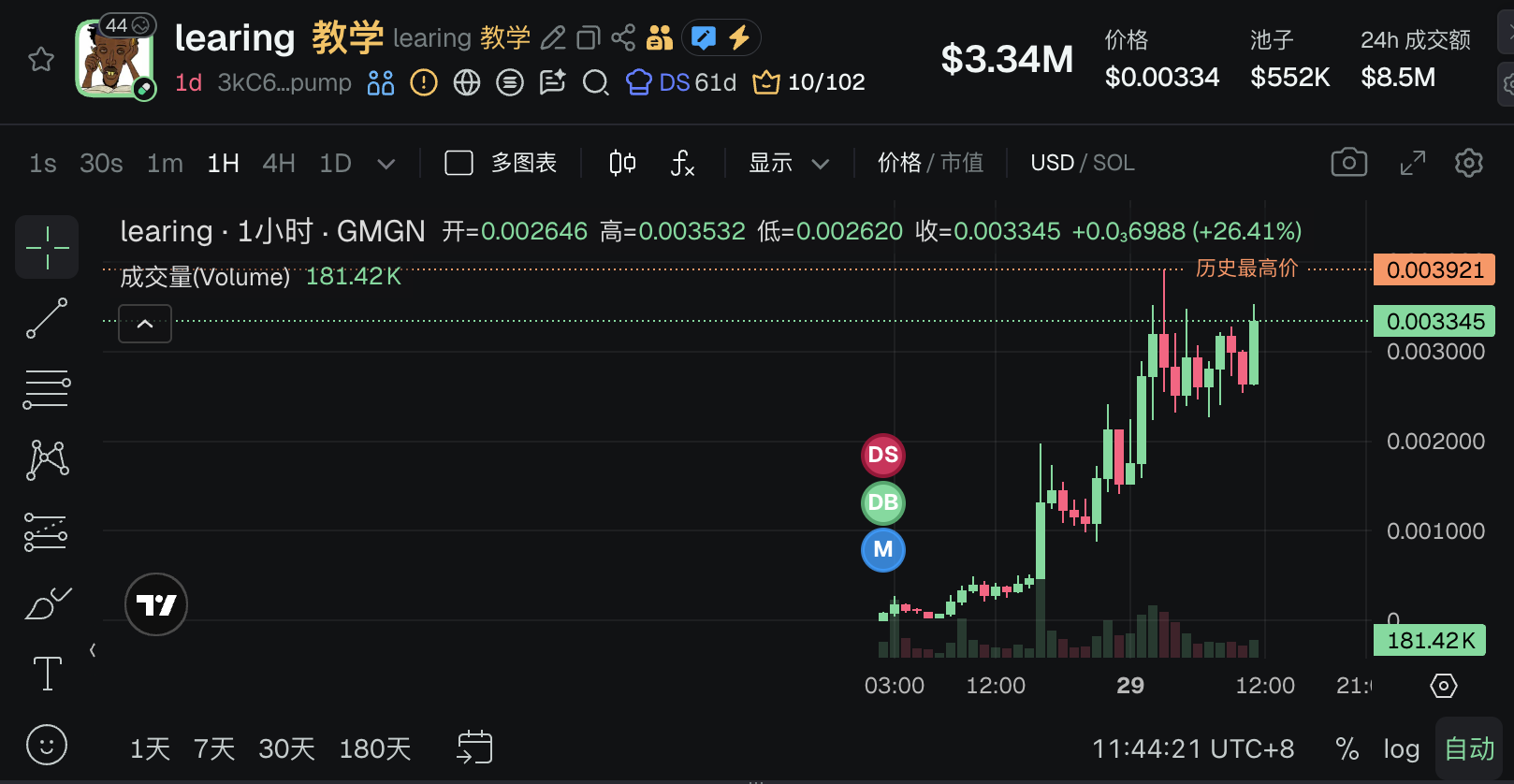
First, the community spontaneously speculated around the most abstract misspelling from the investigation, 'learing'. The market cap of this Meme token on Solana is temporarily reported at $3.34 million.
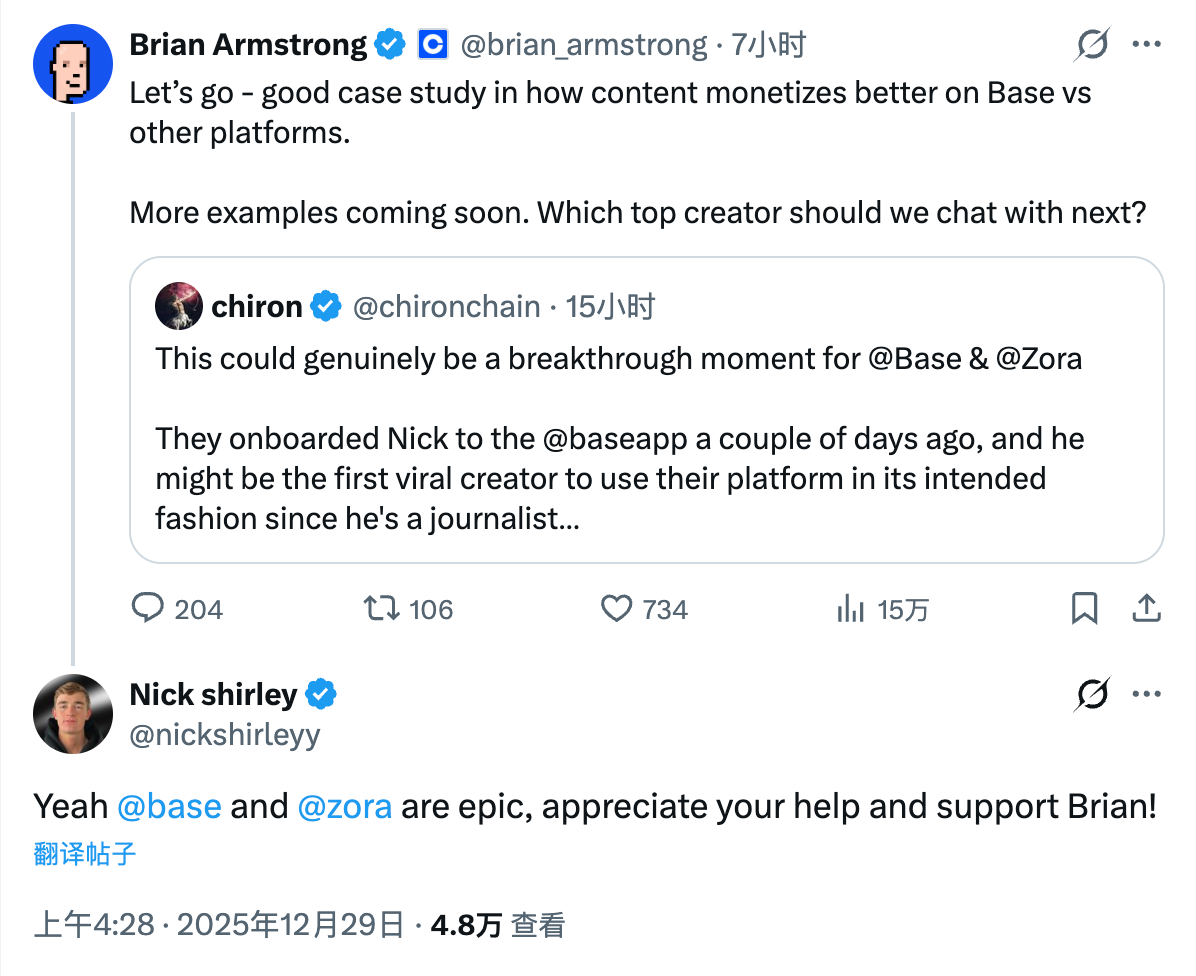
Subsequently, the community discovered that Nick Shirley疑似 registered on Zora's creator platform and launched a personal creator token, $thenickshirley, on Base. Subsequent comment interactions between Coinbase founder Brian Armstrong and Nick Shirley confirmed that the token was indeed issued by him.
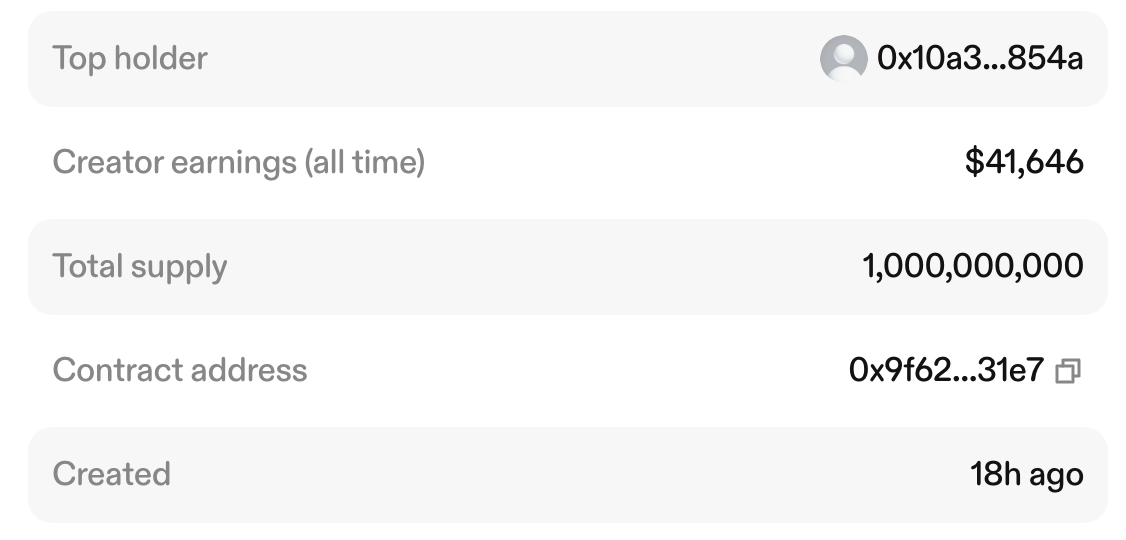
As of writing, the market cap of $thenickshirley is temporarily reported at $5.65 million (having once reached a high of $9.02 million). Nick Shirley himself has already earned $41,646 in creator royalties.
Brian Armstrong commented that this proves content monetization on Base is more effective than on other platforms. Nick Shirley didn't forget to thank Brian Armstrong after making money, praising Base and Zora as "legendary".

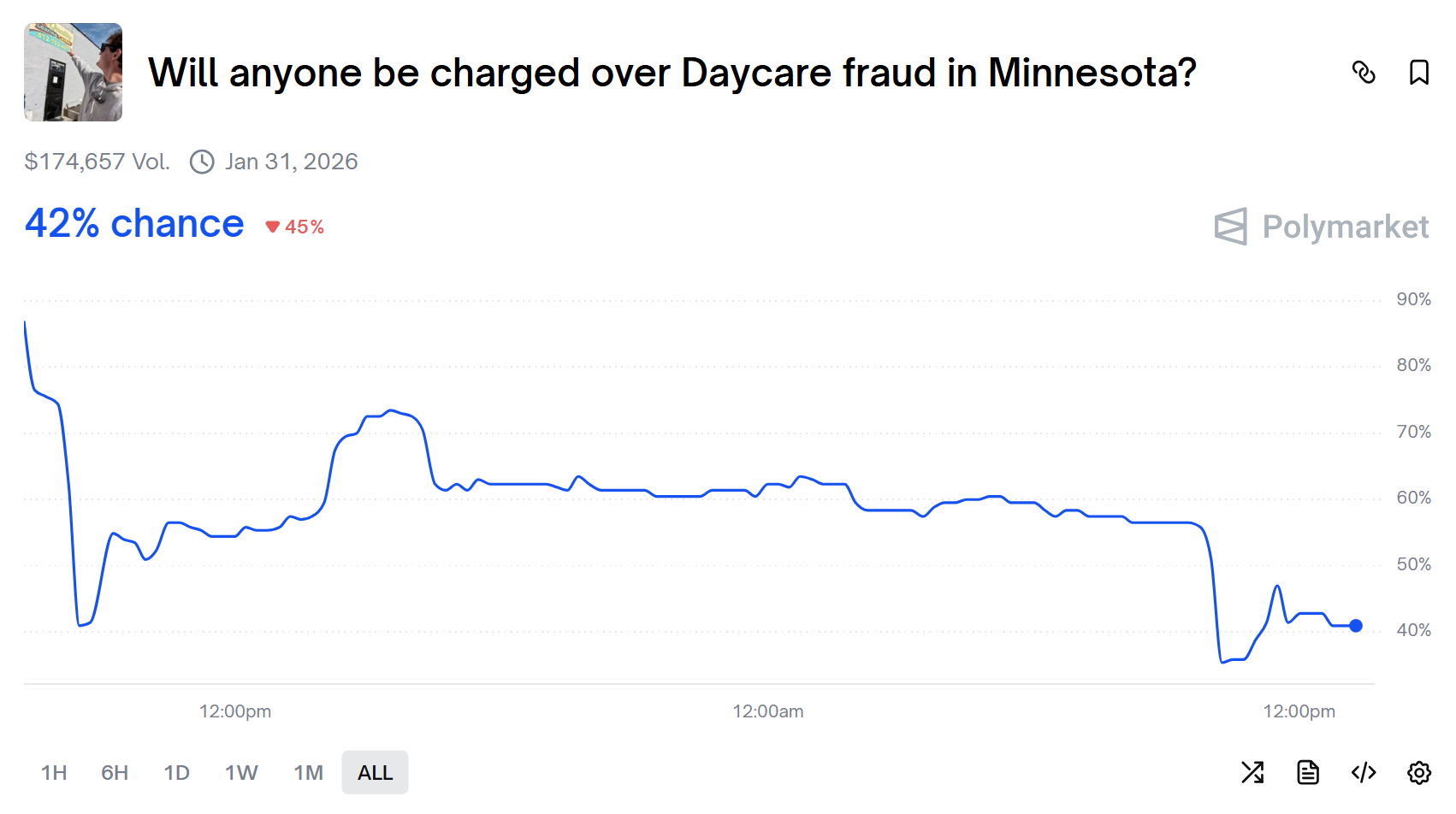
Additionally, the prediction market Polymarket quickly followed up with predictions regarding the potential "handling" of this issue. The current odds are as shown in the image below:
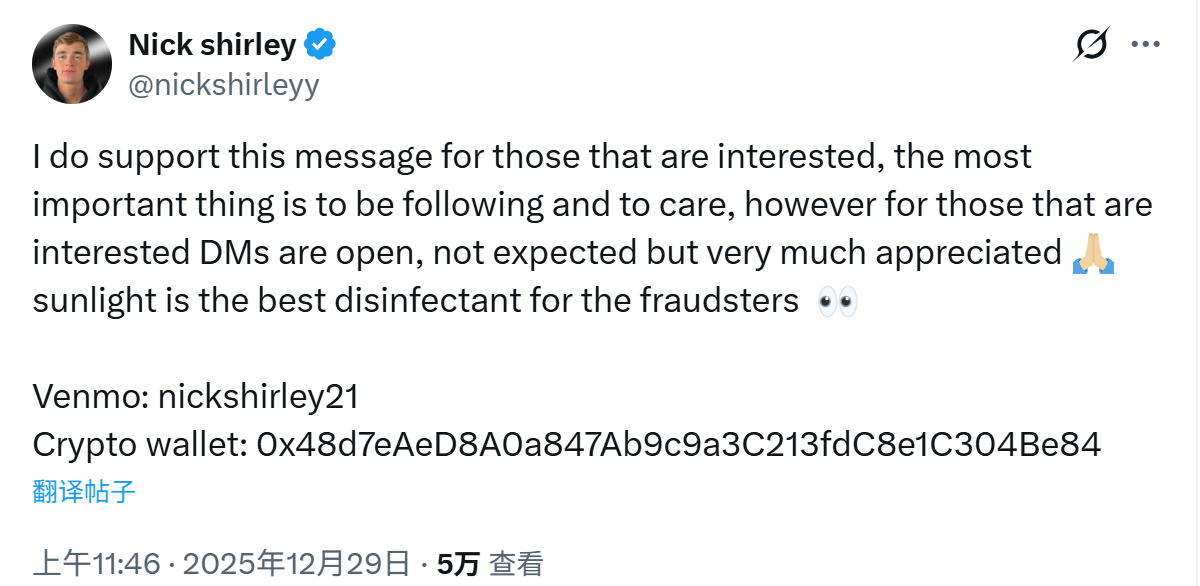
One hour ago, Nick Shirley posted his Venmo and crypto addresses on X, openly accepting "donations".
From the new Meme hotspot $thenickshirley, to Nick Shirley's token issuance itself, to opening "all-channel crowdfunding" and the ongoing catalytic fermentation in the market periphery, we are witnessing a performance combining network media and open finance.

This is not merely Meme speculation; it更像 a real-world experiment in "creator economy + on-chain content monetization" — an individual with immense传播力 and public issue influence in the real world, without sponsors, without platform revenue shares, without advertisers, directly monetized attention through on-chain tools, completing the闭环.

What it validates is not "how high this token can go", but a more fundamental question: can content truly be monetized on decentralized platforms in a lower-friction, more transparent manner? Within this, perhaps lies the future evolutionary direction of the media industry.


Trending Cryptos

Related Questions

QWho is Nick Shirley and why has he gained significant attention in the United States?

ANick Shirley is an independent investigative journalist who has gained massive attention by exposing alleged fraud and corruption in Minnesota's daycare system through viral videos on social media platforms like X, Instagram, and YouTube.

QWhat specific allegation did Nick Shirley make about the daycare in Minnesota?

ANick Shirley alleged that a daycare in Minnesota, which received $1.9 million in tax-free funding, had no children present during operational hours and was one of many fraudulent operations in the state, with the governor aware but not reporting it.

QHow did prominent figures like Elon Musk and Vice President Vance react to Nick Shirley's investigation?

AElon Musk praised Nick Shirley for his media impact and humorously called the misspelled 'learing' the 'word of the year.' Vice President Vance stated that Shirley's investigation was more valuable than all 2024 Pulitzer Prize-winning works.

QWhat cryptocurrency did Nick Shirley launch, and how did he monetize his influence?

ANick Shirley launched a personal creator token called $thenickshirley on Base via Zora, earning $41,646 in creator royalties, and also openly shared his Venmo and crypto addresses for donations.

QWhat broader implication does the article suggest about Nick Shirley's actions for media and content monetization?

AThe article suggests that Shirley's actions demonstrate a potential future for media where creators can monetize attention directly through decentralized platforms with lower friction and greater transparency, bypassing traditional sponsors and platform fees.

Related Reads

IPO Imminent, OpenAI Faces Major Personnel Upheaval

OpenAI, preparing for a potential IPO, is experiencing significant leadership turmoil. In mid-August 2026, longtime "GPU geek" Scott Gray quietly left, and within three days, Chief Operating Officer Brad Lightcap (8-year veteran) and Chief Revenue Officer Denise Dresser (8-month tenure) departed. This follows a broader exodus of at least 10 senior executives in 2026, including heads of product, safety, and ethics. Analysts view this as a strategic "surgery" to transform from a research lab into a sales-driven enterprise company before going public. Revenue now tilts toward enterprise clients, surpassing consumer income sooner than expected, with annualized revenue reaching $40 billion. The new CRO, Dali Rajic, is a veteran enterprise sales leader. Concurrently, OpenAI has disbanded independent safety teams like "Preparedness," which assessed catastrophic risks, integrating their functions into core research. Critics warn this removes dedicated "brakes" on AI development. The leadership vacuum raises questions about who is the clear second-in-command after former apps CEO Fidji Simo moved to an advisory role. Co-founder Greg Brockman appears to be consolidating power. As OpenAI races against rival Anthropic ($47B annualized revenue), it faces the dual challenge of commercial execution while managing the departure of foundational technical talent and ensuring responsible AI development remains a priority.

marsbit8m ago

IPO Imminent, OpenAI Faces Major Personnel Upheaval

marsbit8m ago

AI Can 'Have Moods Too'! New Research from USTC: Confusion and Anxiety Make AI Work Better

The article discusses research from the University of Science and Technology of China and Oxford, revealing that allowing AI to recognize and act upon simulated "internal emotions" can significantly improve its performance. The study demonstrates a coherent pairing between specific emotional states in AI agents and their subsequent skill choices. For instance, an agent feeling curious and desirous will search for products, while one feeling confused and tense will rephrase queries. This mirrors human decision-making influenced by emotions. Statistical validation showed a 76.5% semantic consistency in these pairings. Crucially, the research challenges the traditional view of AI errors as flaws to be eliminated. It found that "bad" emotions like confusion, tension, or frustration serve as useful metacognitive signals, indicating a mismatch between the current strategy and the environment. By responding to these signals, AI can proactively adjust before a failure occurs. This is particularly effective in complex tasks prone to failure. For example, in tasks like "heating an item" and "picking up two items," success rates surged from 9.6% to 56.9% and 4.4% to 31.3%, respectively, when using the emotion-driven skill selection method (EMOTION2SKILL). The AI's "nervous" state about a closed microwave, for instance, prompted it to check and open it first, preventing failure. The article also mentions related work from Tianjin University, which embeds emotional prediction into world models (Large Emotional World Model, LEWM), significantly improving prediction accuracy in human-centric environments. Removing emotional data was found to degrade performance even in unrelated logical reasoning tasks. These studies build on earlier findings, like those from Anthropic, that identifiable emotional representations exist within large language models (LLMs). The focus is shifting from philosophical debate about AI emotion to practically harnessing these internal states as functional signals to enhance AI robustness and capability.

marsbit44m ago

AI Can 'Have Moods Too'! New Research from USTC: Confusion and Anxiety Make AI Work Better

marsbit44m ago

Trading

Spot

Hot Articles

Discussions

Welcome to the HTX Community. Here, you can stay informed about the latest platform developments and gain access to professional market insights. Users' opinions on the price of S (S) are presented below.

活动图片