To Mass-Produce Multi-Million Dollar Millionaires, Why Wait for the Company to Go Public?
The Wall Street Journal disclosed a set of impactful data. In October last year, more than 600 current and former OpenAI employees cashed out a total of $6.6 billion through stock sales, with about 75 people each cashing out $30 million.
This means that before OpenAI goes public, a group of executives and ordinary employees have already received the wealth returns from this wave of AI boom.
This is also one of the most noteworthy changes in the current AI industry. In the past, startup employees usually had to wait until after an IPO to truly cash in their shares. But now, top AI companies are significantly advancing the timing of wealth realization.
OpenAI is the most prominent example. DeepSeek is currently catching up on external valuation and equity incentives, while companies like Anthropic, Cerebras, and Character.AI illustrate that AI wealth creation pathways are becoming more diverse—through financing, tender offers, secondary market transactions, technology licensing, and team transfers.
For AI companies, this is a new weapon to attract top talent. For AI talent, technical skills no longer just translate into high salaries and options; they are also more likely to become real earnings before the company goes public.
1
Let's first look at OpenAI's "wealth creation myth."
That OpenAI executives earn a lot has already been made public through recent court battles.
Recently, the lawsuit where Musk sued OpenAI, Altman, and others went to trial.
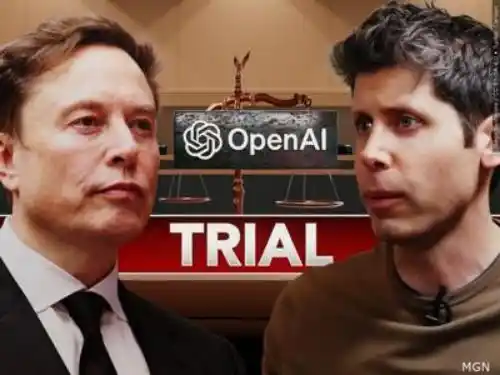
President Brockman testified in court that the value of his equity holdings is approximately $30 billion. At the same time, former Chief Scientist Sutskever also disclosed during the Musk vs. OpenAI trial that the value of his OpenAI equity holdings is about $7 billion.
CEO Sam Altman stated that he does not hold shares in the company, citing its non-profit nature. However, some investors anticipate that if OpenAI's transition to a for-profit structure proceeds smoothly in the end, Altman may still receive equity arrangements in the future.
Many ordinary employees have also realized substantial wealth.
The Wall Street Journal reported that last October, OpenAI organized a large-scale stock sale where over 600 current and former employees cashed out their shares on the same day, totaling approximately $6.6 billion.
Among this group of employees, about 75 reached the company's maximum sale limit, each cashing out $30 million.
Some employees donated their remaining shares to donor-advised funds to support public welfare causes and receive tax deductions for that year.
This sale is one of the largest employee equity realization events in the AI industry to date.
This transaction also marked the first time since ChatGPT's release that OpenAI allowed newly hired employees to cash out their stock.
This is a significant change: OpenAI is becoming increasingly generous regarding employees cashing out stock.
Previously, the company required employees to have been with the company for at least two years before they could sell shares, so many technical experts who joined the company earlier were unable to cash out before this.
Compared to the initial stock grants seven years ago, the equity value for early employees has grown over 100 times. Contrasted with the roughly three-fold increase in the Nasdaq index during the same period, this far exceeds the wealth growth levels of traditional tech companies.
OpenAI's equity incentive system itself has also undergone adjustments.
The previous maximum sale limit per employee was $10 million, which was adjusted to $30 million in the fall of 2025 in response to investor and employee demands.
This system addresses external investors' demand to buy shares while also providing a channel for employees to realize the paper wealth in their hands. Historical data shows that if early employees could only sell shares after an IPO, their wealth appreciation might be affected by market fluctuations. OpenAI's early realization mechanism effectively mitigates this risk.
Compensation and stock incentives are important means for OpenAI to attract and retain top talent.
Some technical positions at OpenAI offer annual salaries of up to $500,000, plus stock awards and one-time bonuses, some of which can be worth millions of dollars. This combination provides employees with significant economic returns while also enhancing the stability of key positions, supporting the company's rapid progress in technology development and product iteration.
Meta offered compensation packages worth up to $30 million to its top AI talent last year. The intense competition for high-end AI talent and compensation levels within the AI industry are generally higher than in traditional tech companies.
AI is mass-producing newly minted millionaires in San Francisco, even to the extent of heating up San Francisco's long-depressed housing market.

Some houses sold for prices far exceeding their asking price due to multiple competing buyers, such as one listed for $1.6 million selling for $2 million. According to Apartment List data, San Francisco's citywide rent increased by 14% year-over-year in February, ranking highest in the United States.
2
These pieces of news—whether it's executives holding vast wealth, or the high salaries, high bonuses, and increasingly "generous" equity plans for ordinary employees—have an obvious benefit for OpenAI: they are bound to create new attractiveness for talent.
This appeal is not just "higher salaries." More importantly, it shows employees a viable path to realization. Join a top AI company, receive options or stock, wait for the company's valuation to continue rising, and then realize wealth through tender offers, secondary market transactions, or a future IPO.
This is also why DeepSeek's recent financing rumors are noteworthy.
According to Reuters, DeepSeek is advancing its first external funding round, with a target valuation possibly reaching $50 billion and a funding size of about $3 to $4 billion. In rumors less than a month ago, DeepSeek's valuation was only $10 billion.
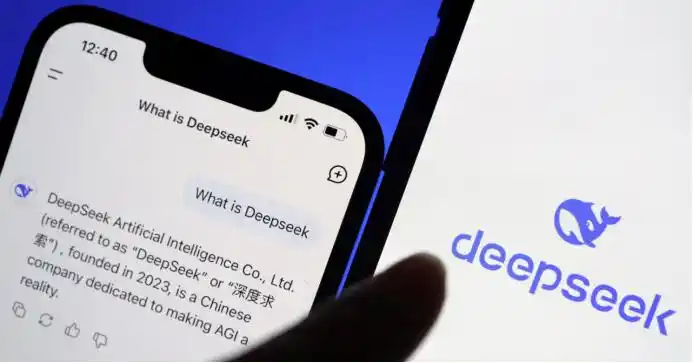
On the surface, this is a Chinese AI star company gaining capital recognition. But viewed in the context of OpenAI's case, this matter has another layer of meaning: what DeepSeek needs is not just money, but a price acknowledged by the external market.
DeepSeek was not a typical venture capital-driven company in the past. Its funding mainly came from founder Liang Wenfeng and his background in the quantitative firm Qraft (幻方量化).
Because of this, it could maintain a "research team" image for a long time: low-key, technology-oriented, emphasizing model efficiency. But when a company truly enters the global AI competition arena, it becomes difficult to sustain an organization solely on technical reputation in the long run. Models require computing power, products need commercialization, and teams also need long-term incentives.
The first role of financing is to value the company. Once a valuation is established, the options and equity in employees' hands have a price that can be discussed. Otherwise, so-called equity incentives are more like a forward commitment: theoretically valuable, but employees don't know exactly how much it's worth or when it can be realized.
The reason OpenAI employees could complete large-scale cash-outs before going public is precisely because the company has undergone multiple financing rounds and tender offers, forming a pricing system that investors are willing to accept.
If DeepSeek wants to retain core members in the long-term battle for Chinese AI talent, it also needs to fill this gap.
This is especially important for DeepSeek. Reuters reported that the funds from this financing round will be used to strengthen computing infrastructure and improve employee benefits.
The report also mentioned that DeepSeek faces talent and capital competition from Chinese AI companies like ByteDance, Alibaba, as well as MiniMax, Moonshot AI, and has already seen cases of talent outflow, such as Luo Fuli joining Xiaomi.
Whether it can provide sufficiently convincing long-term returns to core talent in an industry where compensation standards have been raised by companies like OpenAI, Anthropic, and Meta is a new challenge for DeepSeek.
3
OpenAI's employee cash-outs show that top AI companies can already create large-scale wealth before going public; DeepSeek seeking external financing indicates that latecomers are also catching up on valuation, equity incentives, and computing power investment.
This wave of AI wealth creation does not only have the one path of "waiting for the company to IPO."
In the past, the most standard wealth exit for startups was going public. Now, money is flowing through more complex paths.
Employees can cash out early in the secondary market, startups can exit through mergers and acquisitions, and chip companies and infrastructure companies can also enter public markets riding the AI boom.
The most direct exit is still an IPO. Besides OpenAI, Anthropic is another example among model companies.
It is currently believed that Anthropic may go public as early as 2026. Its particularity is that, unlike DeepSeek, which is still in its first external financing stage, and unlike OpenAI with its complex non-profit to for-profit controversy, it has Claude, enterprise customers, and support from cloud providers like Google and Amazon.
Another type of IPO example is the chip startup Cerebras.
Reuters reported that due to strong investor demand, Cerebras plans to raise its IPO price range from $115-$125 per share to $150-$160, and increase the number of shares offered from 28 million to 30 million.
Calculated at the highest price, the fundraising amount is about $4.8 billion. This deal received over 20 times subscription and plans to list on Nasdaq under the ticker CBRS. The report also stated this could become the world's largest IPO in 2026.
The AI boom is not only making model teams more expensive but also turning chips, computing power, and data centers into new wealth exits.
Mergers and acquisitions are another path.
In June 2023, Databricks announced the acquisition of the generative AI platform MosaicML for approximately $1.3 billion, with the transaction amount including retention incentive packages. MosaicML, which focused on helping enterprises train and deploy their own generative AI models, was essentially acquired by Databricks for its model training platform, team, and enterprise AI capabilities.
MosaicML had only about 62 employees at the time. So, the media described the deal's expensiveness as "approximately $21 million per employee."
Mergers and acquisitions are no longer just about "a company being bought outright."
Character.AI is a more typical new example.
In 2024, Google and Character.AI reached a technology licensing deal worth approximately $2.7 billion, granting Google a license to its model technology, while also hiring co-founders Noam Shazeer, Daniel De Freitas, and some core research members to join Google DeepMind.
The Financial Times later reported that after this deal, Character.AI abandoned further training of cutting-edge large models, shifting focus to strengthening consumer-grade chatbot products.
Additionally, the company used the funds to buy out investors' shares, transferred company ownership to employees, and employees also received one-time cash compensation. About 30 employees joined Google, while about 100 remained at Character.AI.
In other words, in this case, Google did not fully acquire Character.AI but obtained the technology and most scarce talent through a high licensing fee; the original company continues to exist, and investors and employees also gained liquidity early.
The company doesn't necessarily get bought, but the technology, team, and future profit rights have been repriced by the tech giant.
This is also a difference between this wave of AI boom and many past tech cycles: wealth is no longer only concentrated and released at the moment of IPO, nor does it belong only to founders and investors.
The people behind models, data, computing power, products, and infrastructure are gaining earlier and more complex realization opportunities through secondary markets, technology licensing, team transfers, mergers and acquisitions, and IPOs.
For AI companies, this is a new weapon to attract talent; for AI talent, this means they don't necessarily have to wait for an IPO and may turn their technical capabilities into real earnings earlier.
This article is from the WeChat public account "Alphabet List" (ID: wujicaijing), author: Little Gold Tooth (小金牙).