The Era Where 'Bitcoin Determines Everything' Is Coming to an End

marsbitPublished on 2026-06-02Last updated on 2026-06-02

Abstract

The article argues that the era where "Bitcoin decides everything" in the crypto market is ending. It posits a new dichotomy: **endogenous assets**, whose value is tied to crypto market cycles (like Bitcoin and traditional altcoins), and **exogenous assets**, which nominally belong to crypto but derive their value from independent, real-world demand and business fundamentals. Examples of exogenous assets include: * **Hyperliquid**: A hybrid, with growing activity in non-crypto perpetual contracts (HIP-3) and prediction markets (HIP-4). * **Venice**: An AI inference service using tokens primarily as a marketing tool; its revenue comes from user payments, not crypto speculation. * **Figure**: A fintech firm using blockchain to streamline lending; its core value is its credit business. The rise of exogenous assets is significant because it enables true fundamental investing, based on quantifiable demand, sustainable revenue (e.g., Venice's subscriptions, stablecoin company acquisitions), and improved token value accrual mechanisms—factors absent in past cycles. Consequently, analyzing exogenous assets requires traditional business due diligence (assessing user base, unit economics, moats) rather than just tracking Bitcoin's price. The market driver is shifting from a single factor (BTC) to multiple factors. Promising exogenous sectors highlighted include: on-chain exchanges/brokers, tokenization infrastructure, crypto+AI, privacy-focused digital banks, lending (institu...

Written by: Charlie

Compiled by: Luffy, Foresight News

For a long time, the entire crypto market's trends have revolved around Bitcoin. Now, such an era is coming to an end.

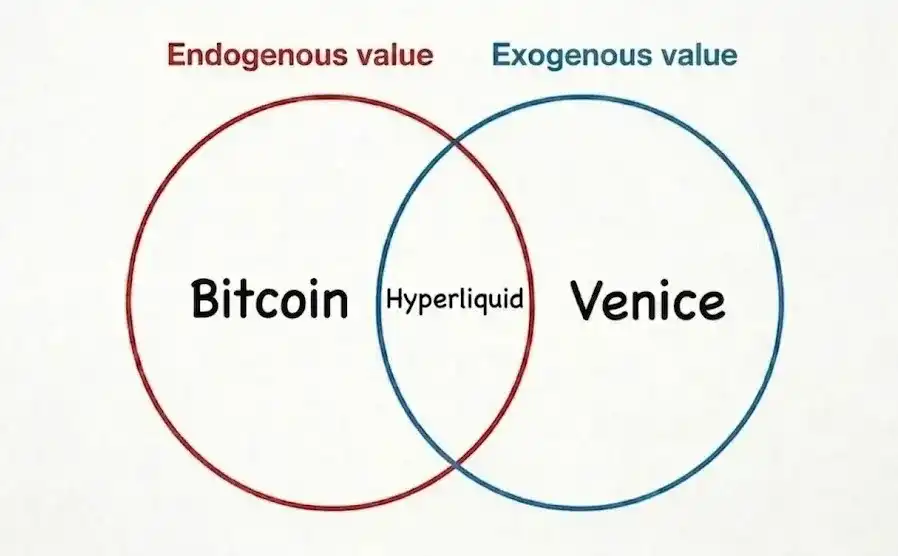
The crypto economy is now splitting into two major camps: endogenous assets and exogenous assets.

So-called endogenous assets are the traditional crypto categories familiar to the public: the value of these tokens and projects is entirely dependent on the overall rise and fall of crypto asset prices. Exogenous assets, on the other hand, nominally belong to the crypto track, but their value trends are increasingly independent of the crypto market.
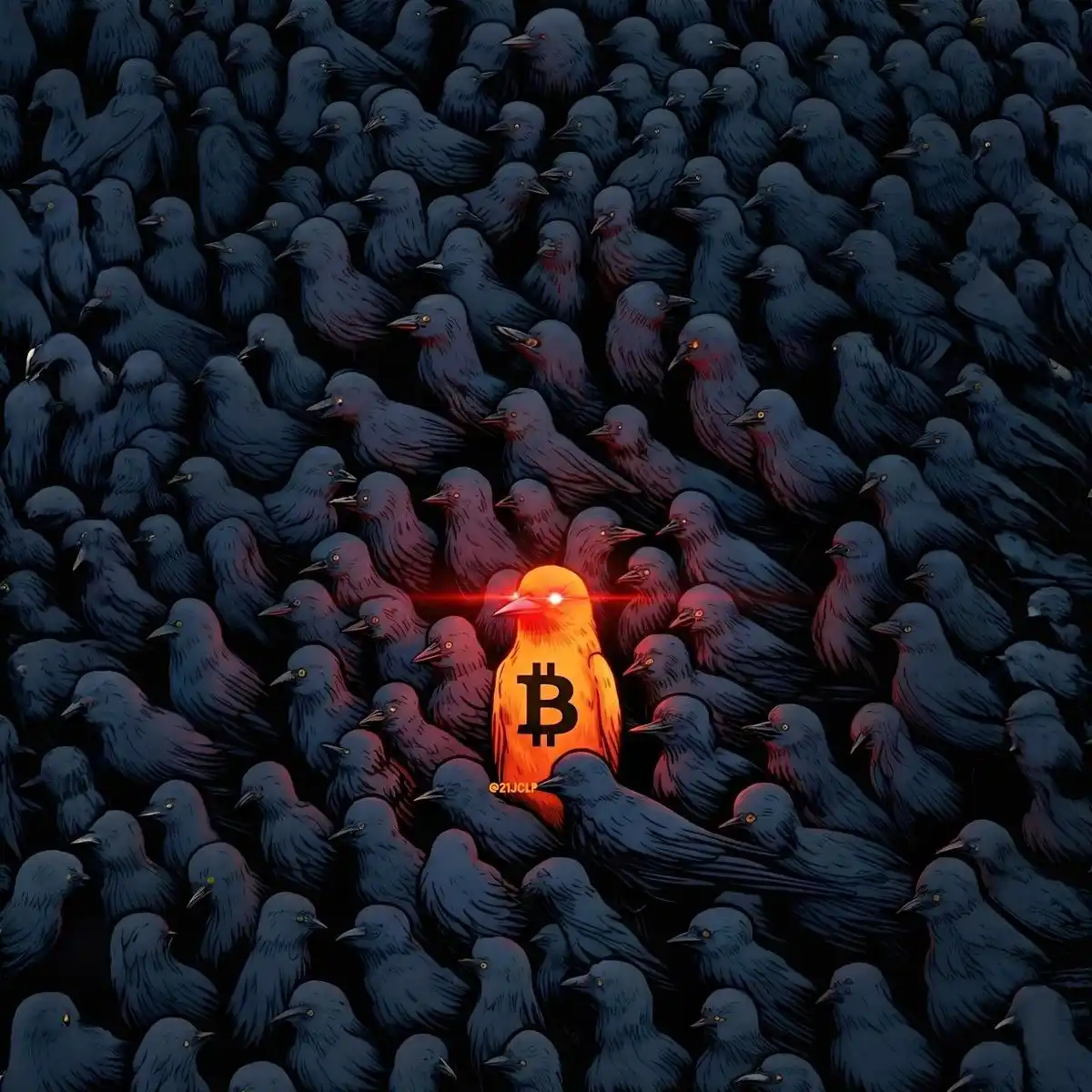
Bitcoin's value stems from its own attributes and is reflected in its price. Price increases further strengthen the market's perception of its value attributes. At the peak of a bull market, Bitcoin is revered as an "interstellar currency," the most scarce digital circulating asset in human hands; at the trough of a bear market, it is denigrated as a digital collectible with no cash flow support.

Hyperliquid falls between these two camps. Most of its business still relies on crypto market trends, but both supply and demand sides are continuously broadening. Many on-chain financial infrastructures fall into this category, with underlying assets gradually shifting towards real-world asset tokenization.
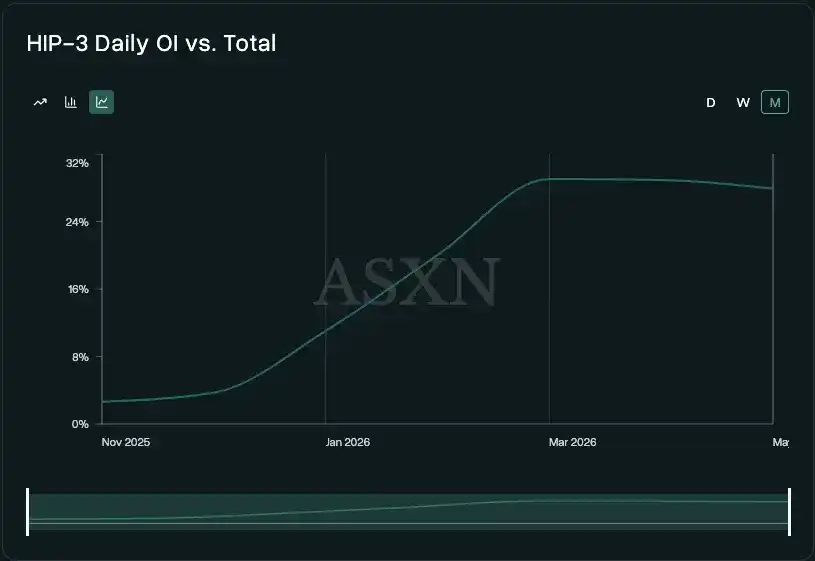
HIP-3 open interest can roughly reflect the activity of non-crypto trades. Currently, HIP-3 contracts account for about 30% of Hyperliquid's total open interest, whereas in November 2025, this proportion was only 4%. The upcoming HIP-4 prediction market will further drive growth, bringing new trading users and trading pairs.

Projects like Venice completely belong to the exogenous camp, with their development logic completely detached from the crypto market. Although there is some user overlap, its business model leans more towards consumer-grade artificial intelligence, rather than native crypto products like Uniswap. Uniswap's core business is still users trading various endogenous assets, so its performance naturally fluctuates with asset prices; Venice packages private multimodal inference services, adopting a "pay-per-use + subscription" fee model.

Venice's only connection to the crypto field is using tokens as a value carrier, and the fact that some of its computing power suppliers have backgrounds in the crypto industry. Project lead Erik Voorhees, a veteran in the crypto industry, believes that when used effectively, tokens can be excellent marketing tools.

Publicly listed company Figure is also a typical case. This fintech lending company developed its own blockchain, reducing the approval time for home equity loans to under 5 minutes. For Figure, blockchain is merely a supporting technology; its core value lies in the credit business itself.

The large-scale rise of exogenous tracks, whether in the token market or the listed company sector, has profound significance. In the past, as most business models were deeply tied to crypto asset prices, purely bottom-up fundamental investing was difficult to implement. The crypto industry has not been without narratives emphasizing "blockchain over Bitcoin," but previous cycles eventually returned to Bitcoin's performance. The reason was that these tracks failed to form stable demand and generate continuous revenue; even with revenue, it couldn't be transmitted to token value. Once token prices stopped rising, projects lost support.

This cycle is fundamentally different. Now we can clearly see paying user groups and payment logic. Demand in most tracks is quantifiable, no longer relying solely on sentiment-driven hype. Simultaneously, the mechanisms for tokens as value carriers are continuously improving. Venice's revenue comes from users genuinely paying for AI inference services. Even if the overall crypto market declines, its business wouldn't be significantly impacted because it doesn't rely on coin price movements. This cycle possesses two core advantages absent in previous ones: sustainable real-world usage demand, and investors starting to invest based on fundamentals rather than pure market narratives.

The stablecoin track in the private market is also like this. In March 2026, Mastercard announced it would acquire BVNK for up to $1.8 billion; this company had a valuation of only $750 million when it completed its Series B round 15 months prior. Another stablecoin-related company, Bridge, was acquired by Stripe for $1.1 billion in February 2025. According to Stripe's annual report, Bridge's current annual business growth is fourfold. The development of these companies is entirely decoupled from the crypto industry's bull and bear cycles.

This is not to say we are bearish on endogenous assets. Just as gold and even small gold mining companies always have their place in an investment portfolio, Bitcoin and a host of endogenous crypto assets also have their raison d'être. However, the performance drivers and market correlations of the two asset classes have fundamentally diverged, a fact confirmed by data.
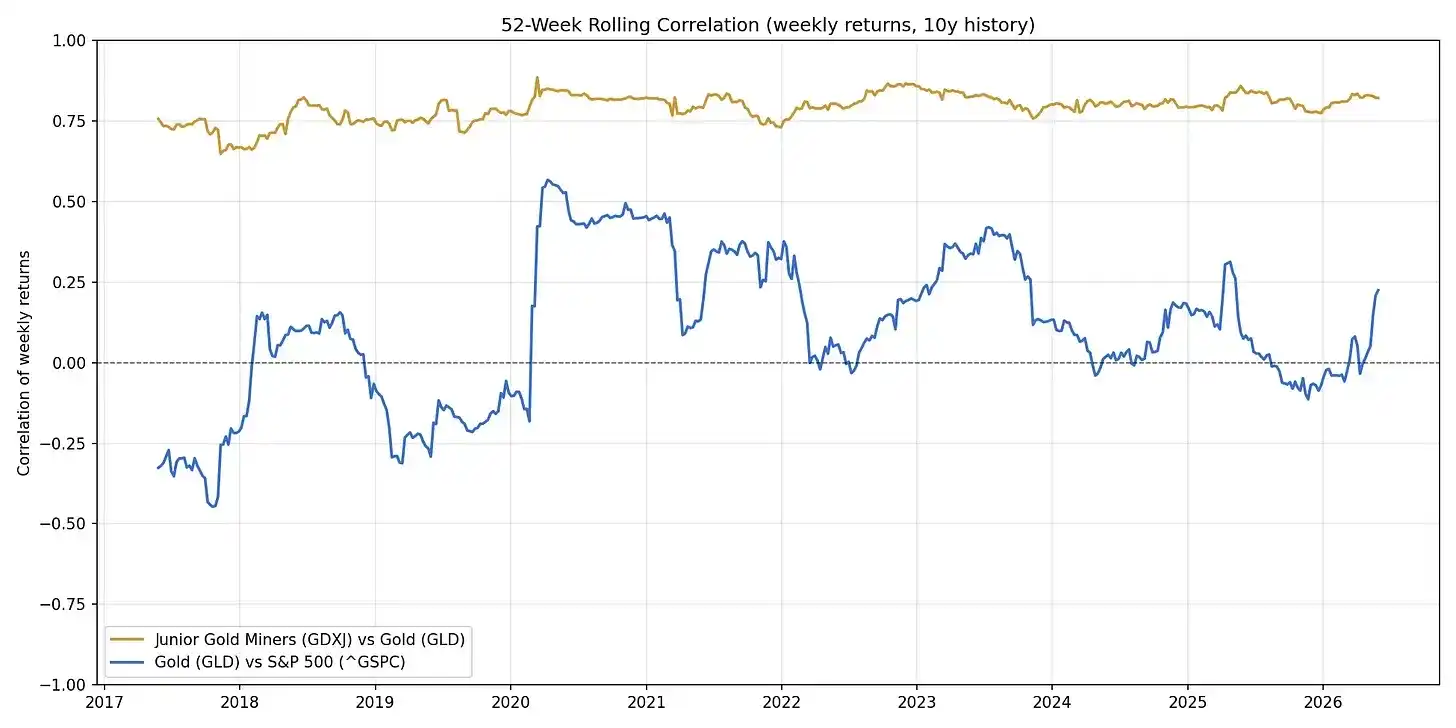
This analogy can be visualized: The correlation coefficient between small gold mining stocks and gold prices consistently remains around 0.75. This is precisely the current state of the traditional crypto market—various crypto assets are like small gold mines, with Bitcoin corresponding to gold; the entire sector represents leveraged investments relative to Bitcoin. The blue curve in the chart represents another relationship: Gold and the S&P 500 Index may show weak联动 due to macroeconomic influences, but each operates on its own independent logic. This is also the future direction for exogenous assets. In the long run, these assets will gradually decouple from the trend of "following Bitcoin's rise and fall."
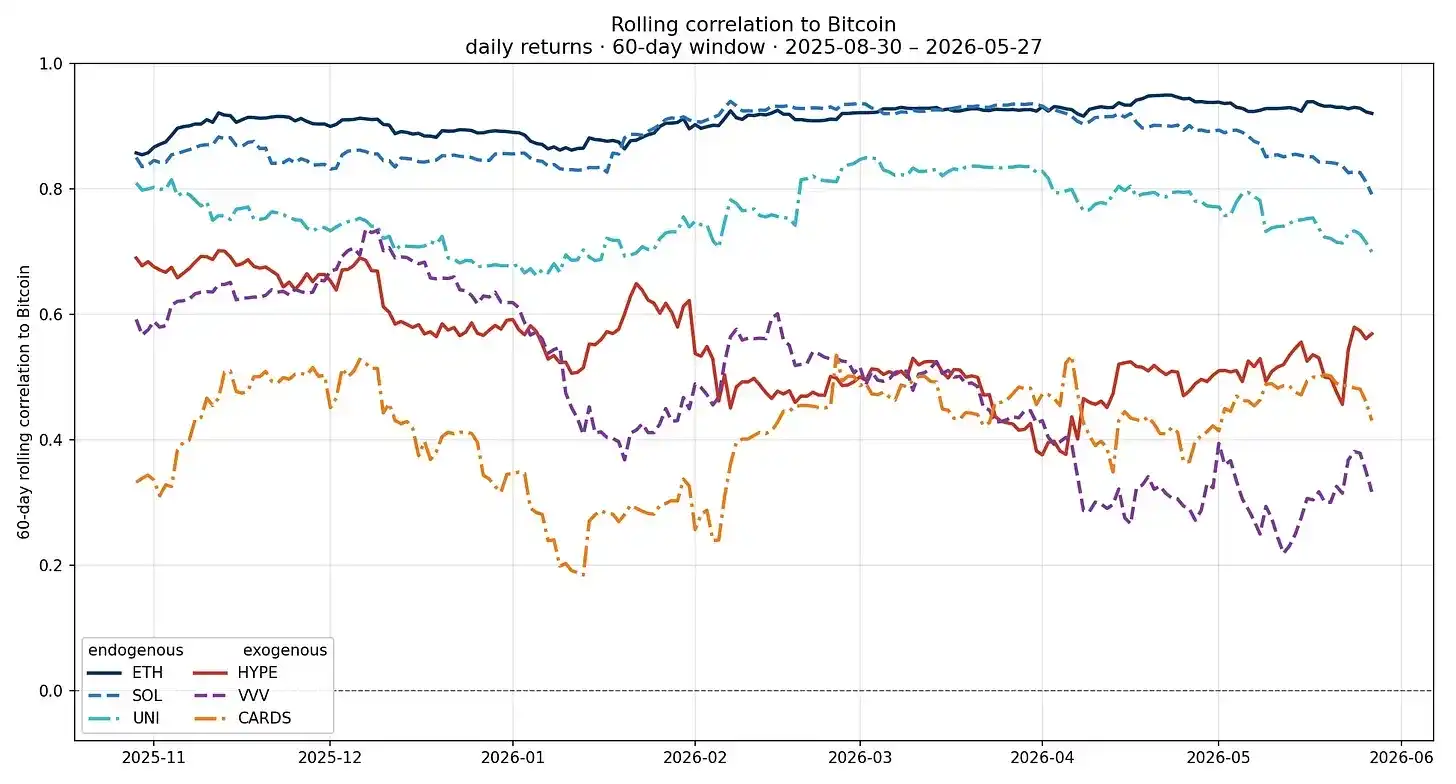
It should be noted that many exogenous assets themselves also issue tokens. This phenomenon both confirms the above trend and represents a special circumstance.

Currently, the vast majority of endogenous assets remain highly synchronized with Bitcoin's price movements. A few exogenous assets show reduced correlation, but due to their short development cycles, they do not yet provide strong reference points. Industry规律 has always been fundamentals first, followed by changes in market correlation.

This change has also completely rewritten industry analysis logic. Researching exogenous assets requires fundamental due diligence like analyzing traditional companies:梳理付费用户群体, measuring unit economics, and assessing industry moats. Bitcoin price is no longer the primary参考指标. Analyzing such projects is more akin to fintech investors making judgments, with the added special环节 of asset custody.

Here are the currently promising exogenous tracks:

  • On-chain exchanges and brokerage service providers
  • Clearing and redemption solutions for long-tail asset tokenization
  • Deep convergence tracks of crypto + AI (private inference, distributed open-source model training like Nous Research's Psyche, etc.)
  • New digital banks (Payy and Raycash, focusing on privacy protection,值得关注; Aztec and Zama providing programmable privacy infrastructure also have potential)
  • Lending track (Morpho has become a mainstream choice for institutional repo markets; smaller projects like Valinor and 3jane focus on private credit细分领域)
  • Stablecoin issuers, real-world asset tokenization service providers
  • Payment channels (in general payments, Stripe and Tempo are industry benchmarks; in agent payments, currently led by Coinbase)
  • Non-financial crypto consumer products (represented by Venice, Collector Crypt; these projects赋予实体业务价值 to tokens, driving product adoption and enabling marketing empowerment)
  • Agent economy (core opportunities lie in the agent接入层, service provider and creator协同生态, where substitutability is low. Cloudflare leads in布局, but whether it will charge traffic fees or merely provide basic services remains unclear)

At this stage, investing in equity of relevant companies remains the safest way to gain exposure to the above tracks, with优质代币标的 being rare exceptions. Only as the value-carrying mechanisms for tokens continue to optimize will their role be further enhanced. This requires joint推进 from regulators and the entire industry. Current work is underway: on the regulatory front, the 《CLARITY Act》 is稳步推进; on the industry front, institutions like Blockworks are推动市场信息透明化. Token mechanisms still have a long optimization journey ahead.

But none of these details change one core trend: the driving force of the crypto market is shifting from a single factor to multiple factors. The focus of industry research is also shifting from interpreting Bitcoin price charts to delving into corporate fundamentals. In the next decade, there will be no need to wonder why the "crypto market" no longer rises and falls in unison, because the industry landscape has been completely transformed.


Trending Cryptos

Related Questions

QAccording to the article, what are the two major camps that the crypto economy is now divided into, and what is their main difference?

AThe crypto economy is now divided into endogenous assets and exogenous assets. Endogenous assets are traditional crypto categories whose value is completely dependent on the overall crypto market trends. Exogenous assets nominally belong to the crypto track, but their value trajectory is increasingly independent of the crypto market.

QWhat examples of exogenous assets are mentioned in the article, and how do their business models differ from traditional crypto projects like Uniswap?

AExamples of exogenous assets mentioned are Venice and Figure. Venice operates more like a consumer-grade AI service, using a 'pay-per-use + subscription' model, with its core value not tied to crypto asset prices. Figure uses blockchain as a supporting technology to streamline its core lending business. Unlike Uniswap, whose core business is trading endogenous assets and thus fluctuates with their prices, these exogenous projects have business models independent of crypto market cycles.

QWhat two core advantages does the current market cycle possess that previous ones lacked, according to the author?

AThe current cycle possesses two core advantages: sustainable real usage demand and investors beginning to invest based on fundamentals rather than solely on market narratives.

QWhat is the key difference in how one should analyze exogenous assets compared to endogenous assets, as described in the article?

AAnalyzing exogenous assets requires fundamental due diligence similar to analyzing traditional companies. This includes examining the paying user base, calculating unit economics, and evaluating industry moats. The price of Bitcoin is no longer the primary reference indicator. The analysis is more akin to what a fintech investor would do, with the additional consideration of asset custody.

QWhat is the core trend identified by the article regarding the driving forces of the crypto market and the focus of industry research?

AThe core trend is that the driving force of the crypto market is shifting from a single factor to multiple factors. Consequently, the focus of industry research is changing from interpreting Bitcoin price charts to delving into corporate fundamentals.

Related Reads

From Gold to Bitcoin: Fixed Supply + Institutional Frenzy, Might It Repeat the 'Explosive' Price Trend?

"From Gold to Bitcoin: Fixed Supply and Institutional Frenzy May Lead to 'Explosive' Price Rally Analysts suggest Bitcoin's price action could mirror gold's over the past two decades, following the launch of spot Bitcoin ETFs. Gold ETFs, introduced in 2004, drove gold's price surge to a current market cap near $28 trillion. Both gold and Bitcoin are non-yielding stores of value, with prices driven purely by investor sentiment rather than cash flows or credit. Gold ETFs experienced dramatic cycles: explosive growth, painful drawdowns, and slow recoveries, with each cycle reaching higher peaks. Bitcoin ETFs, approved in early 2024, saw rapid institutional adoption but are now facing similar volatility. Recent warnings highlight the risk of significant ETF outflows disrupting the current rebound. BlackRock's IBIT, a leading Bitcoin ETF, has sold nearly 100,000 BTC to meet redemptions while still holding over 733,000. The core parallel is fixed supply: when demand surges, prices explode, but demand is often volatile and wave-like, not steady. Institutional interest, through ETFs and corporate adoption, remains a key support pillar, helping to cushion sell-offs. If Bitcoin captures even a fraction of gold's role as a store of value, its upside potential is immense, though the path will be marked by high volatility. For investors, focusing on long-term trends and managing risk is crucial as this 'price explosion' narrative unfolds."

Foresight News17m ago

From Gold to Bitcoin: Fixed Supply + Institutional Frenzy, Might It Repeat the 'Explosive' Price Trend?

Foresight News17m ago

Why Is AI Agent Shopping Hard to Popularize?

The article argues that the popular narrative of "AI agent shopping" – equipping AI with a wallet to autonomously handle purchases – is fundamentally flawed and oversimplifies the complexity of shopping. It deconstructs shopping into two core actions: **information retrieval** (standardized, easily automated) and **value judgment** (deeply subjective and human-centric). The narrative mistakenly assumes AI can fully handle both. Value judgment itself has two layers: **evaluation** (assessing options against criteria) and **demand definition** (setting the criteria, weights, and values). The latter is inherently human and dynamic, as preferences are not fixed but constructed during the decision-making process ("constructive preferences"). The real dividing line for automation is not product standardization, but whether the **act of choosing** itself holds experiential value. For mundane purchases (e.g., printer paper), full AI delegation works. For experiential goods (e.g., wine, furniture), the joy of selection is core to consumption, so AI should act as an assistant that narrows options, leaving the final choice to humans. The "AI wallet" concept confuses three separate elements: decision-making, execution, and fund custody. Current payment industry solutions (e.g., from Stripe, Mastercard, Google, Visa) show that limited, scoped payment authorization tokens are sufficient for most consumer scenarios, not full fund custody. The true use case for autonomous AI wallets is in **B2B procurement** and **machine-to-machine (M2M) settlements** for standardized, high-frequency, low-value transactions. The real bottlenecks for AI shopping are not payment technology, but **1) the lack of trusted data sources** (e.g., fake reviews, counterfeit goods) and **2) the impossibility of automating human demand definition**. The conclusion is that the focus should be on safely automating the assessment and filtering process while reserving for humans the rights to define their criteria and enjoy the final act of choice. For experiential goods, the platform's competitive advantage shifts to providing a superior selection experience.

Foresight News1h ago

Why Is AI Agent Shopping Hard to Popularize?

Foresight News1h ago

After Nine Months of Shorting, a Full Turn to Long: Renowned Trader Opens Bitcoin Positions Around 64K, Crypto Market Long-Short Divergence Intensifies

After nine months of being short, prominent crypto trader Doctor Profit has closed all his bearish positions and started buying Bitcoin near $64,000, signaling a complete bullish reversal. He argues that structural market changes—such as impending U.S. regulation (CLARITY Act) and institutional adoption via securities tokenization—are rewriting the traditional four-year cycle script, potentially bringing the market bottom forward from the widely expected September/October timeframe. This view finds some technical support from on-chain analyst gumsays, who notes a bullish divergence on Bitcoin's weekly chart has persisted for 147 days, nearing the 161-day duration seen before the 2022 cycle low. However, cycle researcher Jake Pahor presents a counter-argument based on historical data. Analyzing patterns since 2014, he identifies three common features of past bear market bottoms: a ~12-month duration from peak to trough, a sustained period of extreme fear (with a proprietary risk score below 20), and the price falling below Bitcoin's realized price (~$53,000 currently). The current cycle, only nine months from its October 2025 peak, meets none of these conditions. The debate highlights a market torn between "front-running" a potential early bottom driven by new fundamentals and waiting for confirmation through traditional on-chain and sentiment metrics. While Doctor Profit opts for aggressive buying, Pahor maintains a disciplined, tiered accumulation strategy, continuing weekly buys at current risk levels but reserving larger orders for if more extreme fear emerges.

marsbit1h ago

After Nine Months of Shorting, a Full Turn to Long: Renowned Trader Opens Bitcoin Positions Around 64K, Crypto Market Long-Short Divergence Intensifies

marsbit1h ago

Senior Trader's Confession: How to Trade Market's False Expectations?

Veteran trader's case study: trading the market's "wrong expectations". This trade centered on a textbook "expectation error" after a weak CPI report. While the market initially priced in broad monetary easing (sending Nasdaq to 30,060), the crucial 30-year real yield hit a 20-year high. This signaled a fractured transmission mechanism: short-term rates eased, but long-term funding costs (vital for tech valuations) refused to fall. The trader executed five short positions on the Nasdaq (NQ) as it fell from 30,060 to 28,768. The core methodology: don't just trade the data, but analyze the market's implied causal chain and identify where it breaks. In this case, the chain was: Weak CPI → Policy Easing → Lower Long-Term Funding Costs → NQ Valuation Expansion. The break occurred between policy easing and long-term rates. The "veto variable" – long-term real yields – refused to confirm the bullish narrative. Trades were structured around "fast variables" (price) temporarily repairing while "slow variables" (funding conditions) remained broken. The article outlines a repeatable framework: 1) Map the market's implied causal chain. 2) Identify the veto variable. 3) Observe if it rejects the narrative. 4) Enter when price still follows the old script. 5) Choose the cleanest asset expression (e.g., short NQ, not broad S&P). 6) Define both invalidation and fulfillment exit conditions. The key insight: Alpha often comes not from an information edge, but from a "reaction function edge" – recognizing when the market is applying an outdated causal logic to new data. The critical question: What causal chain is the market's first reaction relying on, and is that chain still valid today?

marsbit2h ago

Senior Trader's Confession: How to Trade Market's False Expectations?

marsbit2h ago

Trading

Spot

Hot Articles

What is $BITCOIN

DIGITAL GOLD ($BITCOIN): A Comprehensive Analysis Introduction to DIGITAL GOLD ($BITCOIN) DIGITAL GOLD ($BITCOIN) is a blockchain-based project operating on the Solana network, which aims to combine the characteristics of traditional precious metals with the innovation of decentralized technologies. While it shares a name with Bitcoin, often referred to as “digital gold” due to its perception as a store of value, DIGITAL GOLD is a separate token designed to create a unique ecosystem within the Web3 landscape. Its goal is to position itself as a viable alternative digital asset, although specifics regarding its applications and functionalities are still developing. What is DIGITAL GOLD ($BITCOIN)? DIGITAL GOLD ($BITCOIN) is a cryptocurrency token explicitly designed for use on the Solana blockchain. In contrast to Bitcoin, which provides a widely recognized value storage role, this token appears to focus on broader applications and characteristics. Notable aspects include: Blockchain Infrastructure: The token is built on the Solana blockchain, known for its capacity to handle high-speed and low-cost transactions. Supply Dynamics: DIGITAL GOLD has a maximum supply capped at 100 quadrillion tokens (100P $BITCOIN), although details regarding its circulating supply are currently undisclosed. Utility: While precise functionalities are not explicitly outlined, there are indications that the token could be utilized for various applications, potentially involving decentralized applications (dApps) or asset tokenization strategies. Who is the Creator of DIGITAL GOLD ($BITCOIN)? At present, the identity of the creators and development team behind DIGITAL GOLD ($BITCOIN) remains unknown. This situation is typical among many innovative projects within the blockchain space, particularly those aligning with decentralized finance and meme coin phenomena. While such anonymity may foster a community-driven culture, it intensifies concerns about governance and accountability. Who are the Investors of DIGITAL GOLD ($BITCOIN)? The available information indicates that DIGITAL GOLD ($BITCOIN) does not have any known institutional backers or prominent venture capital investments. The project seems to operate on a peer-to-peer model focused on community support and adoption rather than traditional funding routes. Its activity and liquidity are primarily situated on decentralized exchanges (DEXs), such as PumpSwap, rather than established centralized trading platforms, further highlighting its grassroots approach. How DIGITAL GOLD ($BITCOIN) Works The operational mechanics of DIGITAL GOLD ($BITCOIN) can be elaborated on based on its blockchain design and network attributes: Consensus Mechanism: By leveraging Solana’s unique proof-of-history (PoH) combined with a proof-of-stake (PoS) model, the project ensures efficient transaction validation contributing to the network's high performance. Tokenomics: While specific deflationary mechanisms have not been extensively detailed, the vast maximum token supply implies that it may cater to microtransactions or niche use cases that are still to be defined. Interoperability: There exists the potential for integration with Solana’s broader ecosystem, including various decentralized finance (DeFi) platforms. However, the details regarding specific integrations remain unspecified. Timeline of Key Events Here is a timeline that highlights significant milestones concerning DIGITAL GOLD ($BITCOIN): 2023: The initial deployment of the token occurs on the Solana blockchain, marked by its contract address. 2024: DIGITAL GOLD gains visibility as it becomes available for trading on decentralized exchanges like PumpSwap, allowing users to trade it against SOL. 2025: The project witnesses sporadic trading activity and potential interest in community-led engagements, although no noteworthy partnerships or technical advancements have been documented as of yet. Critical Analysis Strengths Scalability: The underlying Solana infrastructure supports high transaction volumes, which could enhance the utility of $BITCOIN in various transaction scenarios. Accessibility: The potential low trading price per token could attract retail investors, facilitating wider participation due to fractional ownership opportunities. Risks Lack of Transparency: The absence of publicly known backers, developers, or an audit process may yield skepticism regarding the project's sustainability and trustworthiness. Market Volatility: The trading activity is heavily reliant on speculative behavior, which can result in significant price volatility and uncertainty for investors. Conclusion DIGITAL GOLD ($BITCOIN) emerges as an intriguing yet ambiguous project within the rapidly evolving Solana ecosystem. While it attempts to leverage the “digital gold” narrative, its departure from Bitcoin's established role as a store of value underscores the need for a clearer differentiation of its intended utility and governance structure. Future acceptance and adoption will likely depend on addressing the current opacity and defining its operational and economic strategies more explicitly. Note: This report encompasses synthesised information available as of October 2023, and developments may have transpired beyond the research period.

939 Total ViewsPublished 2025.05.13Updated 2025.05.13

What is $BITCOIN

Discussions

Welcome to the HTX Community. Here, you can stay informed about the latest platform developments and gain access to professional market insights. Users' opinions on the price of BTC (BTC) are presented below.

活动图片