The Bear Market Has Ended, A New Bull Cycle Has Begun

marsbitPublished on 2026-08-21Last updated on 2026-08-21

Abstract

**Title: Bear Market Over, New Bull Cycle Begins** Bitcoin surged over 20% in just three days, from a low of $64,100 on August 19th to a high of $79,500 by August 21st, marking a dramatic shift in market sentiment. This rapid rise triggered massive liquidations exceeding $4 billion, with short positions accounting for $3.7 billion—the largest short squeeze since 2021. The rally was fueled by several key factors. Macroeconomic conditions improved as the US Treasury doubled its long-term bond buyback size, easing pressure. Significant regulatory developments included a White House meeting where former President Trump urged Senate action on the CLARITY Act and hinted at potential US Bitcoin reserves, followed by the CFTC Chairman stating the agency would establish crypto market rules if the bill stalls. On-chain data revealed a fierce battle: large whales faced substantial liquidations on short positions, while others took profits or doubled down on longs. Major altcoins like ETH and XRP also saw impressive gains. Analysts are divided but increasingly bullish. Many, including CryptoQuant's founder, declare the bear market over and a new bull cycle begun. Price targets range from $100k by year-end to ambitious long-term projections of $200k. However, some caution against immediate chasing, noting overbought conditions and viewing the move as a potential "trap" ahead of the crucial September 15th Senate vote on the CLARITY Act. The market's next test is sustaining the momentum...

Written by: angelilu, Foresight News

Just three days, only three days.

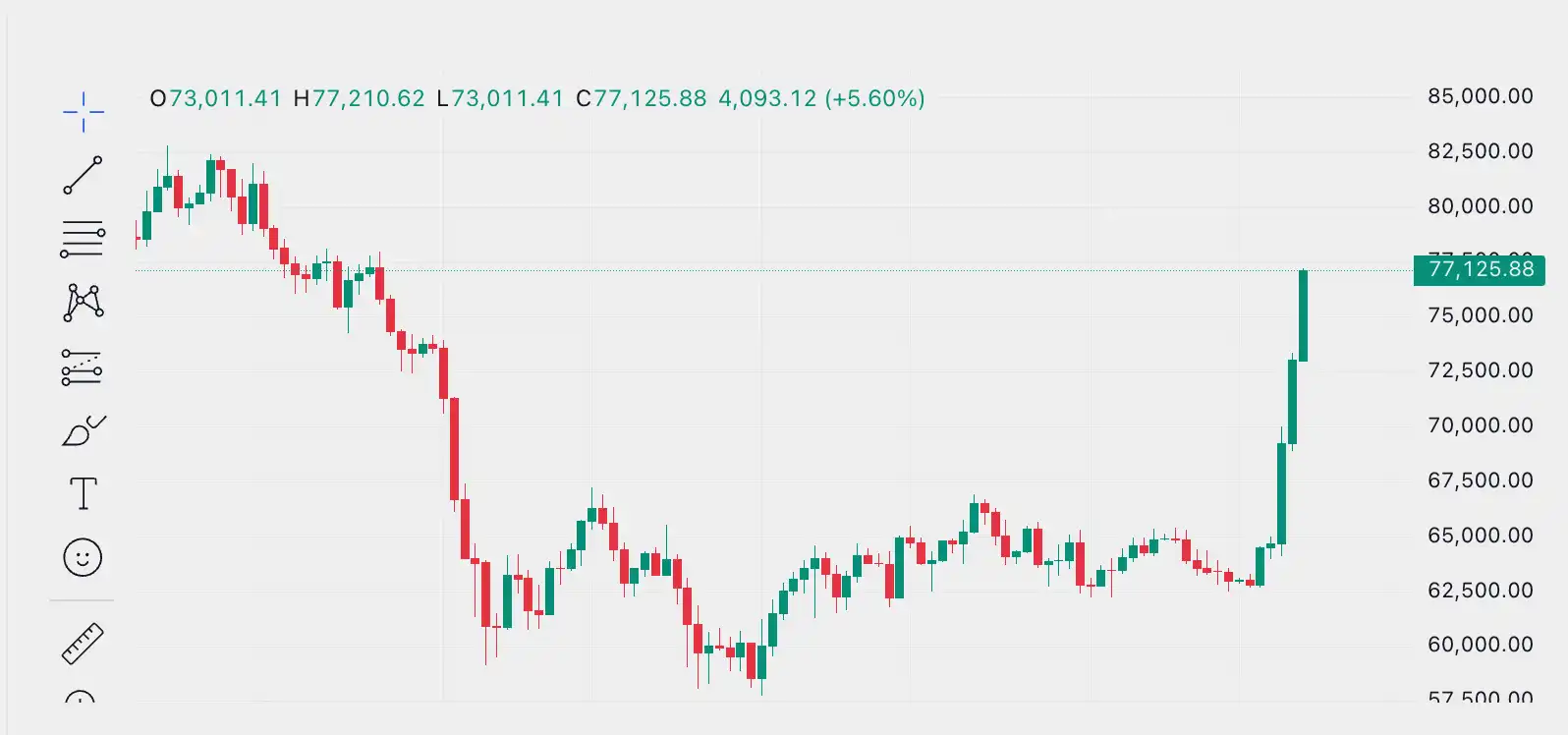
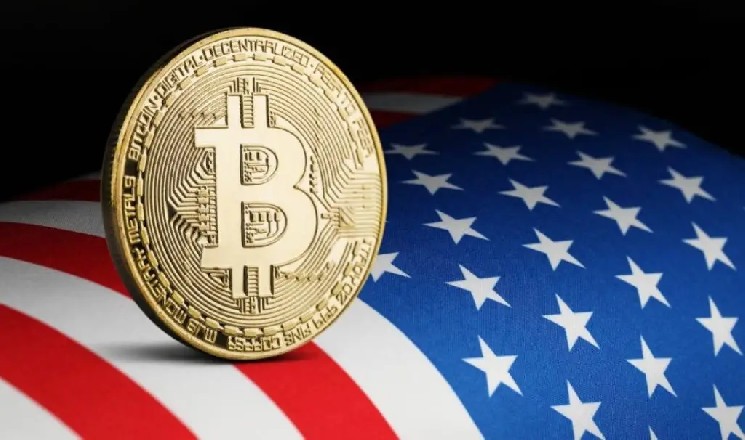
Bitcoin, like a rocket ignited, surged from a low of $64,100 on August 19th to $79,500 on August 21st (at the time of this article's publication, BTC had reached a high of $75,720, data updated) — a gain of over 20% in three days.

Just days ago, the market was still deeply mired in the quagmire of a "bear market." From fear (index 46) to greed (index 72), it took only three bullish candles.
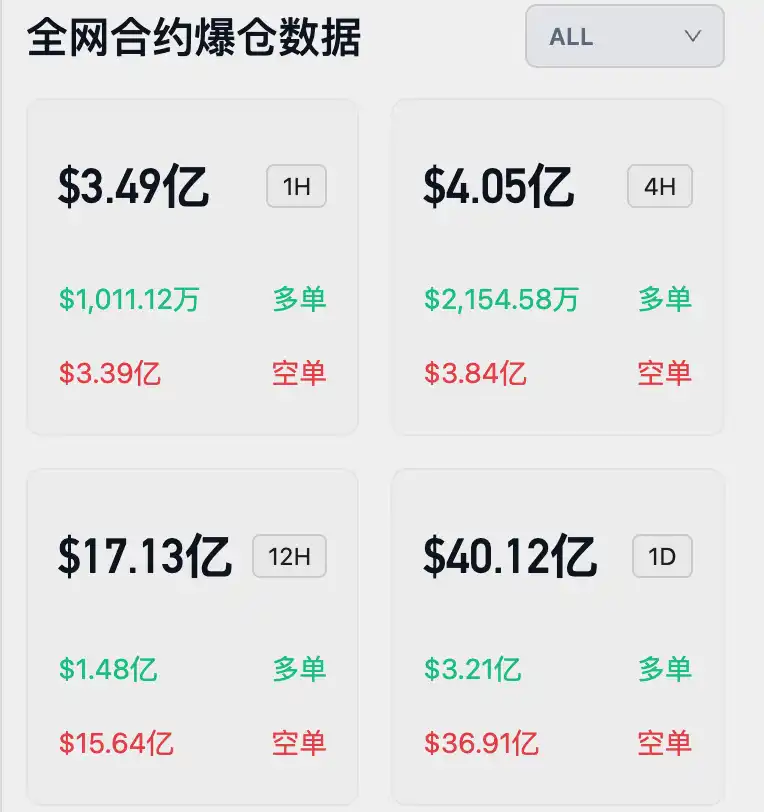
The real numbers behind the market volatility are staggering. According to CoinAnk data, the total liquidation amount of crypto assets across the network once exceeded $4 billion, with short positions alone accounting for $3.7 billion, setting the most brutal short squeeze record since 2021.

Bitcoin's market cap is temporarily reported at $1.5 trillion, surpassing Meta's $1.39 trillion, ranking 13th in global asset market value. Bitcoin spot ETFs saw a total net inflow of $606 million yesterday, marking the fourth consecutive day of net inflows.
The total market cap of altcoins has returned to $1 trillion after nearly a month, with ETH, XRP, and other coins performing notably:

ETH surged 18% in a single day, up 25% weekly, currently at $2,361, hitting a new high in over two months;

XRP rose 20% in 24 hours, up 31% weekly, currently at $1.3, with a single-day market cap increase of about $10 billion;

HYPE rose 15% weekly, briefly touching $75, approaching its all-time high of $76.85;

SOL briefly broke above $90, up nearly 15% weekly.

For digital asset treasury companies, this rally directly altered the fate of their balance sheets. As of August 16th, Strategy held 840,447 BTC with an average cost of $75,385. With BTC's rise, this world's largest publicly traded Bitcoin holder has just broken even.

Why the Surge

The euphoria came so swiftly that everyone is asking the same question: Is the bear market really over?

This surge did not happen without reason. Macroscopically, on August 19th, the U.S. Treasury announced at least doubling its long-term bond buyback size from $2 billion to $4 billion per auction. The 30-year Treasury yield promptly fell from 5.337% to 5.187%, and the U.S. dollar index fell below 99—a signal of loosening liquidity gates.

On the same day, Donald Trump gathered a host of crypto industry leaders at the White House, from Coinbase's Brian Armstrong to Ripple's Brad Garlinghouse, urging the Senate on the spot to advance the CLARITY Act, and mentioning that the U.S. is considering purchasing a "sizeable amount" of Bitcoin reserves.

Just the day before, on August 18th, the U.S. SEC had thrown out a new regulatory framework proposal, loosening the soil for compliance pathways.

On August 21st, U.S. regulatory actions continued, releasing favorable signals. CFTC Chairman Michael Selig dropped an even tougher statement at the agency's inaugural Innovation Advisory Committee meeting: if the CLARITY Act "continues to stall due to Democratic obstruction, the CFTC will use its existing authority to begin establishing a system for the crypto asset market."

He said he has directed staff to begin studying rules to use existing powers to solidify the crypto market structure, covering crypto exchanges, leveraged and margined trading, and compliance pathways for developers of on-chain financial protocols.

Whales Are Gambling with Real Money

This surge was also accompanied by a bloody short squeeze, with a large number of short positions forced to liquidate, which was also a structural market factor in this rally.

Since July 8th, Bitcoin had been languishing for a long time within a narrow range of $62,000 to $66,900. The six-week buildup of confidence among shorts was shattered as prices rose.

According to Lookonchain data, the three addresses with the largest short liquidation losses were all in the hundreds of millions. Address 0x8c96... was liquidated for 1,829 BTC, approximately $120 million; pension-usdt.eth had 49,808 ETH liquidated, approximately $111 million; address 0x8eff... was liquidated for 1,343 BTC, approximately $92.56 million.

A typical casualty was the well-known Chinese community whale "先定 10 个大目标" (Set 10 Big Goals First). On August 19th, he just made $20 million from a long position, then turned around and went short at high levels, opening a total of $222 million in BTC and ETH short positions. After the price surged, on August 20th he was forced to close his position, giving back $6.28 million.

But he didn't stop. On August 21st, he charged ahead again, shorting once more—opening a total of approximately $17.9 million in BTC and ETH shorts, with an average BTC entry price of $74,506.57 and an ETH entry price of $2,346.83.

Amid the surge, some whales chose to cash out at highs, while others chose to add short positions at highs: two whale addresses sold 5,250 ETH and 550 BTC, profiting $6.26 million; another address that had previously accumulated a long position of 120,000 ETH reversed and added long, with two wallets holding a combined $182 million long position at an average entry price of around $2,265.

What Do Analysts Think

On-chain liquidation and position change records sketch out the micro-battlefield of this rally—shorts being slaughtered, longs diverging, some fleeing and some doubling down. But what do these fragmented individual behaviors, pieced together, point to? What do analysts think?

The optimistic side is full of confidence. Bitwise research analyst Ishmael Asad stated he would view this move as "the strongest confirmation so far that the bottom is in," with institutional allocation just beginning and long-term fund inflow potential still ahead.

Coinbase CEO Brian Armstrong declared, "We could very well be on the eve of the next crypto spot trading bull market";

Trader mignolet publicly corrected himself, saying he hadn't expressed a bullish view since August 2025 but now admits his previous judgment was wrong. The current rebound could last longer, and he no longer expects an easy breakdown. He announced turning bullish on Bitcoin from now on and stopping shorting.

CryptoQuant founder Ki Young Ju stated that spot and perpetual contract demand turned positive simultaneously for the first time since the historical high in October 2025. The bear market has ended, and a new bull cycle has begun.

On the institutional side, Standard Chartered's Head of Digital Asset Research, Geoff Kendrick, gave a year-end target of $100,000, while Risk Dimensions CIO Mark Connors even called for BTC to reach $180,000 to $360,000 by 2030.

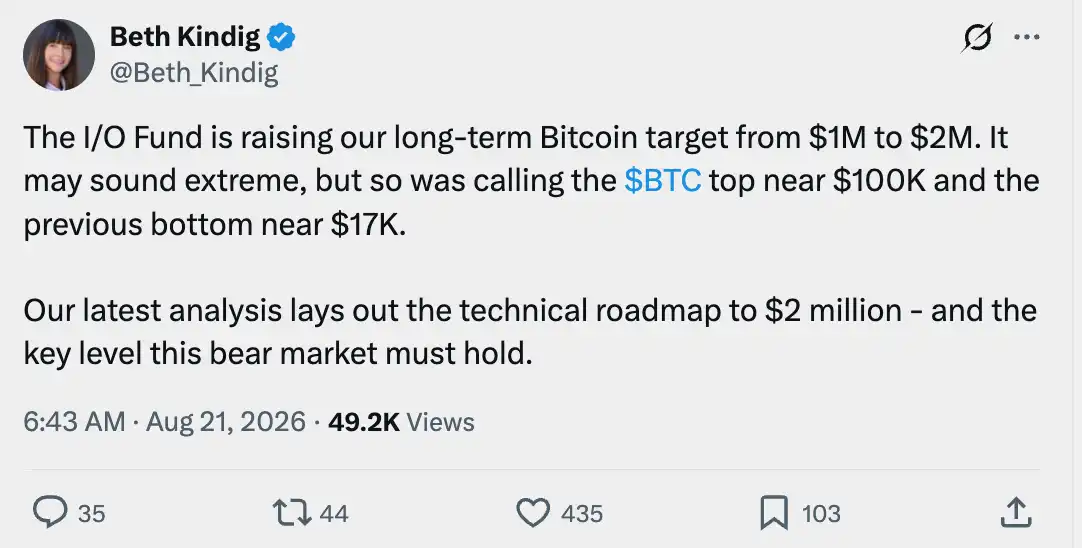
Analyst Beth Kindig, known as the "Queen of Nvidia," posted that the I/O Fund has raised its long-term Bitcoin price target from $1 million to $2 million.
However, some analysts cautioned against chasing highs hastily. Smart Money stated this rebound is not a bottom bounce but a "trap" surrounding the September CLARITY Act vote, bouncing from support, attracting short positions, and clearing leveraged accounts. The 4-hour RSI indicator is at 92.6, yesterday morning it was 82.8, in overbought territory. They advise not to chase highs for now, observing if it can hold above $73,244.

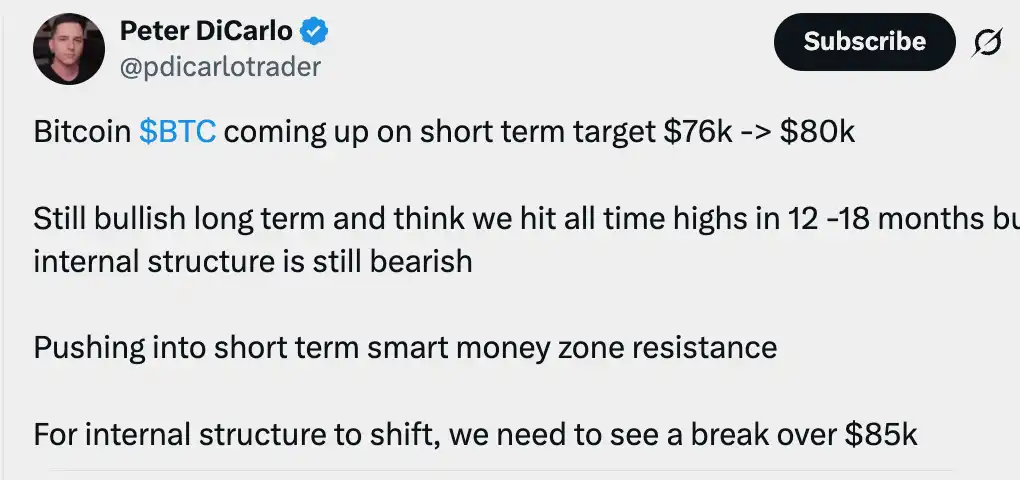
Trader Peter DiCarlo believes long-term bullish, short-term bearish. He stated Bitcoin could look towards $80,000 from here. Long-term, he is still bullish, believing new all-time highs will be reached within 12 to 18 months, but the internal structure is still bearish at present. Price is pushing into short-term "smart money zone" resistance. For the internal structure to change, a valid breakout above $85,000 must be seen.
The Next Key Date: September 15th

In three days, Bitcoin nearly recovered two months of losses. After a massive clearing of short positions, the real test is just beginning—the baton must be passed to sustained real buying.

The market will now focus on verifying a few things: whether spot Bitcoin ETF net inflows can remain positive consecutively; whether the price can effectively break and hold above the important resistance zone of $78,000–$80,000; whether it can continue to attack the average cost line of all active investors (approximately $75,800); and the result of the U.S. Senate vote on the CLARITY Act on September 15th.

Related Questions

QAccording to the article, what is the main argument presented for the claim that the bear market has ended?

AThe main argument is that the dramatic three-day price surge, combined with several key factors, signals a shift. These factors include: significant short liquidations (over $37 billion), strong and sustained inflows into spot Bitcoin ETFs, positive changes in market sentiment (from fear to greed), and major regulatory and political developments in the US (like the Treasury's liquidity move and Trump's pro-crypto meeting). CryptoQuant's founder explicitly states 'bearish market has ended, a new bullish cycle has begun.'

QWhat specific regulatory and political events from August 19-21, 2026, are cited as catalysts for the market surge?

A1. August 19: The US Treasury announced it would at least double its long-term Treasury bond buyback size from $2 billion to $4 billion, easing liquidity concerns. On the same day, former President Trump met with crypto industry leaders, urged the Senate to advance the CLARITY Act, and suggested the US consider buying a 'considerable amount' of Bitcoin for reserves. 2. August 18: The SEC proposed a new regulatory framework, seen as loosening compliance pathways. 3. August 21: The CFTC Chairman stated that if the CLARITY Act stalls, the CFTC will use its existing authority to establish rules for the crypto asset market.

QHow did the 'Smart Money' analyst quoted in the article view the recent price rally, and what caution did they advise?

AThe 'Smart Money' analyst viewed the rally not as a true bottom reversal but as a 'trap' centered around the upcoming September vote on the CLARITY Act. They noted the 4-hour RSI indicator was at 92.6 (highly overbought) and advised against chasing the rally at high prices. They recommended waiting to see if the price could hold above the $73,244 support level.

QWhat was the significance of the massive short liquidations during the three-day price surge?

AThe massive short liquidations, where over $37 billion was liquidated (primarily short positions), were a key market structure factor fueling the price surge. This 'short squeeze' forced traders with bearish bets to buy back assets to cover their positions, creating intense upward buying pressure and contributing to the rapid 20%+ price increase. It was described as the most severe short squeeze since 2021.

QWhat is the next key date and event that the market is focused on, according to the conclusion of the article?

AThe next key date is September 15, 2026. The market is focused on the US Senate's vote on the CLARITY Act. The outcome of this regulatory vote is seen as a critical test for whether the bullish momentum can be sustained with real buy-side demand, beyond the initial short squeeze and speculative activity.

Related Reads

Grayscale: Zcash, Financial Privacy in the Age of AI

Grayscale Research suggests a third wave of public focus on financial privacy is approaching, driven by stablecoin/blockchain adoption and new AI-powered surveillance tools. In this context, Zcash emerges as a decentralized digital currency, similar to Bitcoin but with built-in, robust privacy mechanisms via its "shielded" transactions that conceal sender, receiver, and amount using zero-knowledge proofs. While privacy is often seen as a niche feature, it is argued to be a core requirement for functional money, needed by individuals and businesses alike. Zcash's optional privacy is distinct from mixers or default-private chains like Monero. After years of development (Sapling, Orchard/NU5, Ironwood upgrades) to improve usability, key metrics show growing adoption: shielded transactions comprise ~90% of network activity, and ~25% of circulating ZEC is in shielded pools—a historical high. Despite this, ZEC's market valuation remains low (~0.6% of the "digital currency" sector), implying the market prices privacy as a marginal concern. The investment thesis hinges on a potential re-rating if the value of financial privacy is recognized more broadly. Risks include regulatory challenges around shielded transactions, legacy trusted setup pools, quantum computing threats, and execution risks for upcoming upgrades like Tachyon for scaling. In summary, Zcash represents a significant, technologically mature option in the privacy currency space, with current valuation offering potential upside if privacy demand grows.

marsbit25m ago

Grayscale: Zcash, Financial Privacy in the Age of AI

marsbit25m ago

Xiaomi Defended Its Smartphone Gross Margin, Yet to Find a Profit Successor

Xiaomi's Q2 2026 financial report reveals a company navigating a complex transition. While smartphone gross margin held steady at 8.5% through strategic product mix and a record-high average selling price (ASP), this came at the cost of a 26.5% year-over-year decline in global shipments, pressuring its core user acquisition engine. This illustrates Xiaomi's central challenge: managing the "timing gap" between its established and emerging growth engines. Its smartphone business is pivoting from scale to premiumization, but it's unclear if high-end models can fully offset the volume loss from more price-sensitive segments, especially in markets like India and Africa. Meanwhile, the electric vehicle segment has become a significant revenue contributor, delivering 104,200 units and generating ¥23.9 billion. However, its profit contribution remains unclear as it, along with AI investments, is still in a scaling and investment phase. The AI and humanoid robot initiatives, though strategically prioritized and tested in Xiaomi's own factories, are in early-stage validation with no near-term commercialization timeline. Financially, the company remains stable, supported by a robust cash position and its high-margin internet services business, which hit a new high in monthly active users. Management emphasized continued heavy investment in AI, chips, and robotics to fuel the next growth cycle. The key question is whether these new engines—cars, AI, robotics—can achieve commercial scale and profitability before the smartphone engine's growth slows further.

marsbit30m ago

Xiaomi Defended Its Smartphone Gross Margin, Yet to Find a Profit Successor

marsbit30m ago

Is RWA Still Meaningful Without DeFi?

The article "Would RWA Still Matter Without DeFi?" argues that tokenizing real-world assets (RWA) alone, like putting a barcode on a container, is not transformative. True value emerges when these tokenized assets are integrated into decentralized finance (DeFi) ecosystems, enabling valuation, financing, hedging, trading, and loss management in a programmable, automated manner. Tokenization provides digital representation, but DeFi provides utility through leverage, liquidity, and composability. The core challenge lies in aligning the different "time clocks" of blockchain (fast, 24/7), traditional markets (limited hours), and asset redemption (slow processes), which creates liquidation risks and gaps. Effective RWA integration requires more than a token; it needs a full stack: legally enforceable rights, reliable data oracles, clear transfer rules, executable secondary liquidity, appropriate collateral parameters, and credible loss resolution paths. Liquidity is defined not by total value locked (TVL) but by the ability to exit a position under stress within a required timeframe. Risk management for RWAs must be modeled as a dependency graph, monitoring interconnected nodes like issuers, custodians, oracles, and liquidity pools for early warning signs beyond just price data. While tokenized government bonds serve as an initial "ping test," the future lies in more complex assets like computing power and energy, which require bespoke risk models. Tokenized stocks paired with perpetual futures present a major test, combining global equity ownership with crypto-native leverage, necessitating robust architectural safeguards like isolation and dynamic collateral rules. The conclusion is that without DeFi, RWA tokenization offers limited value—improving distribution and transparency. The significant opportunity arises when tokenized assets become functional components within open, programmable capital markets, where they can be used as collateral and facilitate complex financial strategies. The token is merely the barcode; the market operating system is the real machine.

marsbit51m ago

Is RWA Still Meaningful Without DeFi?

marsbit51m ago

Government Intervention in the Bond Market: What Does It Mean?

On August 19, 2026, the U.S. Treasury unexpectedly announced it would at least double the size of its long-term Treasury buyback operations, starting September 9. The move triggered an immediate market reaction, with the 30-year yield falling 9 basis points. This intervention came against a backdrop of the 30-year yield hitting a 19-year high of 5.34% the previous day, driven by persistent inflation, high oil prices, deteriorating U.S. fiscal health with public debt surpassing $40 trillion, and a global "buyers' strike" for long-dated bonds. Treasury buybacks involve the government repurchasing older, less liquid bonds from the market via reverse auctions to improve market functioning, not to reduce overall debt. While the action provided tactical relief and signaled the Treasury's willingness to intervene, analysts caution it does not address core structural issues: massive fiscal deficits, high borrowing needs, and fading demand from traditional buyers like foreign central banks. For investors, the announcement offered short-term support for long-duration bond ETFs and boosted assets like gold, which rose 2.7%. However, it's unlikely to significantly lower mortgage rates or alter the challenging environment for long-term bonds. The key takeaway is the distinction between a tactical market operation and the unresolved structural pressures that continue to push yields higher, requiring close monitoring of upcoming economic data, Treasury auctions, and potential signals of more aggressive policy measures.

marsbit55m ago

Government Intervention in the Bond Market: What Does It Mean?

marsbit55m ago

Trading

Spot
活动图片