Written by: Zennon Kapron
Compiled by: Chopper, Foresight News
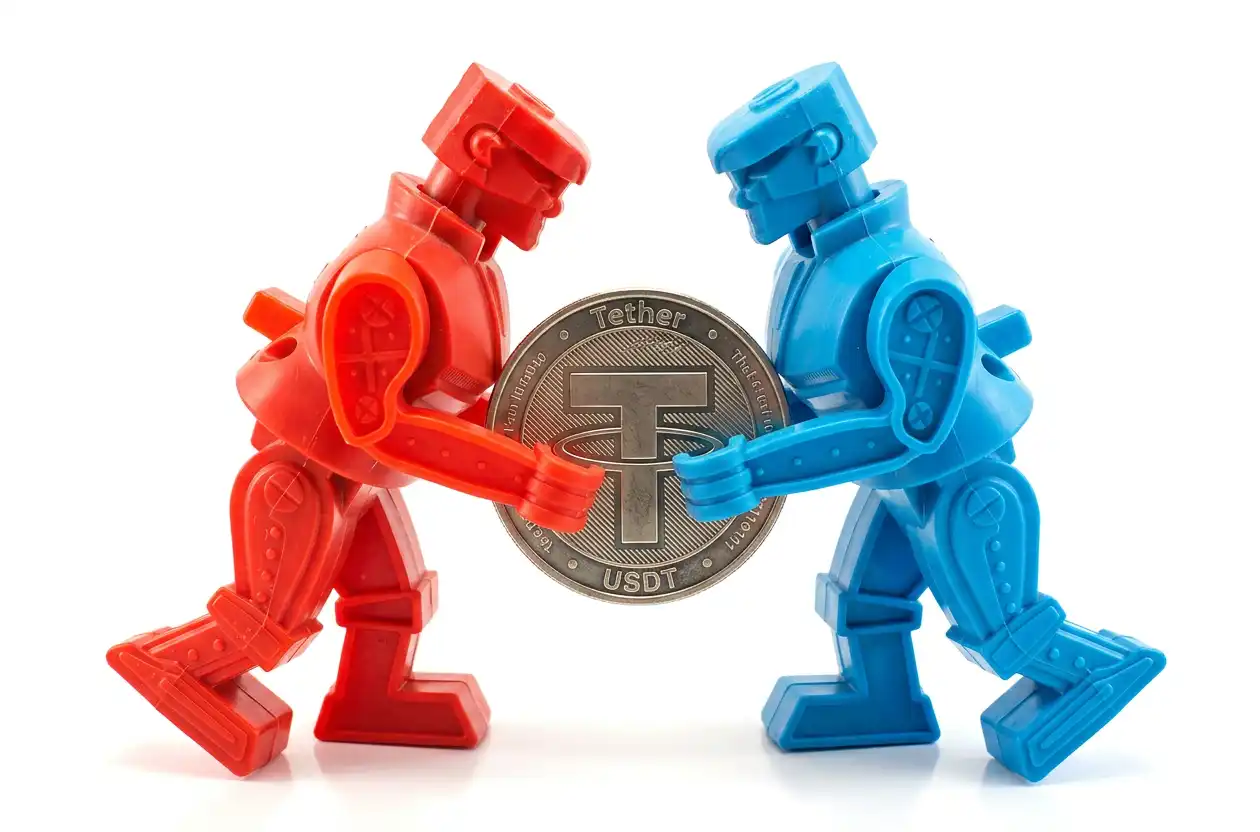
As AI agents increasingly undertake various commercial transactions, a battle for the underlying payment infrastructure has already begun.
Currently, the technical path to enabling AI agents to make autonomous purchases has diverged into two incompatible solutions: through which channel transactions are ultimately cleared and settled when software programs make payments on behalf of users. One camp builds payment rails based on tokenized bank card credentials controlled by Visa and Mastercard; the other, led by Coinbase, adopts stablecoins for settlement based on open internet protocols. While the surface-level focus of AI agent commerce is on shopping assistant applications, the core game behind the scenes is about who will dominate the next-generation payment system.
Two Payment Channels, Adapted to Different Application Scenarios
Traditional card networks have taken the initiative and moved swiftly. Mastercard launched its Agent Pay service in April 2025, built on its proprietary agent tokenization system. This tokenization technology, originally designed for contactless payments and card-on-file payment scenarios, has been extended to allow verified AI agents to make transactions on behalf of users within authorized limits.
From its launch, the service assembled a host of industry partners, signaling a clear strategic intent: collaborators include Microsoft, IBM's watsonx intelligent orchestration platform, and payment service providers Braintree and Checkout.com. A day later, Visa introduced its Visa Intelligent Commerce service, opening its payment network to AI developers, with AI-adapted bank cards as the core vehicle. This solution replaces raw card numbers with tokenized credentials, proving user authorization for a specific AI agent and defining transaction boundaries. Visa also enlisted several leading AI companies, including Anthropic, OpenAI, Perplexity, Mistral, and Samsung.
The solutions from both major card networks keep transactions within the decades-old bank card payment model. While AI agents are a new entity, the payments flow through traditional channels that have served global commerce for half a century.
The stablecoin camp adopts an architecture fundamentally different from the card networks. Coinbase launched the x402 protocol in May 2025, reviving the long-dormant HTTP 402 "Payment Required" status code. The protocol leverages this code to settle transactions using the USDC stablecoin directly on the internet. The specific process involves: a client requesting access to a resource, the server returning a payment instruction; the client attaching signed stablecoin payment information in the request header; once the on-chain transaction is confirmed, the corresponding resource becomes accessible. The entire process requires no account registration, card binding, and incurs no bank card transaction fees.
This solution is designed specifically for machine-to-machine (M2M) transactions. An AI agent might need to make thousands of micro-payments for API calls, data streams, or interactions with other agents. Processing such transactions through traditional card channels is completely unfeasible from a cost perspective.
Both technical routes have their strengths. The bank card channel excels in personal retail consumption scenarios, which place high demands on chargeback handling, fraud prevention, and dispute arbitration mechanisms. The stablecoin channel holds significant advantages for high-frequency, small-value, cross-border machine transactions, where traditional card fee structures and settlement times are ill-suited. The core of the contest lies in which type of scenario will become the mainstream for AI agent commercial transactions.
A major challenge common to both routes is identity verification. When a software program initiates a payment, merchants need to confirm that the operator is a legitimate agent authorized by a real user, not a malicious bot using stolen credentials. Simultaneously, users need a mechanism to dispute transactions erroneously initiated by an AI agent.
Visa, noting a 47-fold surge in AI traffic to US retail websites, collaborated with cloud service provider Cloudflare to launch a Trusted Agent Protocol for distinguishing legitimate AI programs from malicious crawlers. This also highlights the structural advantage of traditional card networks: five decades of accumulated risk scoring systems, chargeback rules, and dispute resolution mechanisms are well-suited to handle issues like AI agents purchasing the wrong item. In contrast, stablecoin transactions are immutable once on-chain, with no native reversal solution within the system.
Looking ahead, the key factor determining the direction of the consumer market may not be which payment channel has lower fees, but who can solve the challenges of agent identity verification and transaction dispute resolution.
Dual-Track Strategy: Card Networks Betting on Both Arenas
A telling signal is that Visa and Mastercard are not betting everything on their own rails but are also simultaneously investing in the stablecoin arena.
By April 2026, Visa's stablecoin settlement business had reached an annualized transaction volume of $7 billion, a 50% increase quarter-over-quarter. The company added support for 5 new public blockchains, bringing its total number of partner chains to 9, while launching over 130 "stablecoin + bank card" linkage projects in more than 50 countries globally. In October 2025, Visa doubled down, jointly launching the Trusted Agent Protocol with Cloudflare to help merchants identify legitimate agents versus malicious programs. It also publicly announced a collaboration with Coinbase to promote interoperability between its network and the x402 protocol. Seemingly competing bank card systems and stablecoin protocols are now building bridges.
Mastercard has adopted a similar dual-track strategy. In March 2026, Mastercard announced its intention to acquire stablecoin platform BVNK for up to $1.8 billion. Prior to this, its Agent Pay service had expanded to Latin America and the Caribbean, with local issuer adaptation completed in early 2026.
It's clear that the core strategy of the two major traditional card networks is: no longer merely defending the bank card channel, but striving to become the fee-collecting gateway for all payment rails, whether proprietary or stablecoin-based. This layout strongly indicates their assessment: if the industry ultimately settles on bank cards as the mainstream for AI payments, they would not need to invest heavily in acquiring stablecoin infrastructure.
Diverging Application Scenarios
Based on currently launched products, the application boundaries of the two technical routes are quite clear.
Mainstream products targeting ordinary consumers mostly choose the bank card channel. The "Checkout with ChatGPT" feature launched in September 2025, co-developed by OpenAI and payment service provider Stripe, relies on a shared payment token for bank card settlement. This token is limited to specified merchants and shopping orders, initially connecting with Etsy sellers and later covering over a million Shopify stores. Amazon's "Buy for Me" feature, which allows AI agents to make purchases on third-party websites on a user's behalf, automatically populates the user's stored bank card for checkout.
AI shopping services for personal consumption commonly choose bank cards due to the system's mature anti-fraud tools, extensive merchant network, and long-established user trust.
Meanwhile, the stablecoin channel firmly occupies the machine transaction market. Amazon integrated the x402 protocol into its Bedrock agent core payment service, using Coinbase's Base blockchain for settlement, with transactions taking about 200 milliseconds and fees under one cent. Stripe also joined the service as a payment gateway. According to Coinbase data, in its first year, the x402 protocol processed over 169 million payment orders, covering 590,000 buyers and 100,000 sellers.
These transactions are not about users shopping for clothes online, but AI agents paying for services like computing power, data, and API calls. Their frequency and individual amounts are incompatible with the design logic of bank cards. In September 2025, Coinbase, jointly with Cloudflare, spearheaded the establishment of the x402 Foundation, aiming to promote the development of universal industry standards rather than building a closed proprietary product.
Summarizing five flagship AI commercial payment projects launched by early 2026: 3 used bank card settlement, 2 used stablecoin settlement, with application scenarios largely divided along the lines of personal consumption and machine transactions.
Future Industry Direction
In the short term, the industry landscape in 2026 is likely to maintain the status quo: bank cards dominating personal retail payments, stablecoins specializing in inter-machine transactions, with both coexisting and developing. However, by 2030, this situation may be disrupted, as both camps are vying for the convergence zone of the two scenarios.
The ultimate decider will depend on whether AI-driven commercial transactions ultimately lean more towards traditional retail forms or evolve into a massive network of micro machine transactions. If it's the former, traditional card networks will retain dominance. If it's the latter, stablecoin channels will capture a significant volume of new transaction flows.
Visa and Mastercard have made the safest choice: a dual-track investment in both arenas, ensuring they can collect fees regardless of where future flows go. The entities that truly need to be cautious are those betting on a single payment channel. The two major card networks have already hedged this risk, which intuitively reflects their judgment about the industry's future.





















