The Arrival of 'Tokenpocalypse': When Costs Outweigh Productivity Gains, Who Pays the Bill?

marsbitPublished on 2026-06-10Last updated on 2026-06-10

Abstract

The article discusses the emergence of the term "Tokenpocalypse" (Token Doomsday), triggered by Microsoft's shift to a token-based pricing model for GitHub Copilot on June 1st. This change introduces significant cost multipliers between different AI models, with some premium models becoming up to 60 times more expensive per token. As leading AI companies like Anthropic and OpenAI prepare for IPOs, increasing profit pressures may lead more vendors to raise prices. This creates a dilemma for enterprises. Companies that once encouraged or mandated high AI token usage to boost productivity now face budget overruns under the new pricing. The lack of granular per-employee token limits means a single developer could exhaust a company's monthly budget. This forces a paradoxical situation where employees are criticized for both using too little and too much AI. The piece cites Uber as a case study, where AI budget depletion led to rapid implementation of usage caps. It highlights the growing disconnect between AI utility and cost, noting that even initial pricing for services like ChatGPT Plus was somewhat arbitrary. The industry now grapples with balancing AI's productivity gains against its escalating expenses. Ultimately, the article suggests the focus is shifting from fears of "AI replacing jobs" to the reality of "AI consuming budgets." The mental overhead and operational hours spent managing token costs are beginning to undermine the very productivity benefits AI promises. Th...

A new term has recently sparked widespread discussion: "Tokenpocalypse."

The trigger was Microsoft's pricing restructuring for GitHub Copilot. Starting June 1st, Copilot has fully transitioned to a token-based billing model. The token cost multipliers differ drastically between various models, with some models costing 60 times more per token than others.

And the advanced models widely regarded by users as "truly effective" are precisely the ones experiencing the most severe price hikes.

As leading AI companies like Anthropic and OpenAI prepare for IPOs, AI firms will face increasingly intense profitability pressures, which may compel more vendors to follow suit with price increases.

The cost of using AI is an inevitable issue for enterprises expanding productivity. The recent "tokenmaxxing" trend, driven by competition over employee token usage, is approaching its end as Tokenpocalypse looms.

"The entire tokenmaxxxing craze, from rise to peak to disdain, lasted just six months."

The Corporate Dilemma

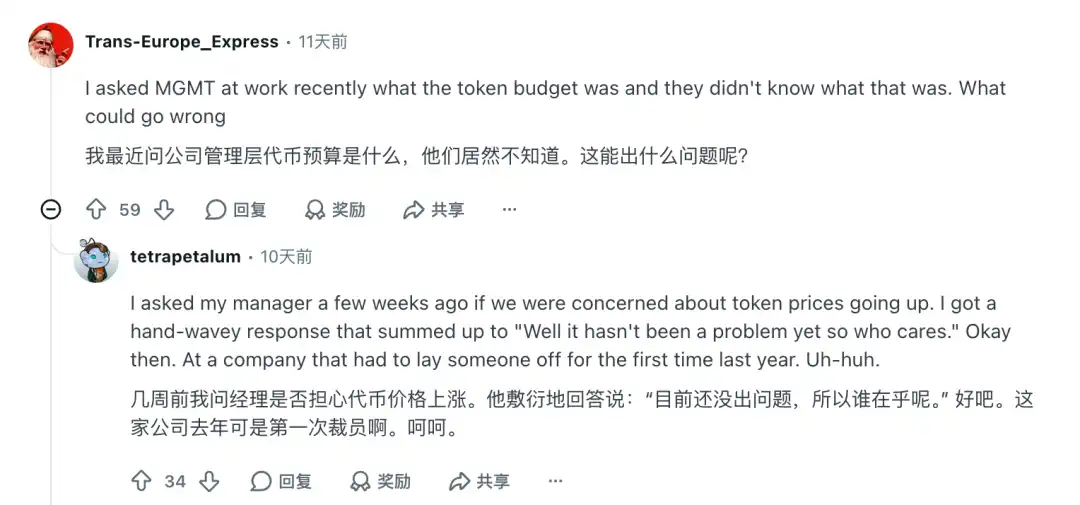
A developer from a large corporation described an absurd predicament: the company had long mandated employee use of AI tools, and using too few tokens would result in a meeting. But with the new pricing, using too many tokens now also leads to a meeting.
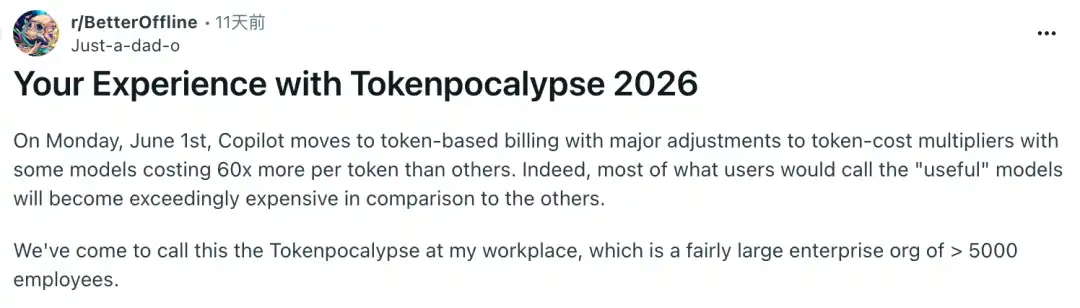
More critically, the Copilot team has yet to launch an "employee-level token quota" feature. This means that under the new billing model, a single employee could potentially exhaust the company's entire monthly token budget in one day.

"My job is no longer about using software to solve business problems," the developer wrote. "My job has become solving the token usage problem."

The comments section offers even more gems. One user summarized it: "Company policy became: 'Use AI for everything, but be careful not to use too much, because if the LLM consumes too many tokens you'll be deactivated, and then you'll be criticized for not using AI for the rest of the month.'"

A company's excessive focus on AI productivity can also be a double-edged sword.
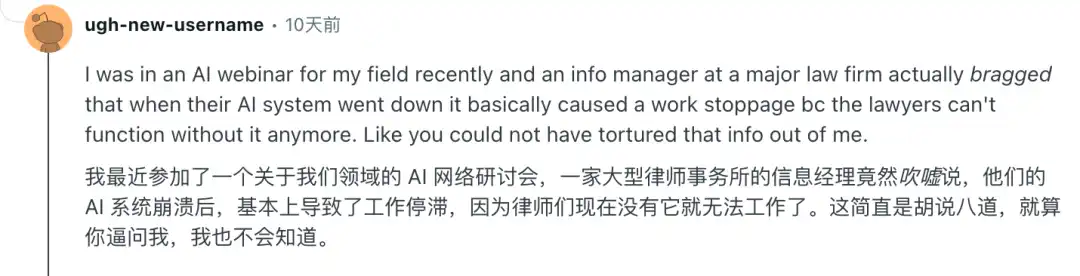
An information director from a major law firm even "boasted" at an AI seminar: after their AI system crashed, the lawyers were essentially at a standstill, as they could no longer work without AI.

"A person trained for years in a specialized field freely admits they can't work without an AI chatbox? I'd be so ashamed I'd start re-evaluating my entire career."

The Uber Overspend Incident: An Industry Microcosm

Most AI models now have usage packages, but the issue of budget control becomes more severe as tokens increasingly trend towards pay-as-you-go pricing.
Uber completed a full arc in just one and a half months: first discovering that "the AI budget was burning much faster than anticipated," then urgently implementing usage caps and employee restrictions.
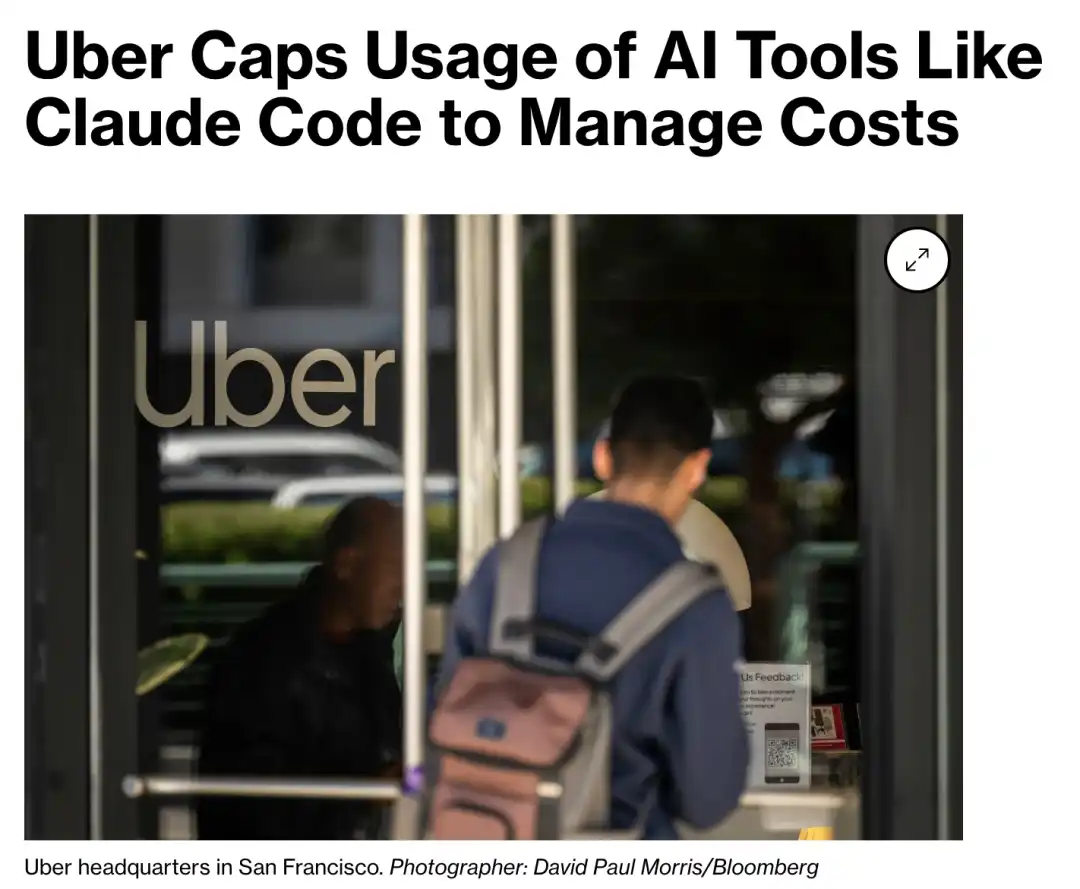
"Imagine a company as heavily reliant on AI as Uber hitting a wall this quickly," was discussed on a TechCrunch podcast. "The question is: Can AI labs bring costs down to meet customers' willingness to pay?"

A little-known fact: When ChatGPT Plus was initially priced at $20/month, there wasn't much strategic consideration; "they just threw out a number." The entire industry is still paying for that starting point.

"Your Job Won't Be Replaced by AI, But Your Budget Might"

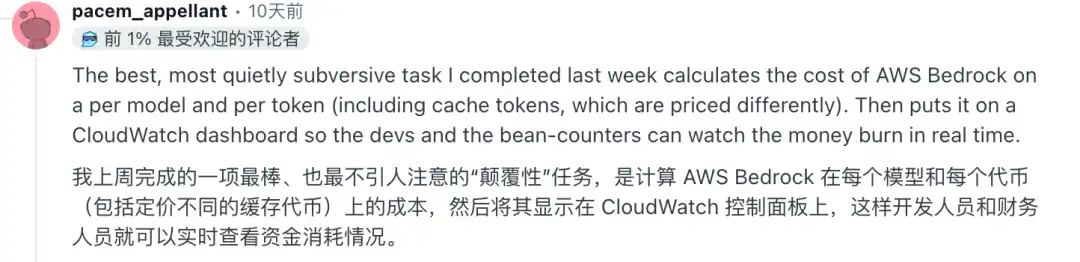
There are more thought-provoking details on Reddit. Someone built an AWS Bedrock cost monitoring dashboard at their company, displaying real-time spending per model and per token (including cached tokens) on CloudWatch, "so developers and finance can watch the money burn together." The comment section's reaction was: "Congratulations, you just gave them a new KPI."
Another large company has already faced similar tightening: after AI credits ran out, everyone was forcibly downgraded to GPT-4.2, losing even the VSCode integration.

An observer from outside the tech industry voiced a sentiment shared by many: "The mental energy and actual man-hours this whole thing consumes have already started impacting the delivery of work that actually makes the company money."

While the entire industry remains immersed in the narrative that "AI will replace everything," a more realistic question has surfaced: the bill for compute power must ultimately be paid. And "Tokenpocalypse" might just be the beginning of this reckoning.


Related Questions

QWhat is 'Tokenpocalypse' and what event triggered its discussion?

A'Tokenpocalypse' or 'Token Doomsday' refers to a scenario where the rising costs of using AI tokens begin to outweigh their productivity benefits. The discussion was triggered by Microsoft's pricing overhaul for GitHub Copilot, which, starting June 1, shifted entirely to a token-based billing model with significant cost disparities between models.

QWhat is the 'absurd dilemma' faced by enterprises regarding AI tool usage as described in the article?

AThe article describes an absurd dilemma where companies have previously mandated employees to use AI tools, reprimanding those who used too few tokens. However, with the new pricing model, employees are now also reprimanded for using too many tokens, putting them in a 'damned if you do, damned if you don't' situation.

QWhat key functionality does GitHub Copilot currently lack, according to the article, and what is its potential consequence under the new pricing?

AAccording to the article, GitHub Copilot's team has not yet implemented an 'employee-level token limit' feature. This means that under the new pay-per-use model, a single employee could potentially exhaust the company's entire monthly token budget in one day.

QHow does the Uber case illustrate a broader industry problem with AI costs?

AThe Uber case serves as an industry microcosm. The company discovered its AI budget was being depleted much faster than anticipated within just a month and a half, forcing it to hastily implement usage caps and employee restrictions. This highlights the challenge of unpredictable and escalating AI operational costs even for large, tech-savvy companies.

QAccording to the article's conclusion, what is the more immediate and realistic threat compared to the narrative of 'AI replacing everything'?

AThe article concludes that a more immediate and realistic threat than 'AI replacing everything' is the financial burden of the compute bill. The 'Tokenpocalypse' represents the beginning of a financial reckoning where someone ultimately has to pay for the computational power, potentially impacting budgets and work delivery more directly than job replacement.

Related Reads

Apple Also Has to Pay Rent Now

Apple Pays Rent Too: The Two-Way Flow of "Traffic Tax" and "AI Capability Rent" Between Tech Giants For over two decades, Google has paid Apple an estimated $20 billion annually to remain the default search engine on Safari, a "traffic tax" for a critical user entry point. However, in 2026, the direction of this cash flow partially reversed. Apple agreed to pay Google roughly $1 billion per year to license its Gemini AI models, as Apple's own models reportedly struggled with complex tasks. This creates a unique dynamic: Apple acts as the "landlord" in the established search ecosystem, collecting rent from Google for access. Simultaneously, in the emerging AI arena, Apple becomes the "tenant," paying Google for access to cutting-edge AI capabilities it cannot currently match internally. While Apple claims its new models are "distilled" from Gemini outputs and contain "not a drop" of Google's original code, core dependencies remain. Its knowledge base is refined using Gemini's outputs, and its most powerful cloud model runs on Google's infrastructure. Apple has structured the deal as non-exclusive, allowing it to theoretically switch AI suppliers—a hedge against over-reliance. The future hinges on whether advanced AI models become a commodity (cheap and abundant) or remain a concentrated, scarce resource (expensive and controlled by few). Apple is betting on the former, leveraging its massive device ecosystem to be a powerful, choosy customer. If the latter proves true, its bargaining power could erode. This power dynamic is extending to developers. Apple, Google, and WeChat are all pushing for apps to expose their core functions as standardized "actions" or "intents" that their respective AI assistants (Siri, Gemini, WeChat AI) can directly call. The new scarce resource is no longer just app store visibility, but "being selected by the AI." The currency of "rent" has changed from a 30% revenue share to ceding control over how users interact with an app's functions.

marsbit30m ago

Apple Also Has to Pay Rent Now

marsbit30m ago

Missed the SpaceX IPO? WEEX's "First Trade Protection" Lets You Experience US Stock Trading Risk-Free.

With the excitement around SpaceX's recent public listing reigniting interest in the US stock market, Chinese investors face significant challenges accessing compliant and convenient trading channels following regulatory actions against major online brokers. This article explores the available options, highlighting their risks and limitations. Traditional paths for US stock investments remain problematic. Qualified Domestic Institutional Investor (QDII) and Listed Open-Ended Fund (LOF) products, while compliant, suffer from high fees, significant purchase premiums, and a very limited selection of assets. Small, unregulated offshore brokers pose substantial risks, including potential insolvency. While secure, VIP accounts at banks in Hong Kong or Singapore require high minimum deposits (often 1-2 million RMB) and in-person visits, placing them out of reach for most retail investors. The article positions cryptocurrency exchanges, specifically their TradFi (traditional finance on-chain) offerings, as a compelling alternative. Platforms like WEEX are noted for providing access to a wide range of US stocks and ETFs, including SpaceX (SPCXON), through tokenized assets. This method offers advantages such as a single account for both crypto and traditional assets, USDT-based settlement avoiding fiat complexities, flexible leverage, and robust risk management. To attract users, WEEX is promoting a "First Trade Guarantee" campaign. Running from June 15 to July 8 (UTC+8), it features a $30,000 prize pool. Users who trade $500 worth of US stock contracts can qualify for a guarantee on their first eligible trade: 100% loss coverage up to $30 or a 20% bonus on profits up to $30. The campaign is presented as a low-risk opportunity for both crypto natives and traditional investors to experience US stock trading.

marsbit31m ago

Missed the SpaceX IPO? WEEX's "First Trade Protection" Lets You Experience US Stock Trading Risk-Free.

marsbit31m ago

How Difficult is Chip Making? A Division Error Costs 475 Million Dollars

How Hard Is It to Make a Chip? A Division Error Cost $475 Million Chip expert Shi Kan, a researcher at the Chinese Academy of Sciences and a popular tech creator, explains the immense challenges of chip development. Chips are foundational to modern technology, but their creation is extraordinarily difficult. The journey from sand to a functional chip involves complex design and manufacturing, but a critical bottleneck is verification—ensuring the design works flawlessly before costly production. A single, undetected bug can have catastrophic consequences, as illustrated by the infamous 1994 Intel Pentium FDIV bug. A flaw in the floating-point division unit forced a recall costing $475 million. Unlike software, chips cannot be easily patched after manufacture, making "first-time success" paramount. However, industry surveys show only 24% of chip projects achieve this; over three-quarters require at least one costly re-spin due to design flaws. Verification has thus become the dominant phase, consuming up to 70% of the design cycle. The core challenge is a "verification impossible triangle" between high performance, good debuggability, and low cost. Exhaustively verifying a modern CPU core could take 15,000 years with software simulation, or 30 years with advanced hardware emulation—timeframes utterly impractical for development. Despite being essential, verification is often seen as unglamorous "dirty work," receiving less academic attention than fields like AI. Shi and his team are tackling this by developing an agile verification research framework called ENCORE, based on FPGA technology, to improve verification efficiency and debug capability. Beyond research, Shi engages in public science communication through long-form video content, aiming to demystify chip technology, AI, and computer science. He argues for the value of pursuing "hard and long-term" endeavors, whether in the meticulous world of chip verification or in creating substantive educational content, believing such sustained effort is likely the right path forward.

marsbit41m ago

How Difficult is Chip Making? A Division Error Costs 475 Million Dollars

marsbit41m ago

Blockchain Has Finally Started to Sail into the Mainstream After 18 Years

Blockchain Finds Its True Path After 18 Years: Becoming the Financial Backbone for AI Agents and Autonomy This analysis explores a pivotal shift in the blockchain and crypto investment landscape, driven by the dominance of AI. Major venture capital firms, including Variant, Paradigm, Haun Ventures, and YZi Labs, are moving beyond pure "crypto" investment theses. They are expanding their focus to AI, robotics, and frontier tech, signaling that blockchain is no longer seen as a standalone sector but as an underlying infrastructure layer. The core argument is that blockchain's killer application may not be user-facing apps, but rather providing the economic rails for the coming wave of AI agents, autonomous robots, and automated systems. Key capabilities like self-custody wallets, programmable stablecoins for micropayments, on-chain identity, and verifiable smart contracts are positioned as essential for a future where machines conduct economic activity. The recent $1.4 billion investment by Tether (via its venture arm) in German robotics company NEURA Robotics exemplifies this, aiming to embed Tether's wallet tools directly into robots for autonomous transactions. While many "AI + Crypto" projects remain superficial, the article concludes that true value lies where crypto is a necessary component—enabling machine-to-machine payments, agent autonomy, verifiable data provenance, and open financial settlement for the AI era. For crypto venture capital, this convergence with AI represents both an adaptation to shifting capital flows and a potential path to unlocking the large-scale, non-speculative utility the industry has long sought.

marsbit1h ago

Blockchain Has Finally Started to Sail into the Mainstream After 18 Years

marsbit1h ago

Trading

Spot
Futures

Hot Articles

How to Buy BILL

Welcome to HTX.com! We've made purchasing Billions Network (BILL) simple and convenient. Follow our step-by-step guide to embark on your crypto journey.Step 1: Create Your HTX AccountUse your email or phone number to sign up for a free account on HTX. Experience a hassle-free registration journey and unlock all features.Get My AccountStep 2: Go to Buy Crypto and Choose Your Payment MethodCredit/Debit Card: Use your Visa or Mastercard to buy Billions Network (BILL) instantly.Balance: Use funds from your HTX account balance to trade seamlessly.Third Parties: We've added popular payment methods such as Google Pay and Apple Pay to enhance convenience.P2P: Trade directly with other users on HTX.Over-the-Counter (OTC): We offer tailor-made services and competitive exchange rates for traders.Step 3: Store Your Billions Network (BILL)After purchasing your Billions Network (BILL), store it in your HTX account. Alternatively, you can send it elsewhere via blockchain transfer or use it to trade other cryptocurrencies.Step 4: Trade Billions Network (BILL)Easily trade Billions Network (BILL) on HTX's spot market. Simply access your account, select your trading pair, execute your trades, and monitor in real-time. We offer a user-friendly experience for both beginners and seasoned traders.

1.4k Total ViewsPublished 2026.05.07Updated 2026.06.02

How to Buy BILL

Discussions

Welcome to the HTX Community. Here, you can stay informed about the latest platform developments and gain access to professional market insights. Users' opinions on the price of BILL (BILL) are presented below.

活动图片












