# Upgrade Related Articles

HTX News Center provides the latest articles and in-depth analysis on "Upgrade", covering market trends, project updates, tech developments, and regulatory policies in the crypto industry.

Ethereum's 11th Year: Why Is This Year Particularly Crucial?

Ethereum's 11th year proved pivotal, marked by a dual evolution in its technical roadmap and organizational structure. The year saw the completion of the Fusaka upgrade, introducing PeerDAS to make data availability sampling more efficient and laying groundwork for future L2 scaling. This was followed by a significant reorganization of the Ethereum Foundation (EF). The EF downsized, redefining its core mandate around user sovereignty and CROPS principles, while spinning off key functions. Independent entities like Ethlabs (non-profit R&D), Ethereum Institutional (institutional onboarding), and EthSystems (institutional privacy solutions) now operate separately. Technologically, the community debated a bold, long-term vision outlined in Justin Drake's "Lean Ethereum" proposal and the collaborative "Strawmap." These point toward a "third major iteration" for Ethereum, targeting goals like faster finality (~1 second), gigagas-scale L1 throughput, teragas-scale L2 capacity, post-quantum cryptography, and protocol-level privacy. Data underscores Ethereum's dominant position: its L1 still holds roughly half of all stablecoin value, leads in tokenized Real-World Assets (RWA), and commands over 55% of total DeFi TVL. While L2s now handle over 10x more transactions than the mainnet, high-value assets remain concentrated on L1. The launch of Robinhood Chain, an EVM-compatible L2 for stock tokens, signals growing institutional adoption. The immediate roadmap includes the Glamsterdam upgrade (featuring ePBS for in-protocol proposer-builder separation and Block Access Lists for parallelism), potentially followed by Hegotá focusing on anti-censorship via FOCIL. In summary, Ethereum's 11th year was defined by setting ambitious technical foundations for its next decade and restructuring its core development ecosystem to be more modular and sustainable, all while maintaining its role as the leading settlement layer for decentralized finance and assets.

marsbit07/31 12:11

Ethereum's 11th Year: Why Is This Year Particularly Crucial?

marsbit07/31 12:11

When 8 Million ETH Start 'Moving': The Post-Pectra Era Ushers in a Structural Transformation for Staking?

A major shift is underway in Ethereum staking, as Lido begins migrating over 8 million ETH (worth ~$16B) from traditional validators to a new architecture enabled by the Pectra upgrade. This migration involves consolidating over 265,000 legacy validators (using 0x01 withdrawal credentials) into a smaller number of higher-balance "0x02" validators, potentially reducing the total validator count on Ethereum by nearly a third. The core driver is EIP-7251 from the Pectra upgrade, which introduced "compounding validators." These allow a single validator's effective balance to grow up to 2048 ETH, with staking rewards automatically reinvested to compound earnings. This contrasts with the old model, where rewards exceeding 32 ETH were automatically sent to a withdrawal address, creating idle funds and operational complexity for reinvestment. While the direct APR boost from compounding is modest—estimated at a ~4.7% relative improvement for smaller validators—the structural benefits are significant. For large operators like Lido, the primary value is operational efficiency: managing fewer validators reduces node, key management, and network message overhead. For smaller individual stakers, the upgrade lowers the barrier to reinvestment by eliminating the need to manually accumulate 32 ETH for new validators. The migration signifies a deeper change in Ethereum's staking landscape. Competition is evolving beyond simple yield, focusing instead on capital efficiency, liquidity management, risk distribution, and infrastructure optimization. Lido's parallel move to require node operator security deposits further highlights this shift towards more robust, capital-backed services. Ultimately, Pectra's compounding validators represent a key step in maturing Ethereum's staking lifecycle, moving the ecosystem from standardized yield products towards more sophisticated capital management and infrastructure solutions.

marsbit07/29 12:21

When 8 Million ETH Start 'Moving': The Post-Pectra Era Ushers in a Structural Transformation for Staking?

marsbit07/29 12:21

Ethereum's 2030 Blueprint: 200x Speed Increase, Quantum-Resistance, and Native Privacy

Ethereum's 2030 Roadmap: 200x Speed, Quantum-Resistant, Native Privacy Ethereum, now in its 11th year, is guided by the "Lean Ethereum" vision, a unified development blueprint aiming to streamline the network. This plan, outlined in the evolving "Strawmap" document, targets five core goals for 2030. **1. Fast L1:** Ethereum aims for near-instant finality and faster block times. By using Zero-Knowledge (ZK) proofs to aggregate validator votes, final confirmation could drop from ~15 minutes to seconds. Block times are slated to decrease from 12 seconds to 6 seconds (2027-28) and eventually 4 seconds (2029-30). The minimum staking requirement may also lower to 1 ETH, enhancing decentralization. **2. 1 Billion Gas L1:** To break the scalability-decentralization trade-off, L1 ZK-EVM will replace redundant transaction execution with ZK proofs. This allows nodes (even on phones) to verify blocks without re-running computations, paving the way to increase L1 throughput ~200x to 1 billion gas per second. **3. Trillion-Gas L2:** Ethereum will become a high-capacity settlement layer for Layer 2 networks (L2s). Planned upgrades, like PeerDAS and subsequent optimizations, target 1 GB per second of data bandwidth for L2s (Blobs), enabling a massive ecosystem of high-throughput rollups for specialized use cases. **4. Quantum-Resistant L1:** To counter future quantum computing threats, Ethereum plans to migrate its cryptographic signatures (ECDSA, BLS) to quantum-resistant, hash-based schemes. This multi-upgrade transition is targeted for completion by 2029, securing the network in the post-quantum era. **5. Privacy-Native L1:** For the first time, native transaction privacy is an official goal. Using ZK proofs, transactions could hide sender, receiver, and amount while proving compliance with rules. This infrastructure is tentatively planned, though details remain fluid and subject to regulatory landscapes. Driven by a broader ecosystem beyond the core Foundation, this ambitious roadmap seeks to make Ethereum faster, more scalable, quantum-secure, and private, while preserving its core tenets of neutrality and trustlessness. All plans remain subject to ongoing research, audits, and community consensus.

marsbit07/28 10:28

Ethereum's 2030 Blueprint: 200x Speed Increase, Quantum-Resistance, and Native Privacy

marsbit07/28 10:28

The Quantum Computing Threat Approaches, Cryptocurrency May Be Exposed to Risks Before Banks

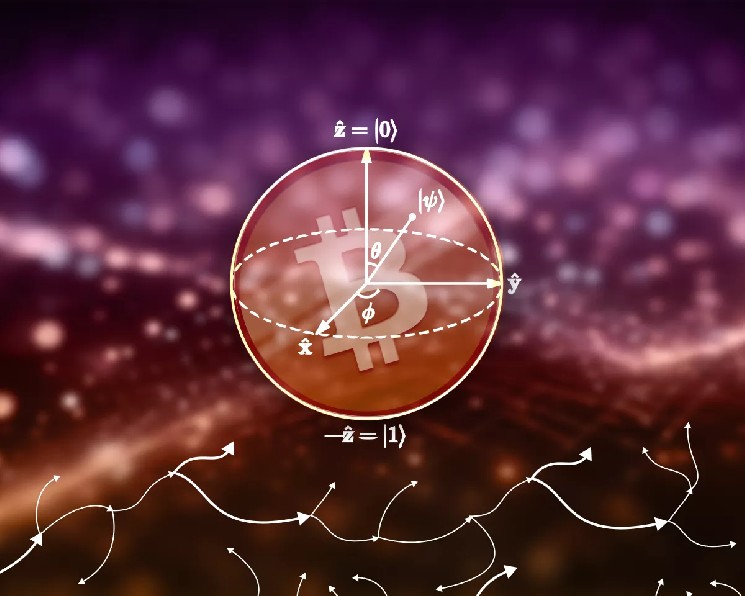
Quantum computing poses a significant threat to all cryptographic systems, including banks and governments, but decentralized cryptocurrencies with public ledgers like Bitcoin are likely the first practical target. Experts warn that a cryptographically relevant quantum computer (CRQC), capable of running Shor's algorithm to break the elliptic curve cryptography securing most crypto wallets, could emerge around 2029. Recent research shows the required quantum resources for such attacks are shrinking dramatically, potentially enabling key extraction in minutes. The core vulnerability for cryptocurrencies is not the cryptography itself—post-quantum standards are being developed—but the slow, decentralized governance required to implement upgrades. Unlike centralized banks that can swiftly transition, Bitcoin needs near-unanimous consensus among its global network, a historically difficult process as seen in past upgrades. Estimates suggest migrating all vulnerable Bitcoin funds could take at least 76 days of dedicated network time, and it must be completed before a CRQC exists to prevent "now-or-never" attacks on exposed keys. The threat is not binary; it begins when a quantum computer can decrypt data before it loses value, not necessarily in real-time. A significant portion of Bitcoin (estimated at millions of coins) already has public keys permanently exposed on-chain, making them vulnerable to eventual "static attacks." While technical solutions exist, the race is against time for decentralized networks to coordinate a defensive transition, serving as an early warning for the broader financial system.

marsbit07/28 01:45

The Quantum Computing Threat Approaches, Cryptocurrency May Be Exposed to Risks Before Banks

marsbit07/28 01:45

What Will Ethereum Look Like in 2030?

Ethereum, now in its 11th year, continues to evolve with a long-term vision centered around five "North Star" goals for 2030. First, a **Fast L1**: The consensus mechanism will be streamlined using zero-knowledge proofs to aggregate validator votes, aiming for single-slot finality. Block times are planned to decrease from 12 seconds to 4 seconds, making transactions irreversible within seconds. The staking minimum will also drop to 1 ETH, promoting greater decentralization. Second, a **1 Billion Gas L1**: Leveraging ZK proofs (L1 ZK-EVM), nodes will verify blocks without re-executing transactions, removing a key scalability bottleneck. This paves the way for the L1 to handle ~1 billion gas per second, a 200x increase, while allowing even light clients to fully verify the chain. Third, **Trillion-Gas L2s**: The roadmap focuses on massively scaling data capacity (blobs) for Layer 2 rollups, targeting 1 GB per second bandwidth. This creates a clear division: the L1 acts as a secure settlement layer, while high-throughput, application-specific L2s (like Robinhood Chain) handle execution. Fourth, a **Quantum-Resistant L1**: To counter future quantum computing threats, Ethereum plans to transition its signature schemes to hash-based cryptography, with the goal of a fully quantum-resistant L1 by 2029. Fifth, a **Privacy-Native L1**: Native privacy features, using ZK proofs to hide transaction details while proving validity, are officially on the roadmap, transforming Ethereum's transparent model. The development ecosystem is also shifting, with new organizations like Ethlabs emerging alongside a smaller Ethereum Foundation. While the "Strawmap" document outlining these goals remains a draft subject to change and delays, the core vision is clear: to make Ethereum faster, more scalable, quantum-safe, and privacy-enabled while preserving its foundational qualities of neutrality and trustlessness.

marsbit07/27 13:16

What Will Ethereum Look Like in 2030?

marsbit07/27 13:16

What Will Ethereum Look Like in 2030?

**Title: What Will Ethereum Look Like in 2030?** **Summary:** This article outlines the "Lean Ethereum" vision, a unified roadmap for Ethereum's evolution leading up to 2030, centered around five key "North Star" goals: 1. **Fast L1:** The goal is to reduce transaction finality from ~15 minutes to seconds and block times from 12 seconds to 4 seconds. This will be achieved through a streamlined consensus mechanism using zero-knowledge proofs (ZK proofs) to aggregate validator votes efficiently. The minimum staking requirement will also be lowered to 1 ETH, promoting greater decentralization. 2. **Billion-Gas L1:** Ethereum aims to increase its Layer 1 throughput by ~200x, targeting 1 billion gas per second. The breakthrough relies on implementing an L1 ZK-EVM, where a single cryptographic proof verifies all transactions in a block, eliminating the need for every node to re-execute them. This enables massive scalability while allowing even light clients (like phones) to fully verify the chain. 3. **Trillion-Gas L2:** The focus shifts to scaling Layer 2 networks (Rollups). Enhancements like PeerDAS and planned upgrades will expand data bandwidth (blob capacity) to 1GB per second, supporting a vast ecosystem of high-throughput L2s. Ethereum will solidify its role as a secure settlement layer, with specialized L2s (e.g., for tokenized stocks) handling application-specific logic. 4. **Quantum-Resistant L1:** To counter future quantum computing threats, Ethereum plans to transition its cryptographic signature schemes (ECDSA, BLS) to quantum-safe, hash-based alternatives. A dedicated post-quantum research team is working on this transition, slated for completion around 2029. 5. **Privacy-Native L1:** For the first time, native privacy is an official goal. Using ZK proofs, transactions could hide sender, receiver, and amount details while proving compliance with network rules. This addresses critical privacy concerns for both individuals and enterprises, though regulatory uncertainty remains. The article notes that development is becoming more decentralized, with new institutions like Ethlabs emerging alongside a downsized Ethereum Foundation. While the "Strawmap" document guiding this vision is a living draft subject to change and delays, the core ambition is clear: to make Ethereum faster, more scalable, quantum-secure, and privacy-preserving while retaining its foundational properties of neutrality and trustlessness.

Foresight News07/27 10:10

What Will Ethereum Look Like in 2030?

Foresight News07/27 10:10

活动图片