# Uniswap Related Articles

HTX News Center provides the latest articles and in-depth analysis on "Uniswap", covering market trends, project updates, tech developments, and regulatory policies in the crypto industry.

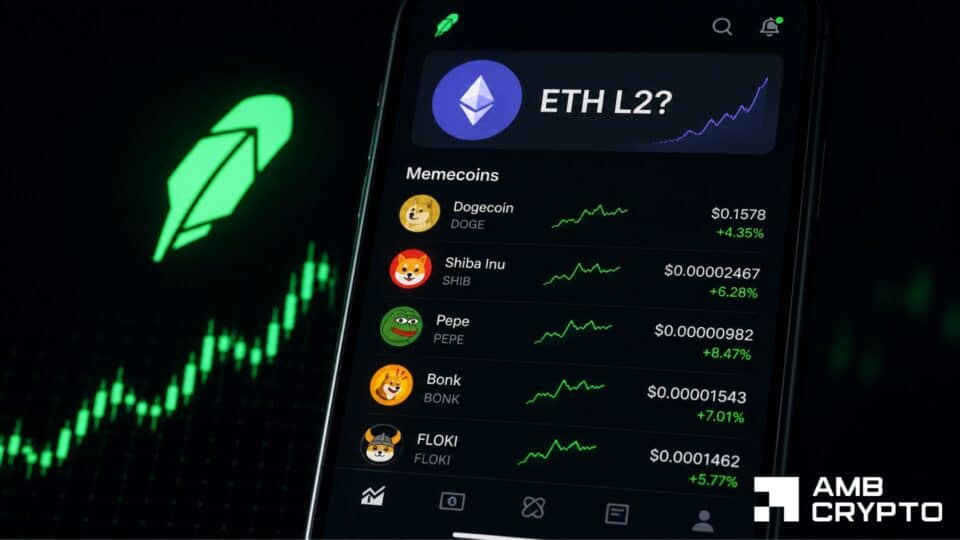
Robinhood Chain Launchpad Chaos: NOXA Shuts Down, Uniswap CCA Steps In?

Robinhood Chain, a blockchain focused on tokenized stocks, has seen unexpected early success driven by meme coin speculation. Two weeks after launch, its weekly DEX volume surpassed $3.1 billion, briefly exceeding Solana in daily meme trading. This frenzy centered on launchpads, tools allowing easy meme token creation. The leading platform, NOXA, generated massive fees ($7.66M in a week) and launched the chain's top meme, CASHCAT. However, on July 11, NOXA abruptly suspended new token launches, citing spam, copycat tokens, and infrastructure strain. It pivoted to a history-only interface, redistributing fees to creators. This move sparked "soft rug pull" fears and caused its launched tokens to drop sharply. NOXA's exit left a leadership vacuum among Robinhood's launchpads. Meanwhile, Uniswap officially launched its Continuous Clearing Auctions (CCA) mechanism on the chain. CCA uses a gradual, block-by-block auction to set a fair initial price and automatically creates a locked liquidity pool. Early CCA-launched memes like UNICORN and TRASH have seen high volatility. The situation highlights the trade-offs: CCA reduces front-running risk but may be less suited for fast-paced meme trading, while instant-launch platforms carry higher sniper risk. For Robinhood Chain, the meme-driven activity has successfully bootstrapped initial usage, testing its "meme-first, RWA-later" strategy as it aims to eventually host tokenized real-world assets.

Foresight News07/15 02:26
Robinhood Chain Launchpad Chaos: NOXA Shuts Down, Uniswap CCA Steps In?

Foresight News07/15 02:26

Robinhood Layer 2 integration fuels 14% Uniswap price jump

Uniswap has deployed its V2, V3, V4, and UniswapX protocols on the Robinhood Chain, a new Layer 2 network built by Robinhood Crypto, where Uniswap will serve as the automated market maker (AMM). The integration, aimed at programmatic and AI-driven ecosystems, sparked a 14.2% surge in the UNI token's price and an 81% increase in daily trading volume over 24 hours, buoyed by a broader 2.3% crypto market rally. Technical analysis reveals a contrasting long-term bearish trend. Despite the short-term bounce, the weekly chart shows UNI broke below the key $4 support level, which has now turned into resistance, with a recent swing low at $2.316 in early June. While the RSI has moved above 50, indicating momentum, the On-Balance Volume (OBV) has not recovered to June highs, suggesting a lack of sustained buying pressure. A Fibonacci retracement analysis places the current rally within a broader bearish structure. The liquidation heatmap shows a high concentration of leveraged short positions up to the $3.52 level, increasing the likelihood of a short-term price move towards $3.5. The analysis suggests traders could use a potential bounce to $3.5 or even $3.77 (the 78.6% retracement level) as a selling opportunity. The overall bearish bias remains intact unless UNI breaks above the $4.17 swing high. In summary, while the Robinhood news triggered a rally, it is viewed as a minor rebound within a dominant long-term downtrend.

ambcrypto07/03 01:32

Robinhood Layer 2 integration fuels 14% Uniswap price jump

ambcrypto07/03 01:32

Will UNI Reach $100 in Four Years? Can Standard Chartered's Prediction Come True?

TL;DR: Standard Chartered Bank predicts UNI token will reach $100 by 2030, based on the growth of tokenized assets fueling demand for open DeFi liquidity and Uniswap's potential to capture fees from that trading. However, institutional tokenized products like BlackRock's BUIDL fund show that strict access controls and permissioned systems remain major barriers. Standard Chartered's $100 price target for Uniswap's (UNI) governance token by 2030 projects massive growth from current levels. The bank's thesis hinges on tokenized real-world assets (RWA) reaching trillions in value and a significant portion flowing into open, decentralized markets for trading and liquidity, rather than remaining in closed, permissioned systems. Uniswap's position as a leading decentralized exchange (DEX) infrastructure could allow it to capture a major share of this future trading activity. A key challenge is whether tokenized assets like bonds, funds, and stocks will trade openly on DEXs or be restricted to controlled, institutional platforms. The case of BlackRock's BUIDL fund exemplifies this tension: while it uses Uniswap's technology for settlements, trading is strictly limited to pre-approved, whitelisted institutional participants. This hybrid model provides DeFi efficiency but maintains traditional access barriers. For UNI to achieve such a high valuation, Uniswap must not only see increased trading volume from tokenized assets but also implement effective value-capture mechanisms for token holders. Recent governance proposals aim to direct protocol fees to UNI stakers, creating a clearer link between platform usage and token value. Ultimately, the realization of Standard Chartered's prediction depends on the future structure of the tokenized asset market. If open liquidity pools and reduced restrictions prevail, Uniswap's role could expand far beyond crypto-native trading. If permissioned, walled-garden systems dominate, its growth from institutional tokenization may be limited. The prediction itself signals growing institutional recognition of DeFi's potential role in the future of finance.

marsbit06/17 09:38

Will UNI Reach $100 in Four Years? Can Standard Chartered's Prediction Come True?

marsbit06/17 09:38

Will UNI Reach $100 in Four Years? Will Standard Chartered's Prediction Come True?

TL;DR: - According to reports, Standard Chartered Bank has published a research report on Uniswap, setting a 2030 price target of $100 for the UNI token. - The bank's core logic is that the tokenization of assets will drive demand for open DeFi liquidity, and Uniswap could capture significant trading volume and fee revenue. - However, most institutional-grade tokenized products are permissioned, and the example of BlackRock's BUIDL shows that DeFi still faces significant access barriers. Standard Chartered's $100 target for UNI by 2030 is based on the hypothesis that tokenized assets will grow massively and a significant portion will flow into open DeFi markets, requiring decentralized exchange platforms like Uniswap for liquidity. The bank forecasts tokenized assets could reach $4 trillion by 2028, with up to 30% in DeFi by 2030. The key question is whether tokenized assets like treasuries and funds will trade in open, decentralized markets or remain within closed, permissioned institutional systems. This directly impacts Uniswap's potential growth. A real-world example is BlackRock's BUIDL fund, which, while using UniswapX for trading, is strictly limited to pre-approved, whitelisted institutional participants. This highlights the current trend: institutions may leverage DeFi infrastructure but maintain strict control over access and transfers. Furthermore, for UNI's value to rise significantly, Uniswap must establish a clear value-capture mechanism, such as the approved fee switch and token burn proposal. Regulatory and interoperability hurdles also persist, as noted by bodies like the Financial Stability Board. In summary, Standard Chartered's bold prediction hinges on the future flow of tokenized asset liquidity. While it signals institutional recognition of DeFi's potential, the path to $100 depends on overcoming current permissioned models and enabling truly open, cross-asset liquidity pools on platforms like Uniswap.

Foresight News06/17 08:03

Will UNI Reach $100 in Four Years? Will Standard Chartered's Prediction Come True?

Foresight News06/17 08:03

Standard Chartered Bank Places a 40x 'Bet', Calls for UNI to Rise to $100

Standard Chartered Bank’s digital asset research head, Geoff Kendrick, initiated coverage on Uniswap with a highly bullish long-term price target of $100 for its UNI token by 2030—a roughly 40-fold increase from its ~$2.60 trading price at the time of the report. The bank’s thesis hinges on the exponential growth of tokenized real-world assets (RWA), projected to surge from ~$340 billion to $4 trillion by 2028. It expects the share of these assets deployed in DeFi to rise from 3.5% to 30%, driving total DeFi TVL to around $2.7 trillion. As the leading decentralized exchange (DEX), Uniswap is positioned to capture a significant portion of this liquidity influx. A key catalyst is Uniswap’s “fee switch,” activated in late 2024, which directs a portion of protocol fees to UNI token buybacks and burns. This transforms UNI from a pure governance token into a yield-generating, deflationary asset, narrowing its valuation gap with centralized exchanges like Coinbase. The report draws an analogy: Coinbase operates like Netflix (centralized, high-cost), while Uniswap functions like YouTube (open, user-generated, network-effect driven). Despite its dominant market share and recent institutional adoption—such as BlackRock’s BUIDL fund and Fidelity’s stablecoin using Uniswap for liquidity—the path faces challenges. Competition from Solana-based DEXs and aggregators threatens user mindshare, while regulatory delays or setbacks in RWA adoption could slow the projected growth. Furthermore, UNI remains down over 92% from its 2021 peak, reflecting persistent market skepticism. Ultimately, Standard Chartered’s report signals a shift in traditional finance’s perception of DeFi, valuing network effects and cash flow potential. However, realizing the $100 target depends on Uniswap successfully navigating intense competition, regulatory hurdles, and the multi-year timeline for massive tokenized asset adoption.

marsbit06/16 09:50

Standard Chartered Bank Places a 40x 'Bet', Calls for UNI to Rise to $100

marsbit06/16 09:50

Understanding Hash in One Article: The "Browser Miner" on Ethereum

Hash is an Ethereum-based ERC-20 token described as a "browser-minable post-quantum token." Its key features include enabling browser-based GPU mining without specialized hardware, a fixed supply cap of 21 million tokens, immutable and permissionless smart contracts with no team allocation or pre-mining, and an emphasis on post-quantum security using Keccak256 hashing. The mining mechanism is a simplified on-chain proof-of-work where miners solve unique challenges tied to their wallet address. Key design elements prevent answer theft, with epochs resetting every 100 blocks (~20 minutes) and a per-block minting limit. Emission follows a Bitcoin-like halving schedule every 100,000 mints, starting at 100 tokens per mint. Projections suggest all tokens could be mined within approximately 294 days if a target rate of one mint per minute is sustained. Hash emphasizes "post-quantum" security by leveraging hash-based primitives like Keccak256, which are considered more resistant to quantum attacks compared to elliptic-curve cryptography. While not a fully post-quantum asset, it aligns with Ethereum's broader post-quantum research narrative. The project completed its Genesis sale at $0.03 and began trading on Uniswap, with its price reaching around $0.19. The initial circulating supply is small, with 5% sold in Genesis and 5% allocated to liquidity. The majority (47.6% of total supply) is allocated to early-stage mining, leading to a front-loaded emission schedule. This structure, combined with low initial liquidity, makes Hash a high-volatility, high-risk project dependent on sustained miner participation and market demand to absorb new supply.

marsbit05/11 10:55

Understanding Hash in One Article: The "Browser Miner" on Ethereum

marsbit05/11 10:55

活动图片