# Solana Related Articles

HTX News Center provides the latest articles and in-depth analysis on "Solana", covering market trends, project updates, tech developments, and regulatory policies in the crypto industry.

The On-Chain Game of Payment Giants: The Battle for a $40 Trillion Settlement Layer

The payment industry, while perceived as traditional, remains one of the earliest and most adaptable parts of the financial system to technological transformation. While the market continues to debate whether cryptocurrencies are assets, payment giants Visa and Mastercard have reached a consensus on a more fundamental issue: the need for a more efficient settlement layer that can integrate with existing payment systems, rather than requiring a complete overhaul. Their answer is stablecoins. Visa has begun integrating USDC stablecoin settlements via the Solana blockchain for U.S. banks, emphasizing standardization and productization rather than disruptive innovation. This allows for near-instant, 24/7 settlements, reducing liquidity constraints and transaction times, all while maintaining a seamless experience for end-users. Meanwhile, Mastercard is pursuing a multi-chain strategy, partnering with entities like Ripple and Gemini to build a flexible compliance layer that connects traditional finance with on-chain settlement networks. This approach prioritizes adaptability across various stablecoins and blockchain environments, particularly for cross-border and B2B payments. Both companies recognize that the real competition is not about individual stablecoin growth, but about controlling the future settlement layer—where an estimated $40 trillion in credit market activity could be redefined. The shift toward programmable settlement tools could reshape core financial processes like credit issuance and risk management. This transition is occurring quietly in the background—a technical migration that is gradual but likely irreversible. As major payment networks adopt on-chain settlement capabilities, blockchain is becoming embedded within the infrastructure of finance itself, changing the underlying logic of how value moves globally.

marsbit12/18 10:03

The On-Chain Game of Payment Giants: The Battle for a $40 Trillion Settlement Layer

marsbit12/18 10:03

The Brutal Reckoning of the Public Chain Market in 2025: The Thriving Casino, The Fake Ghost Town, and VC's Harvesting Scheme

Crypto Public Chains Face a Reality Check: A Grim Settlement in 2025 The crypto market, often perceived as a lens of soaring market caps and futuristic promises, reveals a starkly different reality when analyzed through on-chain fee data. A deep dive into DeFiLlama’s “Fees by Chain” metrics exposes a severe structural issue: the public chain ecosystem is dominated by profit concentration, while the long tail languishes in zombification. Notable examples highlight this disparity. Algorand, a chain backed by Turing Award-winning cryptography, recorded a meager $17 in daily protocol revenue despite a billion-dollar valuation. Similarly, Cardano, a top-ten asset by market cap, generates only around $6,000 in daily fees, indicating a lack of substantial economic activity beyond basic transfers. In contrast, the chains capturing real value are those serving clear, immediate demands. Tron leads with $1.24 million in daily fees, powered primarily by its role as a low-cost payment rail for USDT transfers. Solana follows with nearly $600,000, driven largely by its vibrant on-chain casino of meme coin trading and speculation. Base, backed by Coinbase’s distribution power, has also emerged as a serious contender. These cases underscore that proven, fee-generating business models in crypto are currently limited to payments, high-frequency speculation, and Ethereum’s role as a settlement layer. The analysis further reveals the failure of the VC-driven model. Newer chains like Sui, Sei, and Starknet, which launched with massive funding and high Fully Diluted Valuations (FDV), show alarmingly low daily fees—often in the low thousands or even hundreds of dollars. Their typical lifecycle involves attracting airdrop farmers with incentives, followed by a collapse in organic activity once subsidies end. This reflects a critical issue of “block space inflation”: too many chains have been built, without a proportional growth in killer applications that demand that capacity. The market is at an inflection point. Investors are shifting from valuing narratives to scrutinizing fundamentals. The new imperative is to identify chains that generate genuine, fee-based revenue from organic user demand—not those sustained by speculation, subsidies, or empty promises. This necessary清算 (settlement) in valuation may be painful, but it is essential for the industry's long-term health. The era of paying for dreams is giving way to an era of paying for proven utility.

marsbit12/18 04:08

The Brutal Reckoning of the Public Chain Market in 2025: The Thriving Casino, The Fake Ghost Town, and VC's Harvesting Scheme

marsbit12/18 04:08

Cory Iring's Christmas Experiment: $30,000 for Subscribers and High-Stakes Play with No Risk

Cory Iring, a well-known poker player and content creator, has launched an unconventional Christmas initiative for his audience. Instead of a traditional freeroll, he is running a competition with a total prize pool of $30,000, offering subscribers a chance to play in high-stakes cash games without any personal financial risk. The project is supported by CoinPoker and has attracted attention for its innovative approach to player engagement and transparent selection process. The idea originated from Iring’s personal experience. Earlier this year, he aimed to reach $1 million in capital through cryptocurrency investments in Bitcoin, Ethereum, and Solana. However, a sharp market downturn disrupted his plans, leading him to seek an alternative path. Rather than making motivational claims like many influencers, Iring returned to poker—a environment where he feels professional—and applied a classic staking model in an unusual format. Instead of seeking investors, he offered his subscribers the opportunity to play at high limits with his financial backing. The selection is conducted through cash games on the CoinPoker platform. Participants register with the promo code "CE" and play freerolls between December 6 and 25. As part of the promotion, two $10,000 buy-ins for games at The Lodge—a Texas card room run by Doug Polk—are being awarded. An additional $10,000 will be distributed among finalists as cash prizes. Winners are chosen in two categories. "The Protege" focuses on efficiency and final financial results, while "The Grinder" is based on gameplay volume: the most active participants enter a separate mini-tournament, whose winner receives a second high-stakes buy-in. Organizers emphasize that only honest play counts, with no tolerance for artificial attempts to increase the number of freerolls played. The first stage has already concluded. The winner in The Protege category was a subscriber named Kayla, who earned a spot in a real cash game against experienced regulars. Despite her lack of experience in such lineups, she ended the session with a profit, proving that the format works not only on paper but also at the table. The second stage remains open, with the final tournament planned for late December. For many participants, this is a rare opportunity to test themselves in conditions usually accessible only to professionals. Iring’s project demonstrates how a personal challenge can evolve into a large-scale media and gaming initiative. The freeroll combines content, live poker, and real money, offering the audience not abstract promises but a concrete chance to play at high stakes. For CoinPoker, it’s another step toward unconventional formats; for players, it’s an opportunity to enter high-stakes games through a fair and transparent selection process.

bitcoinist12/16 16:34

Cory Iring's Christmas Experiment: $30,000 for Subscribers and High-Stakes Play with No Risk

bitcoinist12/16 16:34

When Breakpoint Becomes a 'Festival': Why Solana Still Puts Builders Center Stage

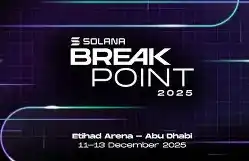
Breakpoint 2025 in Abu Dhabi marked a significant evolution for the Solana ecosystem—from a developer-focused gathering into a global “festival” of builders, capital, and cultural energy. Authored by Abhitej, a long-time Solana builder, the piece reflects on whether the event has retained its builder-first ethos amid rapid scaling and institutional interest. Unlike traditional conferences, Breakpoint felt open, decentralized, and intentionally designed to reduce hierarchy. It balanced the presence of developers, founders, creators, and investors without letting any group dominate. The agenda emphasized short, high-signal talks and demos, giving more people visibility. Solana’s culture stands out for rejecting elitism—anyone building something meaningful, no matter how small, gets a platform. The ecosystem embraces what works, from DeFi and infrastructure innovation to memecoins, learning from both successes and failures. Despite market turbulence, Breakpoint 2025 felt grounded in product-building, with mature discussions on scalability, cost, and real-world use cases. The energy was optimistic yet pragmatic—a celebration of creation, not extraction. While some insular “Solana-only” attitudes persist, the overall vibe was collaborative and forward-moving. Abu Dhabi’s setting contributed to the event’s inclusive, international atmosphere. Breakpoint has outgrown the conference model—it’s now a cultural festival embodying the open, builder-centric spirit of the next internet.

marsbit12/16 13:53

When Breakpoint Becomes a 'Festival': Why Solana Still Puts Builders Center Stage

marsbit12/16 13:53

活动图片