# Security Related Articles

HTX News Center provides the latest articles and in-depth analysis on "Security", covering market trends, project updates, tech developments, and regulatory policies in the crypto industry.

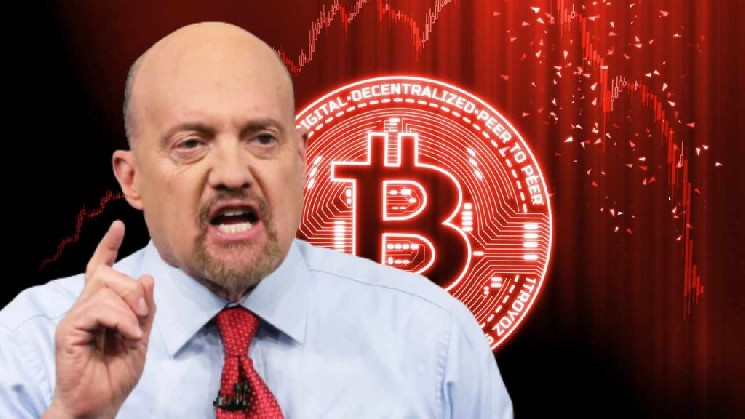
Jim Cramer Plans to Dump His Bitcoin, Warns Quantum Firm Will Crack Crypto Soon

CNBC's Jim Cramer announced plans to sell his Bitcoin holdings, citing warnings from IBM's CEO Arvind Krishna that commercially viable quantum computers could break Bitcoin's cryptography within three to four years. This statement triggered the popular "Inverse Cramer" reaction in crypto markets, with many traders viewing it as a bullish signal, and Bitcoin's price remained stable around $63,764. The specific quantum threat targets the ECDSA signature scheme, potentially exposing private keys from public ones for Bitcoin addresses that have been reused or are visible during transaction broadcasts. Researchers estimate around 30% of all BTC, or 6-7 million coins held in older "dormant" wallets, could be vulnerable. While a recent Google Quantum AI paper suggested such an attack might require fewer physical qubits than previously thought, current quantum systems are still orders of magnitude away from the reliable logical qubits needed. Expert timelines for a functional cryptographically relevant quantum computer vary widely, from Krishna's 2028-2029 estimate to more conservative predictions in the 2030s or 2040s. Cramer has a history of shifting his Bitcoin stance, and his latest warning was largely interpreted as a market sentiment indicator rather than a technical analysis. The focus now is on whether Bitcoin's development of quantum-resistant upgrades will outpace the advancement of quantum computing hardware.

cryptonews.ru08/03 23:06

Jim Cramer Plans to Dump His Bitcoin, Warns Quantum Firm Will Crack Crypto Soon

cryptonews.ru08/03 23:06

Hacker Coldcard Receives Brazen Bitcoin Money Laundering Proposal on the Blockchain

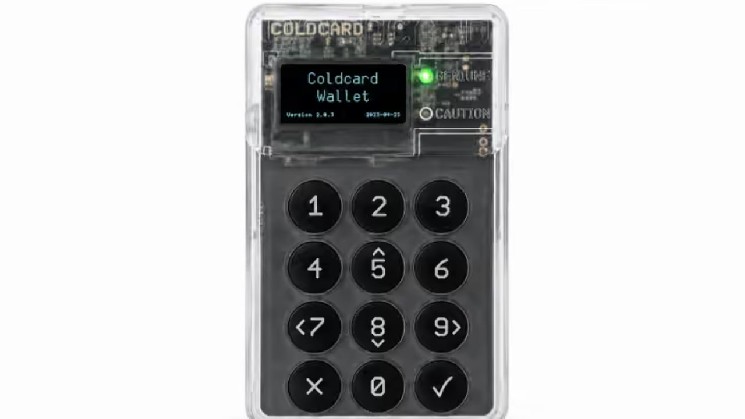
Coldcard, a Bitcoin hardware wallet, faced a significant security breach a few days after Coinkite disclosed a long-undetected firmware vulnerability. The flaw allowed attackers to recover weakly generated wallet seeds, systematically draining vulnerable single-signature wallets. According to Coldcard Sweep Watch, total losses have reached approximately 1,359.882 BTC, with most stolen funds still concentrated on addresses controlled by the attacker. An unusual event occurred on August 1st when a transaction containing an OP_RETURN message was sent to one of the attacker's addresses. This message openly advertised money laundering services, offering help with KYC procedures and cashing out stolen coins for a 10% fee, and included a Telegram contact. This has led to speculation that it could be a serious offer, a trap, or possibly even law enforcement. Despite the theft of over 1,300 BTC, blockchain researchers note that the majority of the funds remain unmoved on a small number of addresses, making the stolen coins highly visible on Bitcoin's transparent ledger. In response, Coinkite released emergency firmware updates to fix the weak random number generator responsible for the vulnerability. However, the update only protects newly created wallets and does not fix seeds already generated by vulnerable versions. Furthermore, users began reporting that the update caused some Mk4 and Q devices (and some Mk3) to freeze, display errors, or become completely inoperable. Coinkite has not yet publicly confirmed a widespread firmware defect. Security experts are strongly advising users of potentially vulnerable wallets to move their funds to a new, securely generated wallet *before* applying any firmware update, as the patch cannot strengthen an already weak seed. This incident has evolved into a major test of trust in hardware wallet security, highlighting concerns about wallet design, seed generation, and long-term self-custody practices. The community is now closely watching to see if the stolen Bitcoin will be moved and if Coinkite will issue further guidance for affected customers.

cryptonews.ru08/03 09:37

Hacker Coldcard Receives Brazen Bitcoin Money Laundering Proposal on the Blockchain

cryptonews.ru08/03 09:37

Samson Mow Shares 5 Urgent Recommendations for Coldcard Users Facing Losses

Samson Mow, CEO of JAN3, shares five urgent recommendations for Coldcard users affected by losses due to a Random Number Generator (RNG) vulnerability. He emphasizes documenting all details (wallet addresses, dates, firmware versions, transaction info) for a proper incident report. Users are advised to file a police report with cybercrime units or agencies like the FBI's IC3 and to monitor coordinated efforts to track stolen funds. Mow strongly warns against destroying the affected Coldcard device or seed phrase, as they may be needed to prove ownership if stolen bitcoin is frozen on an exchange. He also cautions victims to ignore fraudulent recovery service offers that request upfront payments or sensitive wallet information. The incident highlights broader self-custody security lessons. Mow stresses minimizing single points of failure by using multi-vendor, multi-signature setups instead of relying on a single hardware provider. He acknowledges self-custody is complex and urges the community to be less critical of those using custodians or ETFs, as each storage method involves trade-offs. Coinkite, the maker of Coldcard, has issued a security advisory urging users of affected devices to update firmware, generate new seeds, and move funds if their seed was created on vulnerable versions. The aftermath includes potential legal action against Coinkite by affected users and an unsolicited blockchain message to the attacker offering money-laundering services.

cryptonews.ru08/03 09:32

Samson Mow Shares 5 Urgent Recommendations for Coldcard Users Facing Losses

cryptonews.ru08/03 09:32

活动图片