# Risk Management Related Articles

HTX News Center provides the latest articles and in-depth analysis on "Risk Management", covering market trends, project updates, tech developments, and regulatory policies in the crypto industry.

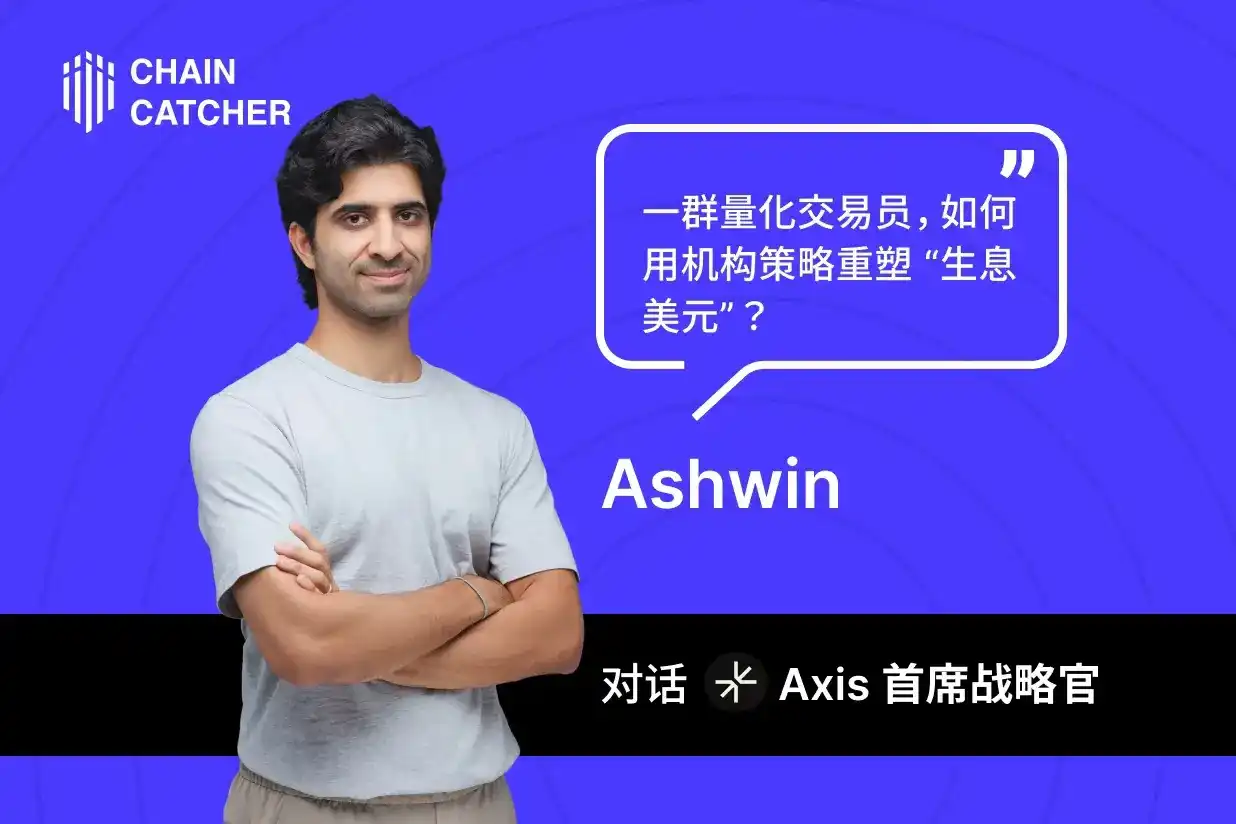
Dialogue with Axis: How a Group of Quantitative Traders is Reshaping 'Yield-Bearing Dollars' with Institutional Strategies?

Axis, founded by a team of quantitative traders including Chris (an early QCP Capital employee and co-founder of the $400M+ AUM fund Alphanonce with 35%+ annual returns), is building a protocol to generate sustainable, transparent yield on-chain through institutional-grade arbitrage strategies. The core product is USDx, a dollar-pegged synthetic asset that users can stake to earn yield. Unlike many DeFi protocols that rely on unsustainable token incentives or directional market bets, Axis’s returns are generated from real, verifiable cross-market arbitrage opportunities. The team’s extensive background in traditional finance, quant trading, and DeFi (with experience from firms like BlackRock, Tether, Ondo, and Maple) informs their focus on capital efficiency, rigorous risk management, and institutional security practices. Axis recently raised a $5M private round led by Galaxy Ventures, with participation from OKX Ventures and FalconX. The protocol is built on Plasma, chosen for its deep USDT liquidity and mature DeFi infrastructure, and is currently in a private testing phase ahead of public launch. Key innovations include a dynamic “arbitrage engine” that allocates capital across multiple strategies (not just basis trading) to capture opportunities in various market conditions. The team emphasizes transparency, with plans for on-chain, third-party-verified proof of reserves and delta-neutrality to build trust. Long-term, Axis aims to evolve from a yield generator into critical “liquidity infrastructure” for the on-chain economy, with plans to expand into yield-bearing assets backed by Bitcoin and gold.

marsbit01/20 03:03

Dialogue with Axis: How a Group of Quantitative Traders is Reshaping 'Yield-Bearing Dollars' with Institutional Strategies?

marsbit01/20 03:03

Institutions Besiege the Crypto World: Deconstructing Three Fatal Traps, A Core Guide for Retail Investors to Avoid Pitfalls

Amidst the recent crypto market hype—such as the London Stock Exchange adopting blockchain settlement, prediction markets hitting $700M in daily volume, and Vietnam’s high USDT payment success rates—many retail investors are eager to jump in. However, this article warns of three major traps set by institutions to exploit散户 (retail investors). First, the LSE’s move is not an endorsement of crypto but a strategic power grab to control on-chain asset pricing and settlement rules, sidelining retail participants. The advice: avoid short-term speculation on "institutional narrative coins" and focus on long-term spot holdings. Second, prediction markets are dominated by professional Wall Street teams using quant models, insider information, and arbitrage strategies. Retail traders, relying on limited information, are at a severe disadvantage. The guidance: only use disposable funds for such high-risk activities. Third, while USDT adoption in Vietnam appears promising with 97% payment success, it serves mainly as a hedge against currency volatility rather than mainstream payment. Challenges like trust issues, slow confirmations, and limited usability hinder broader adoption. The core advice for散户 is to avoid chasing hype, not overweight high-risk sectors, and stick to long-term positions in major cryptocurrencies like BTC and ETH. Separate entertainment funds from investment capital, and stay rational to survive institutional dominance.

marsbit01/19 05:39

Institutions Besiege the Crypto World: Deconstructing Three Fatal Traps, A Core Guide for Retail Investors to Avoid Pitfalls

marsbit01/19 05:39

The Key Value of Munger and Buffett's Long-Term Thinking Model for Web3

The article explores how Charlie Munger and Warren Buffett's long-term investment philosophy can provide critical insights for the Web3 industry. Despite their historical skepticism toward cryptocurrencies, their principles—focusing on intrinsic value, durable business models, and rational risk assessment—are highly relevant to blockchain’s development. The author identifies three key criteria for evaluating Web3 projects: 1. **Real Demand**: Projects should demonstrate genuine utility and organic usage—like Ethereum’s gas fees or user-paid transactions—rather than rely on short-term incentives or artificial metrics. 2. **Sustainable Business Models**: Successful projects exhibit network effects, scalability, and economic moats that allow them to thrive across market conditions, aligning with the concept of compounding value. 3. **Sound Tokenomics**: Tokens should have clear value-accrual mechanisms, such as fee distribution or buybacks, and avoid structural dilution or over-centralization. Additionally, Munger’s emphasis on multidisciplinary thinking and operating within one’s “circle of competence” is crucial for navigating Web3’s complexities. Understanding protocol risks—like governance failures, death spirals, or technical flaws—can prevent significant losses. Ultimately, the piece argues that long-term value creation in Web3 depends on applying time-tested investment principles to filter out speculative noise and identify projects with enduring worth.

marsbit01/14 07:26

The Key Value of Munger and Buffett's Long-Term Thinking Model for Web3

marsbit01/14 07:26

活动图片