# Options Related Articles

HTX News Center provides the latest articles and in-depth analysis on "Options", covering market trends, project updates, tech developments, and regulatory policies in the crypto industry.

Options Don't Work in DeFi? Vitalik Might Not Agree

For years, the prevailing view has been that options struggle to gain traction in DeFi due to complexity, fragmented liquidity, and lack of natural demand compared to products like perpetual futures. However, a recent algorithmic stablecoin design proposed by Vitalik Buterin presents a different perspective, using options not as a standalone trading product, but as foundational infrastructure for other financial instruments. In this design, one unit of ETH is split into two components: a "stable" side (P) that retains value up to a specified strike price, and an "upside" side (N) that captures all appreciation above that strike. Combined, they always equal one ETH, eliminating debt, margin, and liquidation risks inherent in typical collateralized debt position (CDP) stablecoins. The stable component essentially mimics the payoff of a covered call option. To function as a stablecoin, this structure requires continuously rolling deep in-the-money calls, which introduces challenges like rollover slippage, predictable transaction flow vulnerable to front-running, and persistent liquidity needs. A core hurdle is finding consistent buyers for the leveraged ETH upside exposure (N). While it offers leverage without funding rates or liquidation, it must compete with simpler alternatives like direct call options or perpetuals. The system's scalability depends on a sustained demand for this specific form of leverage. The author draws parallels to their experience with Rysk, where earlier versions of DeFi options protocols struggled. The breakthrough came with Rysk V12, which aligns incentives: asset holders generate yield by selling covered calls against their holdings, while market makers efficiently acquire the desired option exposure. This demonstrates that options can find product-market fit when embedded as a risk distribution and pricing engine within structured products, stablecoins, or yield-generating assets, rather than marketed as a complex direct trading instrument. Vitalik's proposal reinforces this architectural approach—using fully collateralized, non-custodial, and physically settled options as a fundamental building block. The real opportunity for options in DeFi may lie not in becoming the next perpetual swap, but in powering the next generation of on-chain financial products.

marsbit06/19 07:08

Options Don't Work in DeFi? Vitalik Might Not Agree

marsbit06/19 07:08

The More It Rises, the More Dangerous? The Systemic Risks Behind SpaceX's Soaring Valuation

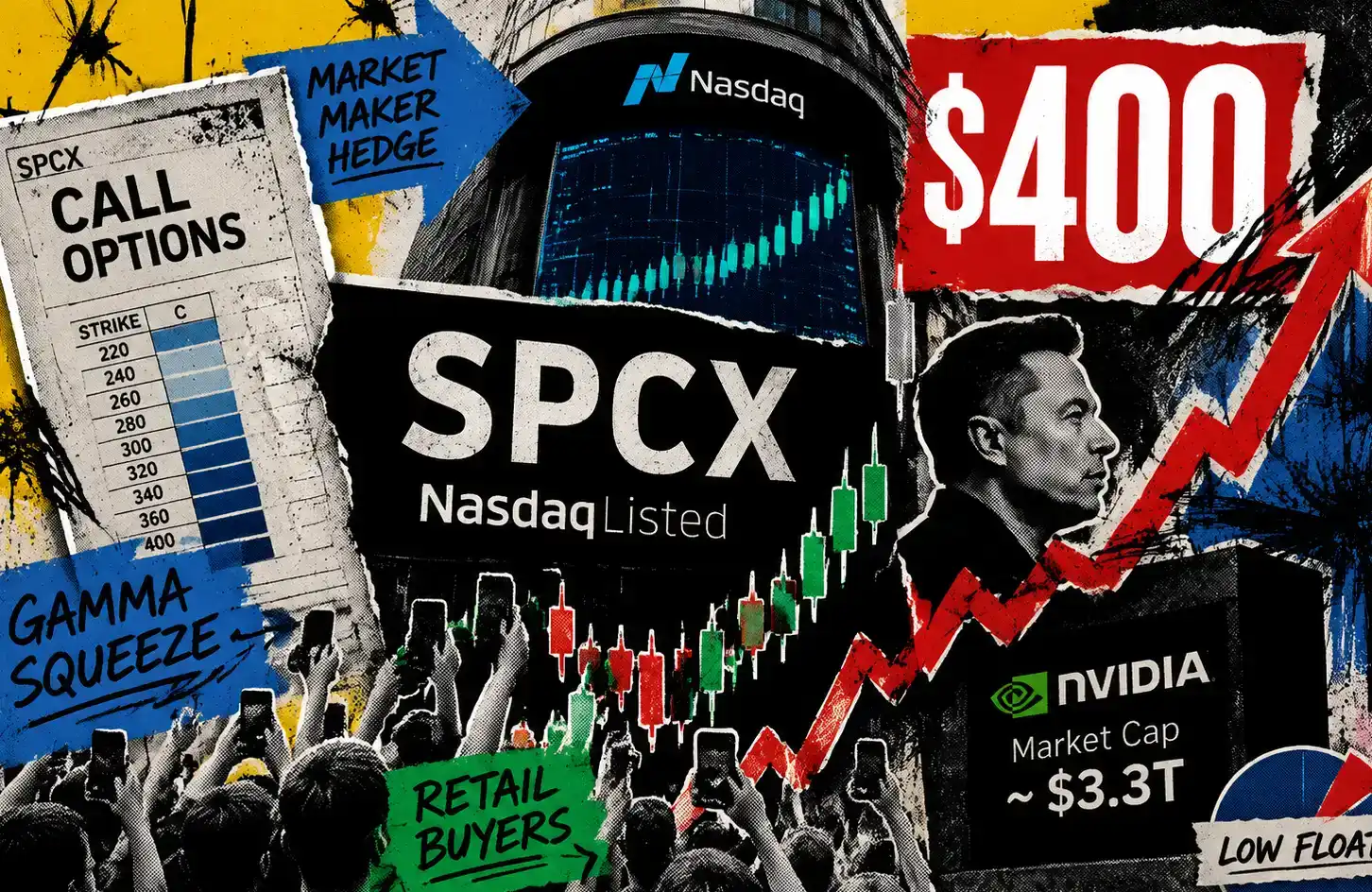
Summary: The article raises concerns about the systemic risks posed by SpaceX's skyrocketing valuation, arguing that modern market mechanics, rather than fundamentals, are driving its price discovery. Following SpaceX's market capitalization surpassing $3 trillion in after-hours trading, the author contends that the market is no longer functioning properly. The core issue is not SpaceX's business prospects but the unhealthy market structure surrounding it. With limited float and the imminent launch of options trading, the stage is set for a potential "gamma squeeze"—a feedback loop where market makers hedging call options are forced to buy shares, pushing the price higher and attracting more speculative momentum traders. This mechanism, seen previously with Tesla and meme stocks, can decouple valuation from financial reality. The danger escalates as extreme valuations force passive funds, ETFs, pensions, and major indices to hold the stock. If SpaceX grows large enough—hypothetically reaching $5 or even $10 trillion—its performance would increasingly dictate broader market indices, embedding systemic risk. The author warns that when price appreciation itself becomes the primary bullish thesis, the market transforms from a capital allocation mechanism into a self-reinforcing speculative machine, endangering the retirement savings of ordinary investors tied to passive strategies. The piece questions whether such a system can still perform its fundamental role of price discovery.

marsbit06/17 03:53

The More It Rises, the More Dangerous? The Systemic Risks Behind SpaceX's Soaring Valuation

marsbit06/17 03:53

BIT Weekly Market Outlook: Highs Halved, Panic Doubled. The $60,000 Line is the Sole Lifeline

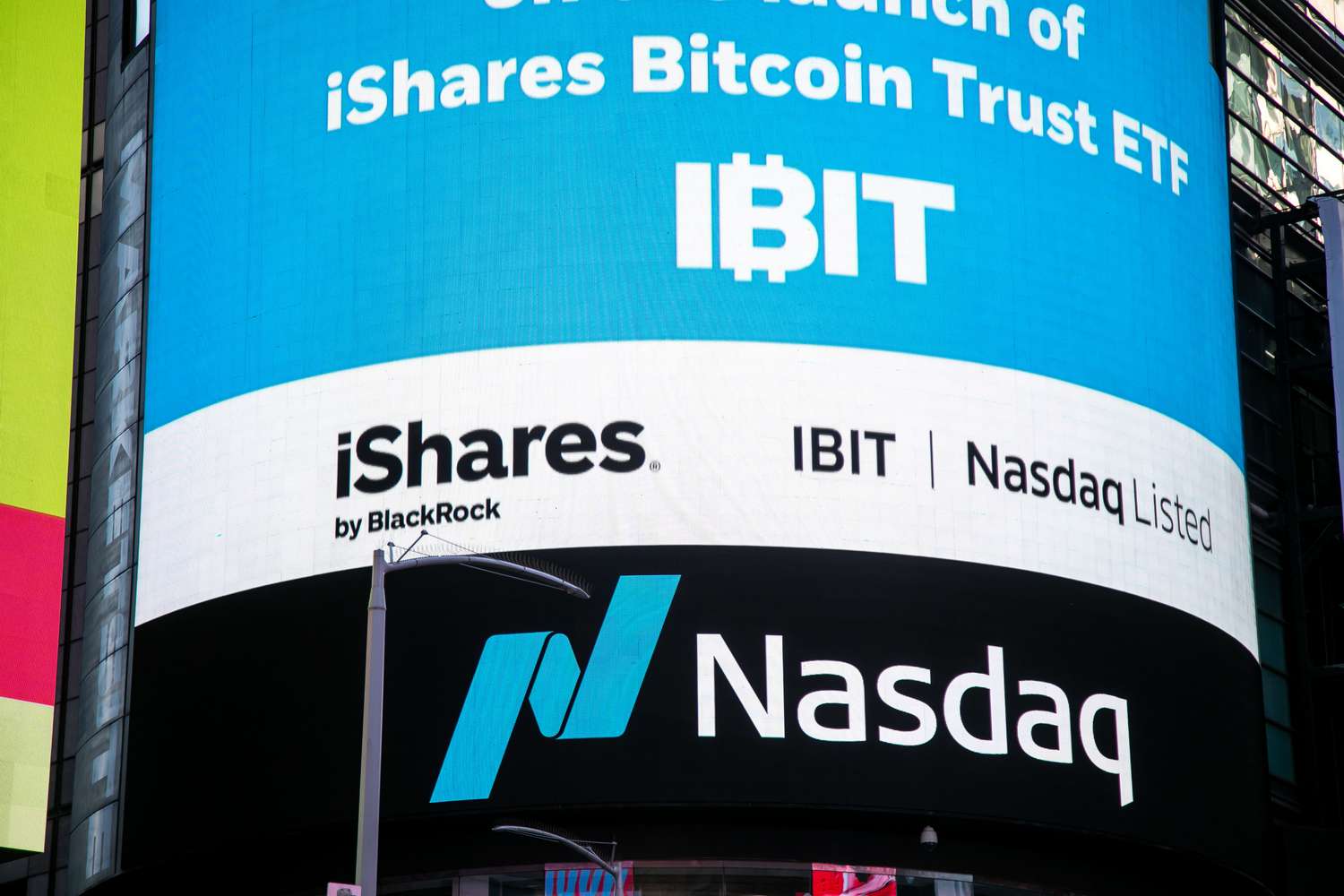
BIT Market Weekly: Halving from the Peak, Doubling Panic. $60K is the Sole Lifeline. The crypto market faces intense pressure from multiple fronts. MicroStrategy's symbolic sale of 32 BTC, its first since December 2022, shattered its "only accumulate" mantra, triggering panic and significant whale selling (~25,000 BTC). This pushed Bitcoin below MicroStrategy's average cost basis, causing unrealized losses. Bearish momentum intensified as spot Bitcoin ETFs saw a record 13-day net outflow streak, with $4.4 billion exiting, led by BlackRock's IBIT. Concurrently, macro risks mounted: sticky inflation dampened rate cut hopes, Mt.Gox wallet movements stoked sell-off fears, and renewed Middle East tensions added uncertainty. Derivatives data reveals a market at a critical juncture. Short-term options show extreme panic (negative Skew), but forward-term Skew has turned positive, signaling institutional expectations for a recovery in 3-6 months. Most notably, institutional activity shifted from defensive hedging to opportunistic bottom-fishing. They are selling puts and buying calls around the $60,000 level, effectively using options to establish controlled long positions. The $60,000 level is now the core battleground, hosting the largest concentration of put options open interest. It represents a binary outcome for the market. Holding above it could provide a base for stabilization, while a break below risks a swift decline toward the next major support at $55,000. Given the high uncertainty ahead of key CPI data and the FOMC meeting, the primary recommendation is risk management via Collar strategies to cap downside. For accumulation, structured products like DCPs or Bullish Seagulls can be deployed in batches near $60,000, mimicking institutional "selling puts to accumulate" logic. While volatility selling appears attractive as Implied Volatility shows topping signals, it's advised only with defined-risk spreads until $60,000 support is confirmed. Current levels are unsuitable for large-scale profit-taking; holding core positions with hedges is preferred.

marsbit06/10 07:26

BIT Weekly Market Outlook: Highs Halved, Panic Doubled. The $60,000 Line is the Sole Lifeline

marsbit06/10 07:26

Vitalik's Vision for the Next Evolution of On-Chain Finance: How to Reconstruct DeFi with an 'Options Mindset'?

Vitalik Buterin recently proposed a conceptual shift for DeFi: replacing traditional Collateralized Debt Positions (CDPs) and forced liquidations with an options-based mechanism. This aims to address key vulnerabilities in current DeFi lending. The traditional CDP model, foundational to protocols like MakerDAO and Aave, allows users to borrow against collateral but relies on real-time oracles and triggers sudden, mandatory liquidations during price volatility. This can cause cascading sell-offs, oracle manipulation risks, and significant MEV extraction, exacerbating market stress. Vitalik's alternative envisions splitting an asset like 1 ETH into two complementary components: one offering stable/index-like exposure and the other absorbing the opposite risk/reward. Instead of a hard liquidation threshold, a user's exposure to the target asset would gradually and smoothly deviate (following a near-quadratic curve) as the collateral price moves. The system would primarily depend on "slow oracles" for periodic settlement rather than instant price feeds. Key potential benefits include: the elimination of abrupt, forced liquidations; drastically reduced reliance on vulnerable real-time oracles; and inherent resistance to certain MEV exploits centered on liquidation auctions. The article posits that for Ethereum DeFi to maintain its relevance amid competition from faster, cheaper chains, it must compete on sophisticated financial engineering and robustness—not just transaction speed or yields. The core value proposition should shift towards offering users clearer, more manageable risk structures, greater autonomy, and resilience in extreme scenarios, moving DeFi from high-risk experimentation towards becoming reliable financial infrastructure.

marsbit06/09 09:09

Vitalik's Vision for the Next Evolution of On-Chain Finance: How to Reconstruct DeFi with an 'Options Mindset'?

marsbit06/09 09:09

活动图片