# Funding Related Articles

HTX News Center provides the latest articles and in-depth analysis on "Funding", covering market trends, project updates, tech developments, and regulatory policies in the crypto industry.

Valuation of $852 Billion, CEO Holds Zero Shares, Shareholders in a Power Struggle: Who Controls OpenAI?

OpenAI, valued at $852 billion after a $122 billion funding round, is navigating immense opportunities and challenges. CEO Sam Altman holds zero equity, earning a minimal salary, which has raised governance concerns, notably during his brief 2023 ouster. Major investors include Microsoft (26.79%), OpenAI Foundation (25.8%), SoftBank (11.66%), Amazon (4.66%), and NVIDIA (3.47%). Their investments are often strategic, aimed at securing AI infrastructure advantages rather than purely financial returns. The company recently transitioned from a non-profit to a for-profit structure, with the OpenAI Foundation retaining significant control. However, oversight concerns persist as board members overlap between the two entities. Internally, tensions exist between Altman, who pushes for a potential IPO as early as Q4 2025, and the CFO, who cautions against rushing due to operational and financial risks. Financially, OpenAI reports $20 billion in monthly revenue (annualized $250 billion) but expects $140 billion in losses this year and $600 billion in compute investments over five years. Its high valuation—34x sales—reflects a bet on achieving AGI, as competition with rivals like Anthropic intensifies. The funding landscape highlights a divide: U.S. tech giants invest via corporate strategic deals, while Chinese AI firms rely on traditional VC funding, creating a significant capital gap. The ultimate question remains whether OpenAI’s vision justifies its historic valuation.

marsbit04/12 01:03

Valuation of $852 Billion, CEO Holds Zero Shares, Shareholders in a Power Struggle: Who Controls OpenAI?

marsbit04/12 01:03

RWA Weekly: HSBC and Standard Chartered Secure Hong Kong Stablecoin Licenses; US FDIC Releases Draft Guidelines for Institutional Stablecoin Issuance

RWA Weekly: HSBC and Standard Chartered Secure Hong Kong Stablecoin Licenses; US FDIC Issues Draft Guidelines for Institutional Stablecoin Issuance This week’s RWA sector saw significant growth, with the on-chain total market cap rising to $29.06 billion. Stablecoin market capitalization remained high at $300.65 billion, while monthly transfer volume hit a record $10.21 trillion. Active addresses surged 15.24%, indicating strong retail participation recovery. Regulatory milestones were achieved as Hong Kong granted its first stablecoin licenses to HSBC and Standard Chartered, marking the start of a compliant stablecoin era. The U.S. FDIC released draft guidelines for stablecoin issuance, focusing on reserve management, redemptions, and capital requirements. The U.S. Treasury also proposed rules requiring stablecoin issuers to implement anti-money laundering and sanctions compliance systems. South Korea, Dubai, and Russia advanced their stablecoin and RWA regulatory frameworks. Key project developments include six Swiss banks, including UBS, planning to test a digital Swiss franc in 2026. Securitize began tokenizing shares for Nasdaq-listed Currenc, enabling 24/7 trading. SBI Ripple Asia completed development of a token issuance platform on XRP Ledger. Circle launched CPN Managed Payments to expand stablecoin payment services for institutions. Funding highlights: Pharos raised $44 million in Series A funding to develop its RWA-focused blockchain. GSR led an investment in tokenization platform Libeara. Gobi Partners invested in Transak to expand compliant stablecoin and digital asset payment infrastructure in Asia. S&P Global reported that banks remain cautious about stablecoins, with only 7% of small and mid-sized U.S. banks developing related frameworks. Chainalysis projected stablecoin transaction volume could reach $1,500 trillion by 2035, driven by generational wealth transfer and deeper integration into payment systems. Major tech firms like Meta are increasingly adopting stablecoins as a core payment strategy, signaling a shift toward digital asset-based transaction infrastructures.

marsbit04/10 09:48

RWA Weekly: HSBC and Standard Chartered Secure Hong Kong Stablecoin Licenses; US FDIC Releases Draft Guidelines for Institutional Stablecoin Issuance

marsbit04/10 09:48

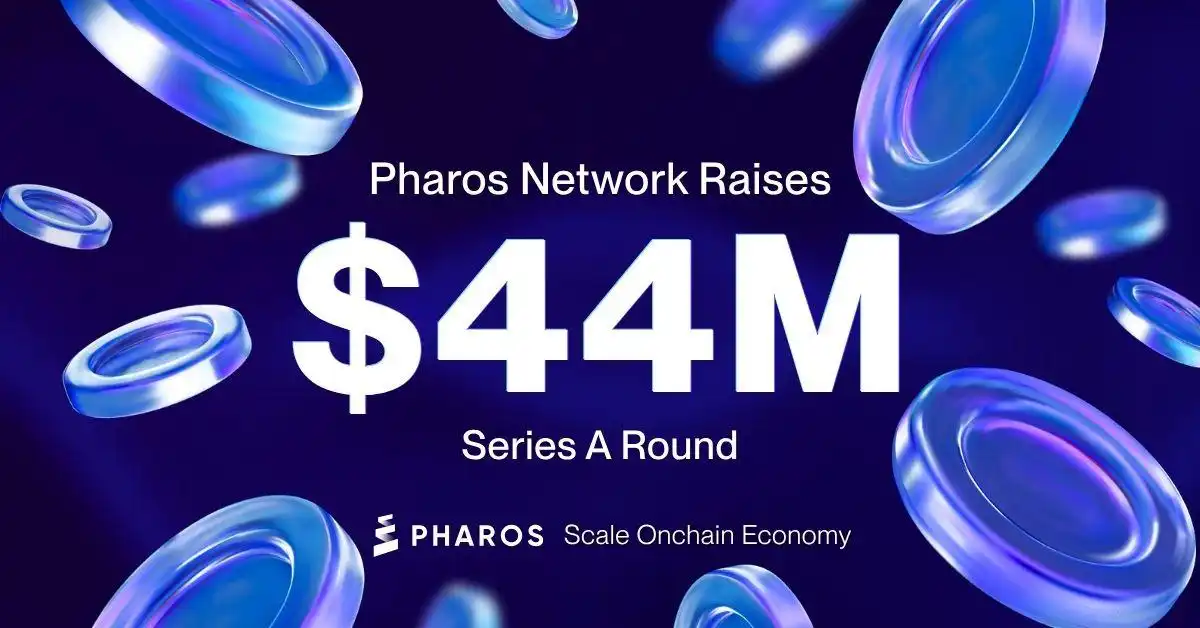
Pharos Network Completes $44 Million Series A Funding, Total Funding Reaches $52 Million, Accelerating the Scalable Development of the On-Chain Economy

Pharos Network, a Layer 1 blockchain designed for institutional financial applications, has raised $44 million in Series A funding, bringing its total funding to $52 million. The round was co-led by undisclosed major institutions, including a top Asian private equity fund, a listed new energy company, and a licensed Hong Kong institution. Other strategic investors include Sumitomo Corporation (via a subsidiary), SNZ, Chainlink, and Flow Traders. The funds will accelerate the development of its on-chain real-world asset (RWA) infrastructure in Asia and globally. Pharos aims to integrate $50 trillion in RWA, traditional finance (TradFi), and cross-chain capital into a modular on-chain economy. The network uses a deeply parallel execution architecture with built-in compliance modules tailored for real-time, asset-backed financial applications. The company recently partnered with energy giant GCL to launch an RWA pilot project backed by energy assets. Its Atlantic Ocean testnet is already operational, supporting millions of users and hundreds of millions of addresses, demonstrating its capacity for high-frequency, high-value asset transfers in preparation for mainnet launch. Pharos was co-founded by ex-Ant Group core management, including CEO Wish Wu, and previously raised an $8 million seed round in November 2024.

marsbit04/08 12:21

Pharos Network Completes $44 Million Series A Funding, Total Funding Reaches $52 Million, Accelerating the Scalable Development of the On-Chain Economy

marsbit04/08 12:21

Meeting at the Pinnacle of Generalist: 30 Billion in 30 Days, What Did Qianxun AI Do Right?

Qianxun Intelligence, a Chinese embodied AI and robotics startup, completed two major funding rounds totaling 3 billion RMB within 30 days in early 2026, backed by prominent investors including Shunwei Capital (Lei Jun) and Yunfeng Capital (Jack Ma). Founded in January 2024 by a team with expertise in robotics, AI, and commercialization, the company focuses on developing general-purpose embodied AI models. Its open-source model, Spirit v1.5, surpassed competitors in performance benchmarks, demonstrating strong zero-shot generalization capabilities for complex tasks. The company follows a scaling law approach similar to large language models (LLMs), leveraging massive diverse datasets—including internet videos, wearable device data, and teleoperation data—to train its Vision-Language-Action (VLA) model. Qianxun employs a multi-source data engine, collecting over 200,000 hours of real-world interaction data, with plans to reach 1 million hours by 2026. It uses low-cost wearable devices for efficient data acquisition and emphasizes real-world deployment for continuous data feedback. The company has deployed robots like "Xiao Mo" in industrial settings (e.g., battery production lines for CATL) and commercial scenarios (e.g., as baristas in JD.com malls), using operational data to refine its models. This "commercialize while iterating" strategy supports both revenue generation and model improvement, positioning Qianxun to compete globally in embodied AI.

marsbit04/07 04:05

Meeting at the Pinnacle of Generalist: 30 Billion in 30 Days, What Did Qianxun AI Do Right?

marsbit04/07 04:05

活动图片