# Funding Related Articles

HTX News Center provides the latest articles and in-depth analysis on "Funding", covering market trends, project updates, tech developments, and regulatory policies in the crypto industry.

Wall Street Capital Enters ARC, Circle Sparks a System-Level Competition for Stablecoins

Wall Street Capital Enters the ARC Arena as Circle Launches a System-Level Battle for Stablecoin Dominance On May 11, Circle successfully raised $222 million in a pre-sale funding round for its new blockchain and native token, ARC, giving the network a fully diluted valuation of $3 billion. The investor lineup, featuring Wall Street giants like BlackRock and Intercontinental Exchange alongside top-tier venture capital firms such as a16z and ARK Invest, signaled a collective strategic bet on future financial infrastructure. This move marks Circle's significant evolution from a stablecoin issuer (notably USDC) to a designer of financial systems. While USDC operates on external blockchains like Ethereum, making Circle dependent on their performance, ARC aims to create a dedicated infrastructure for the circulation, payment, and clearing of stablecoins. This would integrate currency issuance and circulation into one system, potentially shifting Circle's business model from asset management to infrastructure provision. The convergence of traditional finance and crypto-native capital in this funding round underscores a broader industry shift: stablecoins are transitioning from being mere trading tools to becoming core components of financial infrastructure. By controlling both the issuance (via USDC) and the流通 pathway (via ARC), Circle could establish a closed-loop system from issuance to settlement. If successful, this infrastructure could optimize costs, lower barriers for institutional adoption, and promote standardization in on-chain finance. Ultimately, it has the potential to challenge traditional systems like SWIFT in areas such as cross-border payments, representing a possible step toward the重构 of global financial infrastructure.

marsbit05/13 14:54

Wall Street Capital Enters ARC, Circle Sparks a System-Level Competition for Stablecoins

marsbit05/13 14:54

How the $900 Billion Anthropic Was Built?

Anthropic, the AI startup behind Claude, is reportedly in early talks to raise at least $30 billion in new funding, targeting a valuation exceeding $900 billion. This would propel it past OpenAI's recent $852 billion valuation. The funding round is expected to close by late May 2026. The company's valuation surge is driven by extraordinary revenue growth, reportedly reaching an annualized $30 billion by March 2026 from $1 billion in December 2024. However, OpenAI questions this figure, suggesting a net revenue closer to $22 billion after cloud platform fees. Despite high revenue, Anthropic's gross margin is reportedly around 40%, and it is not yet profitable, with breakeven projected for 2028. A significant portion of the new capital would fund massive, pre-committed computing infrastructure with partners like Amazon, Google, and Microsoft. This highlights a new AI financing model where high valuations fuel compute spending, which in turn requires even higher future valuations to sustain. Notably, many early-stage investors are reportedly sitting out this round. Bankers privately estimate a potential IPO valuation between $400-500 billion, creating a rare scenario where the final private funding round valuation ($900B+) could far exceed the expected public market debut. Anthropic is targeting an IPO between October 2026 and the first half of 2027. Its public listing is poised to be a critical test for the entire AI sector's valuation logic, potentially validating or challenging the high-stakes "valuation-compute-valuation" cycle that has defined private market investments.

链捕手05/13 02:42

How the $900 Billion Anthropic Was Built?

链捕手05/13 02:42

What Happens to Ethereum Developer Tools After the Grants Run Out?

On February 27th, the Ethereum Foundation (EF) announced Project Odin, a structured sustainability support program designed for a select group of strategic, previously grant-funded teams. Unlike a standard grant, Odin offers a long-term advisory mechanism focused on helping these teams establish credible, sustainable paths within a two-year framework, thereby reducing long-term dependence on single funding sources. The program addresses a critical post-grant challenge: how essential public goods, especially major developer tools, can achieve financial sustainability beyond initial funding. While grants from EF and programs like Gitcoin or RetroPGF remain vital for startups and research, they often fall short for mature, widely-used infrastructure. Tools like compilers, languages, and network stacks are deeply embedded but struggle with monetization, trapped between being too foundational to lose and too public to generate natural revenue. Project Odin provides teams with a dedicated Strategic Advisor to guide them through a three-phase process: 1) analyzing current funding and realistic options, 2) validating potential paths with stakeholders, and 3) executing plans, which may include crafting support contracts, service agreements, or other recurring revenue models. The first pilot participant is Vyper, a critical smart contract language for the EVM, highlighting the need for sustainable models for core infrastructure. The initiative reframes the public goods conversation from "who should be funded" to "how do already-proven teams avoid perpetual funding crises?" It encourages ecosystem participants—protocols and projects that depend on these tools—to view sustainable support not just as charity, but as essential risk management for their own operational supply chains.

marsbit05/12 08:35

What Happens to Ethereum Developer Tools After the Grants Run Out?

marsbit05/12 08:35

600 People, $66 Billion: The First Major Cash-Out in the Era of Large Models

The first systematic "big cash-out" of the AI era occurred in October 2025, when over 600 current and former OpenAI employees sold a total of $6.6 billion in shares via a secondary market. Approximately 75 individuals maxed out a $30 million per-person sale limit, while around 525 others cashed out an average of $8.3 million each. This event, exceeding the scale of any 2024 US IPO, functioned as a "shadow IPO." It marked a radical departure from the traditional Silicon Valley path of waiting for a public listing, instead allowing employees to convert equity to cash after just two years of tenure—a direct retention tool in a fiercely competitive talent market where rivals like Meta have offered packages worth hundreds of millions. This massive liquidity event presents a dual-edged sword for OpenAI. While it helps retain talent, it also risks triggering a brain drain as newly wealthy employees may depart. Furthermore, it creates a dilemma for those who sold: they forfeited potential future gains as the company's valuation soared from $400 billion to $852 billion within months. In stark contrast, employees at rival Anthropic demonstrated greater reluctance to sell during their own secondary offering. The financial narratives of the two labs also diverge sharply. OpenAI, while achieving over $20 billion in annualized revenue by 2025, faces massive projected losses (up to $14 billion in 2026), a long path to cash flow positivity, and significant revenue-sharing payments to Microsoft. Anthropic reports rapid revenue growth, improving gross margins, and a faster path to profitability. OpenAI's trajectory is thus balanced precariously between skyrocketing valuation based on funding narratives and the pressures of sustained financial losses post-cash-out. The event underscores that the AI race has evolved into a capital and human experiment, where immense wealth crystallizes the complex calculations of greed, fear, and ambition within the industry.

marsbit05/12 07:46

600 People, $66 Billion: The First Major Cash-Out in the Era of Large Models

marsbit05/12 07:46

Funding Weekly Report | 14 Public Funding Events, Kalshi Completes $10B New Funding Round at $220B Valuation Led by Coatue Management

Weekly Funding Roundup: 14 Deals and $10.49B+ in Total Funding, Led by Kalshi's $1B Round Last week (5.4-5.10) saw 14 notable funding events in the global blockchain ecosystem, raising over $10.49 billion in total. Key highlights include Kalshi, a prediction market platform, securing a $1 billion round led by Coatue Management, reaching a $22 billion valuation. The platform now boasts ~2 million MAUs and $178B in annualized trading volume. In DeFi, regulated on-chain reinsurer OnRe raised $5 million in Series A funding, and Bitcoin-backed credit protocol Saturn Credit completed a $2 million seed round. For Infrastructure & Tools, OpenTrade raised $17 million to expand its stablecoin yield infrastructure, and RWA platform Balcony secured $12.7 million to deploy its property settlement service in the US. Centralized Finance saw one deal: AI-driven trading platform Stockcoin.ai completed a seed round led by Amber Group. In the prediction market sector alongside Kalshi, AI-powered platform Elastics raised $2 million. Other notable deals include SC Ventures' strategic investment in crypto market maker GSR and Centrifuge securing a "seven-figure" investment from Coinbase to become a core RWA partner for Base. On the investor side, Haun Ventures raised a new $1 billion fund targeting crypto and AI, and Multi Investment raised ~$616 million to focus on blockchain and Web3 investments.

marsbit05/11 03:15

Funding Weekly Report | 14 Public Funding Events, Kalshi Completes $10B New Funding Round at $220B Valuation Led by Coatue Management

marsbit05/11 03:15

The Night Before the AI Model Shakeout

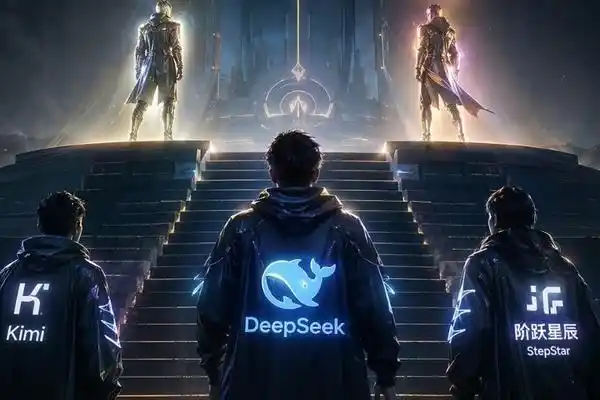
China's large language model (LLM) industry is entering a critical consolidation phase. In a concentrated wave of funding in May 2026, leading players Kimi, StepFun, and DeepSeek reportedly secured over $70 billion combined, signaling a dramatic capital rush towards the few remaining independent contenders. This frenzy masks an impending shakeout. The core dynamic has shifted from a pure technology race to a battle for survival and strategic positioning. LLM capabilities are rapidly commoditized; gaps between top models are narrowing. Consequently, investment logic has pivoted from betting on future potential to prioritizing cash flow, user access, and ecosystem integration. The economic model poses a fundamental challenge: while user growth previously meant profits, in the AI era, it drives soaring inference costs. Startups, lacking the cross-subsidy ability of tech giants like ByteDance or Tencent, face immense pressure to achieve financial sustainability. DeepSeek's open-source, high-performance, low-cost strategy has further compressed industry profit margins. Facing this reality, the top players are scrambling to lock in their status before the window closes. StepFun is accelerating its港股 IPO, embedding itself in hardware supply chains. Kimi is aggressively showcasing revenue growth (ARR doubling to $2 billion in a month) to prove viability. DeepSeek, with new state-backed investment, is solidifying its role as a strategic national asset. The parallel to China's previous AI "Four Dragons" is stark. The industry is witnessing extreme capital concentration at the top, while mid-tier companies face a funding winter. The narrative has evolved from "who can build the best model" to "who can survive." For independent LLM companies, securing a public listing or a definitive strategic identity is no longer about expansion—it's about securing the very right to exist in the impending era of industry clearance.

marsbit05/10 02:05

The Night Before the AI Model Shakeout

marsbit05/10 02:05

TechFlow Intelligence Agency: Anthropic Seeks $50 Billion Funding at $900 Billion Valuation, Zcash Surges 70% in a Week

TechFlow Intelligence Briefing: Key developments in AI, crypto, hardware, and global markets. **AI:** Anthropic is reportedly seeking $50B in funding at a ~$900B valuation, positioning it as a major rival to OpenAI. It also published research on making AI "thinking" interpretable. Google DeepMind released AlphaEvolve, a Gemini-powered programming agent for scientific research. **Crypto/Web3:** Zcash surged 70% in a week, reigniting interest in privacy coins. Geopolitical tensions in the Strait of Hormuz spiked oil prices and market volatility. **Chip/Hardware:** SK Hynix awarded massive bonuses due to AI-driven demand, while Samsung faces potential strikes. TSMC's April revenue grew 17.5% year-on-year. Nvidia-backed CoreWeave faces valuation scrutiny ahead of its earnings. **Tech Companies:** Cloudflare announced a ~20% workforce reduction. Sony PS5 sales dropped amid a memory chip crisis and price hikes. Apple is nearing production of camera-equipped AirPods for AI features. **Markets:** Kodiak AI raised $100M at a steep discount, causing its stock to plunge 37%. US stocks fell amid Middle East tensions. **New Trends:** China unveiled the "Hanyuan 2," a low-power dual-core neutral atom quantum computer. Russia announced the Rassvet satellite network to compete with Starlink. **The Undercurrent:** Today's news highlights a central tension: capital is flooding into perceived certainties like AGI while retreating from uncertainties, seen in layoffs and geopolitical risks, asking where sustainable growth lies.

marsbit05/08 12:33

TechFlow Intelligence Agency: Anthropic Seeks $50 Billion Funding at $900 Billion Valuation, Zcash Surges 70% in a Week

marsbit05/08 12:33

Three Months of Raising $6 Billion in Funding: What Are the Leading Crypto VCs Betting On?

While the crypto bear market persists, top-tier venture capital firms are making significant moves by raising massive new funds, signaling a strategic bet on the industry's future. Haun Ventures and a16z recently announced funds totaling $1 billion and $2.2 billion, respectively. This follows other major raises from firms like Dragonfly, Paradigm, ParaFi, and Blockchain Capital. In under three months, these six VCs have amassed over $6 billion in fresh capital, a clear example of counter-cyclical investing during a quiet market phase. The fundraising landscape highlights a sharp divergence between large and small VCs. Many mid-sized and smaller funds are struggling with poor returns, limited exit options, and difficulty raising new capital, leading some to scale back or exit. In contrast, leading firms are strengthening their dominance due to structural advantages: superior access to high-quality deals, the ability to invest across all stages, greater capacity for long-term bets and risk, and stronger negotiation power. These new funds are largely converging on key investment themes. The strongest consensus centers on next-generation on-chain financial infrastructure, including stablecoins, real-world asset (RWA) tokenization, prediction markets, and on-chain payments. VCs are focusing on projects with validated demand that can attract traditional finance flows. Another major focus is artificial intelligence (AI), particularly AI agents, as crypto seeks to position its open, composable networks as foundational infrastructure for the emerging AI economy. Ultimately, this wave of bear-market fundraising is a strategic wager on the next cycle. By deploying capital when valuations are lower and market noise is reduced, these top VCs aim to identify and back the foundational projects that will define the industry's future, betting on which companies will become the next generation of leaders.

marsbit05/08 05:49
Three Months of Raising $6 Billion in Funding: What Are the Leading Crypto VCs Betting On?

marsbit05/08 05:49

活动图片