# Exchange Related Articles

HTX News Center provides the latest articles and in-depth analysis on "Exchange", covering market trends, project updates, tech developments, and regulatory policies in the crypto industry.

Why Does Hyperliquid Earn Less Than Coinbase?

Hyperliquid, a decentralized exchange, processes near-Nasdaq-level perpetual trading volumes but captures significantly lower fees compared to centralized platforms like Coinbase and Robinhood. While Hyperliquid cleared $205.6 billion in notional volume over 30 days, it generated only $80.3 million in fees—an effective take rate of ~3.9 bps. In contrast, Coinbase and Robinhood achieve take rates of ~35.5 bps and ~33.5 bps, respectively, by operating as retail brokers that monetize multiple layers: distribution, balances, subscriptions, and order flow. This gap stems from a structural difference: Hyperliquid positions itself as a low-fee *market layer* (like Nasdaq), providing high-throughput execution and清算 infrastructure, while brokers like Coinbase control user relationships and extract value through higher-margin activities. Hyperliquid’s model includes permissionless distributor frontends (Builder Codes) and product deployment (HIP-3), which drive ecosystem growth but also create long-term fee compression risks by outsourcing high-value distribution. To defend its economics, Hyperliquid is taking steps to retain distribution control, integrate HIP-3 markets natively, and introduce balance-driven revenue streams like USDH (a native stablecoin with 50% reserve收益 sharing) and portfolio margin (10% interest fee on borrows). These moves aim to shift its model from pure exchange-level execution toward a hybrid approach that captures broker-like profit pools—without sacrificing its core infrastructure advantages. The key challenge remains balancing open ecosystem growth with tighter economic integration to avoid being commoditized as a wholesale execution venue.

marsbit12/18 07:03

Why Does Hyperliquid Earn Less Than Coinbase?

marsbit12/18 07:03

HashKey Supports Nighttime Currency Exchange, Becoming First Licensed Exchange to Fully Enable 24/7 Fiat Conversion

Hong Kong's licensed virtual asset exchange platform, HashKey Exchange, has announced the launch of overnight USD-HKD currency exchange services, making it the first licensed platform in Hong Kong to offer round-the-clock fiat currency conversion for both retail and institutional clients. This upgrade allows users to enjoy near-native crypto market liquidity at any time of day. Previously, currency exchanges were limited to banking hours, restricting institutions from hedging overnight and individuals from transferring funds promptly. With the new service, HashKey will process conversion requests outside regular banking hours, enabling seamless transactions without delays. As a licensed platform, all funds used in overnight exchanges are fully segregated from operational funds and monitored in real-time to ensure security. The move enhances Hong Kong’s digital finance infrastructure, providing both institutional and retail users with continuous, regulated, and reliable conversion services. Randall Chan, Managing Director of HashKey Exchange, stated that fiat liquidity has been a major barrier for institutional entry into digital assets. Overnight conversion reduces time constraints for hedging, transfers, and settlements, allowing secure capital flow at all hours. The platform aims to further integrate trading, deposits/withdrawals, custody, and settlement into a comprehensive liquidity infrastructure.

深潮12/18 04:50

HashKey Supports Nighttime Currency Exchange, Becoming First Licensed Exchange to Fully Enable 24/7 Fiat Conversion

深潮12/18 04:50

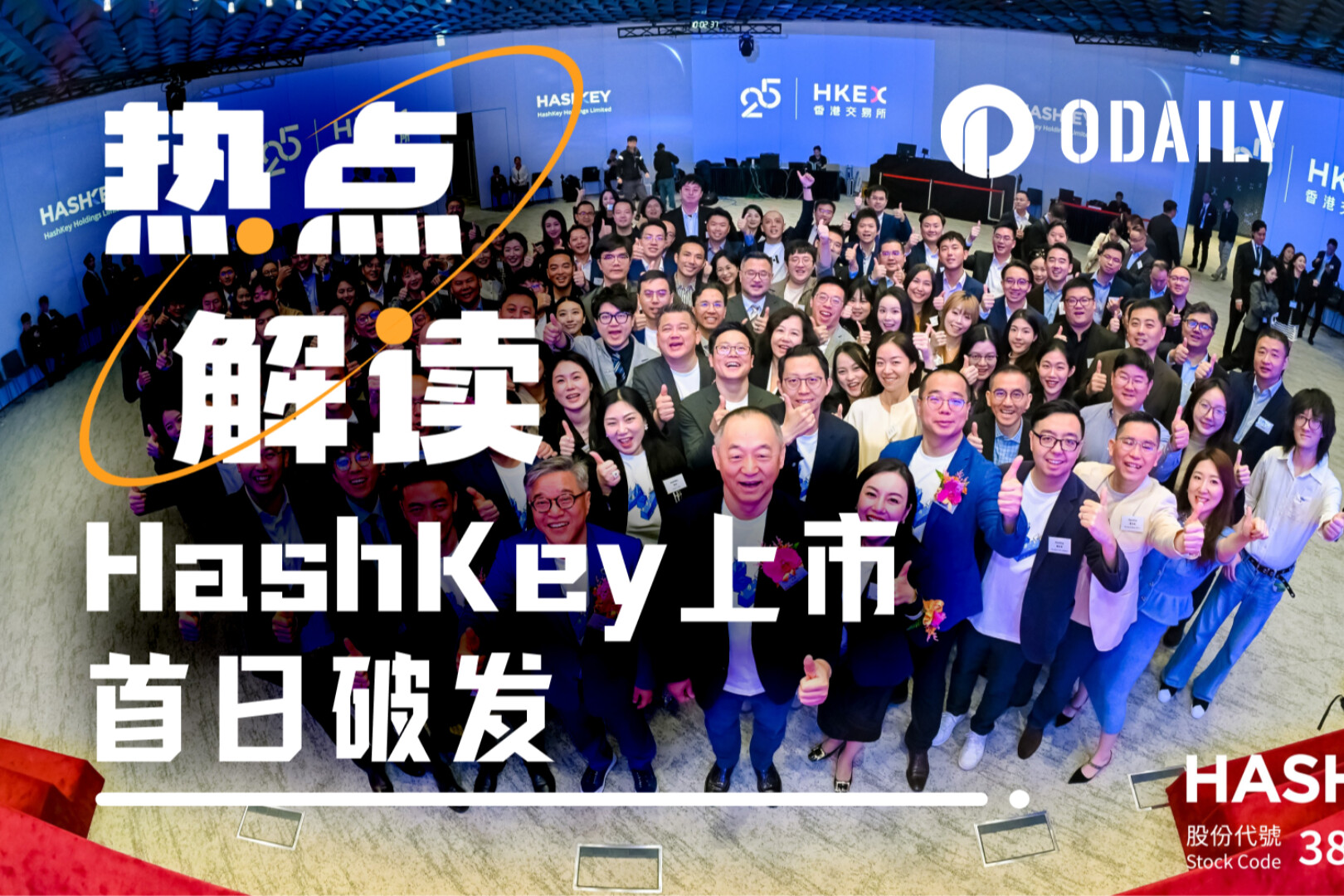
HashKey Falls Below IPO Price on First Day of Trading, 'The Eastern Coinbase' Not Yet Established

HashKey Holdings (stock code: 03887.HK), known as the first Hong Kong-listed cryptocurrency exchange, debuted on the Hong Kong Stock Exchange on December 17. Despite strong pre-IPO interest—with its public offering oversubscribed by nearly 394 times—the stock price fell below its initial offering price of HK$6.68 within the first hour of trading. It closed the day at HK$6.67 after hitting a low of HK$6.12. The market response contrasts sharply with earlier optimism from crypto industry participants, who had hailed HashKey as a milestone for Hong Kong’s Web3 sector and even dubbed it the "Eastern Coinbase." However, the article points out significant gaps between HashKey and Coinbase in terms of scale: HashKey has only 138,000 registered users and average daily trading volumes in the millions of dollars, far below Coinbase’s pre-IPO user base of 56 million and billions in daily trades. HashKey has reported four consecutive years of losses, which the company attributes to high investment in technology and compliance during its early development phase. The IPO raised approximately HK$1.67 billion, with 40% earmarked for technology upgrades and another 40% for market expansion. The listing is seen by some as a symbolic step toward broader acceptance of crypto in traditional finance, yet the author suggests HashKey’s successful listing may remain an isolated case in Hong Kong. This is largely due to the influential backing of its major shareholder, Lu Weiding—chairman of Wanxiang Group and a prominent business and political figure—whose support may be difficult for other crypto firms to replicate under current regulatory conditions.

Odaily星球日报12/17 12:05

HashKey Falls Below IPO Price on First Day of Trading, 'The Eastern Coinbase' Not Yet Established

Odaily星球日报12/17 12:05

"Asia's First Stock" HashKey Goes Public: A Decade of Dedication, Edge Emerging

"Asia's first crypto stock" HashKey has listed on the Hong Kong Stock Exchange, marking a milestone after a decade of strategic development. As of September 2025, the platform has facilitated HKD 1.3 trillion in cumulative spot trading volume, commanding over 75% market share among Hong Kong’s 11 licensed virtual asset trading platforms. HashKey’s success stems from its long-term compliance-first strategy, aligning closely with Hong Kong’s evolving regulatory landscape. While many platforms operated in regulatory grey areas, HashKey focused on building robust infrastructure, obtaining licenses, and adhering to strict anti-money laundering (AML), know-your-customer (KYC), and asset segregation requirements. The company capitalized on Hong Kong’s introduction of the Virtual Asset Service Provider (VASP) licensing regime in 2022, becoming one of the first fully regulated exchanges. The compliance-heavy model requires significant investment in technology, auditing, and risk management, resulting in higher operational costs and a longer path to profitability. However, it has positioned HashKey as a trusted gateway for institutional investors, offering services including staking, asset management, and real-world asset (RWA) tokenization. HashKey’s IPO symbolizes a broader industry transition from speculative trading to institutional participation and regulated financial infrastructure. It represents the rise of compliance as a core competitive advantage in the virtual asset sector and underscores Hong Kong’s strategic role in shaping Asia’s digital finance future.

深潮12/15 06:36

"Asia's First Stock" HashKey Goes Public: A Decade of Dedication, Edge Emerging

深潮12/15 06:36

HashKey IPO Oversubscribed 300 Times, Investors Betting on Its Era Positioning

HashKey, known as "Hong Kong's first licensed crypto asset stock" (Stock Code: 03887), concluded its IPO subscription on December 12, with its official listing scheduled for December 17. Despite concerns over continued significant financial losses—reporting an adjusted net loss of approximately HK$1.57 billion from 2022 to 2024—the public offering was oversubscribed by 301.6x, raising HK$506 billion in margin financing against an initial target of HK$1.67 billion. The company attributes its losses to high upfront investments in compliance, technology development, and ecosystem expansion, drawing parallels to Coinbase’s early growth trajectory. HashKey operates multiple business segments, including regulated exchange services (HashKey Exchange and HashKey Global), blockchain infrastructure (HashKey Chain), asset management (HashKey Capital), OTC services, and tokenization solutions. Its strategic value lies in being a bridge between traditional finance and Web3, positioning itself as a compliant gateway for institutional entry into Asian crypto markets. With backing from cornerstone investors like UBS, Fidelity, and CDH Investments, HashKey aims to strengthen Hong Kong’s ambition to become a "global virtual asset hub." While skeptics point to its financials and perceived inefficiencies, investor enthusiasm reflects confidence in HashKey’s regulatory compliance, institutional leadership in Asia, and its role in regional digital finance infrastructure. The IPO is seen less as a short-term profit play and more as a bet on Hong Kong’s—and Asia’s—future in the evolving crypto and Web3 landscape.

marsbit12/15 00:10

HashKey IPO Oversubscribed 300 Times, Investors Betting on Its Era Positioning

marsbit12/15 00:10

活动图片