# EVM Related Articles

HTX News Center provides the latest articles and in-depth analysis on "EVM", covering market trends, project updates, tech developments, and regulatory policies in the crypto industry.

Divergence in Regulated Token Protocol Standards: Issuance, Compliance, and Integration Each Assume Their Roles

Regulated token standards on EVM chains are diverging not towards a single unified standard, but into a modular, complementary architecture by function. Key examples include ERC-1450 (centered on a Registered Transfer Agent), ERC-3643 (a modular stack for policy), and ERC-7943 (a minimal integration layer). This reflects a broader industry trend: instead of bundling all regulatory functions into one standard, the ecosystem is separating **recurring, universal execution functions** (pre-transfer checks, freezing, forced transfers) from **product/jurisdiction-specific policies** (KYC providers, holding limits). Beyond EVM, other chains integrate comparable features at different architectural levels. Solana's Token Extensions provide hooks and controls at the program library level. Stellar and XRPL embed authorization and freezing natively in the ledger. Sui and Aptos place common controls in their Move frameworks. Networks like Canton and Avalanche L1 extend functionality to market operations and validator-level compliance. The competitive edge for regulated token standards will likely depend on **flexibility to adapt to regulatory changes** and the clarity of embedded controls for external integrators, rather than the sheer number of features. The future points towards a **compliance stack**: a base layer of standardized execution functions supporting interchangeable modules for identity, jurisdictional rules, and product-specific policies. This approach balances operational consistency with the necessary flexibility for diverse regulatory requirements across assets and regions.

marsbit08/10 01:11

Divergence in Regulated Token Protocol Standards: Issuance, Compliance, and Integration Each Assume Their Roles

marsbit08/10 01:11

Chainstack Adds Support for Robinhood Chain for Managed and Self-Hosted Nodes

Chainstack, a Web3 infrastructure platform supporting over 100,000 developers across 70+ blockchain networks, has added support for Robinhood Chain across its three deployment models: Global Nodes, Dedicated Nodes, and Chainstack Self-Hosted. The support is available for both the mainnet (chain ID 4663) and testnet (chain ID 46630). Robinhood Chain is an Ethereum L2 network built on Arbitrum Orbit with Nitro, optimized for financial and tokenized real-world asset transactions. It offers 100-millisecond block times and uses ETH for gas. A key feature is its first-come, first-served transaction ordering based on endpoint latency, making node placement a matter of execution rather than fee strategy. Chainstack's three models provide different levels of control and infrastructure: scalable Global Nodes for dApps and wallets, high-performance Dedicated Nodes with unlimited requests for marketplaces and protocols, and Self-Hosted Nodes for clients requiring full control over data sovereignty and deployment in their own environment. The Self-Hosted option is highlighted as critical for regulated issuers and brokers who cannot use third-party infrastructure due to compliance. The platform offers a unified management plane, billing, and monitoring for RWA workflows across multiple blockchains. Access is available immediately, with testnet tokens provided via a faucet and a free tier for evaluation.

cryptonews.ru08/05 17:58

Chainstack Adds Support for Robinhood Chain for Managed and Self-Hosted Nodes

cryptonews.ru08/05 17:58

Base Under Pressure

**Title: The Pressure Mounts for Base** Base, the Ethereum Layer 2 scaling solution backed by Coinbase, is facing significant pressure and public scrutiny from its leadership following the launch of Robinhood Chain. Base co-founder Jesse Pollak recently acknowledged strategic missteps, admitting that the chain's past focus on social and creator tokens (e.g., through Farcaster, Zora) failed to deliver sustainable adoption. He has refocused on core infrastructure, handing leadership of the Base App back to Coinbase's Cobie. While Base remains a top L2 contender alongside OP Mainnet and Arbitrum, and boasts the highest TVL (nearly $12B), its weaknesses are being highlighted by the new competitor. Key criticisms include its slow progress on decentralization. Base has faced issues with its single sequencer causing block production halts, and L2BEAT is reportedly considering downgrading its decentralization rating from Stage 1 to Stage 0. This contrasts sharply with the rapid initial success of Robinhood Chain, whose DEX quickly entered the top five by volume. The leadership styles of the parent companies are also being compared: Robinhood's CEO actively engages with new projects, while a recent incident where Coinbase's Brian Armstrong briefly changed his profile picture—sparking and then crashing a related meme token—drew community ire and mockery. Pollak stated Base is working with Coinbase on tokenized stocks backed 1:1 by real equity, differentiating it from Robinhood's derivatives model. However, the article argues that Base's most urgent task is to address its long-standing technical and trust issues. With more traditional finance players likely to emulate Robinhood's path, Base must use this competitive pressure to solidify its position as long-term financial infrastructure.

Foresight News07/21 08:46

Base Under Pressure

Foresight News07/21 08:46

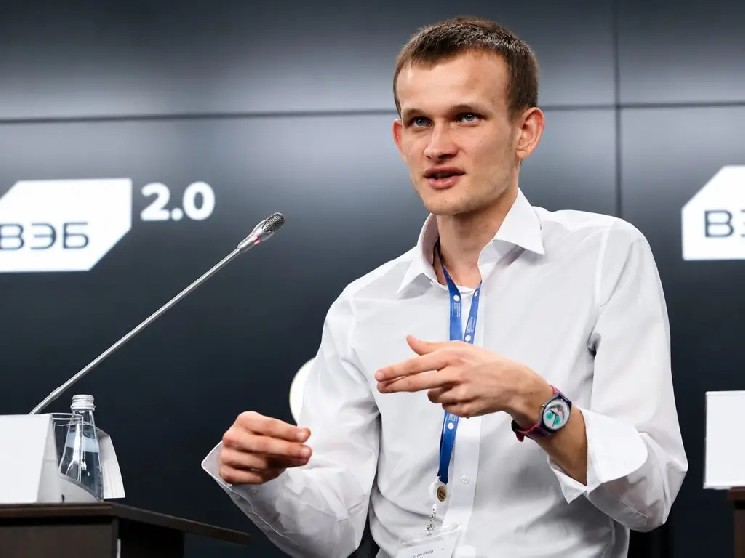
Ethereum's Next Decade in the Eyes of Vitalik

"Lean Ethereum" Long-Term Roadmap Unveiled by Vitalik Buterin On July 5, 2026, Vitalik Buterin published the "Lean Ethereum" roadmap, positioning it as Ethereum's third major evolution following the Merge. This multi-year, multi-phase upgrade aims to fundamentally transform Ethereum's core protocol through staged network upgrades extending to 2029. Key goals include achieving 1 gigagas per second L1 throughput (a massive increase from the current ~32 TPS), near-instant finality, and quantum-resistant cryptography. The plan involves transitioning Ethereum's security model from full transaction re-execution by all nodes to native verification via recursive STARK proofs. A major proposed change is replacing the EVM with a proof-friendly architecture like RISC-V or leanISA, though this remains a point of contention, especially with L2s like Arbitrum favoring alternatives like WASM. Other planned upgrades include a restructured state model with a large, cheap "warehouse" storage layer to drastically reduce fees for migrated applications, multi-dimensional gas pricing, and a new focus on making privacy a first-class, native protocol feature. While the roadmap significantly raises Ethereum's long-term technical ceiling, analysts note it does not directly address ETH's mid-term token economics or value capture. The plan's multi-year timeline means near-term price impact will likely depend on observable progress milestones, such as the successful deployment of the upcoming Glamsterdam gas limit increase, growth in L2 activity and blob usage, and trends in L1 fee revenue and ETH burn.

链捕手07/11 09:17
Ethereum's Next Decade in the Eyes of Vitalik

链捕手07/11 09:17

活动图片