# Decentralization Related Articles

HTX News Center provides the latest articles and in-depth analysis on "Decentralization", covering market trends, project updates, tech developments, and regulatory policies in the crypto industry.

Where Did the $362 Million Go? Hyperliquid Counters FUD, A Decentralization Route Debate Behind the Reconciliation

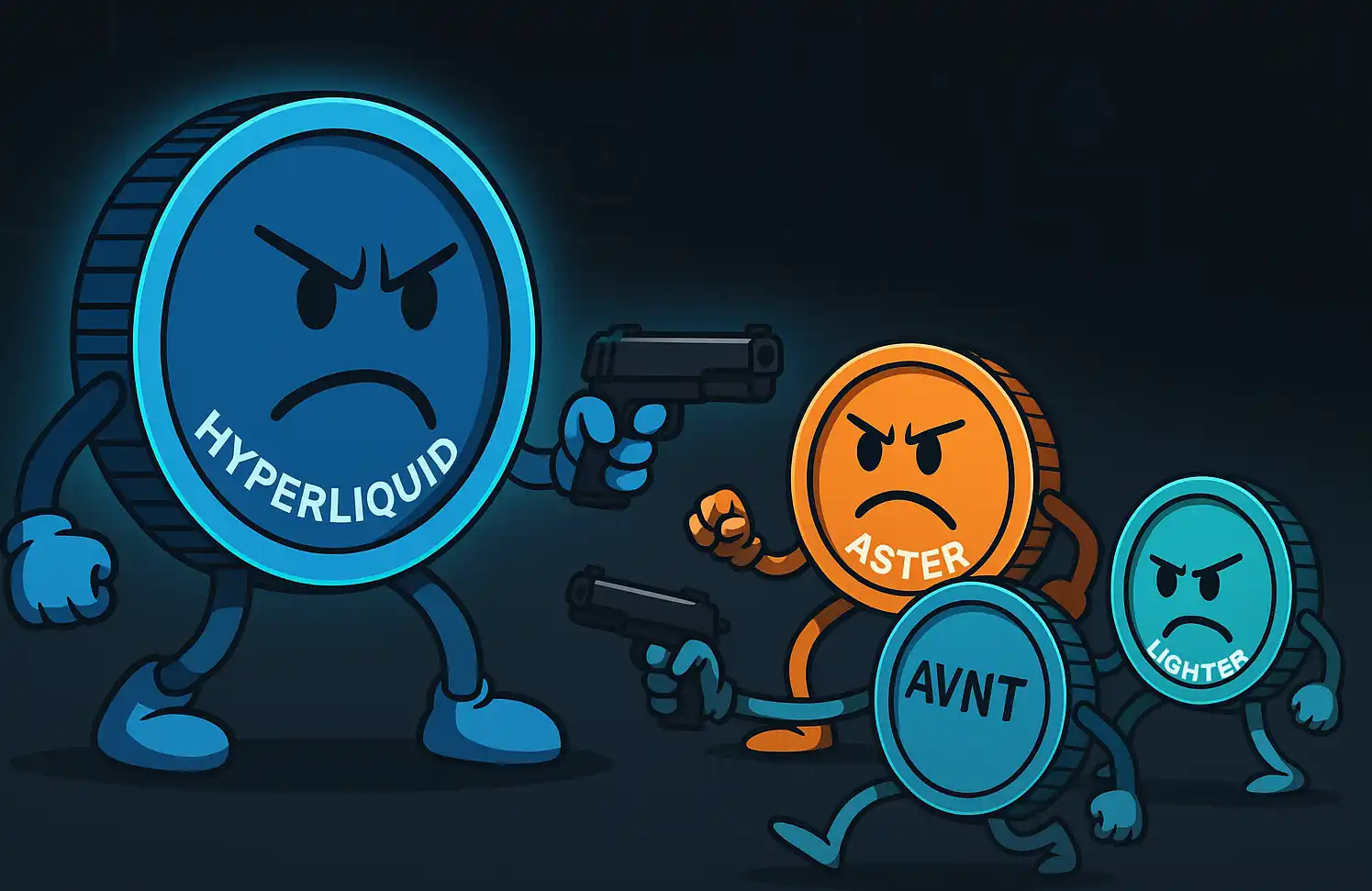
A technical report published on December 20, 2025, accused Hyperliquid, a decentralized exchange, of multiple severe issues—including insolvency and a "God mode backdoor"—claiming it was a centralized platform disguised as a blockchain. Hyperliquid issued a detailed response refuting the claims. The most serious allegation—a $362M shortfall in user funds—was debunked. The discrepancy arose because the accuser overlooked native USDC on HyperEVM during Hyperliquid’s transition from an L2 to an independent L1. Total reserves across Arbitrum and HyperEVM matched user balances. Other accusations were partially addressed: some code was testnet-related, limited broadcast nodes were an anti-MEV measure, and chain freezes were part of upgrade procedures. However, Hyperliquid did not fully respond to claims about unqueryable governance proposals and a lack of a cross-chain "escape hatch" for withdrawals. The exchange also compared itself to competitors like Lighter and Aster, criticizing their reliance on centralized sequencers and lack of transparency, while highlighting its own fully on-chain state verification. Additionally, Hyperliquid addressed community concerns about insider trading, attributing significant short selling to a former employee. The incident underscores broader challenges in DeFi transparency as protocols grow more complex, emphasizing the crypto mantra: "Don’t trust, verify."

marsbit12/24 02:55

Where Did the $362 Million Go? Hyperliquid Counters FUD, A Decentralization Route Debate Behind the Reconciliation

marsbit12/24 02:55

Plummeting Token Price, Whales Dumping and Exiting: The Aave Governance Battle Exposes DeFi's Governance Dilemma

The article details a major governance crisis within Aave, a leading DeFi lending protocol, sparked in December 2025. The conflict began when Aave Labs, the development team, switched the front-end service provider for its official website and redirected an estimated $10 million in annual fees from user transactions to its own controlled address instead of the community DAO treasury. This move was perceived by the Aave community as a "hidden privatization" of brand assets and a breach of trust. It raised a fundamental question: who ultimately controls a DeFi protocol—the founding team that builds the code and brand, or the token holders governing the DAO? Tensions escalated with the submission of an aggressive "poison pill" governance proposal demanding Aave Labs transfer all intellectual property, trademarks, and equity to the DAO. A more constructive counter-proposal, "Phase 1 - Ownership," sought to reclaim control of critical assets like domains and social media accounts for the DAO. Amid the internal strife, the AAVE token price fell over 25%, and a major whale investor sold their holdings at a significant loss, signaling eroding confidence. Aave Labs further angered the community by unilaterally advancing a snapshot vote during the Christmas holiday, a move criticized for violating procedural norms. Despite the turmoil, Aave's core protocol remained robust with $34 billion in assets. The SEC's decision to close its investigation without action was seen as a tacit endorsement of its decentralized governance model. The crisis is presented as a painful but necessary "rite of passage," potentially leading Aave to evolve into a "hybrid organization." This new model would clearly define the DAO as the sovereign owner of all assets, with Labs operating as a service provider under a formal, on-chain agreement, thereby preventing future revenue disputes.

marsbit12/23 08:07

Plummeting Token Price, Whales Dumping and Exiting: The Aave Governance Battle Exposes DeFi's Governance Dilemma

marsbit12/23 08:07

Believing in the Capital Market: The Essence and Core Value of Cryptocurrency

The article "Believing in the Capital Market: The Essence and Core Value of Cryptocurrency" argues that the true foundation of the crypto industry is not technological utility or capital manipulation, but faith and consensus, forming what the author terms a "faith capital market." The author posits Bitcoin as a modern religion, drawing parallels to traditional faiths: it has a creator (Satoshi Nakamoto), a foundational text (the whitepaper), core tenets (e.g., the collapse of the modern financial system). However, its key differentiators are its decentralized consensus formation, internet-native propagation through memes, and a unique system where acts of "faith" like running a node or holding BTC are rewarded with both spiritual and material gains (price appreciation). The piece explores the double-edged sword of secularization. While it expands influence (like Christmas for Christianity), in crypto, it attracts speculators who dilute the core faith, leading to industry-wide "narrative failure" and a loss of purpose. The author critiques the industry's "technology myth," arguing that the relentless pursuit of faster blockchains with more utility is a self-destructive distraction from crypto's core value: decentralized consensus on value. The proposed savior is not more technology, but meme coins—or more accurately, "faith assets." True faith assets, like $SPX or $NEET, are not mere jokes; they are new religions with clear doctrines that galvanize communities around shared beliefs, mirroring Bitcoin's original role. The author concludes that the market's essence is this faith capital, and its future resurgence depends on recognizing and nurturing these belief-based assets, not on technological specs. The piece is a call to return to the foundational belief that value is derived from collective, decentralized consensus.

marsbit12/23 07:22

Believing in the Capital Market: The Essence and Core Value of Cryptocurrency

marsbit12/23 07:22

Prediction Market Veteran Narrates a Decade of Evolution: From Augur's 'Innovation Theater' to Polymarket's Practical Breakthrough

Prediction market pioneer Joey, co-founder of Augur, reflects on the evolution of the sector over the past decade. He identifies Augur’s early challenges—low liquidity, poor user experience, and regulatory uncertainty—as key reasons it initially failed to achieve product-market fit. While Augur demonstrated the potential of crypto-native innovation, it also revealed the gap between theoretical decentralization and practical usability, which he refers to as "innovation theater." Key lessons include the need to solve the oracle problem (real-world data integration) and reduce user barriers rather than relying solely on decentralization ideals. Founders should avoid premature decentralization by first testing centralized prototypes before moving on-chain. Polymarket’s recent success stems from focusing on real-time event prediction (elections, sports), high liquidity mechanisms, and attracting non-crypto users. It has proven effective as an information market, outperforming traditional polls in accuracy, especially during events like the 2024 U.S. election. Joey argues that prediction markets are evolving beyond gambling into risk-hedging tools—for example, helping businesses forecast supply chain disruptions. This shift reflects crypto’s broader move from speculation to utility. While speculation exists, the core value lies in information discovery. Regarding regulation, he expects the U.S. to enforce KYC/AML rules, limiting anonymity. The EU and Asia may adopt more favorable policies, but U.S. standards could dominate globally. Clear regulation could attract institutional participation, but overregulation—such as banning certain event types—may stifle innovation. He advises projects to collaborate with regulators rather than adopt a confrontational approach.

marsbit12/23 04:07

Prediction Market Veteran Narrates a Decade of Evolution: From Augur's 'Innovation Theater' to Polymarket's Practical Breakthrough

marsbit12/23 04:07

Lighthouses Guide the Way, Torches Claim Sovereignty: A Hidden War Over AI Allocation Rights

The article "Lighthouse Guides Direction, Torch Fights for Sovereignty: A Hidden War Over AI Allocation" by Zhixiong Pan examines the underlying power struggle in AI development, moving beyond superficial metrics like model size and performance rankings. It identifies two coexisting paradigms: the "Lighthouse," representing state-of-the-art (SOTA), centralized AI systems controlled by tech giants like OpenAI and Google, which push cognitive boundaries but are resource-intensive and create dependency risks; and the "Torch," symbolizing open-source, locally deployable models (e.g., DeepSeek, Mistral) that democratize access, ensure data sovereignty, and enable private, customizable AI assets. The Lighthouse drives innovation and sets technical directions but poses risks in accessibility, control, and single-point failures. The Torch, while shifting security and responsibility to users, offers resilience, cost stability, and compliance for critical applications in sectors like healthcare and finance. The interplay between these models forms a symbiotic relationship: Lighthouses expand capabilities, while Torches disseminate and stabilize these advances, collectively elevating AI’s baseline. Ultimately, the conflict is over AI allocation rights—defining default intelligence, managing externalities, and determining individual control. A dual strategy—using Lighthouses for frontier tasks and Torches for private, reliable deployment—is proposed as the pragmatic path forward, balancing extreme capability with broad, sovereign access. The true measure of the AI era lies not in raw power but in whether individuals possess "a light they don’t have to borrow from anyone."

marsbit12/22 11:13
Lighthouses Guide the Way, Torches Claim Sovereignty: A Hidden War Over AI Allocation Rights

marsbit12/22 11:13

活动图片