# Crude Oil Related Articles

HTX News Center provides the latest articles and in-depth analysis on "Crude Oil", covering market trends, project updates, tech developments, and regulatory policies in the crypto industry.
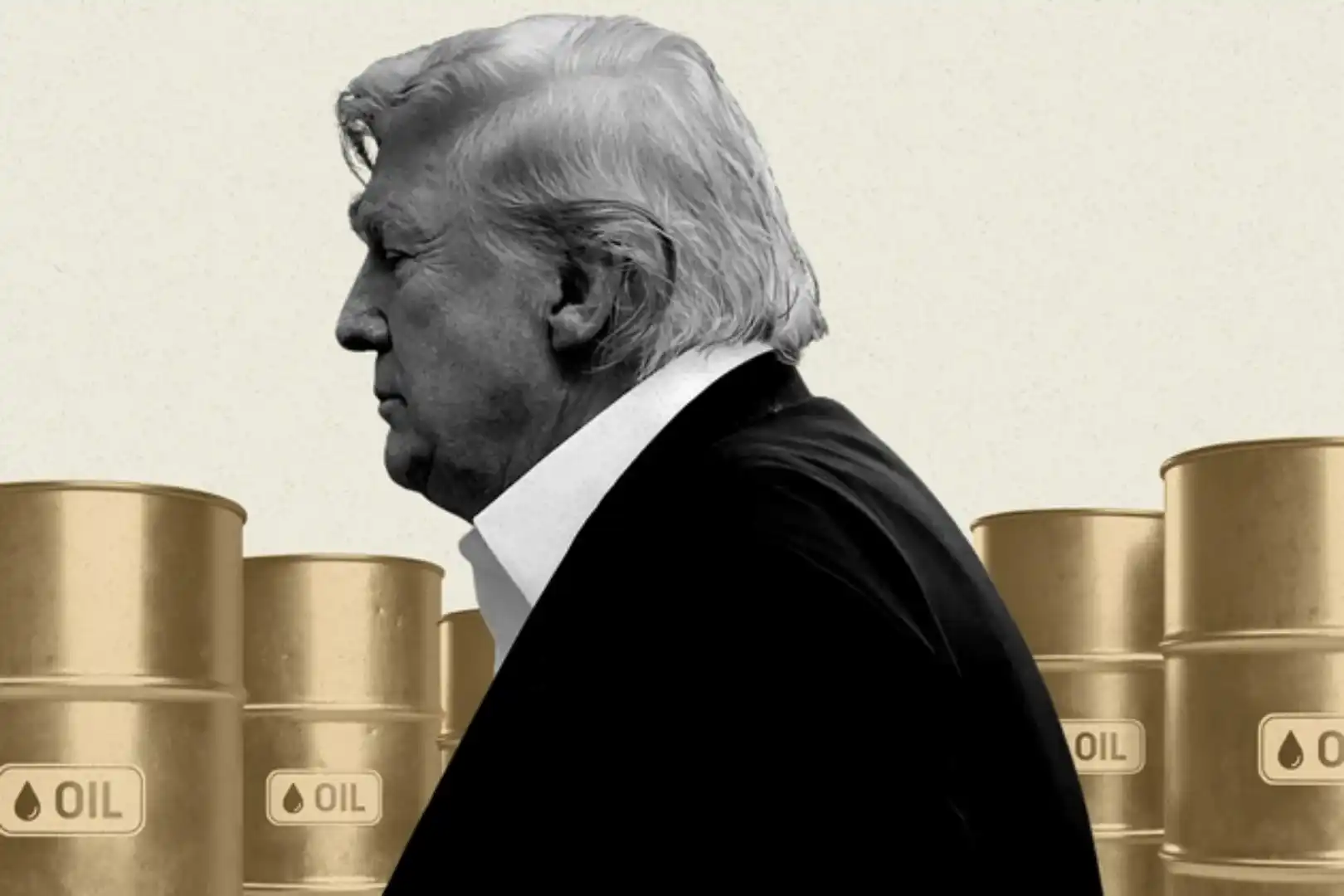

Data Research: How Big Is the Liquidity Gap Between Hyperliquid and CME Crude Oil?

This analysis compares the liquidity and market structure of Hyperliquid's xyz:CL perpetual crude oil contract with CME's CLJ6 futures contract over a three-week period from late February to mid-March 2026. Key findings reveal a significant liquidity gap: Hyperliquid's average depth is less than 1% of CME's, with a 125x difference at the ±2 bps level. The median trade size on Hyperliquid ($543) is 166x smaller than on CME ($90,450), reflecting its crypto-native retail user base. For a $1M order, estimated slippage on Hyperliquid (15.4 bps) is approximately 20x higher than on CME (0.79 bps), indicating it currently lacks the capacity for institutional-sized orders. However, a notable trend emerged during weekends when CME is closed. Hyperliquid's weekend trading volume grew significantly over the three observed weekends, from $31M to over $1B, and the average trade size increased, suggesting use by traders seeking exposure or hedging ahead of Monday's open. While an initial "discovery boundary" mechanism limited price discovery on the first weekend, subsequent weekends showed Hyperliquid's price increasingly converged with CME's Monday opening price, demonstrating its evolving price discovery capabilities. The report concludes that while Hyperliquid's absolute liquidity metrics are not comparable to CME, its growing weekend activity shows promise. However, high transaction costs for large orders remain a major barrier to attracting institutional participants.

Odaily星球日报04/06 02:50

Data Research: How Big Is the Liquidity Gap Between Hyperliquid and CME Crude Oil?

Odaily星球日报04/06 02:50

Behind the 25% Surge: The On-Chain Life-and-Death Game of Hyperliquid

A dramatic 25% surge in WTI crude oil prices, reaching $119.5 per barrel, has triggered a high-stakes on-chain showdown on the Hyperliquid derivatives exchange. The price spike was driven by a geopolitical crisis: the seven-day blockade of the Strait of Hormuz, a critical chokepoint for 20% of global oil supply. This event led to massive liquidations for several prominent traders who had heavily shorted oil. Key figures include trader CBB, who faced a $3.8 million unrealized loss on a $13.78 million short position, and the account "2 frères 2 fauves," the platform's largest oil short with a $3.4 million loss. Both faced liquidation at $120.76. Another whale, 0x8Af7, was fully liquidated, losing $1.55 million, only to immediately reopen a new $6.48 million short position. In contrast, Sky (formerly MakerDAO) co-founder Rune Christensen profited significantly, gaining over $1.36 million from a $7.82 million long position opened around $93. He employed a sophisticated macro-hedging strategy, simultaneously shorting ETH and equity indices to bet on war-driven oil premiums and risk-off sentiment. The event highlights the emergence and risks of on-chain commodity trading. Platforms like Hyperliquid offer democratized access to leveraged oil futures without traditional brokers or safeguards. However, the automated, unforgiving liquidation mechanisms provide no protection against black swan events like a geopolitical crisis, demonstrating that while the tools are new, the lessons of leverage and risk remain starkly old.

比推03/09 08:45

Behind the 25% Surge: The On-Chain Life-and-Death Game of Hyperliquid

比推03/09 08:45

Geopolitical Earthquake in the Middle East: Deciphering Safe-Haven Capital Flows and BTC Pricing Logic Through Options Data

In an unprecedented geopolitical shock on March 1, 2026, a direct U.S.-Israel military strike resulted in the death of Iran’s Supreme Leader, triggering a global repricing of risk across asset classes. While traditional safe-havens like crude oil and gold surged, Bitcoin exhibited a dual narrative—oscillating between "digital gold" and high-risk asset behavior. BTC held key support near $67,000 with robust spot market activity ($1.74B in 24h volume), indicating strong institutional accumulation despite initial volatility. Deribit options data revealed critical insights: the March 27 expiry期权 had a max pain of $76,000—12% above spot—suggesting pre-event bullish positioning remained largely intact. Implied volatility spiked to 51.3%, reflecting heightened hedging demand. The put/call open interest ratio stood at 0.75 (call-heavy), while the volume ratio reached 1.37, indicating tactical put buying for short-term protection. A breakdown below $65,000 could trigger negative gamma feedback toward $60,000. Conversely, stabilization above $70,000 may induce a gamma squeeze, accelerating a move toward max pain near $76,000. Medium-term outlook suggests a broad range between $62k–$70k with violent swings. However, as panic subsides, BTC’s structural role as a non-sovereign, uncorrelated asset may strengthen, with a high probability of a rebound toward $75k–76k by late March. This event underscores Bitcoin’s evolving function in global macro portfolios amid escalating geopolitical fragmentation.

marsbit03/02 02:52

Geopolitical Earthquake in the Middle East: Deciphering Safe-Haven Capital Flows and BTC Pricing Logic Through Options Data

marsbit03/02 02:52

活动图片