# Conflict Related Articles

HTX News Center provides the latest articles and in-depth analysis on "Conflict", covering market trends, project updates, tech developments, and regulatory policies in the crypto industry.


The Dark Side of Altcoins

The article "The Dark Side of Altcoins" argues that most cryptocurrency tokens inevitably fail due to a fundamental structural conflict between company equity and token holders. Most crypto projects are essentially traditional companies with equity-held founders, VC investors, and profit motives, which later issue a token. This creates irreconcilable incentives: equity seeks to capture value (revenue, profit, control) for the company and shareholders, while tokens need value (fees, buybacks, governance) to accrue to the protocol and holders. Equity almost always wins, leading to token value drainage. The piece highlights Hyperliquid as a rare success because it avoided VC equity financing entirely. Without a board or pressure to deliver value to shareholders, it could direct all economic value to its protocol and token. Legally, tokens cannot function like stocks without being deemed unregistered securities (if they offer dividends, ownership, etc.), which would trigger severe regulatory crackdowns. The optimal structure is one where the company holds no equity, captures no revenue, and all value flows to token holders via protocol mechanisms, with a DAO governing economic decisions. However, the only way to eliminate all conflict is to become a fully decentralized protocol like Bitcoin or Ethereum, with no company, no equity, and neutral, autonomously running infrastructure. The core issue is structural, not market conditions. Tokens are mathematically destined to fail if the project had VC rounds, private token sales, investor unlock schedules, or allows the company to capture revenue. Success requires value directed to the protocol, no VC equity, aligned founder/tokenholder incentives, and an economically irrelevant company. The solution is for investors to stop funding poorly designed projects. The future of the industry depends on capital flowing to projects with sound tokenomics, like those pioneered by Hyperliquid, MetaDAO, and Street.

深潮12/11 10:13

The Dark Side of Altcoins

深潮12/11 10:13

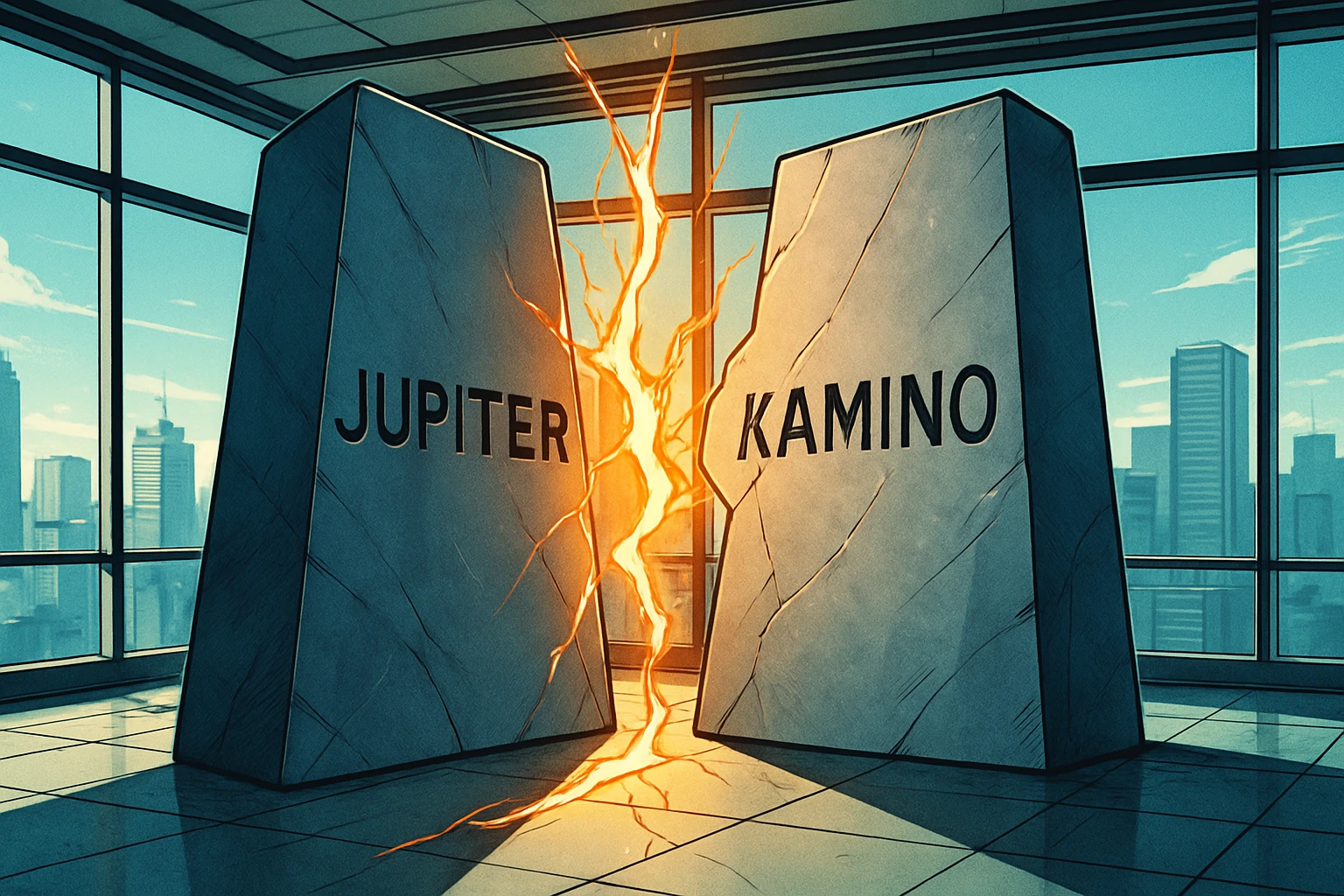
Solana Lending Internal Conflict: The Power Struggle Behind Foundation Mediation

Over the weekend, a public dispute erupted between Solana's two leading lending protocols, Jupiter Lend and Kamino. The conflict originated from Jupiter's earlier marketing claims that its lending product featured "risk isolation," implying that different lending pools would not be exposed to cross-contagion in the event of an asset failure. However, after Jupiter Lend launched, the market observed that its design did not align with the conventional understanding of risk isolation. The protocol allows for the rehypothecation (re-use) of collateral across pools to improve capital efficiency, which critics argue creates potential channels for risk contagion. Kamino's co-founder, Marius Ciubotariu, publicly accused Jupiter of misleading users with false advertising and subsequently blocked a migration tool from Kamino to Jupiter Lend. The core of the debate lies in differing interpretations of "risk isolation." Jupiter and its supporters argue their model offers a balanced approach with independent pool configurations, while Kamino and its allies insist that any form of rehypothecation negates true risk isolation and constitutes a failure in disclosure. The dispute drew reactions from key ecosystem players. Multicoin Capital, an investor in Kamino, strongly criticized Jupiter, accusing the team of either incompetence or intentional deception. In contrast, the Solana Foundation President, Lily Liu, called for unity, urging the two projects to focus on growing the overall market share against competitors like Ethereum rather than engaging in internal conflict. The clash is seen as an inevitable result of intensifying competition in a shrinking market. Jupiter Lend has been rapidly capturing market share from the formerly dominant Kamino since its launch. In a tighter, post-market-crash environment where safety is a paramount concern, Kamino seized on a perceived vulnerability in Jupiter's product design to launch a competitive attack. The incident highlights the fierce battle for dominance in Solana's DeFi lending sector.

比推12/08 16:55

Solana Lending Internal Conflict: The Power Struggle Behind Foundation Mediation

比推12/08 16:55

活动图片