# Adoption Related Articles

HTX News Center provides the latest articles and in-depth analysis on "Adoption", covering market trends, project updates, tech developments, and regulatory policies in the crypto industry.

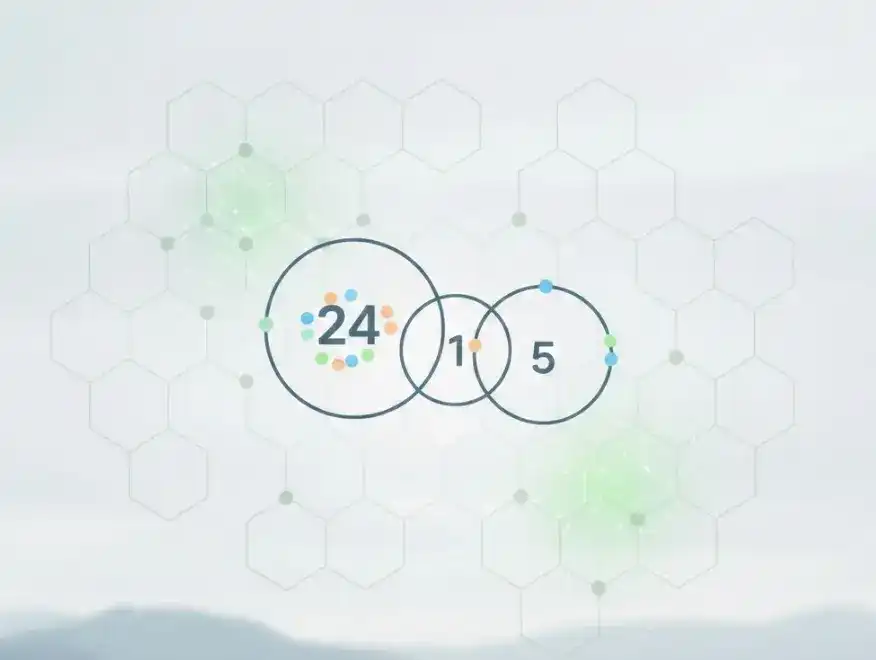
From 24 to 1 to 5: YC No Longer Invests in Crypto, But Crypto Hasn't Disappeared

The article analyzes Y Combinator's shifting investment strategy in crypto, moving from a peak of 24 crypto startups in a single batch (Winter 2022) to a low of just 1 (Summer 2024), with a recent modest rebound to 5 in Winter 2026. The key insight is that while the *number* of crypto investments has drastically fallen, the *nature* of these investments has fundamentally changed. YC is no longer funding traditional crypto-native sectors like L1/L2 protocols, DeFi, or NFTs. Instead, the five recent investments are infrastructure companies that use crypto as a backend tool to solve specific problems, with the end-user often unaware of the underlying blockchain technology. Examples include: * **Unifold:** A Stripe-like API for crypto deposits. * **SpotPay:** A cross-border neobank powered by stablecoins. * **Sequence Markets:** An execution engine for digital asset trading. * **Orthogonal:** A payment gateway for AI agents to pay for APIs, utilizing crypto for machine-to-machine micropayments. * **Forum:** A regulated "attention exchange" to trade on cultural trends, potentially involving tokenization. The author, a professional in both crypto and AI, concludes that Silicon Valley's mainstream is redefining crypto's value proposition: its greatest potential is not as a standalone industry but as invisible infrastructure for other sectors, particularly in stablecoin financial services and emerging fields like AI agent economies. The message for crypto builders is to focus on solving real-world problems where crypto is the best tool, rather than building for the crypto ecosystem itself.

marsbit02/20 11:26

From 24 to 1 to 5: YC No Longer Invests in Crypto, But Crypto Hasn't Disappeared

marsbit02/20 11:26

If Ozak AI Follows Its Current Trajectory, 2026–2028 Could Mark the Most Profitable Window for Early Holders

As attention in the crypto market shifts from short-term speculation to long-term positioning, analysts are increasingly focused on when value creation will occur. For Ozak AI, forecasts suggest the 2026–2028 period could be the most profitable window for early holders if the project maintains its current growth path. This outlook is based on roadmap timing, AI-sector expansion cycles, and historical trends in crypto infrastructure adoption. Analysts believe the next major crypto expansion will be driven by functional AI infrastructure, with adoption accelerating from 2026 and peaking toward 2028. Ozak AI’s roadmap is aligned with this timeline, featuring progressive deployment of AI-native infrastructure like Prediction Agents, Ozak Stream Network, EigenLayer AVS integration, Arbitrum Orbit, and Data Vaults. By mid-to-late 2026, these components are expected to operate at scale, transitioning the platform into a usage-driven ecosystem. Early holders benefit from low entry valuations, exposure before full deployment, and positioning ahead of peak AI-driven demand. Macro trends also support this thesis, including growing enterprise interest in decentralized AI, regulatory shifts toward transparent systems, and accelerating demand for real-time data intelligence. Valuation models indicate the most significant expansion may occur when AI infrastructure becomes indispensable, making early positioning a long-duration strategy rather than a short-term trade. In summary, if execution continues as planned, 2026–2028 could define Ozak AI’s most profitable phase for early holders, driven by converging technology, timing, and sector momentum.

TheNewsCrypto02/17 12:52
If Ozak AI Follows Its Current Trajectory, 2026–2028 Could Mark the Most Profitable Window for Early Holders

TheNewsCrypto02/17 12:52

活动图片