Surprise Lasted Only Hours! Apple AI for China Version Suddenly Launched and Then Withdrawn, No Official Release Plan Yet

marsbitPublished on 2026-03-31Last updated on 2026-03-31

Abstract

Apple Intelligence, Apple's generative AI service, experienced an unexpected and brief beta launch for the Chinese market in the early hours of March 31, 2026. The service, which included a new Siri interface and features like photo object removal, AI-generated emojis, real-time translation, and visual intelligence tools, became active on some devices running iOS 26.4 or later. However, many users reported unstable activation and issues with key functions, particularly the GPT extension plugin. According to Bloomberg's Mark Gurman, this activation was unplanned. He reported that while the technology had been ready for months, Apple had not yet received final approval from Chinese regulators and had no official release plan for the region. The launch was deemed an accident, inconsistent with Apple’s typical product rollout strategy for a major market like China. A key piece of evidence was the inclusion of a Google reverse image search feature, which is inaccessible within the country. Apple has since taken the service offline, with users no longer able to download it from their settings. The incident highlights the significant compliance challenges and technical complexities global tech companies face when deploying AI services in China.

At 3:31 AM Beijing time on March 31, 2026, the beta version of Apple's generative AI service, Apple Intelligence, was activated in batches on some devices that had been upgraded to iOS 26.4 or above in China. Although this feature brought a brand-new Siri interface and covered core collaboration tools such as photo erasure, smart emoji, real-time translation, and visual intelligence, a large number of users reported that the activation process was unstable, and the critical GPT extension plugin could not function properly.
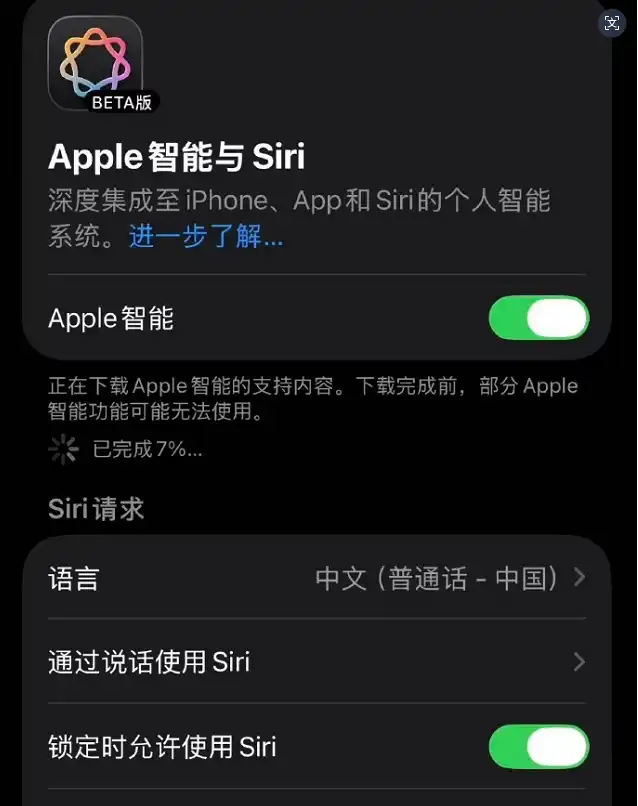
However, this highly anticipated launch was subsequently suggested to possibly be an "accident." According to veteran Bloomberg reporter Mark Gurman's latest report, the activation of Apple Intelligence in China was an unplanned and accidental launch. Gurman pointed out that although the relevant features have been technically ready for months, Apple has not yet obtained final approval from Chinese regulatory authorities, and there is currently no clear near-term release schedule. This incident is also unrelated to the ongoing iOS 26.5 testing cycle.
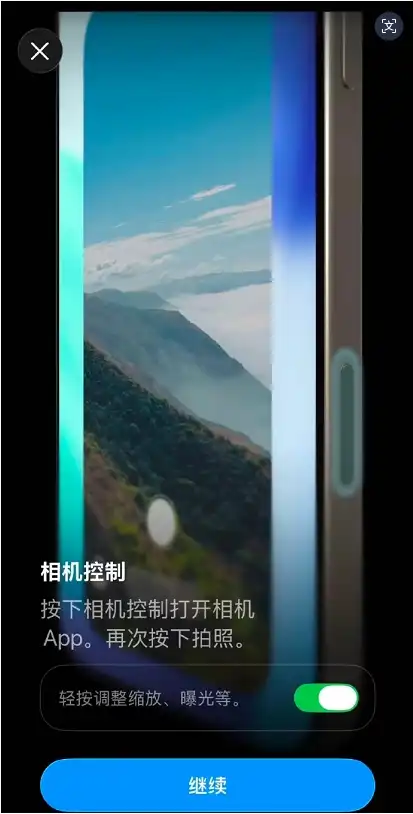
Signs supporting the "accident theory" are quite evident: First, Apple rarely releases major features in a strategic market like China without an official announcement; second, a launch in the early morning does not align with its usual product release rhythm; the most critical evidence is that the Google Reverse Image Search function included in this test version cannot connect properly within China.

Currently, Apple has taken emergency measures to take it offline. Many users have reported that after clicking download in the "Apple Intelligence and Siri" settings, the progress bar no longer appears. This incident once again highlights the compliance challenges and technical adaptation complexities faced by top-tier terminal manufacturers when deploying AI services in China.


Related Questions

QWhat is the name of Apple's generative AI service mentioned in the article, and what was the issue with its release in China?

AThe service is called 'Apple Intelligence'. The issue was that its beta version was unexpectedly and non-programmatically activated for some users in China, only to be taken down hours later as it was not yet approved by Chinese regulators.

QAccording to Bloomberg's Mark Gurman, why was the activation of Apple Intelligence in China considered an 'accidental launch'?

AMark Gurman stated that the activation was a 'non-planned, accidental launch' because although the feature was technically ready, Apple had not yet obtained final approval from Chinese regulators and had no clear near-term release plan.

QWhat were some of the key features of the Apple Intelligence beta that became available?

AThe key features included a new Siri interface, photo object removal, smart emoji creation, real-time translation, and visual intelligence tools.

QWhat specific technical issue did users encounter with the beta version, indicating it was not fully functional in China?

AA critical issue was that the GPT extension plugin could not be used normally, and the Google reverse image search feature included in the beta could not connect properly within China.

QWhat action did Apple take after the accidental launch was identified?

AApple urgently took the service offline. Many reported that the download progress bar would no longer appear when attempting to access the 'Apple Intelligence and Siri' settings.

Related Reads

Anthropic Cries Wolf: Is the AGI Threat Real, or Just an IPO Story?

Anthropic has published an article titled "When AI builds itself," discussing the emerging concept of "recursive self-improvement," where AI begins to actively participate in designing, training, testing, and optimizing its own subsequent versions. The company presents internal data showing that by May 2026, over 80% of code merged into its codebase was written by Claude, its AI model. Claude's capabilities have expanded to handling complex, open-ended engineering tasks, achieving a 76% success rate in such areas, and even contributing to research processes, such as optimizing code performance and conducting AI safety experiments. Anthropic outlines an evolution from human-driven development to AI-assisted workflows, culminating in the current stage where AI agents can autonomously write, run, and delegate code. The company cautions that the path toward a "closed loop," where AI continuously improves itself, is becoming visible. It calls for coordinated global mechanisms to potentially slow or pause frontier AI development to allow safety research and societal structures to catch up. However, the timing of this warning coincides with Anthropic's preparations for an IPO, framing the narrative not just as a safety concern but also as a demonstration of Claude's advanced capabilities and its integral role in accelerating Anthropic's own R&D—creating a potential "flywheel" effect for competitive advantage. This contrasts with OpenAI's recent, more policy-oriented discussion of the same risks, highlighting the competitive dynamics in the AI industry as companies position themselves in both the technological and regulatory landscape.

marsbit25m ago

Anthropic Cries Wolf: Is the AGI Threat Real, or Just an IPO Story?

marsbit25m ago

BIT Research: ETF Purchases Have Slowed, Strategy (MicroStrategy) Has Slowed, What Else Can Drive Bitcoin's Rise?

Market Refocus on Inflation and Rate Expectations Weighs on Bitcoin Currently, the market is in a phase of macro-repricing dominated by inflation and interest rate expectations. Bitcoin, which previously benefited from easy liquidity and low inflation, is seeing its core bullish drivers weaken. These drivers were market expectations for interest rate cuts and strong inflows from Bitcoin ETFs and institutions like MicroStrategy (referred to as "Strategy" in the text). The logic has shifted. Recent high inflation data (e.g., CPI hitting 3.8% in a May 2026 report) has caused the market to sharply reduce its rate cut expectations for 2025 and even price in potential hikes. This is a key constraint for Bitcoin, as it lacks cash flows and is highly sensitive to rate expectations. Concurrently, institutional capital flows have slowed significantly. Following the hot CPI data, Bitcoin ETFs saw accelerated outflows, with around $4.3 billion leaving over a period. MicroStrategy's ability to keep adding substantial Bitcoin to its balance sheet is also diminishing. Together, ETF and MicroStrategy holdings total roughly $110 billion, but their momentum as growth engines is cooling. In summary, Bitcoin's current pressure stems not from its own fundamentals but from a changing macro environment. As long as inflation stays elevated, Bitcoin is likely to remain in a consolidating phase. However, historically, inflation eventually peaks. Once it recedes and rate cut expectations rebuild, institutional capital could return, potentially fueling a new and more robust recovery phase for Bitcoin.

marsbit33m ago

BIT Research: ETF Purchases Have Slowed, Strategy (MicroStrategy) Has Slowed, What Else Can Drive Bitcoin's Rise?

marsbit33m ago

Earning 1000 Trillion in Half a Year, 'Pocketing' 20 Million per Capita: This Round of Wealth Creation in the Korean Stock Market is Unprecedented in Scale

The South Korean stock market is experiencing an unprecedented wealth surge in 2026, with household equity and fund asset values soaring by over 1,000 trillion KRW (~$730bn) year-to-date. This translates to an average per capita wealth increase of roughly 20 million KRW, fueled by a historic 109% rally in the KOSPI index. The boom is driven by three converging forces: an AI-driven semiconductor supercycle boosting giants like Samsung and SK Hynix; the government's "Value-Up" market reforms addressing long-standing corporate governance issues; and aggressive real estate regulations that have locked capital within financial markets, preventing profits from flowing back into property. This has triggered a wealth effect, boosting high-end consumption significantly. However, the gains are highly concentrated. The two semiconductor behemoths account for over half the index's value, but retail investors own relatively low stakes in them, systematically missing the biggest rallies. Wealth and consumption benefits are skewed towards luxury goods and imported cars, bypassing mainstream retail. Further risks stem from excessive leverage, with high trading volume in leveraged ETFs, and a market sentiment heavily reliant on the AI sector's fortunes and speculative rumors. While this cycle marks a potential shift from real estate to equities as a primary wealth generator for Koreans, its sustainability, amid structural imbalances and leverage, remains a critical test.

marsbit38m ago

Earning 1000 Trillion in Half a Year, 'Pocketing' 20 Million per Capita: This Round of Wealth Creation in the Korean Stock Market is Unprecedented in Scale

marsbit38m ago

Trading

Spot
Futures

Hot Articles

Discussions

Welcome to the HTX Community. Here, you can stay informed about the latest platform developments and gain access to professional market insights. Users' opinions on the price of AI (AI) are presented below.

活动图片