Strategy Watch #2

insights.glassnode发布于2026-03-24更新于2026-03-24

文章摘要

Strategy Watch #2 provides institutional analysis of digital asset fund performance and allocation trends. The report covers six key areas: institutional capital flows, fund performance, macro strategies, on-chain vault returns, manager sentiment, and allocation updates. In February and early March, Bitcoin and Ethereum saw significant net outflows (-$9.6B and -$3.2B respectively), while stablecoins attracted inflows (+$6.2B), suggesting a defensive shift toward lower-risk assets. BTC ETF flows turned positive in March, though institutional conviction remains cautious. DeFi Total Value Locked (TVL) on Ethereum declined sharply, with peak outflows of -$23.7B in February, indicating reduced participation in on-chain yield strategies. CME basis yields continued to tighten, reflecting lower institutional leverage and softer derivatives demand. The report also highlights performance trends, with only one strategy type generating positive returns in February. Over 300 managers shared their three-month market outlook, and a new $750M fund of funds was announced.

The full report is freely available in PDF format.

Download PDF version

Welcome to Strategy Watch #2

Strategy Watch was built to address a clear demand for high-signal, impartial analysis of fund-level performance and allocation trends in digital assets.

The inaugural edition confirmed this demand, reaching a broad audience of key decision makers, from leading global asset managers, hedge funds, major investment banks, top-tier crypto-native funds and Fund of Funds.

Building on this early momentum, our objective is straightforward — to make Strategy Watch a must-read monthly publication for the digital asset investment community.

This publication is strengthened by direct input from market participants. Funds and allocators that contribute data and insights help shape a more complete and valuable view of the landscape.

If you have insights, data, or allocation updates worth sharing, we welcome your contribution.

Present your latest initiatives and updates to a curated audience of institutional allocators.

Share updates ↗

Inside the Latest Strategy Watch

The report is structured across six core sections, each focused on a distinct dimension of institutional activity in digital assets:

01 Institutional Flow Monitor |

02 Fund and SMA Performance | February was a bloodbath, check this section to see the only strategy type that returned positively last month.

03 Strategy Deep Dive: Macro Strategies | Hear firsthand from a macro portfolio manager on how they are navigating the current geopolitical challenges. 

04 On-chain Vault Performance | Are ETH curators underperforming ETH staking yield?

05 Manager Monitor | Find out how more than 300 managers are expecting the crypto market to perform over the next three months.

06 Allocation Updates | New USD 750m Fund of Funds is launching. Check this section to learn more.

in partnership with

The Premier Digital Assets Allocator Platform. Learn more


Institutional Flow Monitor

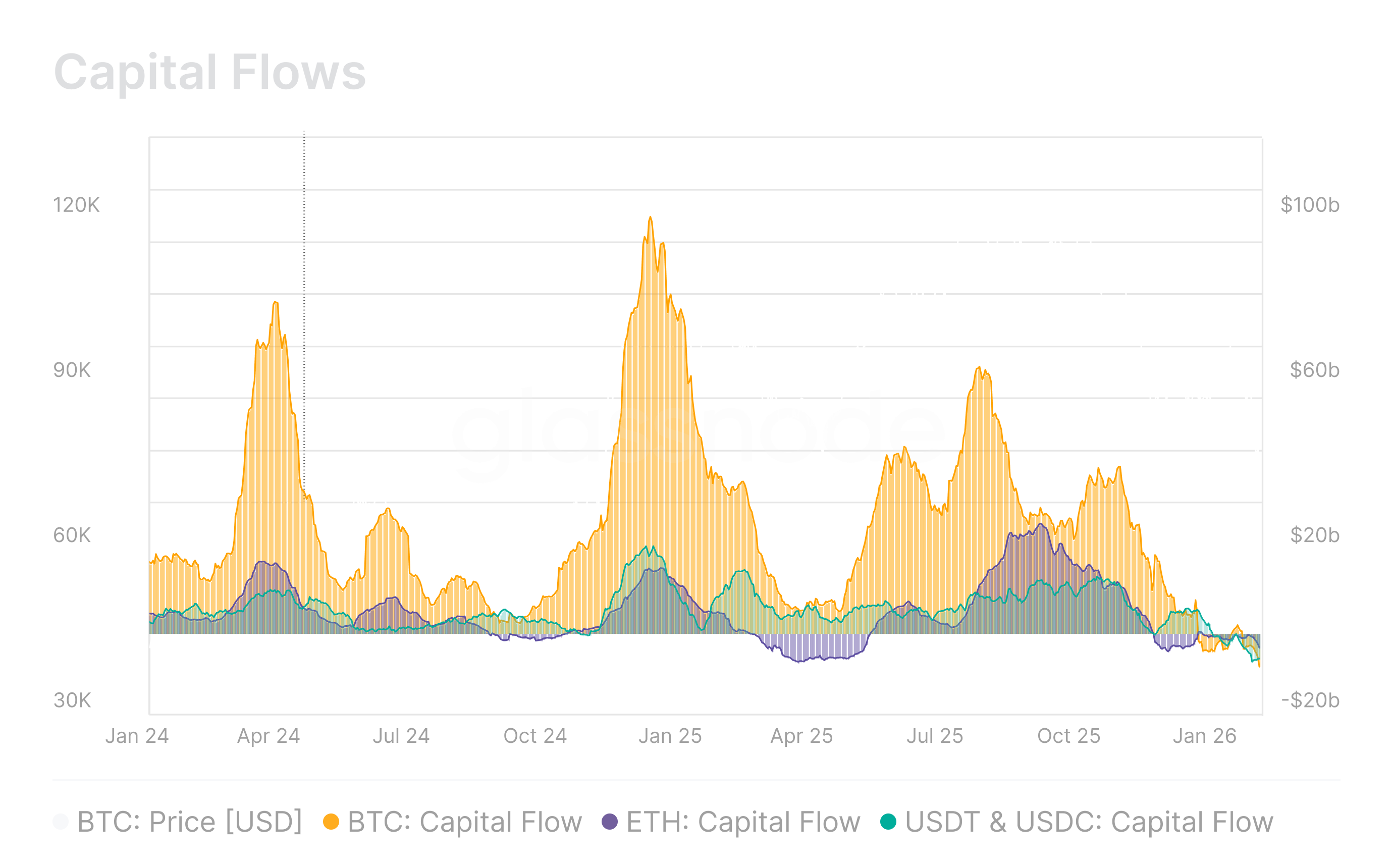
Capital flows into BTC and ETH remained deeply negative through February and into March, with stablecoins turning net positive in early March as investors rotated toward lower-risk positioning.

Bitcoin and Ethereum continued to experience sustained net outflows, with BTC and ETH capital flows registering -$9.6B and -$3.2B. However, stablecoins broke from the broader negative trend, flipping to +$6.2B in net inflows. Rather than signaling a broad return of risk appetite, this rotation likely reflects a defensive repositioning, with capital migrating into dollar-denominated on-chain instruments while conviction in spot crypto assets remains under pressure heading into mid-Q1 2026.
ETF & DAT Net Flows

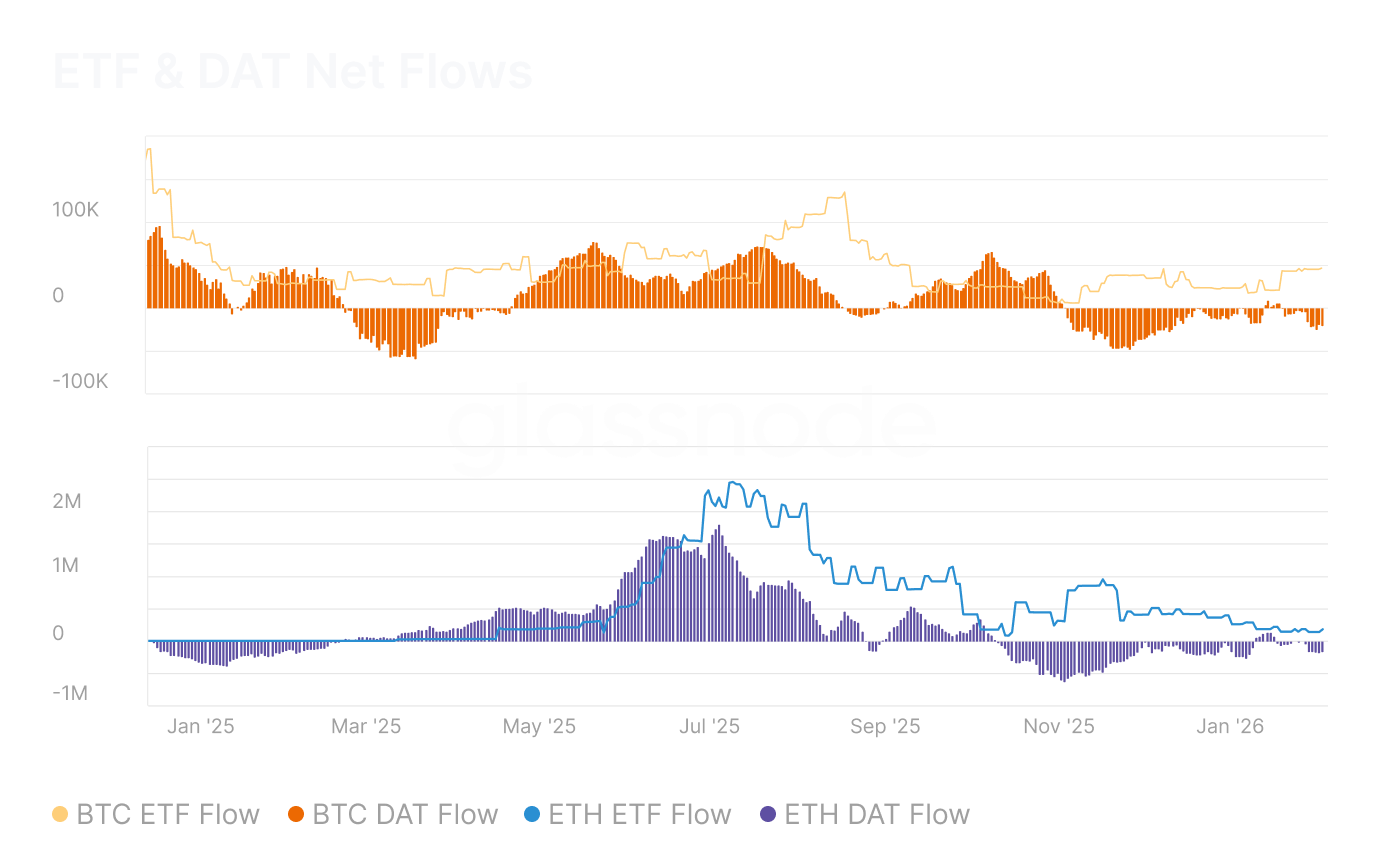
After sustained February outflows, BTC ETF and DAT flows returned to positive, while ETH institutional flows showed early signs of stabilization.

After sustained February outflows, Bitcoin ETF and DAT flows returned to positive territory, recovering to +28k BTC and +46.8k BTC respectively. Ethereum flows were more measured, with ETF flows near neutral at +46.5k ETH and DAT flows stabilizing at +295.8k ETH. While the directional shift is encouraging, the recovery remains early-stage and uneven, and it would be premature to characterize this as a broad resumption of institutional conviction.
DeFi TVL & Stablecoin Cap

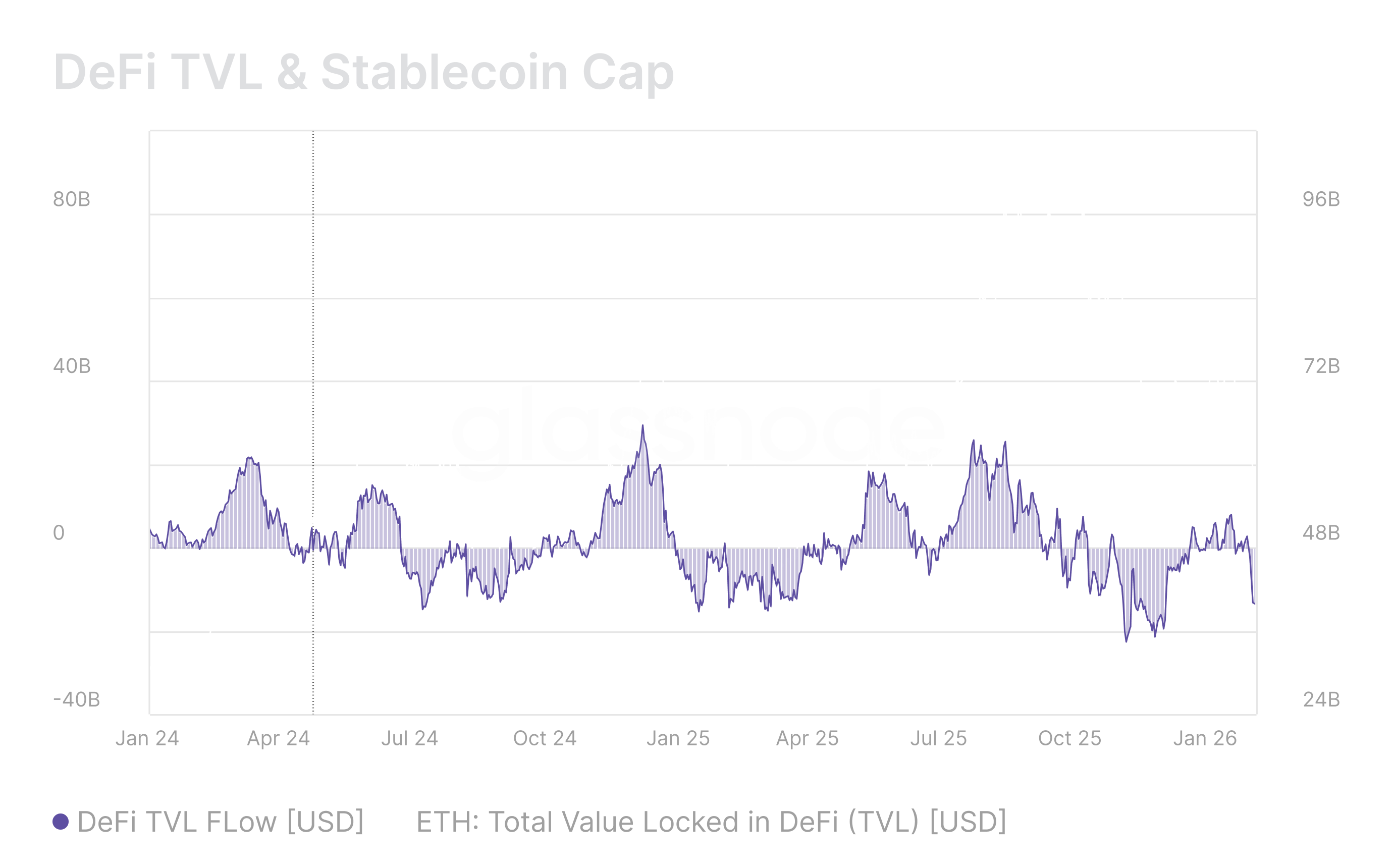
DeFi TVL on Ethereum saw sharp contraction through February before showing early signs of stabilization in March, though the broader declining trend since August 2025 remains intact.

Total Value Locked on Ethereum recorded peak outflows of -$23.7B per month in February, implying sustained withdrawal by larger allocators from on-chain activities such as liquidity provisioning and yield strategies. This slowdown alone is insufficient to signal a reversal, and diminished conviction in DeFi risk-adjusted returns continues to point to shallower liquidity depth across the ecosystem.
CME Basis Yield

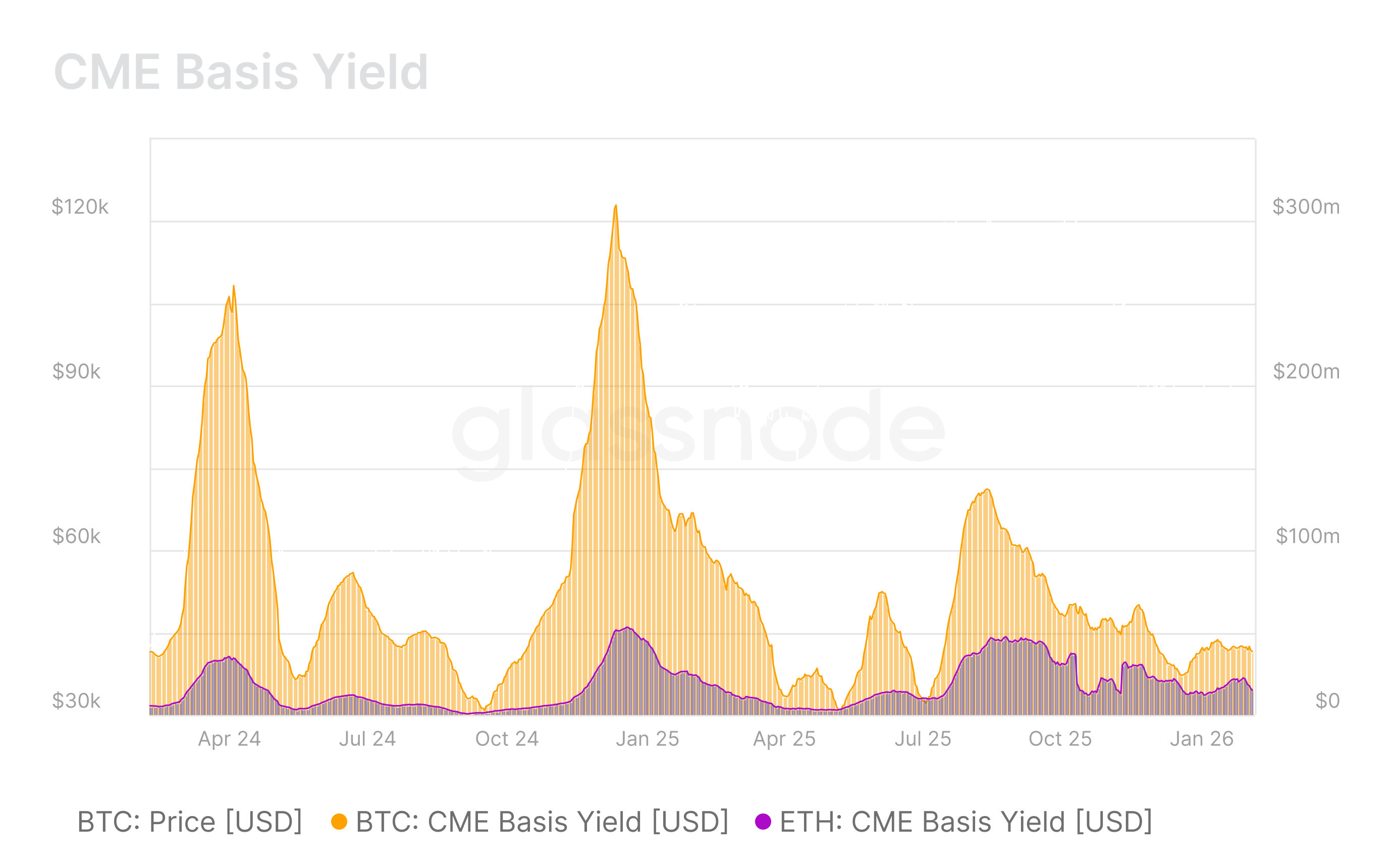
CME Basis Yield compressed even further in February, reinforcing waning incentives for market-neutral strategies compared to January.

The monthly dollar value captured by institutions via cash-and-carry trades declined notably for both Bitcoin and Ethereum, building on the sharp compression seen since August 2025. This tightening basis reflects reduced leverage deployment, softer futures demand, and continued pullback in balance-sheet commitment amid tighter liquidity conditions persisting from January into early March 2026.


Disclaimer: This report does not provide any investment advice. All data is provided for information and educational purposes only. No investment decision shall be based on the information provided here and you are solely responsible for your own investment decisions.
Exchange balances presented are derived from Glassnode’s comprehensive database of address labels, which are amassed through both officially published exchange information and proprietary clustering algorithms. While we strive to ensure the utmost accuracy in representing exchange balances, it is important to note that these figures might not always encapsulate the entirety of an exchange’s reserves, particularly when exchanges refrain from disclosing their official addresses. We urge users to exercise caution and discretion when utilizing these metrics. Glassnode shall not be held responsible for any discrepancies or potential inaccuracies. Please read our Transparency Notice when using exchange data.

相关问答

QWhat is the primary purpose of the Strategy Watch publication?

AStrategy Watch was built to address a clear demand for high-signal, impartial analysis of fund-level performance and allocation trends in digital assets, aiming to be a must-read monthly publication for the digital asset investment community.

QWhich was the only strategy type that returned positively in February according to the report?

AThe report indicates that readers should check the 'Fund and SMA Performance' section to see the only strategy type that returned positively in February, though the specific strategy name is not stated in the provided text.

QWhat was the trend in capital flows for Bitcoin (BTC) and Ethereum (ETH) through February and into March?

ACapital flows into BTC and ETH remained deeply negative, with BTC and ETH capital flows registering -$9.6B and -$3.2B, respectively.

QHow did stablecoin capital flows behave in contrast to BTC and ETH in early March?

AStablecoins broke from the broader negative trend, flipping to +$6.2B in net inflows, which likely reflects a defensive repositioning into lower-risk, dollar-denominated on-chain instruments.

QWhat does the sharp compression in CME Basis Yield indicate about market conditions?

AThe compression in CME Basis Yield reflects reduced leverage deployment, softer futures demand, and a continued pullback in balance-sheet commitment amid tighter liquidity conditions, indicating waning incentives for market-neutral strategies.

你可能也喜欢

解读大航海时代投资机遇,景顺长城基金发布《2026年中国企业出海报告》

景顺长城基金发布《2026年中国企业出海报告》,指出在当前全球产业链重构背景下,“出海”已成为中国企业的“必选项”和新增长引擎。报告认为,出海行情并非昙花一现,而是可能持续影响A股投资的长期趋势。 报告分析了中国企业出海的版本迭代:从早期赚取加工费的“产品出口”(出海1.0),演进至当前包含产能、经营能力及服务输出的“出海2.0”。后者具体体现在资本品投资高增长、消费品品牌拓展、服务业(如创新药BD、大模型Token)加速出海以及供应链深度嵌入全球AI产业链。 中国企业出海的底气源于多重系统性优势:庞大的工程师红利、完善且低成本的基础设施以及完整的产业链集群效应。这些优势在光模块、创新药等行业已转化为全球竞争力。 针对具体投资机遇,报告重点提及: 1. **资本品**:如工程机械、电力设备(变压器、电网配电设备等),凭借成本与服务优势,正快速进入“一带一路”及全球市场。 2. **科技与高端制造**:新能源车需注重海外本地化;AI应用(大模型、云服务等)及光模块企业展现出非线性增长潜力。 3. **消费与医药**:消费品牌正从“链价比”优势转向品牌溢价;创新药在肿瘤、减重等大适应症领域孕育着巨大的市场机会。 报告也指出,出海之路面临地缘政治、合规、文化等多重挑战,成功的企业需具备前置合规、本地化运营及构建海外核心能力等关键素质。

marsbit6分钟前

解读大航海时代投资机遇,景顺长城基金发布《2026年中国企业出海报告》

marsbit6分钟前

GitHub,被 AI 打穿了

2026年2月9日,GitHub发生大规模服务中断,核心数据库集群因“缓存重写风暴”过载,导致网站、API、Actions及Copilot等服务瘫痪。事故根源是一个配置改动(缓存刷新时间从12小时改为2小时),但背后是平台面临的结构性挑战。 2026年前三个月,GitHub发生至少8次重大事故,故障原因各异但相互关联。深层原因是AI Agent的爆发式使用导致负载性质剧变。数据显示,2026年单周代码提交量达2.75亿次,按此推算全年将达140亿次,是2025年的14倍。AI贡献的提交量和PR数量在数月内增长数十倍。这些不眠不休的AI“用户”以远超人类的速率提交代码、创建仓库,使GitHub的负载模式从可预测的人类节奏转变为持续高压的自动化洪流。 同时,AI Agent(尤其是Agentic工作流)消耗的计算资源远超预期,使GitHub基于座位的Copilot订阅模式严重亏损。GitHub不得不实施限流,并于6月1日全面转向按用量计费。 为应对挑战,GitHub宣布需按当前规模的30倍重新设计架构,而非简单扩容,重点包括解耦服务、增强故障隔离、改进流量管控等。行业如Stripe、AWS也面临类似问题。 本质上,GitHub正从“人类协作平台”转变为“AI工作流的输出管道”。这不仅是基础设施的压力测试,也引发对其商业模式和核心身份的重塑。频繁的事故报告和高透明度,是平台在重建过程中争取社区耐心的方式。这次停机事件标志着软件开发在AI时代的一次深刻转折。

marsbit46分钟前

GitHub,被 AI 打穿了

marsbit46分钟前

交易

现货
合约
活动图片