Strategy Adds 1,550 Bitcoin As Treasury Holdings Reach 845,256 BTC

bitcoinistPublished on 2026-06-12Last updated on 2026-06-12

Abstract

Strategy Inc. (formerly MicroStrategy) added 1,550 Bitcoin to its treasury between June 1 and June 7, at an average cost of $65,332 per BTC, according to a June 8 SEC filing. The purchase, funded by $181.0 million in net proceeds from its ATM equity program, brings the company's total holdings to 845,256 BTC, acquired for approximately $44.1 billion. The filing also showed Strategy increased its cash reserves to $1.0 billion to meet dividend and debt obligations. The disclosure clarifies an earlier, larger purchase figure was inaccurate. While the company sold a small amount of BTC in May to fund dividends, its core strategy of using equity financing to accumulate Bitcoin remains intact, albeit within a more complex capital structure.

TL;DR

  • Strategy Inc. disclosed a new Bitcoin purchase in a June 8 Form 8-K filing.
  • The company bought about 1,550 BTC between June 1 and June 7 for roughly $101.3 million.
  • Its total holdings stood at 845,256 BTC as of June 7, acquired for about $44.1 billion.
  • The filing also showed fresh ATM equity issuance and a $1 billion cash reserve for dividend and debt obligations.

Strategy Inc., formerly known as MicroStrategy, added more Bitcoin to its treasury in early June, according to a June 8 Form 8-K filing, even as the company continues to balance BTC accumulation with equity issuance, preferred stock obligations, and cash reserve management.

The company disclosed that it acquired approximately 1,550 BTC between June 1 and June 7 for around $101.3 million. The average purchase price was approximately $65,332 per bitcoin, including fees and expenses.

As of June 7, Strategy said it held 845,256 BTC in total. The aggregate acquisition cost of those holdings was about $44.1 billion, with an average cost of roughly $52,173 per bitcoin.

Strategy Funds Purchase Through ATM Equity Program

The latest purchase was funded through Strategy’s at-the-market equity offering program. During the June 1 to June 7 period, the company sold 1,409,600 shares of its Class A common stock, raising approximately $181.0 million in net proceeds.

That structure has become central to Strategy’s Bitcoin accumulation model. The company raises capital through equity or other financing tools and uses part of the proceeds to acquire additional BTC, effectively turning its public-market access into a Bitcoin treasury strategy.

The filing also showed that Strategy increased its U.S. dollar cash reserves to $1.0 billion as of June 7, up by $100 million. The company said the reserve is intended to support preferred stock dividend obligations and debt interest obligations.

Why The Numbers Matter

The verified June filing is important because older candidate-pool data referenced a much larger 15,400 BTC purchase tied to a previous transaction period. For this report, the current SEC filing is the relevant source: 1,550 BTC purchased for approximately $101.3 million, not the older 15,400 BTC figure.

The distinction matters for readers tracking institutional Bitcoin demand. Strategy remains one of the largest corporate Bitcoin holders in the market, but accurate purchase size, average price, and total holdings are essential because the company’s disclosures are often used as a benchmark for corporate treasury appetite.

At 845,256 BTC, Strategy’s reported holdings are substantial by any measure. But the company’s approach also means investors must watch both sides of the balance sheet: Bitcoin accumulation and the financing structures used to support it.

Bitcoin Sales And Cash Management

The filing context also included a notable recent development. Strategy sold 32 BTC in late May 2026 for around $2.1 million to fund preferred dividend payments on its Series A Perpetual Stretch Preferred Stock. The source material described that as the company’s first Bitcoin sale since 2022.

That sale does not change the broader accumulation strategy, but it shows that Strategy is managing a more complex capital structure than in earlier phases of its Bitcoin treasury plan. The company is not simply buying BTC; it is also maintaining reserves and meeting obligations tied to preferred stock and debt.

For Bitcoin markets, the broader signal remains familiar: Strategy continues to add BTC and remains one of the most visible corporate treasury buyers. But the latest filing also shows a more mature and financially layered version of that strategy, where cash reserves, equity issuance, and dividend obligations sit alongside the Bitcoin headline.

The takeaway is straightforward: Strategy’s Bitcoin thesis remains intact, but investors should read the filings closely. The purchase size, funding source, total holdings, and cash reserve details all matter when assessing what the company’s treasury activity really signals for Bitcoin demand.


Originally disclosed in an SEC filing by Strategy Inc. at SEC EDGAR / Strategy Inc. Form 8-K

Related Questions

QHow many Bitcoins did Strategy Inc. purchase in early June, and at what average price?

AStrategy Inc. purchased approximately 1,550 Bitcoin between June 1 and June 7 at an average price of approximately $65,332 per bitcoin, including fees and expenses.

QWhat was Strategy Inc.'s total Bitcoin holding and aggregate acquisition cost as of June 7?

AAs of June 7, Strategy Inc. held 845,256 Bitcoin in total. The aggregate acquisition cost for these holdings was about $44.1 billion, with an average cost of roughly $52,173 per bitcoin.

QHow did Strategy Inc. fund its latest Bitcoin purchase?

AThe latest Bitcoin purchase was funded through Strategy's at-the-market (ATM) equity offering program. The company sold 1,409,600 shares of its Class A common stock during the period, raising approximately $181.0 million in net proceeds.

QWhy did the article emphasize the importance of the 1,550 BTC purchase figure over an older candidate-pool figure?

AThe article emphasized the 1,550 BTC figure because it is from the current, verified SEC filing. Older candidate-pool data incorrectly referenced a much larger 15,400 BTC purchase. Accurate data on purchase size, average price, and total holdings is essential as Strategy's disclosures are a key benchmark for tracking corporate Bitcoin demand.

QWhat is the purpose of the $1.0 billion cash reserve Strategy Inc. reported, and what notable sale did the filing mention?

AThe $1.0 billion cash reserve is intended to support the company's preferred stock dividend obligations and debt interest obligations. The filing also noted that Strategy sold 32 BTC in late May 2026 for around $2.1 million to fund preferred dividend payments, marking its first Bitcoin sale since 2022.

Related Reads

As the US and Japan Hike Interest Rates, Which Asset Class is Most at Risk?

This week, global markets face two major events: the Bank of Japan's likely interest rate hike and the US Federal Reserve's FOMC meeting. For risk assets, it is a pivotal and volatile week. In the US, expectations for rate cuts have faded dramatically. May's higher-than-expected CPI and resilient jobs data have shifted the Fed's focus from potential cuts to the possibility of future hikes. New Fed Chair Wash is unlikely to raise rates at this meeting, but any hawkish shift in communication, the dot plot, or the policy statement could lead markets to price in tighter policy, pushing up short-term Treasury yields and strengthening the dollar. High-valuation growth stocks, AI-related assets, and small-cap stocks reliant on cheap funding are most vulnerable to rising rates. In Japan, a 25 basis point hike is almost fully priced in (98.3% probability), which would bring the policy rate to 1%, its highest since 1995. The concern is not the hike itself, but its potential to unwind the massive "carry trade," where investors borrowed low-yielding yen to invest globally. Historically, Japan's rate hikes have coincided with global market stress (2000, 2007, 2024). While this well-telegraphed hike may be digested smoothly, two key factors increase uncertainty: 1) Governor Ueda's absence due to illness, putting communication in the hands of less-familiar deputies, and 2) the Fed meeting occurring just days later, creating potential for a compounded market reaction if both central banks sound hawkish. Asset implications: * **Bonds:** US short-term yields sensitive to Fed signals. Japan's rate hike could pressure its massive US Treasury holdings. * **Currencies:** Dollar likely supported by Fed; Yen's reaction hinges on BoJ's forward guidance. * **Equities:** US growth stocks, small-caps most at risk. Japanese stocks face pressure from a stronger yen. * **Crypto:** Assets like Bitcoin face headwinds from higher rates and tighter liquidity; high-beta altcoins are even more vulnerable. The convergence of these two central bank meetings amplifies market volatility risks, with potential spillovers across asset classes globally.

marsbit9m ago

As the US and Japan Hike Interest Rates, Which Asset Class is Most at Risk?

marsbit9m ago

Data Decrypts the BTC Cycle: Three Major Bottom Signals Illuminate Simultaneously, Q4 Could Be a Crucial Turning Point Window?

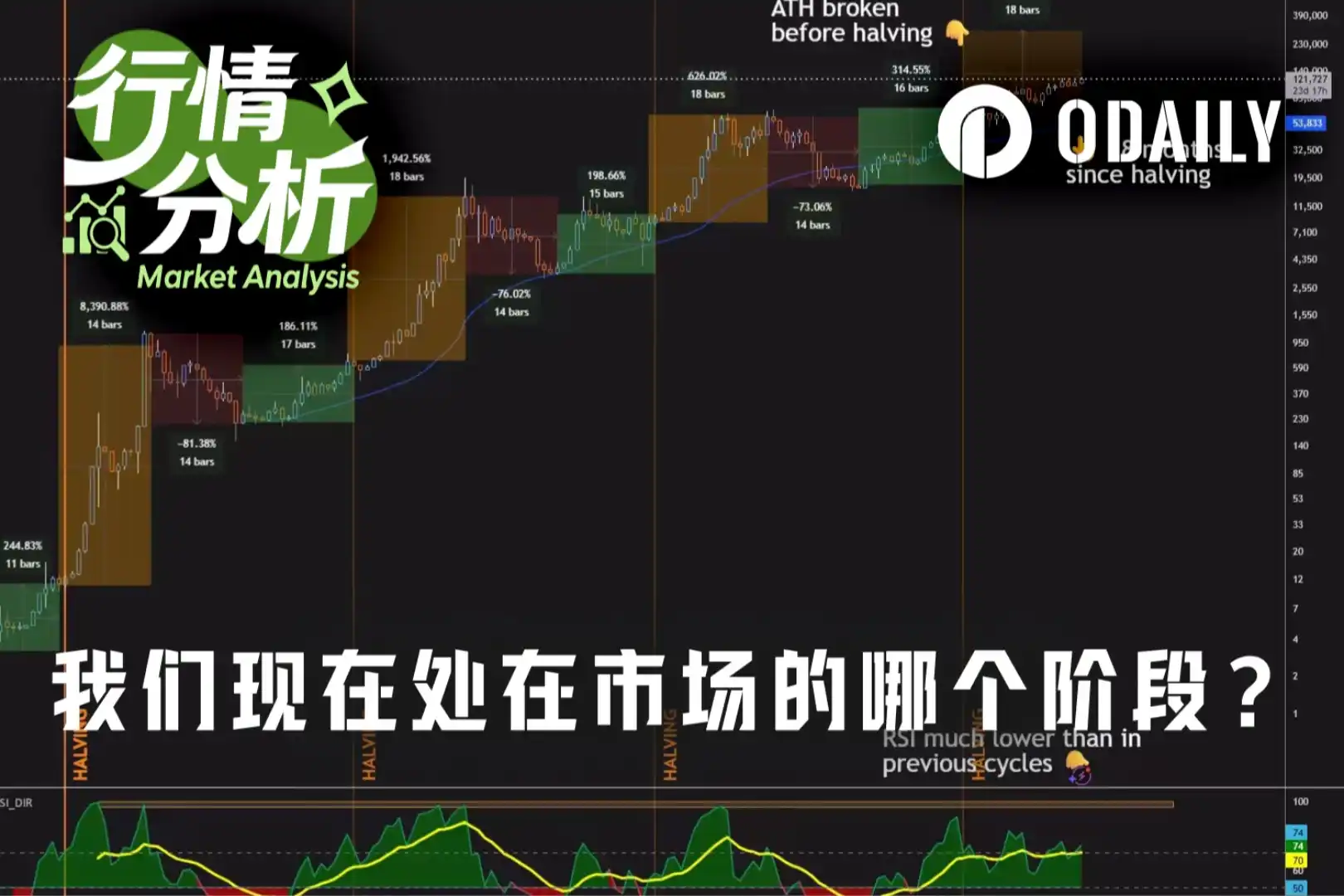
"Decoding the Bitcoin Cycle: Three Bottom Signals Flash Simultaneously, Is Q4 the Key Turning Point?" The article analyzes Bitcoin's current market position, comparing it to historical cycles. BTC has corrected over 52% from its October 2025 peak of $126,198 to around $59,100 in June 2026. While significant, this drawdown is milder than the 77-86% declines seen in past bear markets. The analysis is framed within Bitcoin's four-year halving cycle. Past cycles show a pattern: prices peak 12-18 months post-halving, bottom 12-14 months after the peak, with lows typically occurring roughly 17 months before the next halving. Following the April 2024 halving and the October 2025 peak, this pattern suggests a potential bottoming window around Q4 2026, ahead of the expected 2028 halving. Three key on-chain metrics are signaling undervaluation: The MVRV Z-Score has dropped near 0.27, approaching historic bottom zones. The market price is only about 9% above the network's average realized price of ~$53,600, a rare low premium. Bitcoin's price recently touched its 200-week moving average (~$62,200), a level that aligned with bottoms in 2015, 2018, and 2020. While US spot Bitcoin ETFs saw record outflows in May/June 2026, indicating retail panic, whale addresses (holding 100+ BTC) reached a yearly high. Entities like MicroStrategy resumed buying, and long-term holders control a near-record 78% of the supply, suggesting accumulation. A major macro overhang was partially removed with a US-Iran ceasefire agreement in mid-June 2026, which eased oil prices and triggered a sharp BTC rally. However, persistent inflation means high-interest rates remain a constraint. The conclusion notes that genuine investment opportunities often arise when confidence is lowest, amidst narratives that "this time is different." While not guaranteeing an immediate bottom, the confluence of cycle timing, undervaluation signals, and shifting macro risks suggests late 2026 may be a critical period for reassessing risk/reward and patient accumulation for long-term believers.

marsbit9m ago

Data Decrypts the BTC Cycle: Three Major Bottom Signals Illuminate Simultaneously, Q4 Could Be a Crucial Turning Point Window?

marsbit9m ago

The Shutdown of Claude Mythos Revealed the True Cost of Renting AI to Me

The sudden shutdown of Claude Mythos this week starkly highlights a critical, often overlooked risk for founders: when your core capability relies entirely on someone else's platform, your fate is not in your own hands. The key question becomes: who truly owns the intelligence your product depends on? For years, the debate around open-source models focused on cost. Now, the evidence is clear: fine-tuned open-source models can achieve frontier-level quality for specific, mission-critical tasks at a fraction of the cost. However, the deeper issue is control. Relying on a third-party API is like renting; it works until the landlord changes the rules, raises the rent, or asks you to leave—as Mythos experienced. The lesson is not to stop using frontier models—they are incredible infrastructure. The goal is ownership. Ownership means starting with a powerful open-source model and shaping it around what makes your company unique: your data, workflows, domain expertise, and definition of "good." Over time, the model becomes less generic and more reflective of your business, creating durable value. The optimistic conclusion is that AI's future doesn't hinge on one superior model. There is no single frontier. The frontier includes proprietary models, models fine-tuned on company-specific knowledge, specialized models for narrow problems, and intelligent routers orchestrating model ensembles. The most interesting development is not models getting smarter, but intelligence becoming increasingly customizable. The winning companies will be those that transform intelligence into a unique, owned asset. Looking ahead, the vision is not one model dominating all, but many teams owning the part of the frontier that matters most to them.

marsbit57m ago

The Shutdown of Claude Mythos Revealed the True Cost of Renting AI to Me

marsbit57m ago

Tiger Research: U.S. Strategic Bitcoin Reserve - Should the Market Be Happy or Disappointed?

Tiger Research analyzes the evolution of U.S. legislative efforts regarding a strategic Bitcoin reserve, concluding the market impact is limited in the short term but potentially positive long-term. The core event was a March 2025 executive order by former President Trump, which designated confiscated Bitcoin as a strategic reserve and promised not to sell existing holdings (approx. 190k BTC). As it contained no mandate to purchase new Bitcoin, the market reacted negatively, with prices dropping 5.7%. Legislative history shows a significant retreat from initial ambitions. The 2024 "BITCOIN Act" proposed mandatory purchases of 1 million BTC over five years. Reintroduced in 2025, it stalled due to high fiscal costs, concerns over dollar hegemony, and opposition from the Treasury Secretary. The current frontrunner, the 2026 "American Retirement and Monetary Advancement (ARMA) Act," is a compromise. It lacks any purchase requirement, instead focusing on consolidating existing government-held Bitcoin and legally prohibiting its sale for at least 20 years. While ARMA has higher passage odds due to bipartisan support and no purchase mandate, its immediate market effect is neutral. It eliminates potential government selling pressure but creates no new demand. The long-term significance is that formally establishing Bitcoin as a national reserve asset in law could later reignite debates on mandatory purchases. Therefore, the path to a government buyer is longer than initially priced by the market, but the directional narrative remains intact.

marsbit59m ago

Tiger Research: U.S. Strategic Bitcoin Reserve - Should the Market Be Happy or Disappointed?

marsbit59m ago

Trading

Spot
Futures

Hot Articles

What is $BITCOIN

DIGITAL GOLD ($BITCOIN): A Comprehensive Analysis Introduction to DIGITAL GOLD ($BITCOIN) DIGITAL GOLD ($BITCOIN) is a blockchain-based project operating on the Solana network, which aims to combine the characteristics of traditional precious metals with the innovation of decentralized technologies. While it shares a name with Bitcoin, often referred to as “digital gold” due to its perception as a store of value, DIGITAL GOLD is a separate token designed to create a unique ecosystem within the Web3 landscape. Its goal is to position itself as a viable alternative digital asset, although specifics regarding its applications and functionalities are still developing. What is DIGITAL GOLD ($BITCOIN)? DIGITAL GOLD ($BITCOIN) is a cryptocurrency token explicitly designed for use on the Solana blockchain. In contrast to Bitcoin, which provides a widely recognized value storage role, this token appears to focus on broader applications and characteristics. Notable aspects include: Blockchain Infrastructure: The token is built on the Solana blockchain, known for its capacity to handle high-speed and low-cost transactions. Supply Dynamics: DIGITAL GOLD has a maximum supply capped at 100 quadrillion tokens (100P $BITCOIN), although details regarding its circulating supply are currently undisclosed. Utility: While precise functionalities are not explicitly outlined, there are indications that the token could be utilized for various applications, potentially involving decentralized applications (dApps) or asset tokenization strategies. Who is the Creator of DIGITAL GOLD ($BITCOIN)? At present, the identity of the creators and development team behind DIGITAL GOLD ($BITCOIN) remains unknown. This situation is typical among many innovative projects within the blockchain space, particularly those aligning with decentralized finance and meme coin phenomena. While such anonymity may foster a community-driven culture, it intensifies concerns about governance and accountability. Who are the Investors of DIGITAL GOLD ($BITCOIN)? The available information indicates that DIGITAL GOLD ($BITCOIN) does not have any known institutional backers or prominent venture capital investments. The project seems to operate on a peer-to-peer model focused on community support and adoption rather than traditional funding routes. Its activity and liquidity are primarily situated on decentralized exchanges (DEXs), such as PumpSwap, rather than established centralized trading platforms, further highlighting its grassroots approach. How DIGITAL GOLD ($BITCOIN) Works The operational mechanics of DIGITAL GOLD ($BITCOIN) can be elaborated on based on its blockchain design and network attributes: Consensus Mechanism: By leveraging Solana’s unique proof-of-history (PoH) combined with a proof-of-stake (PoS) model, the project ensures efficient transaction validation contributing to the network's high performance. Tokenomics: While specific deflationary mechanisms have not been extensively detailed, the vast maximum token supply implies that it may cater to microtransactions or niche use cases that are still to be defined. Interoperability: There exists the potential for integration with Solana’s broader ecosystem, including various decentralized finance (DeFi) platforms. However, the details regarding specific integrations remain unspecified. Timeline of Key Events Here is a timeline that highlights significant milestones concerning DIGITAL GOLD ($BITCOIN): 2023: The initial deployment of the token occurs on the Solana blockchain, marked by its contract address. 2024: DIGITAL GOLD gains visibility as it becomes available for trading on decentralized exchanges like PumpSwap, allowing users to trade it against SOL. 2025: The project witnesses sporadic trading activity and potential interest in community-led engagements, although no noteworthy partnerships or technical advancements have been documented as of yet. Critical Analysis Strengths Scalability: The underlying Solana infrastructure supports high transaction volumes, which could enhance the utility of $BITCOIN in various transaction scenarios. Accessibility: The potential low trading price per token could attract retail investors, facilitating wider participation due to fractional ownership opportunities. Risks Lack of Transparency: The absence of publicly known backers, developers, or an audit process may yield skepticism regarding the project's sustainability and trustworthiness. Market Volatility: The trading activity is heavily reliant on speculative behavior, which can result in significant price volatility and uncertainty for investors. Conclusion DIGITAL GOLD ($BITCOIN) emerges as an intriguing yet ambiguous project within the rapidly evolving Solana ecosystem. While it attempts to leverage the “digital gold” narrative, its departure from Bitcoin's established role as a store of value underscores the need for a clearer differentiation of its intended utility and governance structure. Future acceptance and adoption will likely depend on addressing the current opacity and defining its operational and economic strategies more explicitly. Note: This report encompasses synthesised information available as of October 2023, and developments may have transpired beyond the research period.

368 Total ViewsPublished 2025.05.13Updated 2025.05.13

What is $BITCOIN

Discussions

Welcome to the HTX Community. Here, you can stay informed about the latest platform developments and gain access to professional market insights. Users' opinions on the price of BTC (BTC) are presented below.

活动图片