Solana: How memecoins are driving the ‘SOL cycle’ narrative in H2

ambcryptoPublished on 2026-07-06Last updated on 2026-07-06

Abstract

The article discusses the growing narrative of a "Solana cycle" in the second half of the year, driven by a surge in bullish sentiment around SOL. While a predicted $1,000 price target is seen as a technical stretch, on-chain data supports optimism: the network added over 1.6 million new addresses in two weeks and saw significant SOL withdrawn from exchanges, reducing sell-side pressure. A key driver is Solana's divergence from the broader memecoin market downturn. As the overall memecoin sector weakens, activity on Solana-based memecoins like BONK is rising, with platforms like Pump.fun leading in DEX volume. This sustained, sector-specific demand and network growth bolster the "Solana cycle" thesis, making SOL a key altcoin to watch despite its current price being below $100.

Traders usually name a market cycle after an asset when bullish sentiment reaches an extreme.

Currently, that seems to be happening with Solana [SOL]. Several traders who were bearish on SOL just weeks ago have now flipped bullish. The sudden shift was so noticeable that it even fueled speculation on social media, with some users questioning whether Solana was paying analysts to push a pro-SOL narrative.

More recently, Ansem added to the buzz by calling SOL undervalued and arguing that it has the potential for a 100x move, citing the network’s ecosystem upgrades and continued growth. The biggest talking point, however, came from another analyst who predicted that SOL could hit $1,000 this cycle, calling the current market phase the “Solana cycle.”
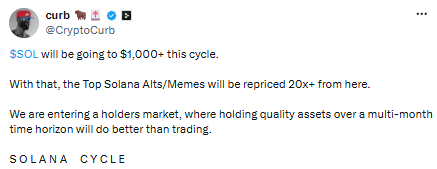
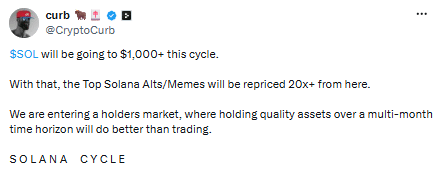
Source: X

Technically, that target looks like a stretch.

Solana is still struggling to reclaim the $100 level, so a move to $1,000 this cycle remains a long shot. That said, the on-chain data is telling a different story. Over the past two weeks, the network has added more than 1.6 million new addresses, a sign that user activity continues to accelerate.

Meanwhile, around $120 million worth of SOL has been withdrawn from exchanges over the past week. Growing network activity combined with steady exchange outflows suggests demand is picking up while more holders are moving their tokens off trading platforms, reducing immediate sell-side pressure.

That said, Solana’s biggest growth catalyst may not be network expansion alone. Instead, the real momentum appears to be coming from sector-specific demand, making the idea of a “Solana cycle” heading into H2 less far-fetched than it first appears.

Memecoin demand strengthens Solana’s outlook

The memecoin market collapse is becoming a key driver of the 2026 cycle.

According to CoinMarketCap data, the total memecoin market cap has declined by over $10 billion so far this year and remains in the red, reflecting fading interest in meme-based tokens. Notably, this weakness is also visible in the data, with memecoin dominance falling sharply to 3.7%, its lowest level since February 2024.

However, Solana is clearly diverging from the broader market trend. As the chart shows, Solana-based memecoins have been in a steady uptrend since June, with Bonk [BONK] leading the move with over 13%+ gains during the period. Meanwhile, Pump.fun has climbed to the top spot by 24-hour DEX volume, surpassing Uniswap, as memecoin trading activity on Solana picks up again.
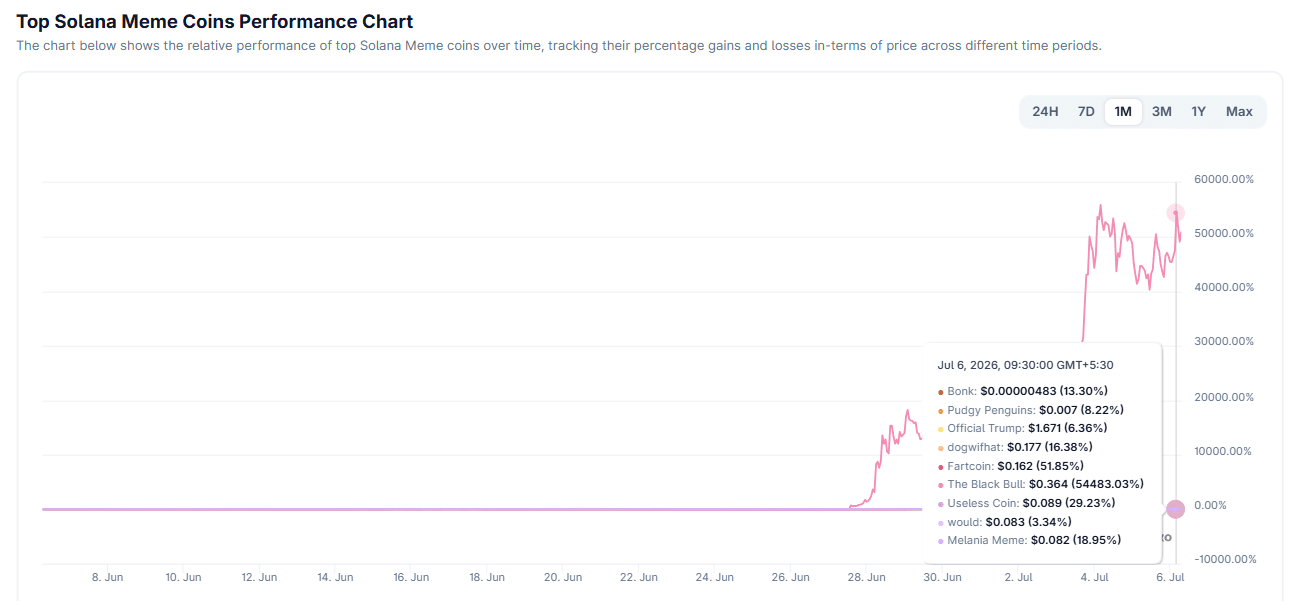
Source: CoinGecko

In simple terms, Solana network usage isn’t just driven by spot demand.

Instead, growth in new addresses has lined up with strong memecoin momentum on the network, showing that interest in Solana-based memes remains firm even as the broader memecoin market cools. That gives SOL a clear edge in the current setup.

So, while SOL may still be far from a $1,000 rally from a technical standpoint, the underlying demand and activity still support the idea of a “Solana cycle.” That keeps SOL a key altcoin to watch heading into H2.



Final Summary

Trending Cryptos

Related Questions

QWhat is the primary factor driving the so-called 'Solana cycle' narrative according to the article?

AAccording to the article, the primary factor driving the 'Solana cycle' narrative is the sustained demand and momentum for memecoins on the Solana network, which contrasts with the broader cooling of the overall memecoin market.

QWhat are two key on-chain metrics mentioned that suggest growing demand and reduced sell-side pressure for SOL?

ATwo key on-chain metrics mentioned are: 1) The addition of over 1.6 million new Solana network addresses in the past two weeks, indicating accelerating user activity. 2) Approximately $120 million worth of SOL withdrawn from exchanges over the past week, suggesting holders are moving tokens off trading platforms.

QHow does the performance of Solana-based memecoins differ from the overall memecoin market trend?

AWhile the total memecoin market cap has declined significantly, Solana-based memecoins have been in a steady uptrend since June, with projects like Bonk (BONK) leading gains. This shows that interest in Solana-based memes remains firm as the broader sector cools.

QWhat is the analyst Ansem's view on Solana's (SOL) potential, as cited in the article?

AAnsem called SOL undervalued and argued that it has the potential for a 100x move, citing the network's ecosystem upgrades and continued growth.

QDespite the optimistic narrative, why does the article suggest a $1,000 price target for SOL this cycle is technically a stretch?

AThe article suggests a $1,000 price target is technically a stretch because Solana is still struggling to reclaim the $100 price level, making such a massive rally appear as a long shot from a current technical standpoint.

Related Reads

Besu Patches Vulnerabilities in 5 Components: What Node Operators Need to Know

The Ethereum client Besu, developed by the Hyperledger community, has patched five security vulnerabilities discovered by blockchain security firm CertiK. These vulnerabilities, detailed in four security advisories on August 14, were all addressed in version 26.7.1, an urgent security update initially released on July 27. The intentional delay between the patch release and the public disclosure of details gave node operators a crucial window to update. JiaLiang Chang, CertiK's Director of Security Engineering, explained this "patch first, details later" model provides defenders a time advantage, allowing them to identify affected systems, test the update, and coordinate deployments—particularly important for institutional or permissioned blockchain networks requiring formal change management. The vulnerabilities, found through CertiK's "Chain Scan" attack methodology, involved issues in block announcement handling, consensus proposal buffering, WebSocket subscription limits, and JSON-RPC filter creation. If exploited, they could have allowed an attacker to exhaust a node's memory or thread resources, compromising its availability and the consensus process. Chang highlighted that while the open-source ecosystem is moving toward more formalized security testing (like differential fuzzing and bug bounty programs), coverage remains uneven. Testing often focuses more on protocol compliance than on continuous resource exhaustion, race conditions, or deployment-specific failures. He emphasized that third-party research remains vital for uncovering attack vectors beyond routine development, advocating for a mature, cumulative security model combining continuous integration, multi-node attack testing, independent audits, and regression testing for each confirmed vulnerability.

cryptonews.ru25m ago

Besu Patches Vulnerabilities in 5 Components: What Node Operators Need to Know

cryptonews.ru25m ago

Trading

Spot

Hot Articles

Discussions

Welcome to the HTX Community. Here, you can stay informed about the latest platform developments and gain access to professional market insights. Users' opinions on the price of SOL (SOL) are presented below.

活动图片