Russia’s Top Stock Exchanges Gear Up To Support Crypto Trading Under New Framework

bitcoinistPublished on 2025-12-25Last updated on 2025-12-25

Abstract

Russia's top stock exchanges, Moscow Exchange (MOEX) and SPB Exchange, have expressed support for the Central Bank of Russia's (CBR) new regulatory framework for cryptocurrencies. They are prepared to launch crypto trading services as soon as the regulations are enacted, leveraging their existing infrastructure and expertise. The proposed rules, expected by July 2026, will allow retail investors to purchase up to 300,000 rubles (approx. $3,800) annually in liquid digital assets after passing a knowledge test, while qualified investors can trade unlimited amounts after a risk-awareness test. Transactions must occur through licensed platforms, and residents can also buy crypto abroad via Russian intermediaries with proper tax reporting. The CBR emphasizes the importance of legitimizing the crypto market quickly due to international attention.

Russian stock exchanges have backed the Central Bank of Russia (CBR)’s recently shared framework to regulate cryptocurrencies, expressing their readiness to support the new rules and offer digital assets trading services next year.

Top Stock Exchanges Ready To Launch Crypto Trading

On Tuesday, local news reported that the leading stock exchanges in Russia, the Moscow Exchange (MOEX) and SPB Exchange, expressed their support of the Central Bank of Russia’s proposed regulatory framework for cryptocurrencies.

The exchanges affirmed they are prepared to launch crypto trading services under the recently unveiled framework as soon as it is enacted. In a statement, The Moscow Exchange, which is the largest exchange in Russia, backed the Central Bank’s proposals.

The platform asserted that the Russian financial market’s reliable and effective solutions will be “highly applicable” under the new framework, noting that they are “actively working on solutions to serve the cryptocurrency market and plans to launch their circulation as soon as the relevant regulations are in place.”

“In our opinion, the regulatory concept draws on the accumulated experience of conducting operations in the currency market, where the Moscow Exchange Group has accumulated expertise in trading, clearing, and settlement technologies that is unique in the international context,” the exchange reportedly said.

Meanwhile, the SPB Exchange also stated its support to the Central Bank’s efforts to create “transparent and secure conditions” for crypto trading, noting that it is prepared to participate in joint efforts to develop the relevant infrastructure within the regulated market.

“We are ready to start trading cryptocurrencies after the relevant changes are made to the legal regulation. The SPB Exchange has the appropriate technological infrastructure for trading and settlements,” the exchange’s statement read.

Russia’s New Regulatory Framework

As reported by Bitcoinist, the central bank unveiled new regulatory proposals this week that will allow retail and qualified investors to buy crypto assets through already licensed platforms in Russia.

The proposed rules, expected to take effect by July 2026, will permit non-qualified investors to purchase up to 300,000 rubles, worth around $3,800, annually in the most liquid digital assets after passing a knowledge test. Meanwhile, qualified investors will be able to purchase unlimited amounts of any cryptocurrency after passing a risk-awareness test.

The framework would also require that transactions are conducted through already licensed platforms, including exchanges, brokers, and trust managers, with additional requirements applied to custodians and exchange services.

In addition, residents will be allowed to buy crypto assets abroad and transfer their holdings through Russian licensed intermediaries, while subject to the necessary tax reporting.

Recently, Vladimir Chistyukhin, First Deputy Chairman of the Central Bank of Russia, affirmed that the local financial market has all the necessary infrastructure to work with crypto assets.

The Deputy chairman explained that Russian financial authorities consider it “fundamentally important” to legitimize the digital assets sector and ensure that it is compliant with the law.

However, he noted that the country needs to adopt regulations quickly due to “international attention” and this process will require amendments to multiple laws, including digital financial assets, the securities market, and banking legislation.
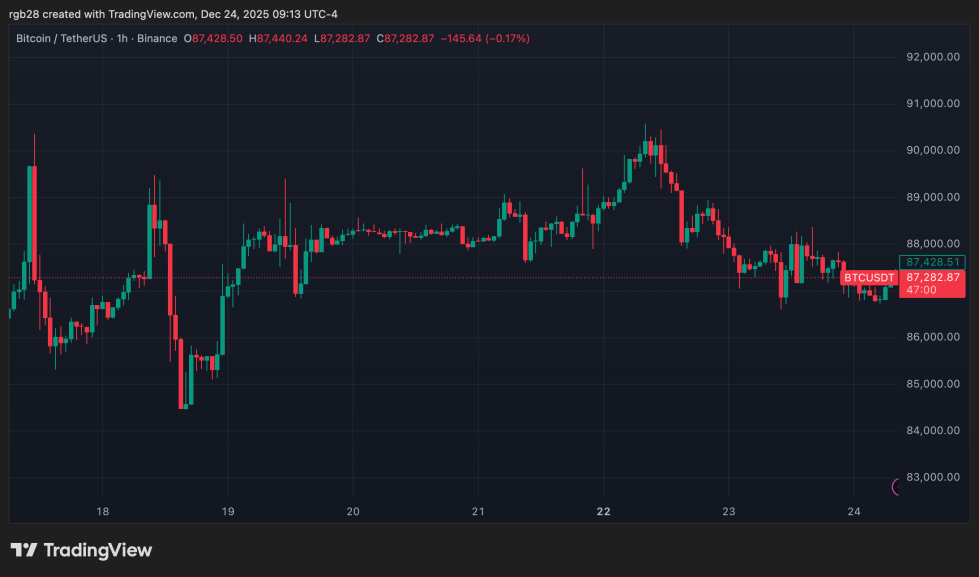
Bitcoin (BTC) trades at $87,282 in the one-week chart. Source: BTCUSDT on TradingView


Related Questions

QWhat are the two major Russian exchanges that have expressed support for the Central Bank of Russia's new crypto regulatory framework?

AThe Moscow Exchange (MOEX) and the SPB Exchange.

QWhat is the maximum amount of crypto that non-qualified investors in Russia will be allowed to purchase annually under the new rules?

ANon-qualified investors will be allowed to purchase up to 300,000 rubles (approximately $3,800) annually.

QBy what date are the Central Bank of Russia's proposed crypto rules expected to take effect?

AThe proposed rules are expected to take effect by July 2026.

QAccording to the framework, through what types of entities must crypto transactions be conducted?

ATransactions must be conducted through already licensed platforms, including exchanges, brokers, and trust managers.

QWhat did First Deputy Chairman Vladimir Chistyukhin say is 'fundamentally important' for Russian financial authorities regarding digital assets?

AHe stated that it is 'fundamentally important' to legitimize the digital assets sector and ensure that it is compliant with the law.

Related Reads

You Bet on the News, the Pros Read the Rules: The True Cognitive Gap in Losing Money on Polymarket

The article explains that the key to profiting on Polymarket, a prediction market platform, lies not just predicting real-world events correctly, but in meticulously understanding the specific rules that govern how each market will be resolved. It illustrates this with examples, such as a market on Venezuela's 2026 leader, where the official rules defining "officially holds" the office overruled the intuitive answer of who was in practical control. Other examples include debates over the definition of a "token" or what constitutes an "agreement." The core argument is that a "reality vs. rules" gap creates pricing discrepancies that savvy traders ("车头" or "whales") exploit. The platform has a formal dispute resolution process managed by UMA token holders to settle ambiguous outcomes. This process involves proposal submission, a challenge window, a discussion period, and a final vote. However, the article highlights a critical flaw in this system compared to a traditional court: the lack of separation between the arbiters (UMA voters) and the interested parties (traders with financial stakes in the outcome). This conflict of interest undermines the discussion phase, leads to herd mentality, and results in opaque final decisions without explanatory rulings. Consequently, the system lacks a body of precedent, making it difficult for users to learn from past disputes. The ultimate takeaway is that success on Polymarket requires a lawyer-like scrutiny of the rules to identify and capitalize on the cognitive gap between how events appear and how they are contractually defined for settlement.

marsbit1h ago

You Bet on the News, the Pros Read the Rules: The True Cognitive Gap in Losing Money on Polymarket

marsbit1h ago

Trading

Spot
Futures

Hot Articles

Discussions

Welcome to the HTX Community. Here, you can stay informed about the latest platform developments and gain access to professional market insights. Users' opinions on the price of S (S) are presented below.

活动图片