On August 9th, OpenAI's AI browser, ChatGPT Atlas, officially reached its end of life.
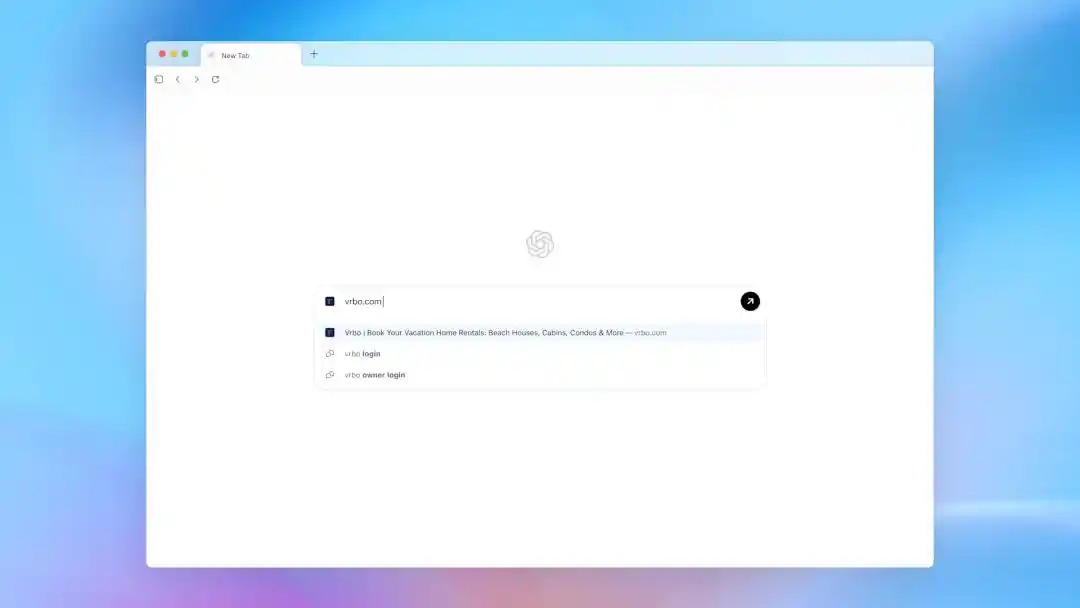
From its release on October 21, 2025, to its shutdown on August 9, 2026, Atlas existed for a total of 292 days. In less than a year, this product, once seen as OpenAI's direct challenge to Chrome and the AI browser ecosystem, concluded its independent browser journey.
However, what OpenAI abandoned was the Atlas product form itself, not the browser Agent concept. The capabilities explored by Atlas are transitioning to the ChatGPT desktop application, Chrome extensions/sidebar, and continuing integration with ChatGPT and Codex.
The 292 Days of Atlas
Like many AI browsers that emerged at the time, Atlas attempted to redesign the way humans interact with browsers.

Users could directly ask ChatGPT questions in the address bar; the Ask ChatGPT sidebar could read the current webpage for summarization, analysis, and writing; Browser Memories could retain context based on browsing history; Agent Mode further granted operational capabilities, allowing it to open tabs, click, type, and perform multi-step tasks like shopping, booking, and research.
In its underlying architecture, OpenAI still used Chromium, but built an additional OWL (OpenAI Web Layer), separating the Chromium browser process from the native UI rebuilt with SwiftUI, AppKit, and Metal.
Therefore, Atlas's goal from the start wasn't merely "adding an AI assistant to a browser," but enabling ChatGPT to directly participate in browsing, understand context, and further operate on webpages.
However, after the product launch, OpenAI quickly encountered a more fundamental problem: building a full-fledged browser involves far more than just implementing AI.
In late October, OpenAI successively fixed issues with Japanese/Korean IME, history deletion confirmation, 1Password, extension buttons, and pop-ups; in November, vertical tabs, Google default search, extension import, and iCloud Passkeys were added.
Entering 2026, Atlas continued to patch capabilities like website data migration, Tab Groups, Auto Search, Saved Prompts, DevTools, and multiple Profiles.
These updates reflected that maintaining a browser meant OpenAI not only had to solve model and Agent problems but also had to handle a large number of fundamental capabilities that mature browsers already possessed, such as extensions, passwords, cookies, logins, input methods, developer tools, and security updates.
Meanwhile, the core Agent experience of Atlas was not stable either.
The Verge's early testing found that Atlas showed instability in search results, location understanding, and Agent execution speed. In one Amazon cart addition task, Atlas took about 10 minutes, while Perplexity Comet in the same test took about 2 minutes.
Subsequent horizontal tests of multiple AI browsers also showed that as task flows became longer, Agents often still required continuous user checking and intervention. In other words, it could already perform some operations for the user, but there was still a noticeable distance from truly reliably "taking over tasks."
Security issues were even more fundamental.
On one hand, a browser Agent can read webpage content; on the other, it can execute operations on websites where the user is already logged in. This makes the risk of Prompt Injection more direct than with ordinary chatbots.
Malicious instructions can be hidden in webpages, emails, or other content. If an Agent cannot accurately distinguish between "instructions genuinely given by the user" and "instructions a webpage attempts to induce the model to execute," it could take actions without the user's knowledge.
OpenAI acknowledged at Atlas's launch that this type of attack could not be completely prevented. In December 2025, the company publicly released a method using reinforcement learning to train attack and defense models and stated that Prompt Injection might be a problem requiring continuous resolution over many years.
Just before Black Hat 2026, Zenity's research could still induce some AI browser products to operate logged-in WhatsApp and Amazon pages. However, the research also noted that among the tested products, Atlas had set relatively more security boundaries.
Beyond reliability and security, Atlas faced a more practical problem: its platform coverage always remained limited.
At launch, the product only supported Apple Silicon Macs. OpenAI had stated that Windows, iOS, and Android versions would follow, but Atlas never formed a complete, public multi-platform version before shutdown.
This was particularly detrimental for a product attempting to challenge mainstream browsers.
More troublesome was that Atlas faced Chrome and Edge, which have massive existing user bases. Google and Microsoft could directly layer AI capabilities onto their existing browsers, while Atlas first had to convince users to enter a new browsing environment.
For users to switch browsers meant migrating bookmarks, extensions, passwords, cookies, login states, and usage habits formed over years. The new browser not only had to be "better," but significantly better to offset these migration costs.
As of July 2026, StatCounter data showed Chrome's global market share still at 68.22%, Safari at 16.47%, and Edge at 5.37%. Products like Atlas, Comet, and Dia had not even entered the independent statistical classification for major browsers.
Entering 2026, Atlas's update focus gradually concentrated on Agent, memory, and workflows. In January, Tab Groups and Auto Search were added; February saw the addition of Saved Prompts, personalized quick actions, and the ability to automatically organize tabs based on Browser Memories; on February 24th, the official team specifically optimized the Agent's continuous execution capability in long tasks.
On March 10th, Atlas released Build 1.2026.63.7, which was also the last public feature update in the official Release Notes. In April, media began reporting that OpenAI planned to further integrate ChatGPT, Codex, and Atlas.
On July 9th, OpenAI officially announced Atlas would be taken offline, providing about a 30-day migration period.
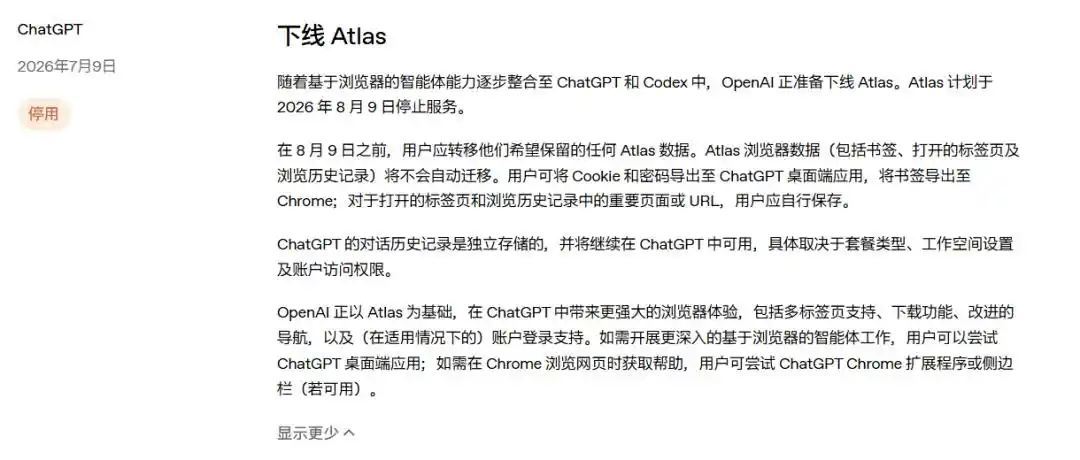
On August 9th, Atlas stopped working.
With this, OpenAI ended this independent AI browser experiment, but the issues Atlas represented did not conclude with it.
Do We Really Need AI Browsers?
AI browsers were once hot, roughly forming two types of approaches.
One type consists of independent products like Atlas, Comet, Dia, Neon, and Fellou.
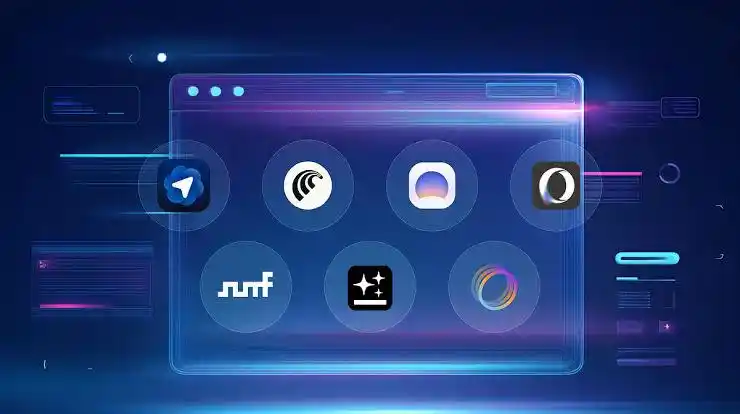
Image source: Medium
Their common idea is to redesign AI interaction from the browser itself. AI is no longer just a sidebar attached to a webpage, but something that can read the current page, understand multiple tabs, remember browsing context, and further click, fill, and execute tasks for the user.
Perplexity's Comet is one of the relatively complete representatives currently. It already covers Mac, Windows, iOS, and Android and extends Perplexity's original search and citation capabilities further into browsing scenarios like email, shopping, research, and travel.
Dia emphasizes the connection between webpages, tabs, and work context more, rather than simply pursuing Agent automation. In September 2025, Atlassian acquired The Browser Company for $610 million in cash, after which Dia continued developing towards a knowledge work browser.
Opera Neon and Fellou emphasize task execution more. Neon integrates Tasks, Agent, and code generation into the browser; Fellou focuses on Deep Action, automatic research, and programmable Agent workflows.
The advantage of this route is direct: since AI needs to understand webpages, tabs, cookies, login states, and the user's ongoing tasks, designing from the browser layer theoretically allows for more complete context and makes it easier to integrate Agent as part of the browsing experience.
However, the Atlas experience has already shown that maintaining a browser from scratch is an engineering burden far exceeding AI feature development. More importantly, independent AI browsers must also cross another threshold: why should users switch browsers?
For people with established browsing habits, migration costs are real. Therefore, a new AI browser cannot just be the old browser "with a few more AI features"; it must provide a sufficiently large experiential leap for users to be willing to rebuild their browsing environment.
This is the structural challenge independent AI browsers face.
The other type is the AI-fication of existing browsers like Chrome, Edge, Brave, QQ Browser, and 360.
Google integrates Gemini into Chrome, continuing to add multi-tab understanding, Google Apps context, and automatic browsing capabilities.

Microsoft is advancing Copilot Mode in Edge.
Brave is testing Agentic Browsing on its existing browser base; QQ Browser and 360 AI Browser have also adopted similar approaches, adding AI search, webpage understanding, and Agent capabilities to their original products.
Compared to building a browser anew, the biggest advantage of this route is that users incur almost no migration costs. Existing extensions, passwords, account systems, and workflows can be retained, and AI capabilities only need to be gradually layered on top of the existing product.
This also makes one question increasingly clear: what do users really need, an "AI browser" or AI in their browser?
If the core needs are merely summarizing webpages, cross-tab queries, assisted search, and writing, then sidebars, plugins, or native browser functions can already accomplish most of the work. Even entering the Agent stage, where AI can click webpages, fill forms, and complete cross-site tasks, these capabilities don't inherently require users to install a brand-new browser.
Therefore, what independent AI browsers truly need to prove is not that "AI can be placed in a browser," but that they can provide experiences that are difficult for existing browsers to achieve by merely layering on AI features.
For example, more complete long-term context, deeper task management, or rethinking tabs, permissions, and workflows from the ground up around the Agent.
Atlas did not prove this was enough to drive mass user migration, but products like Comet, Dia, and Neon continue to try.
Currently, it seems AI entering browsers has almost become a common direction.
Do you usually use AI browsers?
This article is from the WeChat public account "Machine Heart" (ID: almosthuman2014), author: Following AI