Author: Ma He, Foresight News
Original Title: Under the Quantum Threat, Are Privacy Coins About to Break the "Last Dance" Curse?
Privacy coins use zero-knowledge proofs, ring signatures, or coin mixing technology to ensure untraceable transactions. Against the backdrop of increasing global regulation, they have become the preferred choice for investors seeking refuge and privacy.
Starting from September 2025, the privacy coin sector began to break away from the broader market's slump and entered an accelerated upward trend.
Taking ZEC, the leading coin in the privacy sector surge, as an example, its price was around $50 in October 2025. Within just 2 months, it broke through $700, yielding a return of over 12 times.
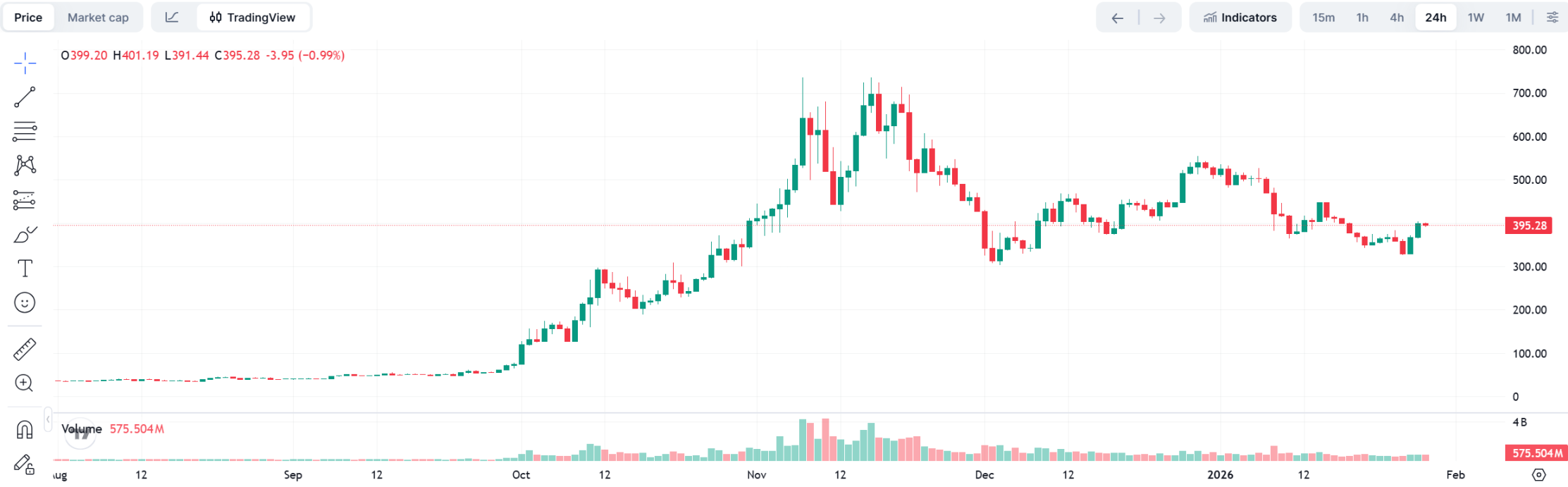
This trend is not an isolated case but a sector-wide explosion.
On November 18th, after the ZEC halving event, which reduced the block reward from 3.125 coins to 1.5625 coins, the price experienced short-term fluctuations before starting to decline and hover erratically.
Monero (XMR), the "big brother" of privacy coins, also showed a strong performance. From around $300 at the end of 2025, it skyrocketed to a high of $800, setting a new historical record.
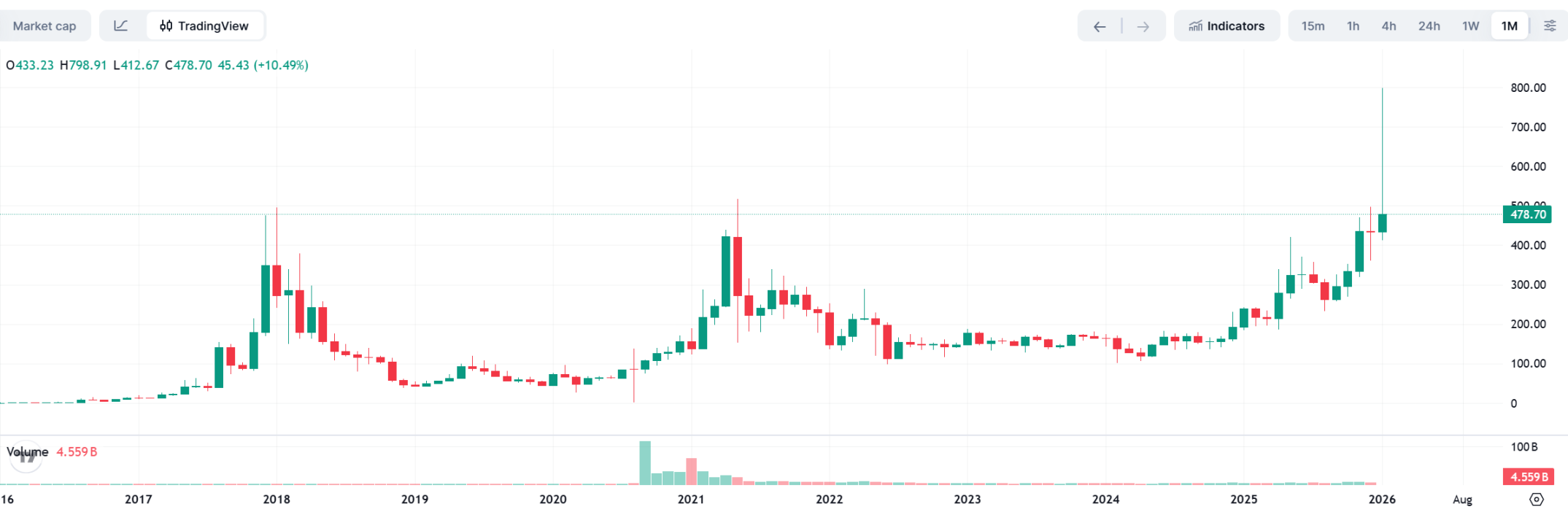
Unlike ZEC's halving-driven rise, XMR's increase relies more on its inherent decentralized nature and actual adoption rate. Despite being delisted from 73 exchanges previously, XMR's transaction volume grew against the trend, with a single-day mixing volume of stolen BTC reaching $282 million, proving the reliability of its privacy technology.
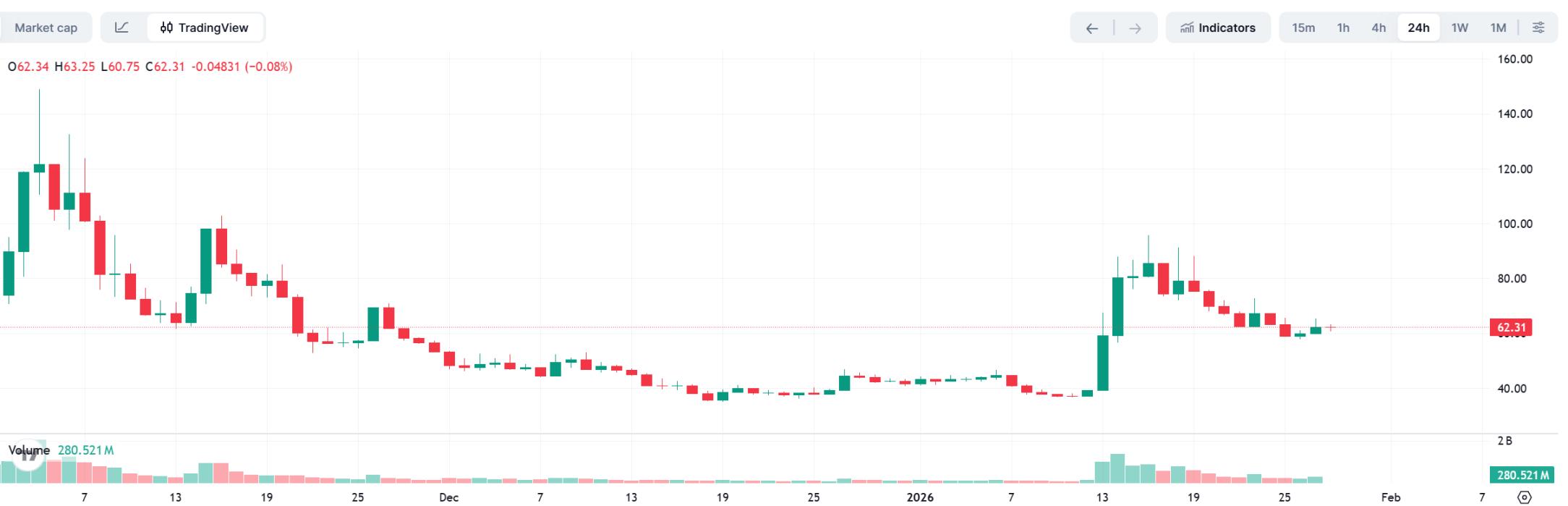
Another privacy coin, DASH, rose from nearly $20 to a high of $150, an increase of over 7 times, and has currently pulled back to $62.
Quantum Computing Threat and the Rise of the Privacy Narrative
The potential threat of quantum computing to Bitcoin became a significant catalyst for the surge in privacy coins from late 2025 to early 2026. Although experts generally believe that quantum computers cannot practically crack Bitcoin's ECDSA signature algorithm by 2026, this risk has already sparked market panic, driving capital away from BTC and towards privacy coins with better quantum resistance.
According to a report by Grayscale Research, although quantum computing is seen as a "false threat to the 2026 market," it amplified investors' concerns about exposed Bitcoin public keys in Q4 2025, leading institutional funds to reassess risk exposure and shift towards coins like ZEC and XMR. These privacy coins use zero-knowledge proofs and ring signature technology, which can better resist Shor's algorithm attacks and theoretically provide higher long-term security.
A CoinDesk report showed that the quantum upgrade discussed at the Bitcoin developer conference in December 2025 would take 5-10 years. During this window, whale investors moved hundreds of millions of dollars from BTC to privacy coins.
Secondly, market rotation and the amplification effect of capital inflows. In Q4 2025, the overall crypto market corrected, but privacy coins rose against the trend, attracting whales and large funds. BitMEX co-founder Arthur Hayes heavily invested in ZEC through the Maelstrom fund, calling it the "next BTC."
Additionally, multiple hacking incidents in 2025 (involving billions of dollars in theft) prompted funds to turn to privacy coins: stolen BTC was quickly converted to XMR, with a single-day mixing volume reaching $282 million. A CoinDesk report pointed out that 80% of privacy coins rose in 2026, with 14 out of 18 coins doubling in market capitalization.
Arthur Hayes warned that the "quantum ghost" would accelerate the privacy supercycle, predicting that ZEC and XMR would attract more hedging funds in 2026.
With the strong rise of privacy coins, some investors are happy while others are worried. Past market trends have often seen privacy coins gradually fade after their "last dance."
Wintermute stated that BTC's current price range shows fatigue, but the market structure is not bearish; instead, it is in a stalemate. The $85,000 support level has been tested multiple times—it is either a solid bottom or a trap waiting to be sprung. Although U.S. fund flows show net outflows and volatility continues to compress, this support level has held, indicating buying interest below (albeit mild). Gold is playing the role that Bitcoin should be playing. The stock market is waiting for earnings reports to validate valuation rationality. Bitcoin is stuck in "no man's land"—not weak enough to break support, nor strong enough to regain upward momentum. The macro environment is poised for a trending move, but the crypto market has been slow to follow.
This situation could change due to a reversal in ETF fund flows or shifts in the U.S. dollar's movement. If the Federal Reserve intervenes in the yen exchange rate and the dollar continues to weaken, it will become a clear catalyst for risk assets. If the "Magnificent Seven" tech stocks report better-than-expected earnings and the AI narrative continues to develop, it will drive the Nasdaq index higher, thereby boosting the crypto market. Conversely, if Powell sends hawkish signals or tariff conflicts escalate, the $85,000 support level will face severe tests. A 60-day consolidation period combined with such密集的事件风险, the market will eventually choose a direction.
If BTC's trend can stabilize and recover, privacy coins may perform well driven by the broader market.
Twitter:https://twitter.com/BitpushNewsCN
Bitpush TG Discussion Group:https://t.me/BitPushCommunity
Bitpush TG Subscription: https://t.me/bitpush