On May 15, 2026, Pope Leo XIV signed his name on a document spanning over forty thousand words. That day marked exactly the 135th anniversary of the release of the encyclical "Rerum Novarum" by Pope Leo XIII. Signed in 1891, that document was the Catholic Church's first formal response to the impact of the Industrial Revolution on the labor order.
Ten days later, on May 25, 2026, Leo XIV personally attended a press conference, formally promulgating this encyclical titled "Magnifica Humanitas" to the world. This is the first encyclical in the history of the Catholic Church to focus on artificial intelligence as its core theme. At this press conference, besides cardinals and theology professors, there was also Chris Olah, co-founder of Anthropic.
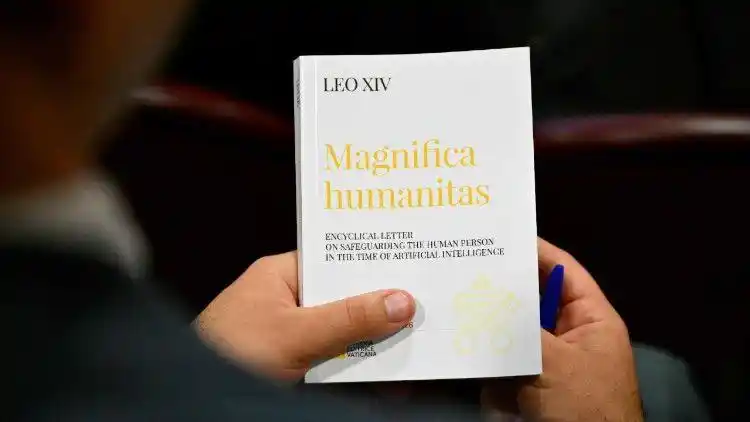
(Image source: Vatican News)
Many find it absurd. AI is science; the Church is theology. While the two disciplines have their own moral concerns, they never seemed to sit at the same table. Having the Vatican talk about algorithms is like asking a weather bureau to judge philosophy—completely unrelated.
However, upon a detailed reading of the "Magnifica Humanitas" encyclical, Lei Technology discovered that this time the Vatican did not use "God" to interpret AI from a lofty position. Instead, it engaged more down-to-earth, discussing topics like war, employment, education, healthcare, and public decision-making—topics the public often struggles to delve into deeply. We have distilled ten core viewpoints from the encyclical to see what the Pope actually said and what it means.
The Ten Viewpoints of the Encyclical, Hitting the Core of People's AI Anxieties
"Magnifica Humanitas" (Sublime Humanity) exceeds forty thousand words, covering war, employment, education, healthcare, information, and public decision-making—touching on almost all current AI controversies. However, it is essentially not a technical document but a moral checklist. It doesn't tell you how to train models; it asks: Whom is AI serving, who is responsible, and who is being left behind? We have extracted ten viewpoints most directly relevant to China's current reality from the encyclical, along with detailed interpretations.
1. AI Is Not the Enemy, But It Has Entered Daily Decision Systems
Technology itself is not the enemy of humanity, but emerging technologies have embedded themselves into daily life and have begun influencing decision-making processes and social imagination.
Leo XIV's attitude is exactly as he wrote. He does not want to label AI as a 'dangerous technology' but describes a change that has already occurred: AI is no longer just a tool but is gradually becoming the environment.
In the past, you had to actively open software to use a technology; now, many AI decisions happen in the background, and users may not even know they have already been assessed by a system. In China, short-video platforms use algorithms to decide content distribution; e-commerce platforms use algorithms to rank products; recruitment platforms perform job matching; office software summarizes meetings and generates documents; educational platforms grade homework and analyze learning situations. Ordinary people might think they only occasionally ask large models, but the real change is that AI has already intervened before they make choices.

(Image source: Lei Technology chart)
Many people might still be thinking or 'resisting' the AI wave by not using AI themselves, but in reality, AI large models have already penetrated our lives deeply. Almost no one can truly escape.
2. The AI Issue Isn't Just About Regulation, But Who Wields Technological Power
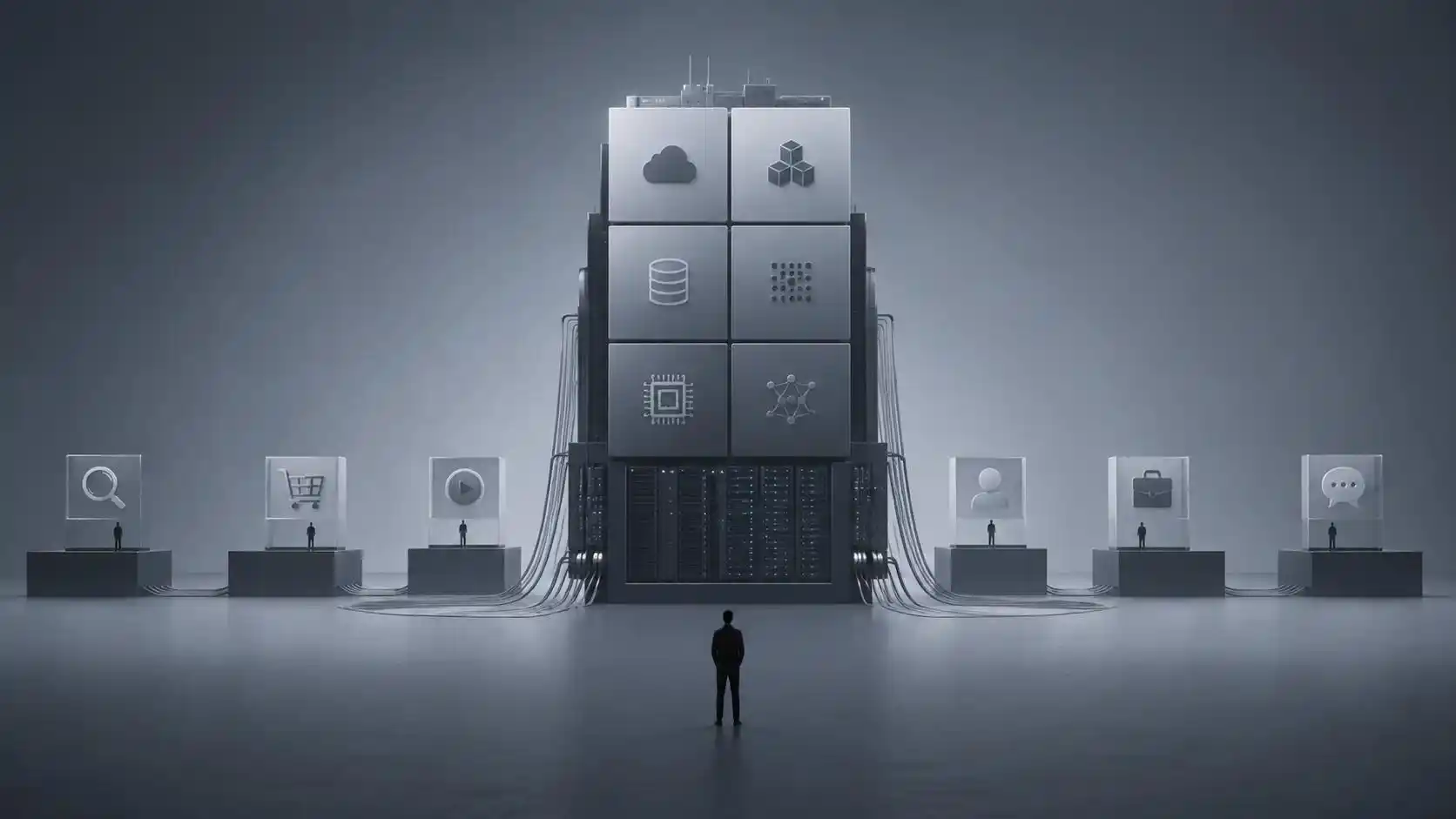
The problem is not limited to regulation. Many of the key actors driving technological development today are private institutions with transnational capabilities and immense resources.
Many AI discussions stop at 'whether to regulate.' But the encyclical probes deeper: Who exactly holds technological power? In my view, this is the sharpest point in the entire 40,000-word encyclical and a question the entire industry struggles to answer perfectly.
In the AI era, power comes not only from model parameters but also from computing power, data, cloud platforms, access points, and workflows. For example, Baidu has search and intelligent cloud; Alibaba has cloud and the Tongyi system; Tencent has WeChat, Enterprise WeChat, and office collaboration; ByteDance has content distribution and Feishu; DingTalk and WPS are also embedding AI into enterprise processes. A small or medium-sized enterprise wanting to develop an AI application often cannot bypass APIs, cloud services, model licensing, and platform rules.
(Image source: Lei Technology chart)
In my view, AI industry competition appears to be about model capability, but at its foundation, it's about control over infrastructure. Whoever can integrate AI into workflows for office work, search, content, transactions, and enterprise management is not just selling tools but reshaping the next generation of digital infrastructure. This is why the question of 'who to regulate' is so difficult to answer.
3. AI Is Powerful, But Even Developers Cannot Fully Explain It
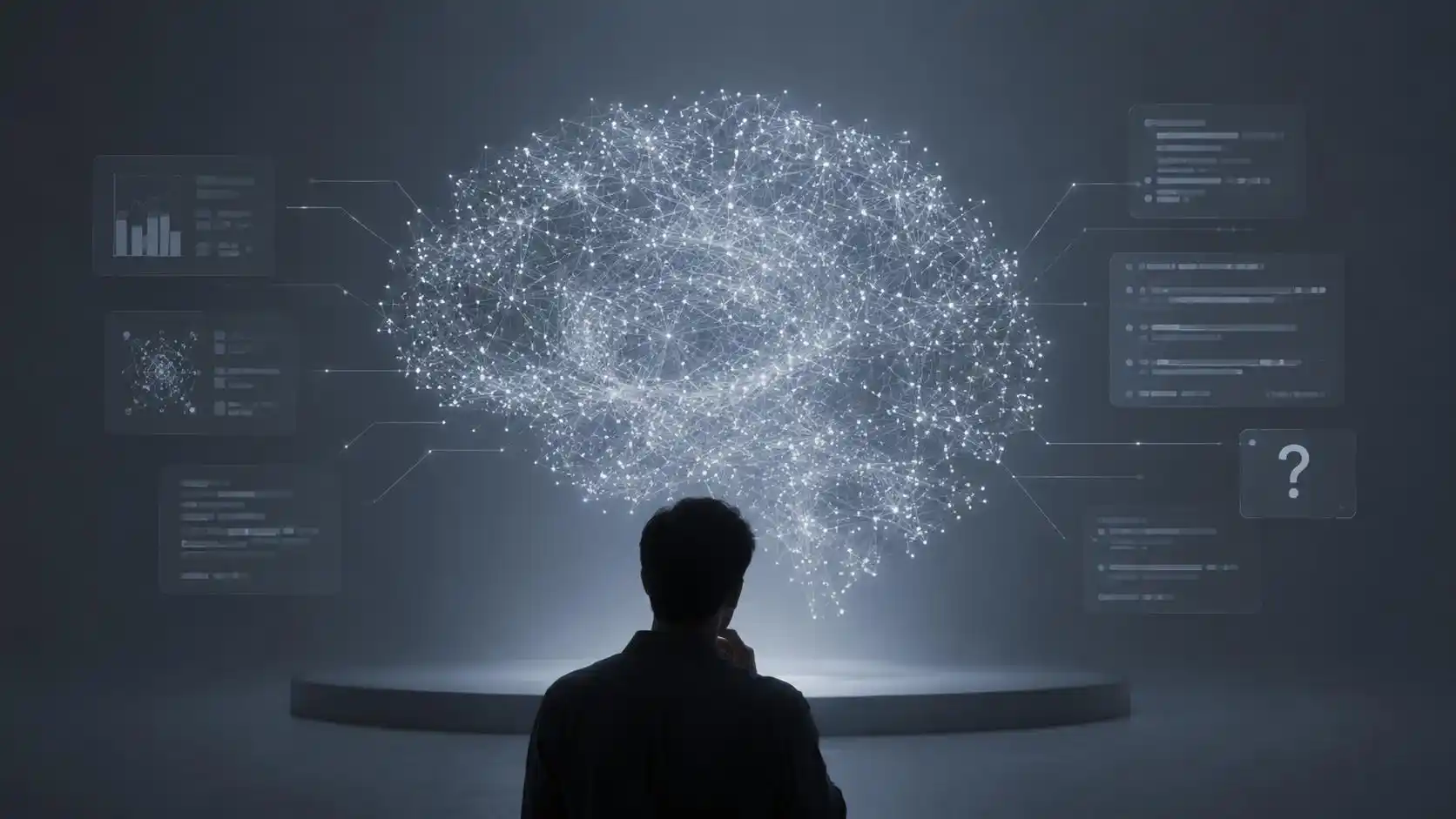
AI offers many astonishing possibilities, but even its designers have limited understanding of the internal mechanisms of generative AI systems.
Over the past year, domestic enterprises' attitudes towards large models have shifted from 'must adopt AI' to 'which areas can we safely delegate to AI?' Customer service, marketing copywriting, meeting minutes, code assistance, and knowledge base Q&A are relatively easy to implement because error costs are controllable and human modification is convenient. However, financial risk control, medical diagnosis, legal review, and government services are different. In these scenarios, AI cannot just provide a seemingly correct answer; it must also explain its reasoning, retain logs, support audits, and allow for human takeover when necessary.
(Image source: Lei Technology chart)
Now, many enterprises procuring AI products no longer just look at how powerful the model is. They also consider data isolation, permission systems, on-premises deployment, and audit tracking capabilities. This change indicates one thing: the next threshold for enterprise AI is not whether it can generate but whether it can be held accountable. The more a model resembles an expert, the more users need to know when it might be unreliable.
4. AI Must Not Be Treated as Human Intelligence, Nor as a Moral Agent
AI is not a pile of data but a subject possessing freedom, relationships, and moral responsibility.
Now, many AI products strive to become 'more human-like.' They comfort, act coquettishly, remember preferences, and maintain long-term relationships with users. CCTV reported on a reminder from the Jiangsu Consumer Council about risks associated with AI companions, including privacy leaks, consumption traps, and emotional dependency. Xin Kuai Bao also reported on platforms like "Xingye" and "Cat Box," where young people pay to 'exclusively own' virtual lovers' AI characters. After popular characters are bought out, other users collectively experience 'heartbreak.'

(Image source: Lei Technology chart)
This actually shows users are not buying a piece of code; they are investing real emotions. AI companionship is not inherently wrong; it does fulfill needs for loneliness and companionship. But products must clearly define boundaries. AI can simulate relationships but cannot bear the responsibilities inherent in real relationships. This isn't moral preaching but a boundary that should be seriously considered at the product design level, especially when targeting minors, the elderly, and emotionally vulnerable individuals.
5. AI Decisions Are Affecting Employment, Healthcare, Welfare, and Justice
Employment, welfare, judicial, and medical decisions—sensitive choices—may be influenced by data systems. Therefore, mechanisms for transparency, accountability, and human oversight are essential.
Recruitment is the scenario where ordinary people most easily feel the pressure of AI decisions. First Financial reported that BOSS Zhipin is testing an end-to-end AI recruitment Agent called "DeepHire," covering AI resume polishing, automatic application submission, batch resume parsing on the enterprise side, automatic replies, and intelligent interview scheduling. AI entering the recruitment process certainly improves efficiency; HR is no longer overwhelmed by massive resumes, and job seekers can better present their experiences. But the problem lies here: if resumes are first batch-parsed, scored, and sorted by AI, job seekers might be filtered out by the system before ever being seen by a human.
My view is that AI can assist in screening but should not leave job seekers facing a completely black-box rejection. At the very least, when affecting hiring decisions and interview opportunities, platforms should retain human judgment, clearly mark AI-generated content, and provide necessary appeal channels. This is not limiting AI but leaving a door open for those rejected by the system. Similar dilemmas exist for beneficiary decisions in welfare agencies and judicial determinations of illegal acts.
6. Morally Defined by a Few Is Insufficient; AI Resources Should Serve the Common Good
If ethical standards are defined by only a few, then even more ethical AI is insufficient. Data, knowledge, science, and technology should serve the common good.
Making AI public does not mean demanding all models be free or excluding commercial companies. It means preventing the definition, use, and benefit rights of AI from becoming overly concentrated. This is similar to the ongoing debate about open-source versus closed-source models.
Models like Tongyi Qianwen and DeepSeek continue to open some of their capabilities. Smart computing centers across regions and core nodes of the National Supercomputing Internet also emphasize inclusive computing power and open-source model ecosystems. Abroad, initiatives like NAIRR (National AI Research Resource) aim to provide computing power, data, and model resources to universities, research institutions, and small teams.
I believe that if only a few companies can train models, access computing power, and control high-quality data, while ordinary entrepreneurs, SMEs, and university teams can only work on peripheral applications, AI will instead create new digital divides. A truly healthy AI ecosystem should allow more people to participate, not just wait for tech giants to open a few APIs. In this regard, China's current AI environment is relatively more open, with companies like Alibaba and DeepSeek providing assistance to universities and SMEs.
7. Truth Is a Public Good; AI Amplifies Misinformation and Cognitive Manipulation
Misinformation did not originate with AI, but AI enables it to be more massive, persuasive, and harder to distinguish from genuine dissemination.
This is an age-old problem. Ultimately, it's not about whether AI has hallucinations, but that the cost of using AI for fabrication has become very low.
CCTV reported cases of people using AI to fabricate fake news like "Yichang, Hubei Tour Boat Capsizes," accompanied by AI-processed fake images. In Dali, Yunnan, AI was used to create fake traffic accident scene videos. After an earthquake in Kuqa, Xinjiang, self-media used AI to generate images and audiovisuals inconsistent with the real disaster, publishing false information like "collapsed houses." Images, videos, and so-called on-scene descriptions can all be generated together, making it harder for ordinary people to distinguish.

(Image source: Lei Technology chart)
The state has already issued the "Measures for Labeling AI-Generated and Synthesized Content," requiring labeling of such content. Platforms are also improving their ability to detect fakes. But I believe this is not the end. In the AI era, what is truly scarce is not content but trustworthy content. The more content proliferates, the more important its source becomes.
8. AI Education Must Not Just Teach Tool Use; It Must Preserve Questioning and Judgment
AI education cannot be reduced to technical training. Schools should still cultivate the ability to question, relate, and think critically.
Regarding this part, China is actually at the forefront globally. For example, in 2025, the Ministry of Education released the "Guidelines for General AI Education in Primary and Secondary Schools" and the "Guidelines for the Use of Generative AI by Primary and Secondary School Students." The former emphasizes a tiered, progressive AI general education system, while the latter clarifies usage norms and safety boundaries for each educational stage.
However, if AI education merely teaches students to write prompts and get answers from models, it cultivates not intelligent societal abilities but more proficient dependency. Nowadays, students use AI to write essays, solve problems, and create PPTs; teachers use AI to generate lesson plans, test questions, and comments. Efficiency improves, but the thinking process may be compressed.
Therefore, I also agree with this viewpoint in the encyclical: AI in educational settings should be a tool, not a ghostwriter. Truly good AI education is not about getting answers faster but about enabling students to ask better questions, verify, compare, and express—in other words, learning the thinking process is more important than learning how to get AI to provide solutions directly.
9. AI Will Reshape Labor, But Work Is Not Just About Efficiency
AI can enhance productivity by taking over routine repetitive tasks, but work is also an important place for human development and social participation.
Currently, the attitude of global enterprises towards AI deployment is very uniform: "reducing costs and increasing efficiency," which has become a standard move in almost every industry. But the question is whether AI is augmenting humans or replacing them—this has always been a source of anxiety about AI. If AI in the office merely enables employees to complete reports and meeting minutes faster, it can improve work efficiency, and employees can have more free time for personal activities after finishing work. But if enterprises only use AI to compress positions, lower wages, and strengthen monitoring, it creates new insecurity.
In fact, a healthy AI workflow should allow employees to shift towards judgment, communication, creation, and complex problem-solving, not turn them into repair workers for model outputs.
10. Irreversible Life-and-Death Decisions Cannot Be Entrusted to AI
Lethal or other irreversible decisions should not be delegated to automated systems. Human judgment and moral responsibility cannot be reduced to calculation.
On the surface, this talks about military AI, but it equally applies to all high-risk scenarios like autonomous driving, medical emergencies, industrial robots, and security systems.
Commercialization of intelligent driving in China is rapid. Automated parking, unmanned delivery, and unmanned mining trucks are accelerating deployment. Users care about experience; enterprises care about cost and scale. But once an accident occurs, questions immediately arise: Was it the user's failure to take over in time, or a system misjudgment? An algorithm issue or a sensor problem? The automaker's responsibility or the driver's? Medical AI is similar. It can indeed assist in reading scans, triage, and generating medical records, but it cannot make irreversible judgments without a doctor being responsible.
High-risk scenarios cannot only emphasize the level of intelligence; they must also clarify human supervision, emergency takeover, accident review, and the chain of responsibility. So-called "disarming AI," in an industrial context, means not allowing technological capability to cross the boundary of responsibility.
40,000 Words, 10 Viewpoints: The Pope Wants to Say One Thing
After dissecting this 40,000-word encyclical, Lei Technology believes the Pope essentially wants to clarify one thing from start to finish: technology is not neutral.
Simply put, what AI looks like depends on who builds it. ChatGPT designed by OpenAI, Gemini created by Google, Doubao built by ByteDance—each has its own "preferences and biases." Whose values enter the training data, whose interests determine the product direction, who controls computing power and access points, who formulates the so-called "ethical frameworks"—all these are becoming part of the experience we feel daily when interacting with AI.
For example, when AI enters recruitment, the screening logic is defined by the platform, and job seekers don't know by what criteria they are filtered. When AI enters education, what constitutes a 'good answer' is determined by the model, and students' thinking gradually aligns with the model. When AI generates content, what is 'credible' is determined by algorithmic distribution, and misinformation circulates in the guise of truth. Behind each scenario lies the same question: Who is defining these rules, and whom are these rules shaping?
The encyclical does not name any company, but it speaks to all companies. What the Pope wants to highlight is that every AI tool you use is not just a tool but a product of certain value judgments. Sometimes you find an AI useful enough, perhaps because it's sufficiently "obedient to you."
In the document, Leo XIV uses a word almost never appearing in AI discussions: "anthropology." He says the challenge posed by AI is fundamentally not a technological challenge but an anthropological one.
AI can write, create music, generate images, simulate dialogue, and make seemingly reasonable judgments. When machines can do all these, humans are forced to answer a question they have long been able to avoid: What is the meaning of us doing these things? If AI writes more fluent articles, generates more pleasing music, and gives more efficient advice, then what is the value of "humans doing this"?
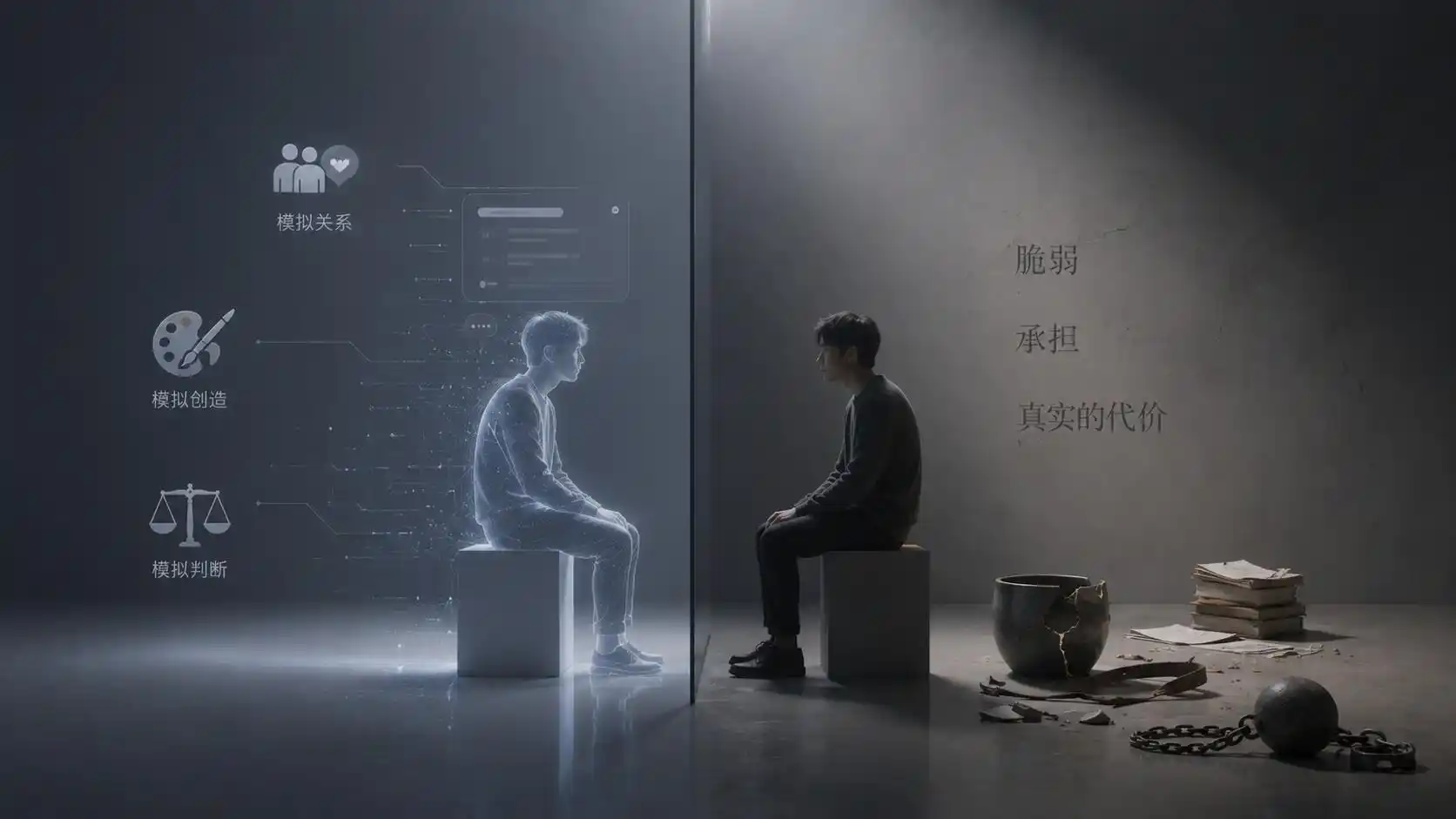
The encyclical contains this passage:
AI can simulate relationships but cannot bear the responsibilities within them; AI can simulate creation but cannot possess the will behind creation; AI can simulate judgment but cannot be accountable for the consequences of judgment. It can achieve the surface, but beneath that surface—the things that make 'human action' meaningful, like vulnerability, commitment, and real cost—it has none.
This makes us think of 1891 when the Catholic Church signed the "Rerum Novarum" encyclical. The Industrial Revolution arrived, and humanity was also experiencing a similarly difficult time. Machines replaced much physical labor but did not replace humans. Humans redefined their position and found things machines couldn't do. This time, the difference is that AI is entering the cognitive domain—creation, judgment. These parts once considered 'uniquely human' are being systematically simulated.
(Image source: Lei Technology chart)
Leo XIV calls this process "the eclipse of the human sense." If we do not seriously answer "what is a human?", AI will answer for us. And its answer comes from training data. As for who provides that training data, that depends on who holds the initiative with large models.
The line in the encyclical, "Technology is never neutral," is correct. But the question immediately following is: Who has the ability to turn the expectation of 'neutrality' into the reality of 'constraint'? Leo XIV does not answer this question, nor can he. What he can do is place a set of moral language into the pool of public discourse, let it circulate, and let it influence those who set rules, deploy technology, and use products. In fact, this has always been what the Church does.
Therefore, this is not absurd. At a time when tech companies, governments, international institutions, and society have yet to find answers, a two-thousand-year-old institution has spoken first.
This article is from "Lei Technology."





















