PIPPIN crashes 44%: How $3.03M liquidations forced a market reset
ambcryptoPublished on 2026-04-05Last updated on 2026-04-05
Abstract
PIPPIN experienced a severe market crash, plummeting over 44% from nearly $0.80 to around $0.035, driven by a liquidation cascade that forced approximately $3.03 million in positions to close—$2.30 million of which were long positions. This sharp decline reflected a shift from expansion to exhaustion, wiping out speculative momentum and triggering a market reset. The price structure weakened, showing lower highs and fading demand throughout March. Currently, PIPPIN is stabilizing near the $0.03–$0.037 support zone, with RSI indicating oversold conditions at 27.9, suggesting reduced selling pressure. The market remains fragile; holding this support could lead to a relief bounce toward $0.15, but failure may result in further downside, extending the reset phase.
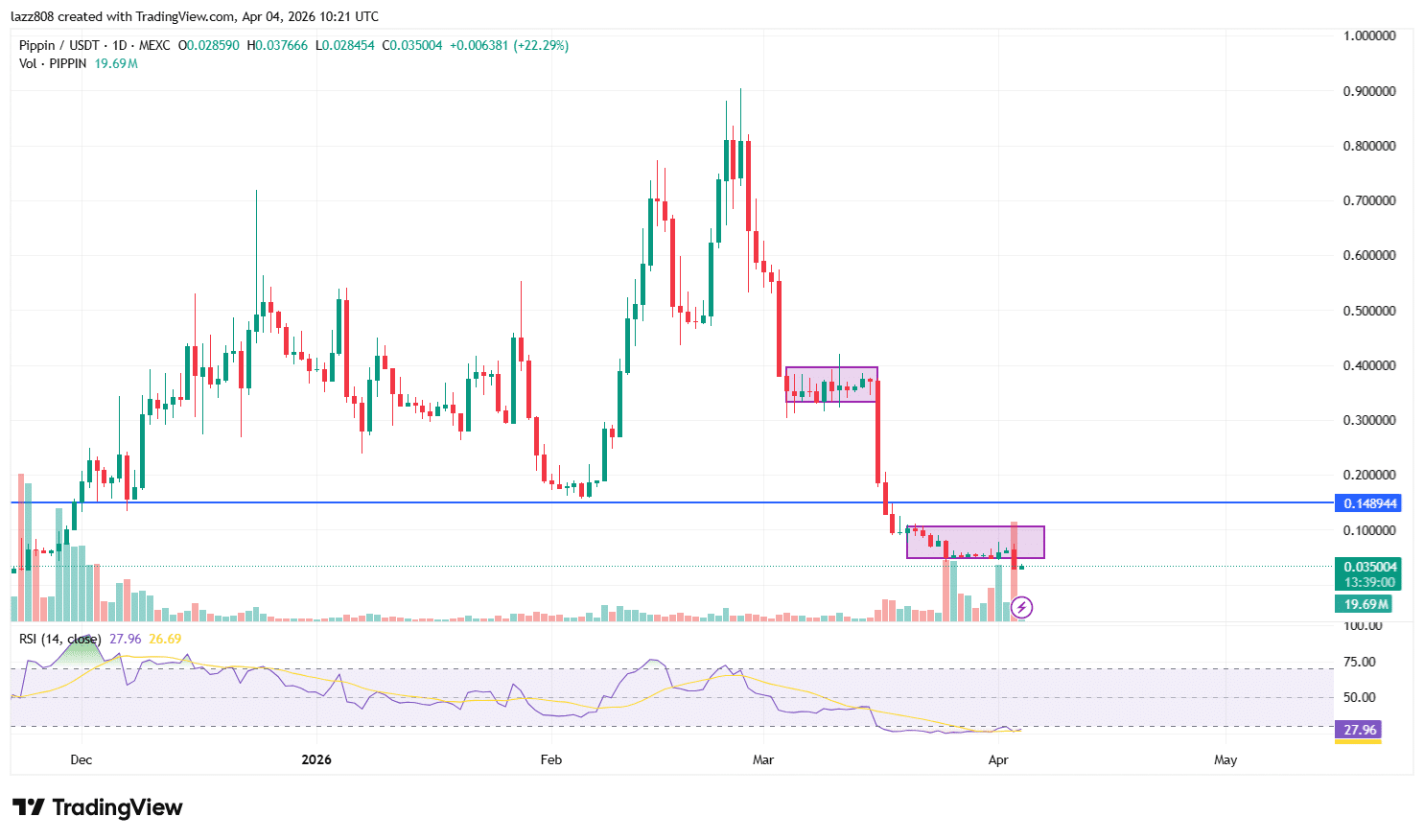
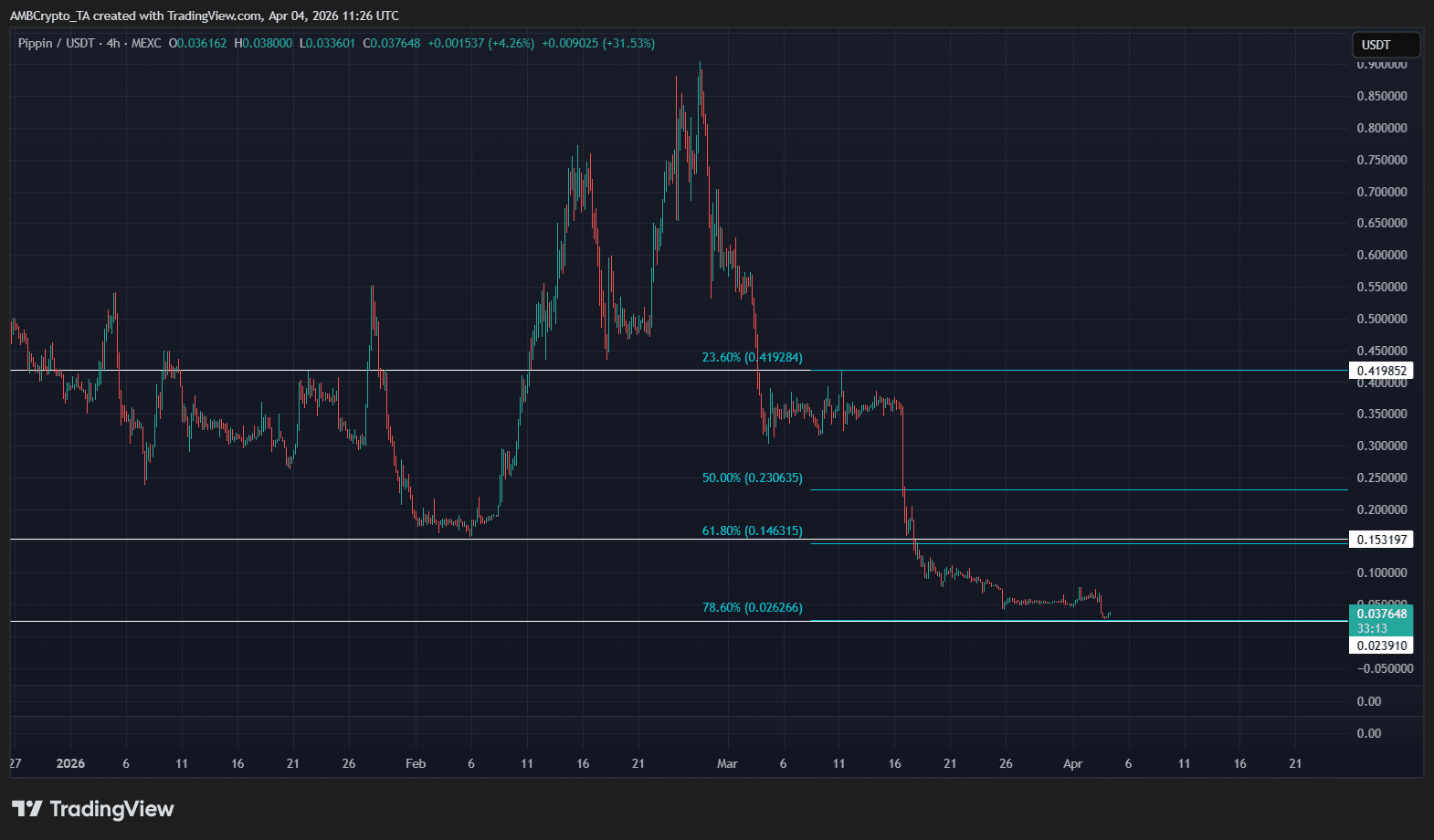
Pippin’s [PIPPIN] market shifted from expansion into exhaustion, as a sharp drop from near $0.80 toward $0.035 signaled a clear liquidity flush. This move exceeded 44% on rising volume, which shows forced exits as speculative momentum unwinds.
As this unfolded, the price structure weakened into lower highs through March, reflecting fading demand. Earlier, a similar consolidation formed around $0.35–$0.40, where the price paused before breaking down sharply. That setup showed how trapped liquidity often builds before a forced move lower.
Source: PIPPIN/USDT on TradingView
Now, the same pattern reappears near $0.035, where price compresses after the drop. This happens because sellers exhaust support while buyers cautiously step in. At press time, RSI was nearing 27.9, signaling oversold conditions, suggesting selling pressure begins to fade.
This creates a fragile balance, where compression reflects indecision. If buyers absorb supply, a relief bounce may follow; however, failure to hold support could trigger another liquidation wave.
Liquidation cascade drives PIPPIN’s breakdown
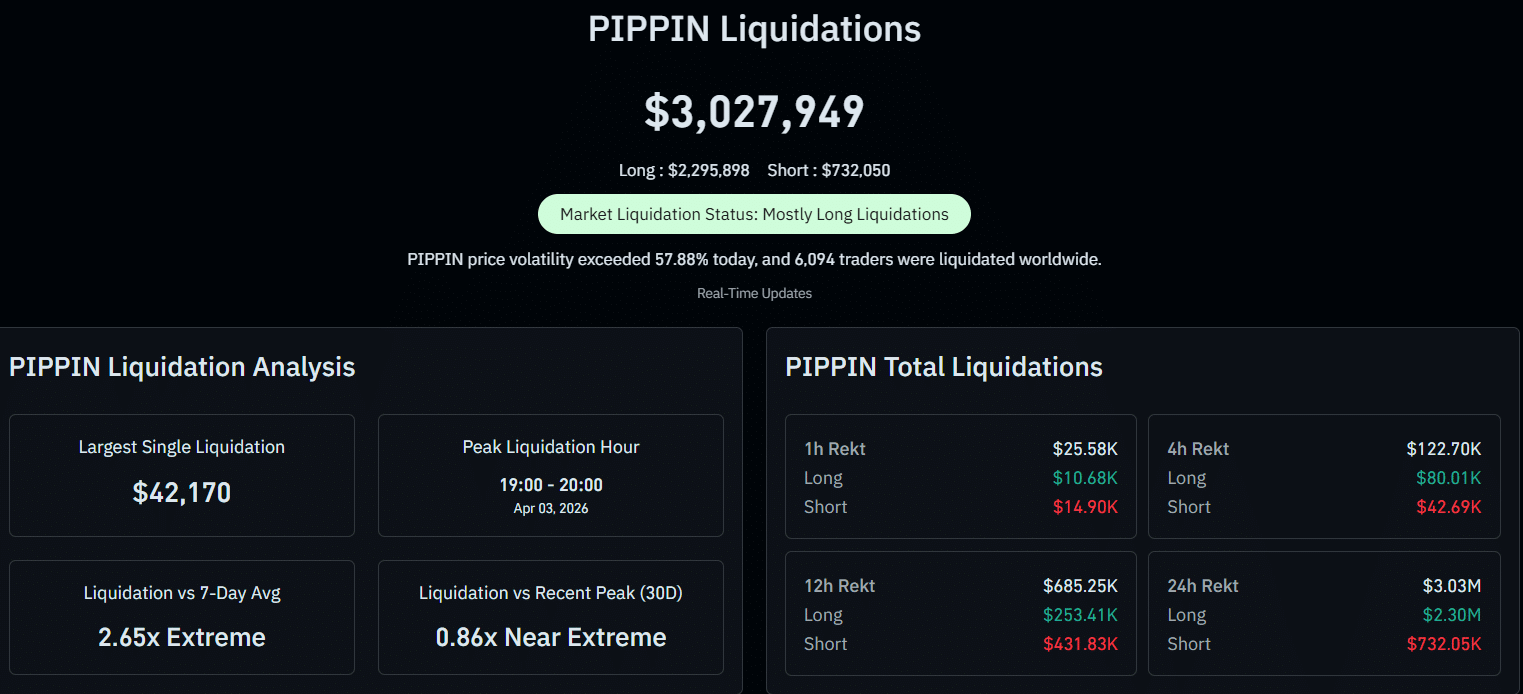
Liquidations took control of the move and accelerated PIPPIN’s breakdown, turning a weak structure into a rapid unwind. As prices dropped, about $3.03 million in positions were liquidated, with $2.30 million in longs, showing buyers were overexposed.
Source: CoinGlass
As support gives way, exchanges force long positions to close, putting immediate sell pressure on the market. This selling lowers prices, which prompts additional liquidations, resulting in a cascading effect.
However, prices then stabilized between $0.03 and $0.035, where the cascade slowed. This move resets the market, as forced exits remove weak hands, leaving recovery to fresh buyers.
PIPPIN tests key support as recovery hinges on...
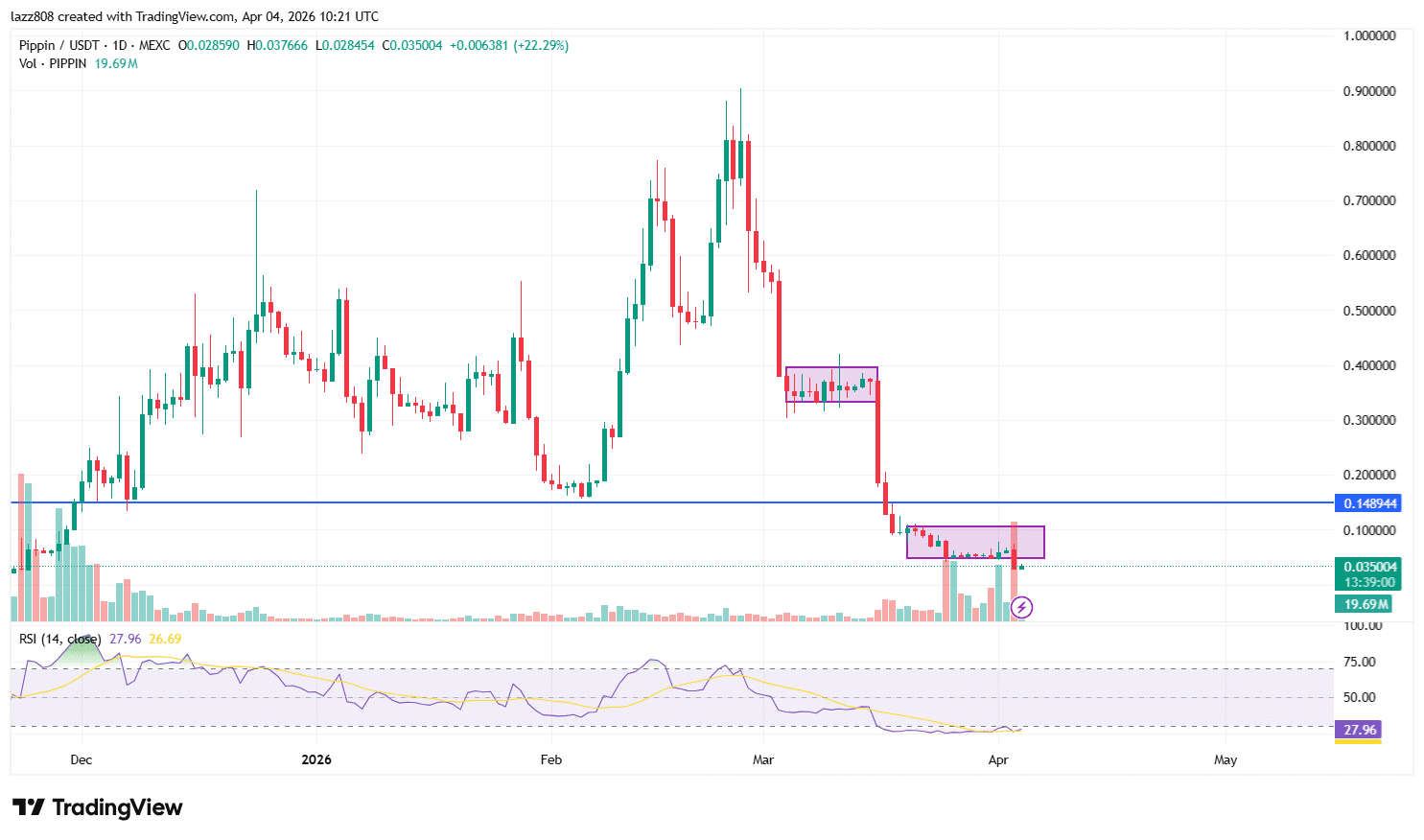
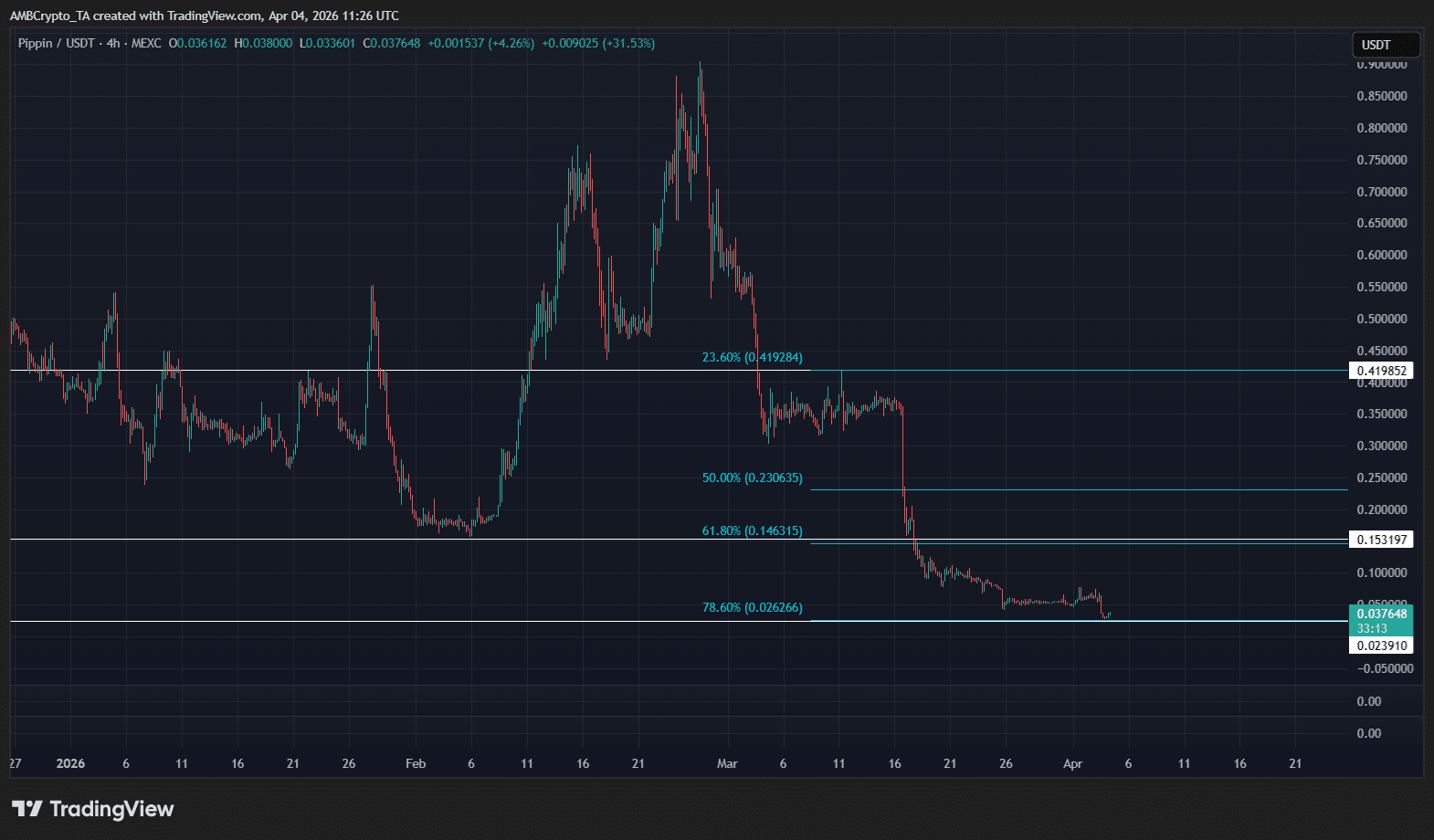
PIPPIN’s structure now reflects a market trying to stabilize after a sharp breakdown, where price holds near $0.037 following a decisive loss of $0.153 and $0.230. This shift shows momentum has flipped, as earlier buyers exit and new demand struggles to take control.
The move pushes price toward the 78.6% retracement near $0.026, a zone where deep corrections often slow as selling begins to exhaust. This happens because most weak hands have already exited, leaving fewer forced sellers in the market.
Source: PIPPIN/USDT on TradingView
However, the inability to reclaim $0.153 shows confidence remains low, which limits sustained upside. Buyers hesitate, as the trend still points downward.
This creates a fragile balance, where holding $0.026–$0.037 could support a relief bounce toward $0.15. That move would signal early recovery, yet failure to hold this zone may trigger another drop, extending the reset phase.
Final Summary
PIPPIN resets after a sharp drop and liquidation cascade, with price stabilizing near $0.03–$0.037 as selling pressure fades.
PIPPIN now depends on demand, where holding support enables a bounce, while failure risks further downside.
QWhat was the primary driver behind PIPPIN's sharp price drop of over 44%?
AA liquidation cascade, where about $3.03 million in positions were forced to close, accelerated the breakdown. This included $2.30 million in long liquidations, indicating overexposed buyers were forced to exit.
QAt what price level did PIPPIN show signs of stabilization after the crash?
AThe price stabilized between $0.03 and $0.035, where the liquidation cascade slowed and the market began to reset as weak hands were flushed out.
QWhat does the RSI value of 27.9 indicate about PIPPIN's market condition at press time?
AAn RSI of 27.9 signals oversold conditions, suggesting that selling pressure was beginning to fade.
QWhich key retracement level is mentioned as a potential zone where deep corrections often slow down?
AThe 78.6% retracement level near $0.026 is highlighted as a zone where selling pressure may exhaust and corrections often slow.
QWhat are the two possible scenarios for PIPPIN's price action mentioned in the final summary?
AIf buyers absorb supply and hold support, a relief bounce toward $0.15 may occur. However, failure to hold the $0.026–$0.037 support zone could trigger another drop and extend the reset phase.
Welcome to HTX.com! We've made purchasing pippin (PIPPIN) simple and convenient. Follow our step-by-step guide to embark on your crypto journey.Step 1: Create Your HTX AccountUse your email or phone number to sign up for a free account on HTX. Experience a hassle-free registration journey and unlock all features.Get My AccountStep 2: Go to Buy Crypto and Choose Your Payment MethodCredit/Debit Card: Use your Visa or Mastercard to buy pippin (PIPPIN) instantly.Balance: Use funds from your HTX account balance to trade seamlessly.Third Parties: We've added popular payment methods such as Google Pay and Apple Pay to enhance convenience.P2P: Trade directly with other users on HTX.Over-the-Counter (OTC): We offer tailor-made services and competitive exchange rates for traders.Step 3: Store Your pippin (PIPPIN)After purchasing your pippin (PIPPIN), store it in your HTX account. Alternatively, you can send it elsewhere via blockchain transfer or use it to trade other cryptocurrencies.Step 4: Trade pippin (PIPPIN)Easily trade pippin (PIPPIN) on HTX's spot market. Simply access your account, select your trading pair, execute your trades, and monitor in real-time. We offer a user-friendly experience for both beginners and seasoned traders.
7.6k Total ViewsPublished 2025.01.11Updated 2026.06.02
Discussions
Welcome to the HTX Community. Here, you can stay informed about the latest platform developments and gain access to professional market insights. Users' opinions on the price of PIPPIN (PIPPIN) are presented below.