Ozak AI x Openledger xSpaces Dives Into Trustworthy Data Infrastructure for Autonomous AI

TheNewsCryptoPublished on 2026-01-15Last updated on 2026-01-15

Abstract

Ozak AI and Openledger are co-hosting an xSpaces session on January 13th to explore the critical role of trustworthy data infrastructure for the future of autonomous AI. As AI systems take on greater responsibilities, the need for verifiable, transparent, and tamper-proof data has become essential. The discussion will focus on how reliable data enables scalable, profitable, and accountable AI agents, with Openledger providing the verifiable data frameworks. Key speakers include Ozak AI's CEO Pax Reid and Openledger's Ram Kumar. The context is strengthened by Ozak AI's recent momentum, including over $5.6M in funding, exchange listings, and the live launch of its EON platform, which has undergone security audits. This session highlights how data integrity is the foundational layer for the next generation of AI.

Artificial intelligence is rapidly evolving toward autonomous execution, but its future depends closely on one vital issue: data trust. As AI retailers take on greater responsibility across decentralized structures, the need for verifiable, transparent, and tamper-proof data infrastructure has become impossible to ignore.

Addressing this shift, Ozak AI is hosting a high-effect xSpaces session that brings infrastructure to the forefront, specializing in how dependable statistics permit scalable, worthwhile, and straightforward AI agents. The discussion aims to attach real-world execution with long-term AI sustainability, providing timely perception into how the next technology of shrewd structures is being built from the ground up.

Ozak AI x Openledger xSpaces Focuses on the Future of Trustworthy AI

Rapid advances in artificial intelligence have pushed data reliability into the spotlight, making verifiable infrastructure an important requirement instead of a secondary feature.

Ozak AI is hosting a high-impact xSpaces session designed to explore this shift, bringing attention to the structures that enable AI agents to operate securely, transparently, and profitably. Scheduled for 13th January at 2 PM UTC, the session aims to unpack how the next technology of AI is being built from the ground up, with trust and execution at its core.

A central theme of the discussion will be the role of Openledger in strengthening AI systems through verifiable data frameworks. As AI agents increasingly interact with decentralized networks and real-world data sources, ensuring data integrity becomes essential for accuracy and accountability.

The xSpaces will explore how reliable data inputs flow through the AI stack, supporting everything from intelligent decision-making to autonomous execution. This infrastructure-first approach reflects a broader industry transition toward AI systems that can operate independently while remaining auditable and trustworthy.

Leadership Insights Driving the Conversation

The session brings together key voices from both projects to provide a well-rounded perspective. Pax Reid, CEO of Ozak AI, will share how verifiable data underpins the performance and scalability of AI agents within the Ozak AI ecosystem. His perspective will focus on why trust at the data level directly translates into long-term value creation.

Ram Kumar, Core Contributor at Openledger, will add technical depth by explaining how verifiable data protocols are designed and why they are becoming foundational for decentralized AI. Rick Thompson, Community Lead at Ozak AI, will highlight how transparent infrastructure and clear communication help align builders, users, and investors around a shared vision.

Ozak AI’s Growth Strengthens the Narrative

Momentum behind Ozak AI provides strong context for the discussion. The project has raised over $5.6 million in total funding, signaling growing confidence in its execution-focused roadmap.
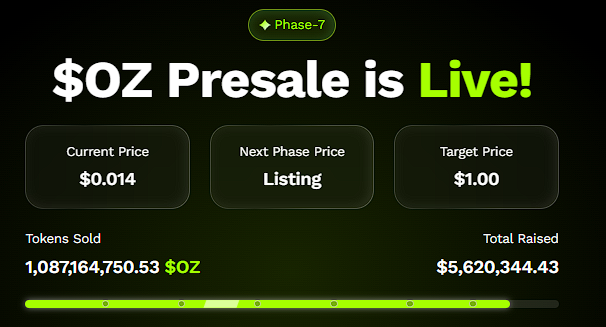
Broader market visibility has been achieved through listings on CoinMarketCap and CoinGecko, positioning Ozak AI among closely watched AI-driven blockchain initiatives. These milestones reinforce the idea that infrastructure-led AI platforms are increasingly attracting serious attention from the wider crypto and technology communities.

EON Live and Security Foundations in Place

Execution has moved beyond planning with Ozak AI’s EON platform now live, marking a major step toward real-world deployment of autonomous AI capabilities. This launch demonstrates how theoretical discussions around AI agents are translating into functional systems. Security has also been prioritized through audits conducted by CertiK and Sherlock, reinforcing confidence in the platform’s reliability and long-term sustainability.

As AI agents take on increasingly complex roles across analytics, finance, and decentralized operations, the importance of verifiable data continues to grow. This xSpaces offers timely insight into how Ozak AI and Openledger are addressing one of the most pressing challenges in AI infrastructure today. For participants and listeners, the session provides a clear view into how trustworthy, autonomous AI systems are being built and why data integrity is becoming the defining layer of the next AI wave.

About Ozak AI

Ozak AI is a blockchain-based crypto project that gives an innovative platform that specializes in predictive AI and advanced data analytics for financial markets. Through machine learning algorithms and decentralized network technology, Ozak AI allows real-time, correct, and actionable insights to help crypto enthusiasts make the correct decisions.

For more, visit:

  • Website: https://ozak.ai/
  • Telegram: https://t.me/OzakAGI
  • Twitter: https://x.com/ozakagi

Disclaimer: TheNewsCrypto does not endorse any content on this page. The content depicted in this Press Release does not represent any investment advice. TheNewsCrypto recommends our readers to make decisions based on their own research. TheNewsCrypto is not accountable for any damage or loss related to content, products, or services stated in this Press Release.


TagsBlockchainCryptocurrencyOzak AI

Related Questions

QWhat is the main focus of the xSpaces session hosted by Ozak AI and Openledger?

AThe xSpaces session focuses on trustworthy data infrastructure for autonomous AI, specifically exploring how verifiable, transparent, and tamper-proof data enables scalable, profitable, and straightforward AI agents.

QWhen is the Ozak AI x Openledger xSpaces session scheduled to take place?

AThe session is scheduled for January 13th at 2 PM UTC.

QWhat role does Openledger play in the context of AI systems according to the article?

AOpenledger strengthens AI systems by providing verifiable data frameworks, which are essential for ensuring data integrity, accuracy, and accountability as AI agents interact with decentralized networks and real-world data sources.

QWhat recent milestone demonstrates Ozak AI's progress toward real-world deployment?

AThe launch of Ozak AI's EON platform, which is now live, marks a major step toward the real-world deployment of autonomous AI capabilities.

QHow much funding has Ozak AI raised and what does this signal?

AOzak AI has raised over $5.6 million in total funding, which signals growing confidence in its execution-focused roadmap and positions it as a serious AI-driven blockchain initiative.

Related Reads

The Value Distribution of Stablecoins

**Summary: The Value Distribution of Stablecoins** The article argues that stablecoins are evolving from mere trading tools into broader channels for dollar access. It divides the stablecoin ecosystem into four layers to analyze how value is distributed: 1. **Issuance Layer:** Mints stablecoins, holds reserve assets, and captures the spread between reserve yield and user costs (e.g., Tether, Circle). This layer currently earns the largest profit margin. 2. **Infrastructure Layer:** Connects stablecoins to the traditional financial system, handling fiat on/off-ramps, banking integration, compliance (KYC/AML), and asset management (e.g., Bridge, BVNK). This is the "unglamorous" but critical work, building the essential bridges between crypto and real-world finance. 3. **Acquiring/Distribution Layer:** Integrates stablecoins into merchant systems, manages payment flows, and provides enterprise financial software (e.g., Stripe, Coinbase). They act as the access point for businesses. 4. **Application Layer:** The end-users and businesses that ultimately use stablecoins for payments, settlements, or as a store of value. They benefit from convenience but have little pricing power. The core thesis is that while the issuance layer currently dominates profits, the often-overlooked **infrastructure layer holds significant long-term potential**. The real challenge and barrier to mass adoption is not the on-chain transfer of stablecoins (which is simple), but the complex "last mile" integration into existing business workflows, banking systems, and regulatory frameworks across different countries. Companies in this layer are currently in a "land grab" phase, investing heavily to build networks, secure bank partnerships, and establish compliance pathways. While their position is currently pressured by the profitable issuers above and distribution platforms below, the article suggests that if stablecoins become a default financial rail for businesses, the infrastructure providers who have done the hard work of integration will ultimately gain strong pricing power and become entrenched, essential players.

marsbit1h ago

The Value Distribution of Stablecoins

marsbit1h ago

The Value Distribution of Stablecoins

The Value Distribution of Stablecoins The article argues that stablecoins are evolving from a mere trading tool into a broad "dollar channel." It analyzes the industry's value chain through four layers: 1. **Issuance Layer (e.g., Tether, Circle):** The top layer that mints stablecoins, holds reserve assets, and captures the thickest interest rate spread. 2. **Infrastructure Layer (e.g., Bridge, BVNK):** Connects stablecoins to the traditional financial system, handling critical but complex "dirty work" like fiat on/off-ramps, banking integration, compliance (KYC/AML), and cross-border settlement. 3. **Acquiring/Distribution Layer (e.g., Stripe, Coinbase):** Embeds stablecoins into merchant systems, manages payment flows, and integrates with enterprise software. 4. **Application Layer:** End-users and businesses that ultimately use stablecoins for payments, settlement, or storing value. The author posits that while the issuance layer currently captures the most profit, the most overlooked and potentially critical layer is infrastructure. The core challenge for stablecoin adoption isn't the on-chain transfer (which is simple), but bridging the gap between blockchain and the real-world financial system. This involves solving practical problems for businesses: fiat conversion, reconciliation, tax handling, and user onboarding. Infrastructure companies are currently in a difficult "land-grab" phase—building networks, securing banking relationships, and achieving compliance country-by-country. They face pressure from both the profitable issuance layer above and distribution platforms below. However, the author suggests this layer is building a crucial moat. Once stablecoins become a default business rail, the infrastructure players who have done the hard work of integration may gain significant, durable value and pricing power.

链捕手1h ago

The Value Distribution of Stablecoins

链捕手1h ago

How to Do Research Well: Deliberately Practice the Real Skills That Matter

No one truly teaches you how to do research. You're often given a desk, a pre-selected problem, and vague instructions to "create something new." Consequently, many people reverse-engineer the job based on visible outputs—papers, posts, announcements—learning only how to *appear* like a researcher rather than how to *become* one. True research capability is built from stacking small, trainable skills, nearly all of which can be developed through deliberate practice. **Pick Your Own Problem:** Most researchers absorb problems from advisors or trends, lacking the underlying reasoning. Choosing a problem you genuinely care about, as John Schulman advises, leads to original work. Develop "taste" like a muscle: predict experiment outcomes, guess paper results from methods, and track which findings remain important over time. **Upgrade Your Inputs:** Relying on shared reading lists (arXiv hot lists, filtered group chats) leads to unoriginal conclusions. Undervalued old literature often holds crucial insights (e.g., MoE, LSTM, backpropagation). Richard Sutton's "The Bitter Lesson" or Claude Shannon's 1952 talk on creative thinking are more predictive than lengthy modern surveys. Breadth matters as much as depth: draw from neuroscience, mechanism design, hardware knowledge, and honest statistics. Read papers directly, especially appendices and limitations sections. **Write Everything Down:** As Paul Graham noted, writing exposes flaws in seemingly mature ideas. Writing is the cheapest defense against self-deception. Following Feynman's principle, Darwin programmatically wrote down facts contradicting his theory to combat memory bias. Maintain a detailed log of hypotheses, setups, predictions, results, and updated understandings. Reviewing past logs fosters essential humility.

marsbit3h ago

How to Do Research Well: Deliberately Practice the Real Skills That Matter

marsbit3h ago

Trading

Spot
Futures

Hot Articles

Discussions

Welcome to the HTX Community. Here, you can stay informed about the latest platform developments and gain access to professional market insights. Users' opinions on the price of AI (AI) are presented below.

活动图片