Sillytuna, one of Ethereum’s earliest NFT whales, has reported a $24 million crypto theft that allegedly combined an on‐chain address‐poisoning scam with offline violence and threats.
The Crime’s Details
In a post on the social network X on March 4, the trader known as Sillytuna reported that he had been the victim of a $24 million-dollar crypto theft in AUSD/aEThUSDC from his wallet.
Mr. Silly claims the authorities have been involved, not just because the immense amount of money that was subtracted, but also because the crime wasn’t just online, describing it as a violent robbery that left him physically unharmed but deeply shaken. shaken.
Following the incident, Mr. Silly stated he is quitting the crypto space and expressed gratitude for still having his “limbs”.
$24 million dollar theft of AUSD from 0x6fe0fab2164d8e0d03ad6a628e2af78624060322
Involved violence, weapons, kidnapp and rape threats. Obvs police involved.
Please pass on to all those who trace such things.
And now... definitely out of crypto. ****ers.
Still have limbs,...
— Sillytuna (@sillytuna) March 4, 2026
In a different post on March 5, Mr. Silly offered a generous bounty for anyone who can recover some of the funds, even if they were involved in the original crime.
Reminder: 10% bounty of any funds individuals or platforms can recover for me. Even if you were involved.
— Sillytuna (@sillytuna) March 5, 2026
The Architecture Behind a Crypto Theft
The most plausible scenario for cases like this one is a hybrid operation where online reconnaissance and social engineering set the stage long before any overt threat appears. Criminals can quietly map a target’s on‐chain footprint, social media presence and real‐world routines, then use low‐friction tricks like address poisoning to ensure that when a big move eventually happens, single copy‐paste mistake routes funds into their infrastructure.
Once a victim realizes something is wrong, the operation can escalate to doxxing, extortion and even in‐person intimidation or kidnapping threats.
A Chain Of Major Crypto Thefts
The crime against Sillytuna is another example of recent catastrophic losses tied to violent situations in the crypto world. In December 2025, a single trader lost almost $50 million in USDT after copying a poisoned address from their own transaction history, then publicly offered a seven‐figure “peaceful resolution” bounty if the attacker returned most of the funds. Scam‐tracking firms also point to at least two more victims who lost roughly $62 million in just two months to similar address‐poisoning mistakes, while physical “wrench attacks” and kidnappings targeting crypto holders have surged worldwide.
This sort of hacking attacks tend to be a multi‐layer campaign rather than a single hack. They are designed to exploit every weak point between a person’s wallet’s interface and their real‐world vulnerability.
This situation leaves the crypto community sitting on the uncomfortable truth that you do not have to be “reckless” or technically incompetent to end up in a position like this. If even the greatest of them all can be felled by coordinated efforts, no one is safe.
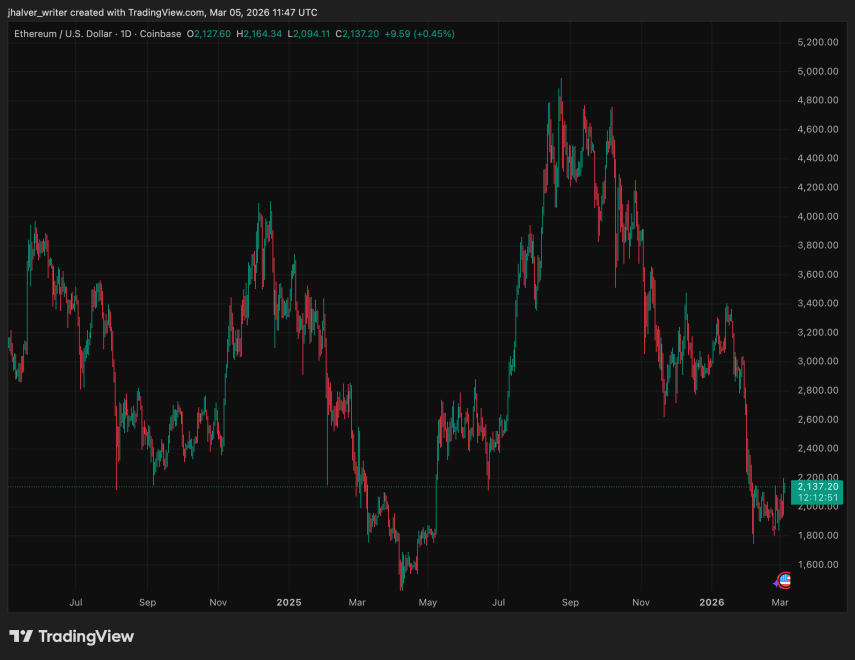
ETH's price trends to the downside on the daily chart. Source: ETHUSD on Tradingview
Cover image from ChatGPT, ETHUSD chart from Tradingview