Micron Shuts Up the Bears, Makes India's 'Buffett' Regret: Sold Too Early, Missed Out on $2 Billion

marsbitPublished on 2026-06-25Last updated on 2026-06-25

Abstract

Indian value investor Mohnish Pabrai, a disciple of Warren Buffett, revealed his costly mistake of selling shares in Micron Technology too early. He initially invested in 2017, holding it for six years and building a position as large as 77% of his portfolio, based on a thesis that the memory chip industry would consolidate into a stable oligopoly of Samsung, SK Hynix, and Micron. However, he sold his entire stake in September 2023, fearing oversupply after Samsung announced production expansion. Shortly after his exit, demand for high-bandwidth memory (HBM) surged with the rise of AI, and Micron's stock price skyrocketed over 15 times in two years. Pabrai estimates this premature sale cost him roughly $20 billion in potential gains. He expressed similar regret over selling his investment in SK Hynix too soon, stating he violated his own principle of holding companies forever. Reflecting on these errors, Pabrai emphasized his core investment checklist principles: avoiding leverage, focusing on the durability of a company's competitive moat, and assessing management's character. Despite these personal trading missteps, his long-term view on the remaining memory chip leaders remains bullish, advising current holders not to sell as "the party is just getting started." He concluded by sharing his philosophical outlook, prioritizing character over wealth, and his goal to donate his entire fortune before his passing.

Known as India's 'Buffett,' Pabrai had heavily invested in Micron for six years. After selling, the stock price surged more than 15 times in two years, causing him to miss out on roughly two billion dollars. He also sold SK Hynix too early. Recently, he personally reviewed his most painful trading error in a media interview: "I visited Samsung multiple times and also held investments in SK Hynix. But to my great regret, I violated my own principles and sold companies I should have held forever."

Having spent nearly $500,000 for a lunch with Buffett, this Indian 'Buffett' missed out on $2 billion from Micron.

'Disciple of Buffett' and globally renowned value investor Mohnish Pabrai initiated a position in Micron in 2017 and sold it in September 2023, making only about double; in the two years after selling, Micron's stock price soared over 15 times, resulting in an estimated $2 billion in missed gains. With SK Hynix, he also sold too early.

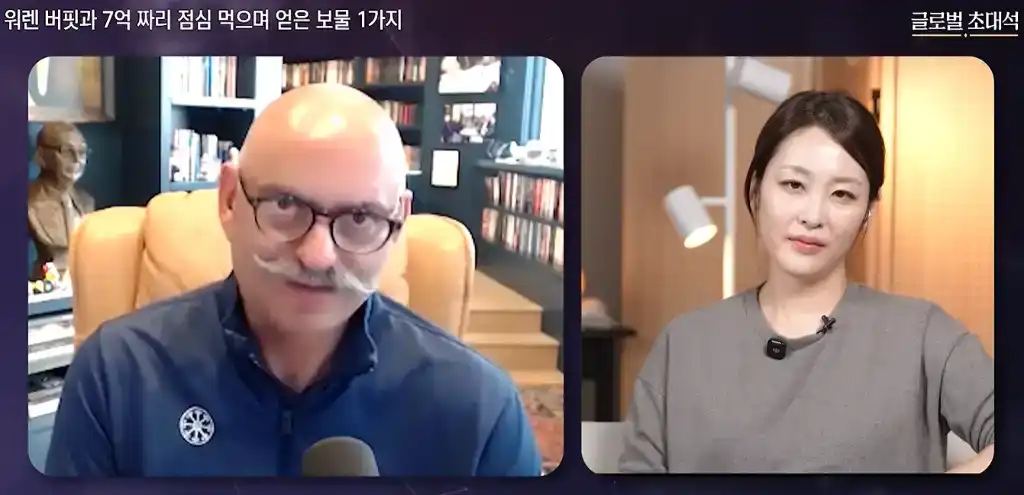
On June 22, in a Korean interview program called "지식인사이드 (Information Inside)," he reviewed his most painful trading errors: Very regrettable. I violated my own principles and sold companies I should have held forever.
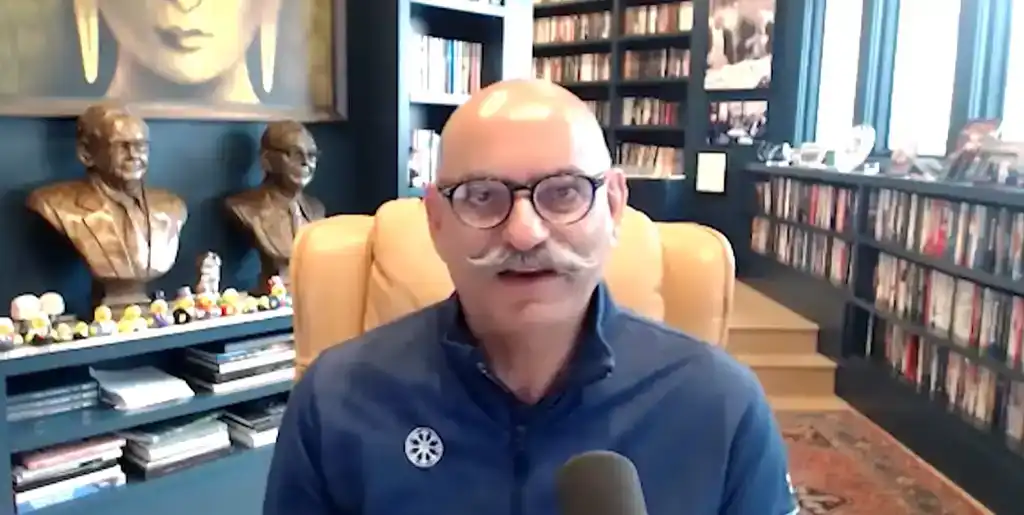
The Pain of Selling: Held for Six Years, Sold Before Takeoff

Pabrai started his Micron position in 2017, and at one point it constituted up to 77% of his portfolio. When asked about the Korean stock market in the interview, Pabrai expressed his regret.

Although he didn't directly detail his specific trades in Micron, Pabrai mentioned in the program that he had done extensive homework—personally traveling to Seoul to meet with SK Hynix management, visiting Samsung executives, and having in-depth discussions with Micron's Indian-born CEO. His core logic was: the global memory market would eventually be left with three players—Samsung, SK Hynix, and Micron—with a stable oligopoly structure, competition becoming more rational, and profits becoming promising.

He even specifically sought advice from Buffett and Munger on this. Pabrai recalled: "Munger and Buffett told me that we studied Coca-Cola bottlers worldwide. In 95% of regions, if only two remain, they make huge money. Only in a minority 3%-5%, where they are natural enemies, will they fight until no one makes any money."

In 2023, when Samsung announced capacity expansion, Pabrai judged that the supply-side logic was broken and subsequently sold out.

But by then, ChatGPT had already been released, and the explosion in HBM (High Bandwidth Memory) demand was on the horizon.

In the two years after selling, Micron's stock price rose more than 15 times.

"I Shouldn't Have Sold Them"

Micron wasn't his only regret.

He also sold SK Hynix too early. He stated directly in the interview: "I visited Samsung multiple times and also held investments in SK Hynix. To my great regret, I violated my own rules and sold these companies when I should have held them forever."

However, his assessment of the Korean semiconductor industry remains clear: "The memory businesses of SK Hynix and Samsung are highly protected businesses." He explained that the memory industry once had up to 20 companies fiercely competing and undercutting prices, all eventually losing money and exiting, leaving only three. "It's almost impossible for new entrants to come in—patent barriers, engineer reserves, process complexity; it would take 10, 15, or even 20 years to enter."

For current investors still holding Korean semiconductors, his advice is direct: "If you already hold them, don't sell. The party has just begun."

This statement is, in a way, also directed at himself.

What Did Buffett's Lunch Buy

In 2007, Pabrai won the charity auction to have lunch with Buffett for $650,000 (at the exchange rate that year, approximately 7.6, roughly equivalent to RMB 4.94 million)—less than one-third of his mental budget of $2 million.

He said his only agenda at the time was: "My entire agenda was to thank Mr. Buffett in person."

But the lunch exceeded expectations. He told Buffett that his wife actually admired Munger more. Buffett immediately "took on the challenge," claiming he would arrange a lunch with Munger for them so they could understand he was the better dining companion. Two days later, Pabrai actually received an arrangement email from Buffett's assistant.

"I'd rate that lunch a 15 out of 10. One reason is that he made it happen."

A relationship with Munger was thus established, and thereafter Pabrai would visit him with his family every three or four months.

Three Bottom Lines, A 213-Point Checklist

Pabrai employs an investment checklist method derived from the aviation industry—after a plane crash, regulatory agencies review the causes and revise procedures; he analogizes investment losses to a crash, turning each loss into a new checklist item.

His checklist currently has 213 questions. For ordinary investors, he distilled three core principles:

First, no leverage. "The number one reason investors lose money is leverage—either the company has too much debt, or the investor borrows money to buy stocks." He cited the founder of IKEA as an example: operating for 70 years without ever borrowing a single euro, "because we owe no one money, no one can stop us."

Second, the durability of the moat. It's not just about whether there is a competitive advantage, but how long that advantage can last. He used Amorepacific as an example: the brand has recognition, but there are many competitors, and consumers continuously seek better products, so the moat is not solid.

Third, the character of management. "Do they love money, or do they love the business? It's okay to love money, but they must not be greedy for money."

For the vast majority of people, his conclusion is simpler—"For over 99% of investors, just buy an index."

"Wealth Lost, Nothing Lost"

At the end of the interview, Pabrai talked about his ultimate goal: to donate all the money in his hands the day before he dies on June 11, 2054 (the date of his death estimated by AI). He said, "I don't really care about money because beyond a certain point, it has no practical meaning for you. I'm playing a game."

"Wealth lost, nothing lost; health lost, something lost; character lost, everything lost. So, don't worry too much about wealth, pay a little attention to health, and put all your energy into character."
Trending Cryptos

Related Questions

QAccording to the article, what major investing mistake did Mohnish Pabrai make with Micron and SK Hynix?

AHe sold his holdings in both companies too early, violating his own principle of holding companies forever. After selling Micron in 2023, the stock price surged over 15x in the following two years, costing him an estimated $2 billion in potential gains.

QWhat was the core investment logic Pabrai had for the memory chip market, which he discussed with Warren Buffett and Charlie Munger?

AHis core logic was that the global memory market would consolidate into an oligopoly of just three major players: Samsung, SK Hynix, and Micron. He believed that with competition rationalized among a few, the industry would become highly profitable, similar to how Coca-Cola bottlers operate in most regions.

QWhat are the three core principles from Pabrai's 213-point investment checklist that he highlights for ordinary investors?

AThe three core principles are: 1) No leverage (avoid companies with high debt or borrowing to buy stocks). 2) The durability of a company's moat (how long its competitive advantage can last). 3) The character of the management (whether they love the business itself or are primarily motivated by greed).

QWhat was Pabrai's stated primary purpose for winning the charity lunch with Warren Buffett in 2007?

AHis stated primary purpose was simply to thank Warren Buffett in person for his teachings and influence.

QWhat is Mohnish Pabrai's stated ultimate financial goal, as mentioned at the end of the article?

AHis stated ultimate goal is to give away all of his money by the day before his projected death date (June 11, 2054, as estimated by AI), viewing wealth beyond a certain point as having no real meaning and his investing as a 'game.'

Related Reads

Mihoyo's Next Protagonist Is Her, Who Plays the Piano

Mihoyo, widely recognized for its hit game Genshin Impact, has long harbored a grander ambition: creating a virtual world where one billion people would want to live. While its character design is unparalleled, the company recognizes a fundamental limitation—these beloved virtual characters are not truly "alive." Their dialogue and actions are pre-scripted. This drive for authentic "living" characters has guided Mihoyo's strategic investments in cutting-edge fields like brain-computer interfaces, AI (including an early investment in MiniMax), and nuclear fusion. Following the release of ChatGPT in late 2022, co-founder Cai Haoyu stepped down from management to lead a new overseas AI venture, Anuttacon, focused on creating AI-driven virtual beings. Mihoyo's path has involved experimentation and iteration. Anuttacon's early project, *Whisper of the Stars*, showcased real-time AI conversation but revealed limitations in underlying language models. The team subsequently focused its resources on developing a sophisticated "emotional" large language model, distinct from purely utilitarian AI. Co-founder Liu Wei (Dawei) announced plans to invest up to 100 billion RMB in this AI pursuit. The first tangible product of this vision is *BSide: Olivia Lin*, a free Steam application featuring a piano-playing virtual companion. Unlike typical AI chatbots demanding constant interaction, Olivia Lin operates on a slower, more deliberate rhythm—responding to letters, playing user-submitted melodies, and serving as a desktop presence. This design emphasizes "lifelikeness" over exhaustive conversation, strategically working around current technological constraints while building a sense of authentic connection. The company's journey traces back to its name, "miHoYo," where "mi" pays homage to the virtual singer Hatsune Miku. For nearly two decades, fans have loved Miku, a character unaware of their devotion. Mihoyo's ultimate goal, now backed by massive investment and AI research, is to bridge that gap—to create virtual beings that can truly know they are loved.

marsbit1h ago

Mihoyo's Next Protagonist Is Her, Who Plays the Piano

marsbit1h ago

Citrini Research: Taking Stock of 5 Major Investment Themes Overshadowed by the AI Trade

Citrini Research identifies five under-the-radar investment themes potentially overshadowed by the dominant AI trade. With capital and analyst attention overwhelmingly focused on AI infrastructure, these overlooked areas present alpha opportunities as market dynamics shift. **Theme 1: Airlines** – Despite strong fundamentals, stocks like Delta and United have been penalized for 18 months due to macro concerns (tariff-inflation, oil prices), not profitability. A rebound is expected as these headwinds fade, aided by trends like premiumization and the 2026 World Cup. **Theme 2: Senior Housing** – A pure demographic play. The U.S. population over 80 is projected to grow 56% in the next decade, drastically outpacing supply. This creates a compelling need for facilities, benefiting REITs like Welltower and operators like Brookdale. **Theme 3: Live Events & Entertainment** – "Being there" is becoming a luxury. This sector has outperformed even tech over the past decade. Companies like TKO Group (WWE/UFC), Cinemark, and IMAX are capitalizing on demand for premium, in-person experiences. **Theme 4: Exchange Competition** – CME Group's ~98% monopoly in U.S. interest rate derivatives faces its first real challenge from FMX Futures Exchange. Backed by major Wall Street banks, FMX offers lower fees and margin savings. While CME's deep liquidity remains an advantage, FMX provides a competitive alternative. **Theme 5: Fintech Recovery** – Heavily sold off in 2026, fintech stocks like SoFi, Robinhood, and Upstart are showing signs of a rebound based on improving fundamentals—SoFi's stablecoin launch, Robinhood's transformation into a "financial super app," and Upstart's renewed AI lending narrative—rather than a change in sector outlook. The report advises maintaining some AI exposure but diversifying into these neglected "small themes" where mispricing exists due to a simple shortage of investor attention.

marsbit2h ago

Citrini Research: Taking Stock of 5 Major Investment Themes Overshadowed by the AI Trade

marsbit2h ago

21Shares Mid-Year Key Report: Bitcoin's Four-Year Cycle Remains Intact, Stablecoins and Tokenization Emerge as New Growth Engines

21Shares Mid-Year Report 2026: Bitcoin Cycle Intact, Stablecoins & Tokenization Emerge as New Engines This mid-year review assesses progress against 21Shares' ten predictions for 2026. While the overarching shift from narrative to fundamentals holds, performance varies. Key findings show Bitcoin's four-year cycle remains evident despite market maturation. Global crypto ETP AUM has declined to ~$140B, lagging the $400B target, though product innovation continues. Stablecoin supply surpassed $320B, demonstrating non-cyclical demand but falling short of the $1T forecast due to slower regulatory clarity. DeFi TVL, stalled at ~$140B, was hindered by major security incidents. Corporate crypto treasuries hold ~1.28M BTC ($100B), with consolidation pressuring weaker players. Prediction markets are on track, with $57.5B volume already surpassing half the $100B annual target. AI agent infrastructure is ready, but adoption is early. Ethereum L2 consolidation is underway, with the top 5 capturing nearly 90% of activity. Compliant token launches have a platform but lack mainstream volume. Tokenized RWAs total ~$31B on public chains, but institutional pipeline growth is strong. In summary, fundamentals like stablecoins, tokenization, and prediction markets are advancing, but targets require faster adoption or price appreciation. The market is maturing, yet cyclical patterns persist.

marsbit2h ago

21Shares Mid-Year Key Report: Bitcoin's Four-Year Cycle Remains Intact, Stablecoins and Tokenization Emerge as New Growth Engines

marsbit2h ago

Trading

Spot
Futures

Hot Articles

Discussions

Welcome to the HTX Community. Here, you can stay informed about the latest platform developments and gain access to professional market insights. Users' opinions on the price of S (S) are presented below.

活动图片