Mapping Ethereum’s macro sensitivity – Oil, liquidity & why ETH absorbs it all

ambcryptoPublished on 2026-03-16Last updated on 2026-03-16

Abstract

The Ethereum market is undergoing a significant structural shift, with derivatives now dominating price discovery. Futures trading on major exchanges like Binance has grown to be over 12 times larger than spot trading. This surge in leveraged activity makes the market more fragile, as evidenced by recent liquidations totaling $135 million, which can trigger rapid price cascades. Concurrently, Ethereum is displaying heightened sensitivity to macroeconomic forces. Rising oil prices above $100 and tightening global liquidity are pressuring risk assets. Due to its critical role as $58.54 billion in collateral within DeFi protocols, ETH is deeply embedded in the financial infrastructure. This positions it as a key gauge for macro risk in the altcoin market, causing its price to react more to geopolitical shocks, energy volatility, and institutional hedging flows than purely crypto-native demand.

Ethereum’s market structure continued shifting toward derivatives dominance at the press time.

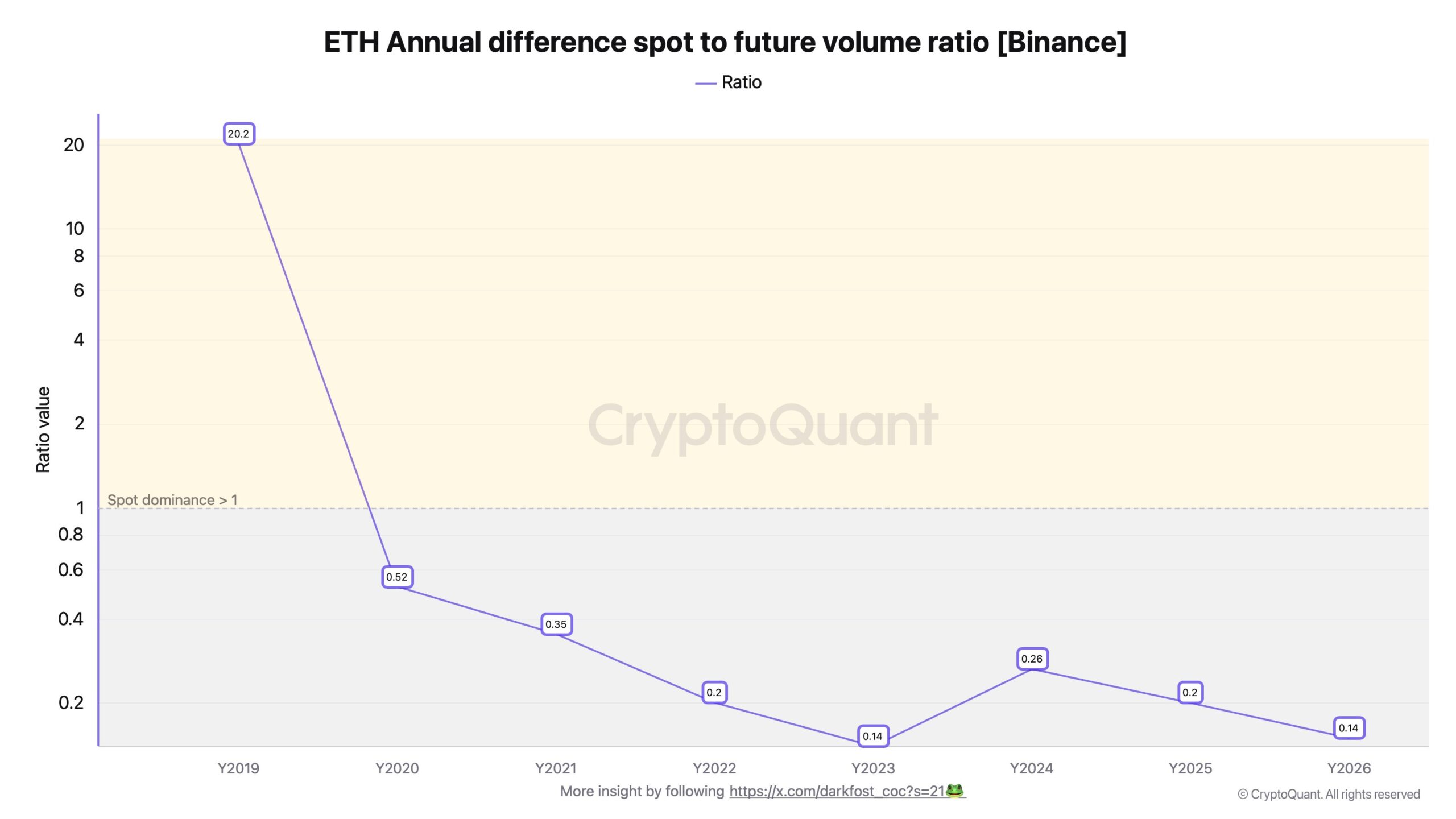
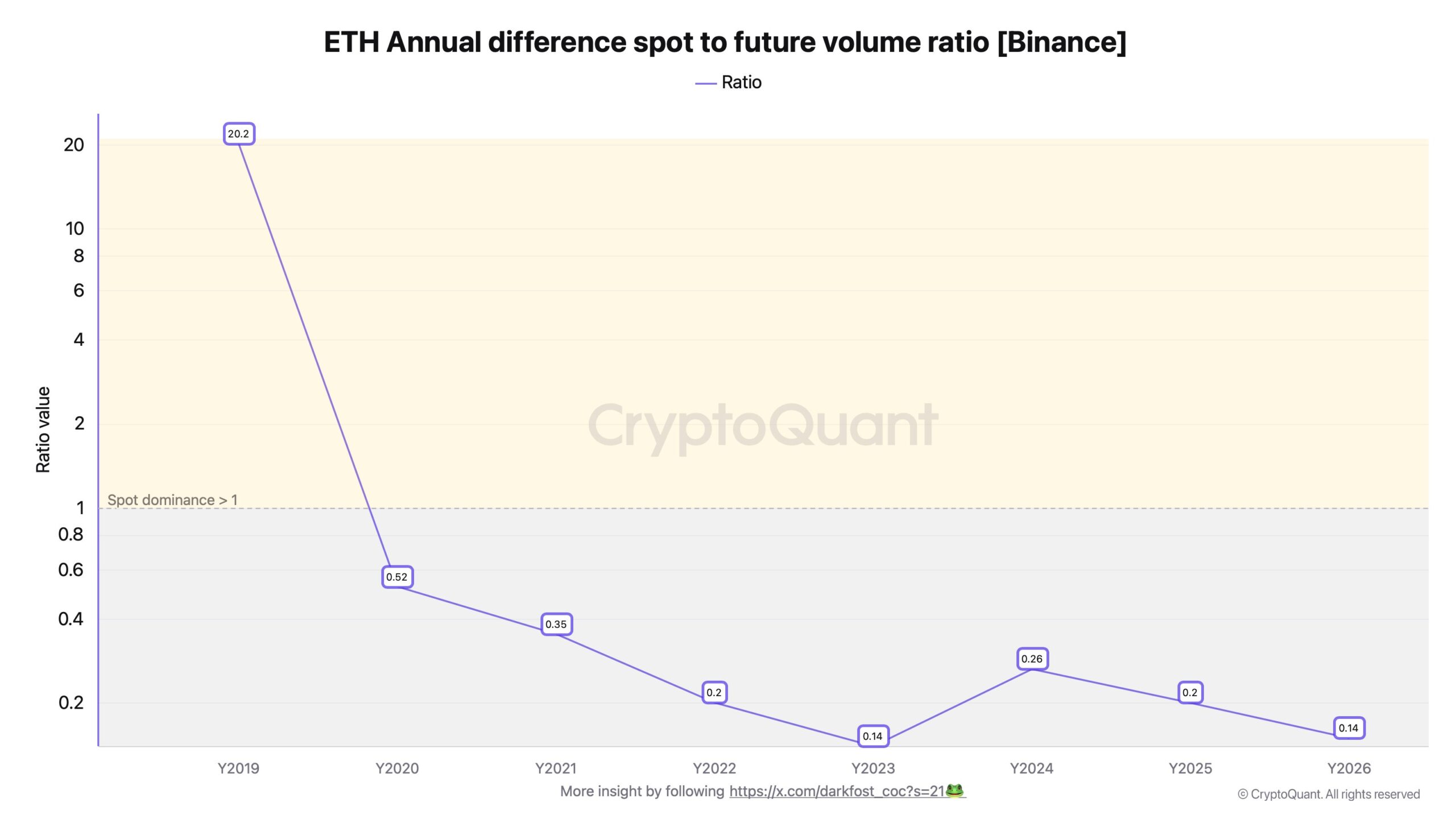
The Spot-to-Futures Volume Ratio on Binance collapsed from 20.2 in 2019 to 0.14 in 2026. This steep decline showed futures markets steadily absorbing price discovery.

As derivatives expand, futures volume exceeded spot activity by more than sixfold.
Source: Darkfost/ X

Meanwhile, positioning across leverage markets has adjusted sharply.

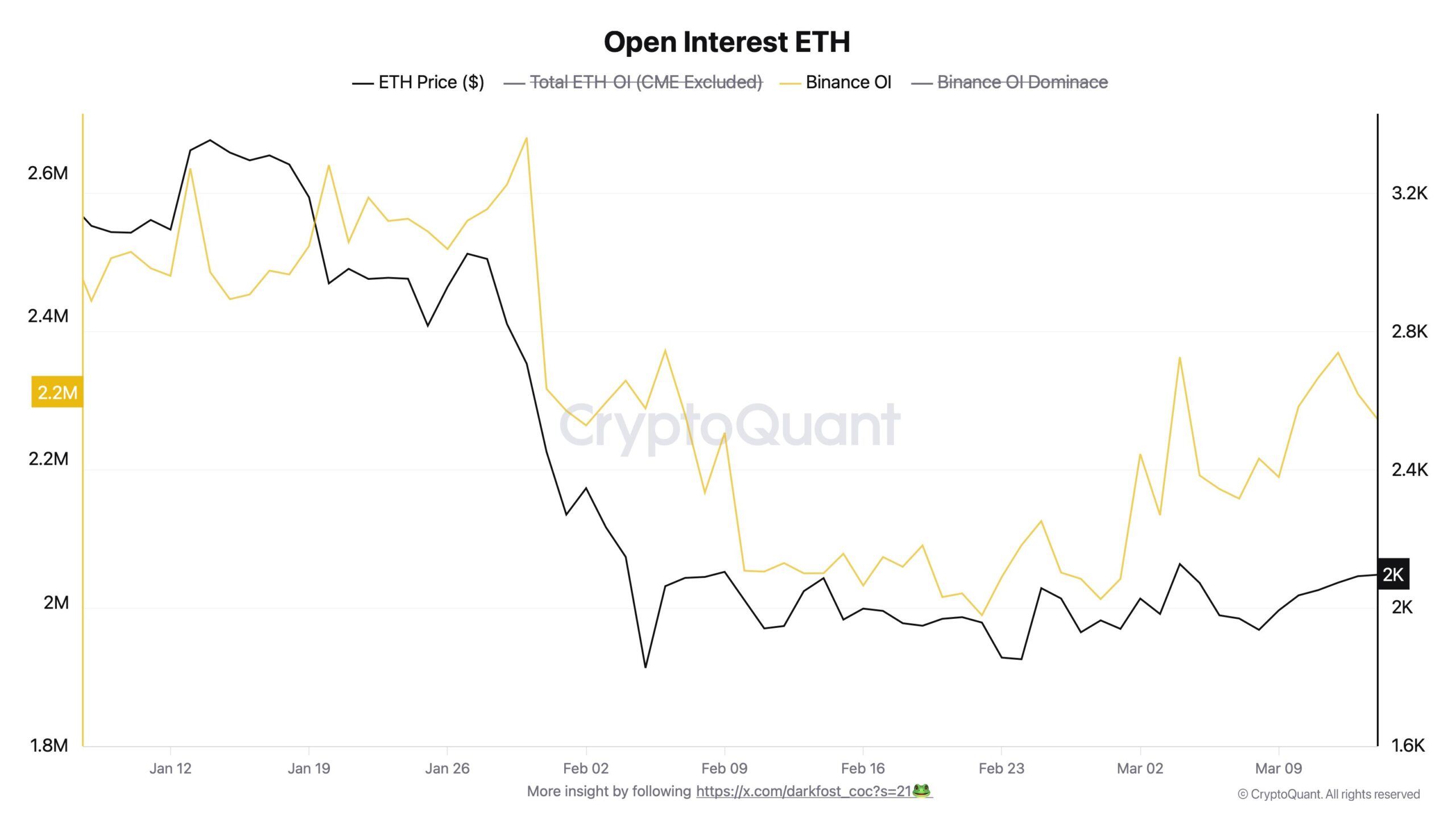
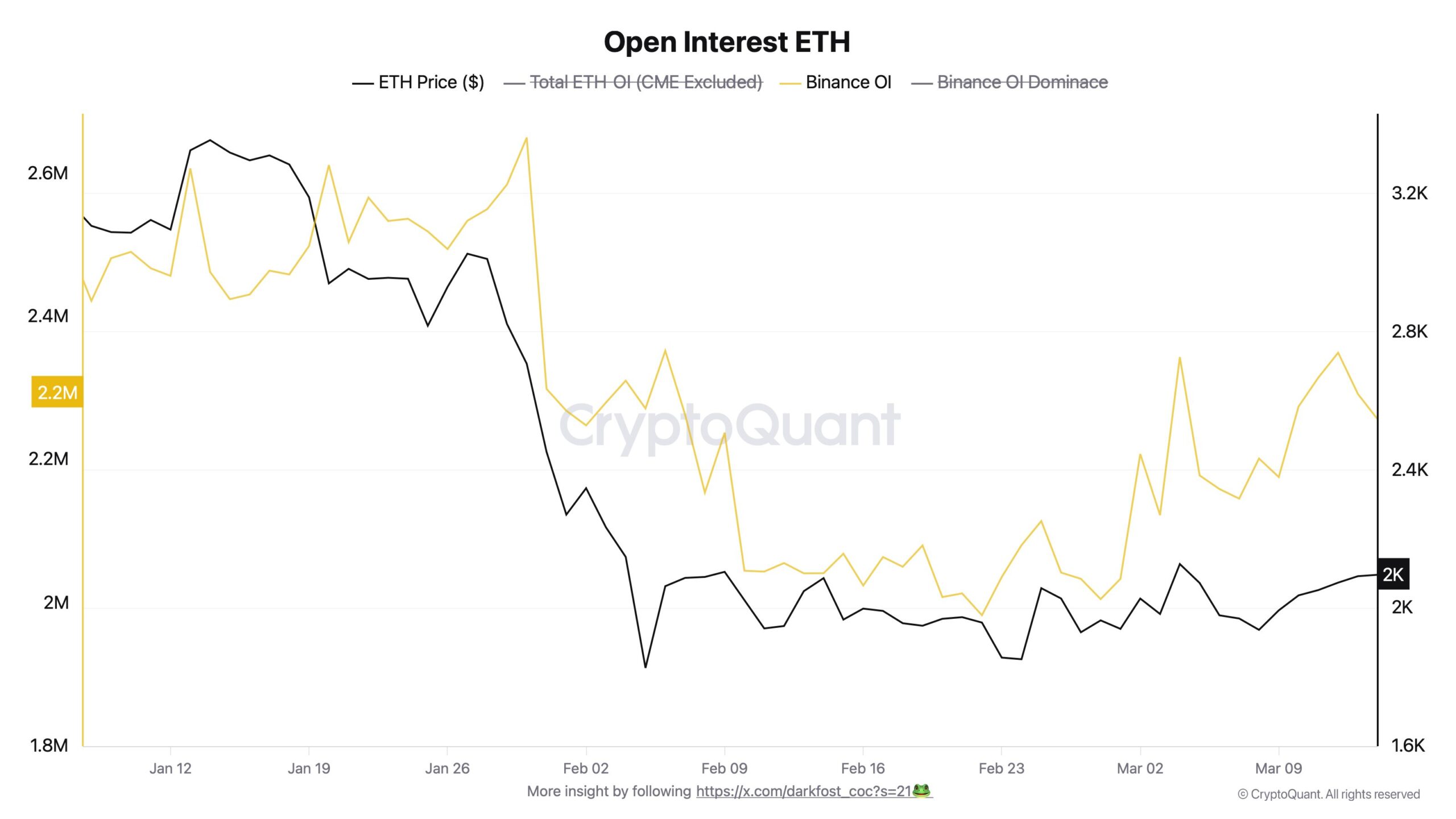
Since January, Binance Open Interest has dropped by roughly 400,000 ETH, equivalent to nearly $4 billion in leaving futures exposure. Yet futures activity remains elevated, signaling that traders rotate positions rather than abandoning leverage entirely.
Source: Darkfost/ X

Alongside this shift, macro pressure is intensifying.

Brent crude climbed above $100 as geopolitical tensions rose. Higher energy costs tighten liquidity conditions globally.

As liquidity compresses and yields rise, investors reduce exposure to risk assets. Within this environment, Ethereum [ETH] increasingly reacts to macro capital flows rather than purely crypto-native demand.

Derivatives now drive Ethereum price discovery

Ethereum’s price discovery is steadily shifting toward derivatives markets.

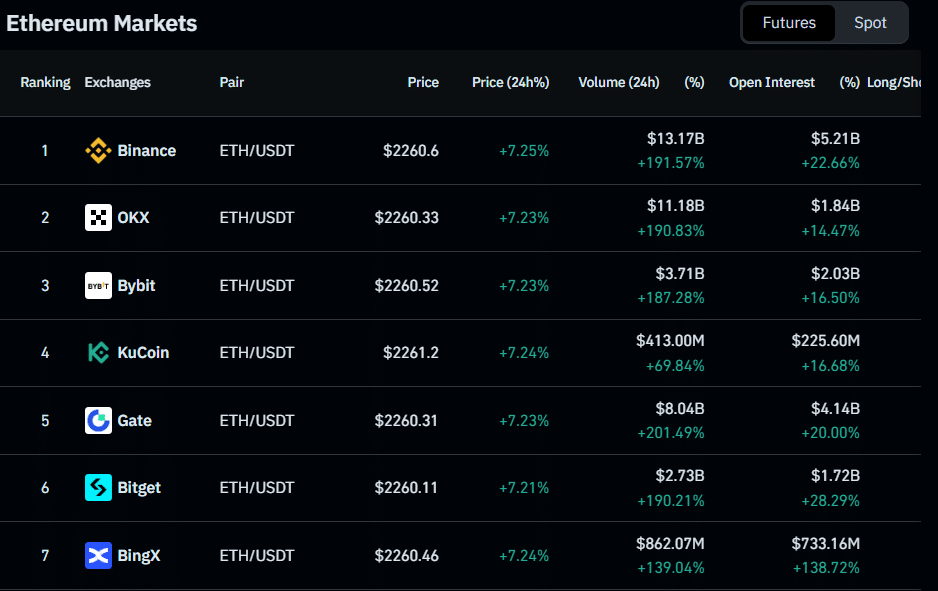
Aggregated Futures Volume reached over $57 billion in 24 hours, signaling where most trading activity now concentrates.

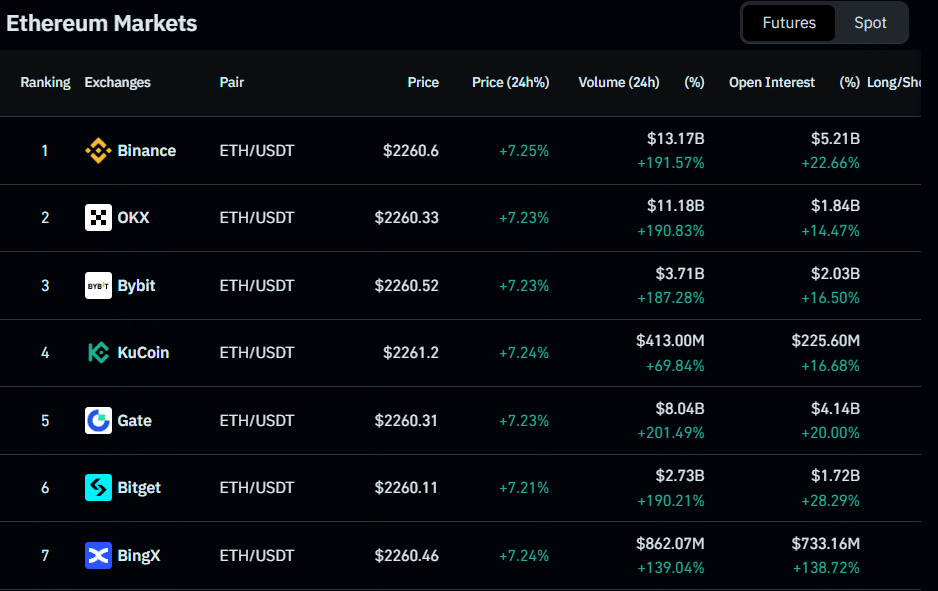
Meanwhile, Spot markets remain comparatively thin. On Binance, Futures Turnover hit $13.17 billion, while Spot Volume reached only $1.1 billion.

This imbalance places derivatives activity roughly 12.5 times larger than physical trading.
Source: CoinGlass

As liquidity concentrates in perpetual contracts, short-term positioning increasingly drives price action. Within this structure, leveraged exposure becomes fragile.

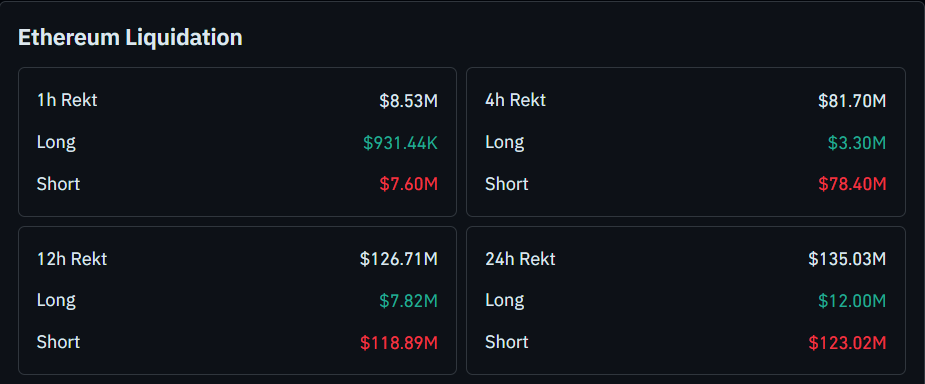
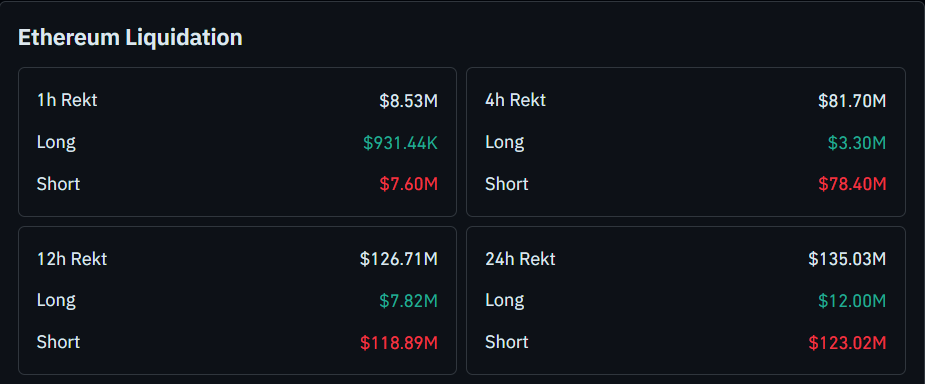
Recent liquidations totaled $135.03 million in 24 hours, triggering rapid cascades across derivatives markets.

Source: CoinGlass

As these liquidations unfold, volatility often accelerates. Ethereum, therefore, reacts more to leveraged positioning dynamics than steady spot accumulation.

Ethereum emerges as the altcoin market’s macro risk gauge

Oil markets are tightening as Brent crude pushes firmly above the $100 threshold. Such energy spikes often revive inflation concerns and pressure global liquidity conditions.

Meanwhile, the U.S. Dollar Index stabilizes near 100.39 while 10-year Treasury yields hover around 4.28%. These shifts gradually push investors toward defensive positioning across financial markets.

As liquidity tightens, risk assets typically absorb the pressure first.

Within this macro environment, Ethereum shows heightened sensitivity compared with most altcoins. ETH secures roughly $58.54 billion in collateral across DeFi protocols such as Aave and Lido.

This structural role keeps ETH deeply embedded in trading and lending infrastructure. As institutional desks hedge exposures through ETH markets, geopolitical shocks and energy volatility increasingly ripple into Ethereum’s price behavior.


Final Summary

  • Ethereum [ETH] derivatives markets now dominate price formation as futures volume exceeds spot activity by over sixfold, while leverage-driven liquidations increasingly amplify short-term volatility.
  • Ethereum is becoming a macro-sensitive altcoin as rising oil prices, tightening liquidity, and institutional hedging flows increasingly shape ETH market behavior.

Related Questions

QHow has the Spot-to-Futures Volume Ratio on Binance changed from 2019 to 2026, and what does this indicate?

AThe Spot-to-Futures Volume Ratio on Binance collapsed from 20.2 in 2019 to 0.14 in 2026, indicating that futures markets have steadily absorbed price discovery and now dominate trading activity.

QWhat is the current relationship between futures volume and spot activity for Ethereum trading?

AFutures volume now exceeds spot activity by more than sixfold, with derivatives activity being roughly 12.5 times larger than physical trading.
QHow much Binance Open Interest has left Ethereum futures markets since January, and what does this suggest about trader behavior?

ABinance Open Interest has dropped by roughly 400,000 ETH (nearly $4 billion) since January, suggesting that traders are rotating positions rather than abandoning leverage entirely.

QWhy is Ethereum increasingly reacting to macro capital flows according to the article?

AEthereum is increasingly reacting to macro capital flows due to tightening global liquidity conditions from rising oil prices and geopolitical tensions, which cause investors to reduce exposure to risk assets.

QWhat role does Ethereum's $58.54 billion in DeFi collateral play in its market behavior?

AEthereum's $58.54 billion in collateral across DeFi protocols like Aave and Lido embeds it deeply in trading and lending infrastructure, making it more sensitive to institutional hedging flows and macro shocks.

Related Reads

The End of the Crypto Premium? Market Logic Shift Seen Through Gemini's Post-IPO Struggles

The article "The End of the Crypto Premium? Market Logic Shifts as Gemini Struggles Post-IPO" examines the dramatic downturn of cryptocurrency exchange Gemini following its public listing in September 2025. Initially part of a wave of crypto IPOs, including Bullish, which saw soaring valuations and massive investor interest, Gemini's stock price has since collapsed by over 80%, falling from $28 to around $5. The company has cut 30% of its workforce, exited international markets, and faces significant financial strain, including $330 million in Bitcoin-denominated debt. The core argument is that Gemini's struggles reflect a broader market shift where the "excess premium" once associated with crypto assets is disappearing. Two key factors are identified: the erosion of regulatory arbitrage, as compliance costs rise for all players (up 22.5% for small firms in 2026), and the decline of liquidity scarcity premiums, as institutional investors now access crypto via low-friction ETFs and stocks rather than volatile altcoins. The approval of Bitcoin and other crypto ETPs, which now manage $1.8 trillion globally, has diverted institutional capital away from altcoins, causing their liquidity to dry up and volatility to increase. For Gemini, its strategy of being "the most compliant exchange" became a liability in a bear market, as fixed compliance costs remained high while trading revenue fell. The article concludes that the era of narrative-driven crypto valuations is ending, giving way to a market logic focused on fundamentals like actual usage, liquidity depth, and sustainable institutional adoption.

marsbit25m ago

The End of the Crypto Premium? Market Logic Shift Seen Through Gemini's Post-IPO Struggles

marsbit25m ago

Utexo Partners with x402 to Provide Near-Instant USDT Settlement for the Agent Economy

Utexo, a Bitcoin-native stablecoin payment execution and settlement layer, has partnered with x402 to integrate USDT compatibility into the x402 payment protocol. This collaboration enables near-instant settlement for agent-to-agent transactions, with speeds as fast as 50 milliseconds. x402 is an open protocol that uses the HTTP 402 "Payment Required" status code to embed payment functionality directly into HTTP requests. This allows applications, APIs, and autonomous systems to pay for services in real-time without requiring pre-funded accounts. The integration expands x402’s initial USDC support to include USDT, one of the most widely used stablecoins globally. Utexo’s infrastructure is designed for high-frequency, low-latency transactions, making it well-suited for machine-driven payments. According to Utexo CEO Viktor Ihnatiuk, supporting USDT within the x402 framework significantly broadens access and provides developers the performance needed for real-time agent-based systems. Kevin Leffew of x402 at Coinbase added that expanding stablecoin access improves performance and accelerates developer adoption. This partnership supports growing use cases where software systems autonomously conduct transactions—such as paying for API calls, accessing data on-demand, and coordinating services across platforms without human intervention. By combining x402’s protocol with Utexo’s settlement infrastructure, the collaboration enables a payment model where transactions are as fast and efficient as the requests that trigger them.

marsbit3h ago

Utexo Partners with x402 to Provide Near-Instant USDT Settlement for the Agent Economy

marsbit3h ago

Trading

Spot
Futures

Hot Articles

Discussions

Welcome to the HTX Community. Here, you can stay informed about the latest platform developments and gain access to professional market insights. Users' opinions on the price of S (S) are presented below.

活动图片